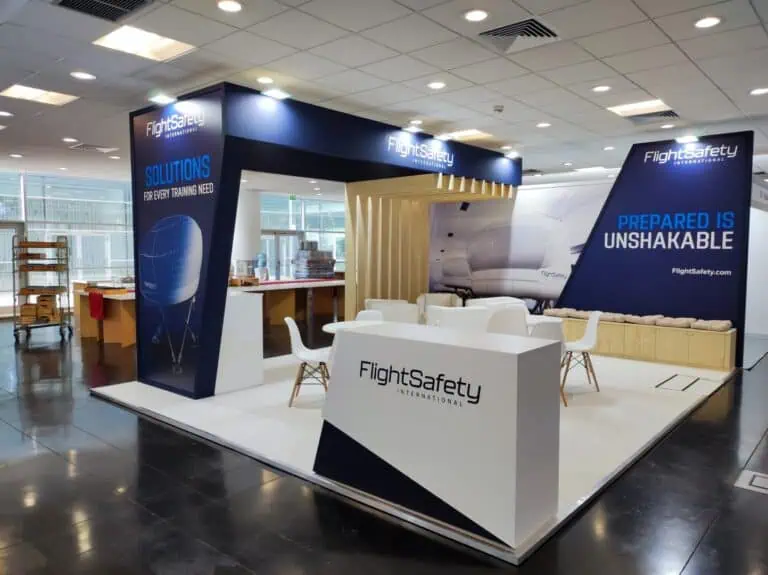
Trade Show Booth Management: Exhibit & Stand Management Guide
Trade show booth management coordinates the people, equipment, services and deadlines needed to operate an exhibition stand. It covers preparation, delivery, installation, show-day checks, agreed visitor next steps and dismantling. This guide explains how to assign responsibilities and review the work against the actual event and supplier scope.
Assign Owners and Escalation Routes
Assign an event lead who maintains the plan, with named owners for design approvals, graphics, logistics, technical services and staff. Record the supplier and organiser escalation routes for each issue. The lead coordinates decisions; structural, electrical or equipment questions still need the appropriate specialist.
Exhibition Booth Management: Boosting Event Success
For exhibitors at European trade fairs, the operating plan needs to connect the stand brief with the organiser’s deadlines and the supplier’s responsibilities. Confirm what the booked space includes, what services must be ordered separately and who accepts the completed stand. Good preparation supports reliable operations; it does not guarantee sales or a particular return.
Table of Contents
- Defining Exhibition Booth Management
- Types of Booths and Service Models
- Core Responsibilities and Processes
- Maximizing Branding and Visitor Engagement
- Common Challenges and Mistakes to Avoid
Key Takeaways
| Point | Details |
|---|---|
| Exhibition Booth Management | Assign owners and deadlines for approvals, services, delivery, staffing and dismantling. |
| Booth Types and Service Models | Distinguish open-side layouts from modular, custom, rental or digital service scope. |
| Visitor Engagement Techniques | Plan an activity with capacity, queues, trained staff and an equipment fallback. |
| Challenges to Avoid | Resolve unclear responsibilities, incomplete scope and missing approvals before production. |
Defining Exhibition Booth Management
Exhibition booth management is the coordination of the stand project and its daily operation. A workable plan identifies the objective, budget scope, approved layout, delivery arrangements, staff roles, service orders and review method.
Start with a responsibility list showing the task, owner, deadline, current status and evidence of completion. Separate exhibitor decisions from supplier work and organiser approvals. Use it to cover:
- Strategic Space Design: Developing booth layouts that facilitate smooth visitor interactions
- Brand Representation: Ensuring visual and messaging consistency with corporate identity
- Logistical Coordination: Managing transportation, setup, staffing, and technical requirements
- Performance Tracking: Defining activity counts, cost scope and later-outcome assessment dates
Define the role of the stand for the event: product explanation, demonstrations, meetings or another agreed objective. Specify the activities and equipment needed, then review the layout and staffing against that brief.
Keep one current project brief and record approved changes. Check their effect on cost, access, production, services and delivery before accepting them. Share the relevant instructions with the supplier and staff so they work from the same version.
Types of Booths and Service Models
Compare booth solutions along two separate dimensions: the space allocation and the construction or service model. Open sides describe access; modular, custom and rental describe how the stand is supplied. The organiser’s assigned plan and rules govern the actual layout.
Traditional booth types include:
- Inline Booths: Usually one open side; confirm the actual space plan
- Peninsula Booths: Usually three open sides; check neighbouring boundaries and access
- Island Booths: Usually four open sides; confirm boundaries and permitted structures
- Pop-up Booths: Portable display equipment; check loading, stability and event suitability
- Modular Booths: System components; verify dimensions, reuse, packing and graphic changes
The stand type does not establish what the supplier quote includes. Compare construction, graphics, equipment, delivery, installation, dismantling and storage for the same brief. Digital or hybrid participation needs a separate content and operating plan.
- Rental Stand Equipment: Hired construction or display components; space booking and installation scope need separate confirmation
- Custom Construction: A build specified for the brief; agree approvals, ownership and end-of-use arrangements
- Digital Participation: Online content and sessions with assigned operators and support
- Hybrid Activities: Physical and digital activities requiring coordinated content and staff
For a digital or hybrid activity, confirm the platform, approved content, session times, operator, network needs and support. Test a simpler fallback. Online participation can add preparation and staffing requirements; do not assume it automatically reduces the project’s cost or workload.
Core Responsibilities and Processes
Organise booth management around actual event milestones. Work backwards from organiser submissions, service-order deadlines, delivery access and opening time. Assign the responsibility for each milestone before production or travel is booked.
The primary responsibilities of exhibition booth management can be categorized into critical operational phases:
- Pre-Event Planning
- Developing comprehensive event strategy
- Budget allocation and financial management
- Design conceptualization and booth layout
- Marketing material preparation
- Logistical Coordination
- Transportation and shipping logistics
- Equipment and technology setup
- Staff recruitment and training
- On-site operational management
For modular or rental equipment, agree the inventory, condition checks, packing, ownership and return arrangements. Confirm who resolves shortages or damage and what support is available during the event. The operating plan should also address:
- Strategic Communication: Developing clear messaging and brand representation protocols
- Technical Infrastructure: Specifying power, network, equipment operators and a tested fallback
- Performance Tracking: Counting agreed activities and reviewing later outcomes separately
- Risk Management: Anticipating and mitigating potential operational challenges
Before opening, walk through the stand with the agreed acceptance checklist. Review the approved layout, finishes, graphics, product mounts, equipment, access and outstanding issues. Record defects and responsibility for resolution; ask the relevant specialist to assess technical concerns.
Maximizing Branding and Visitor Engagement
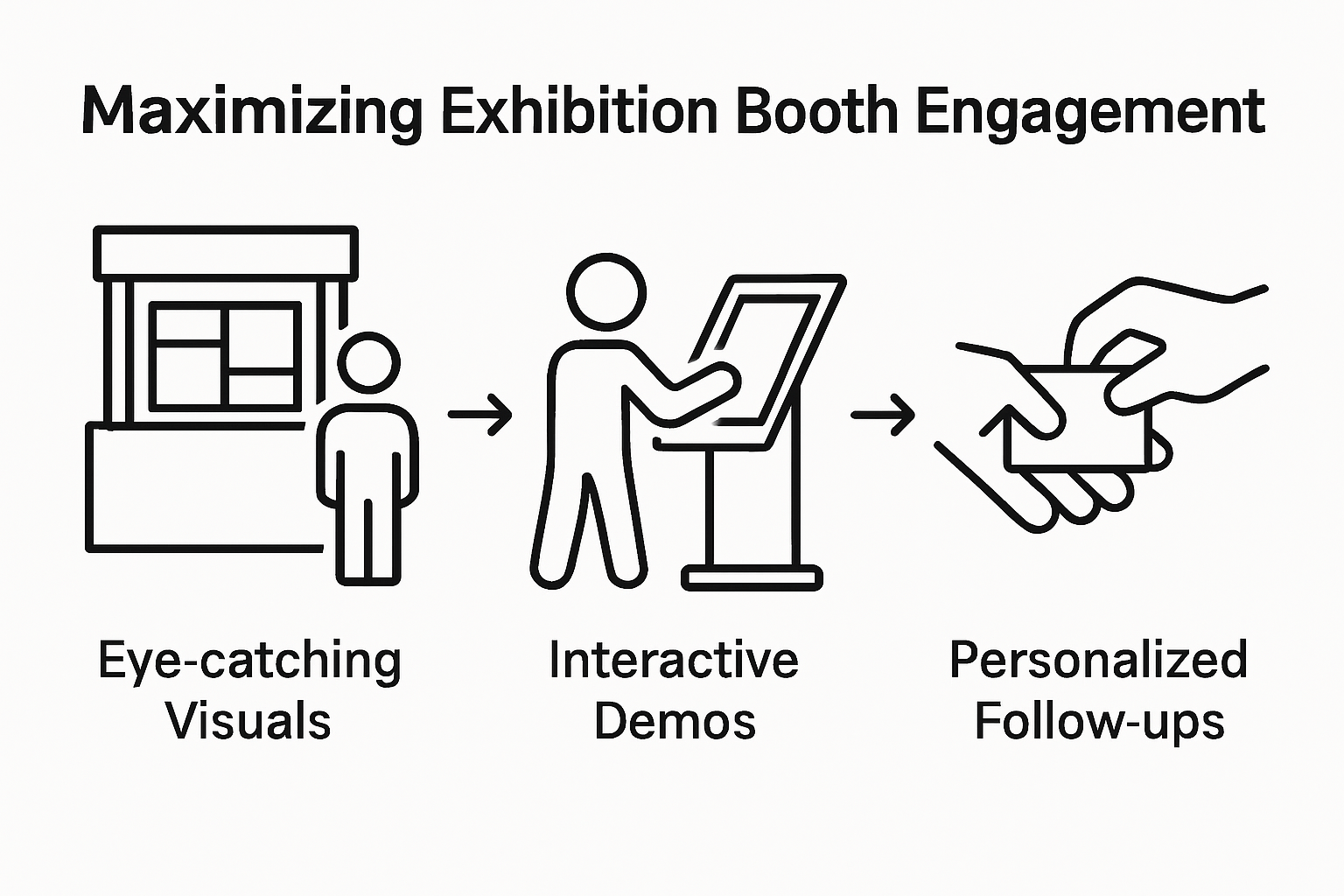
Choose a visitor activity that answers a useful product question and fits the available space and staff. Check how visitors enter, wait, participate and leave. Keep staff workspace, storage and queues within the assigned stand area.
Review the message and activity together:
Effective engagement strategies involve multiple sophisticated approaches:
- Visual Storytelling
- Creating immersive brand narratives
- Utilizing high-impact graphic design
- Developing intuitive visual communication
- Interactive Experience Design
- Implementing technology-driven engagement tools
- Designing interactive product demonstrations
- Offering product explanations based on the visitor’s stated needs
Use the booth design checklist to review readability, circulation, product access and equipment needs. Select an approach for the actual visitor task, with suitable staff support:
- Sensory Engagement: Designing multisensory experiences that stimulate visual, auditory, and tactile interactions
- Technology Integration: Incorporating augmented reality, touchscreen interfaces, and real-time demonstrations
- Personalized Interaction: Creating custom engagement pathways tailored to individual visitor profiles
- Clear Product Explanation: Using accurate content relevant to the visitor’s question
Rehearse the activity with approved content and the equipment being supplied. Test loading, sound, glare, reach and recovery from failure. Provide a staff-assisted or simpler alternative when the technology is unavailable or unsuitable for a visitor.
Common Challenges and Mistakes to Avoid
Operating problems often arise when scope, ownership or deadlines remain unclear. Check the plan for unresolved approvals, unbooked services, incomplete graphics, delivery restrictions, missing equipment and gaps in staff coverage before the event.
Review these planning and operating checks:
The most prevalent challenges in exhibition booth management include:
- Strategic Planning Failures
- Insufficient pre-event research
- Inadequate audience targeting
- Poor budget allocation
- Lack of clear event objectives
- Operational Execution Risks
- Inconsistent brand messaging
- Poorly trained booth staff
- Technical infrastructure breakdowns
- Ineffective lead capture mechanisms
Match the layout to the activity brief and review the proposed design before approval. The design planning discussion can help prepare questions, but the agreed specification and event rules govern the build. Check for:
- Design Disconnection: Creating booth layouts that do not align with brand identity
- Engagement Breakdown: Developing passive displays that fail to invite visitor interaction
- Performance Tracking: Neglecting robust metrics and follow-up strategies
- Resource Misallocation: Investing disproportionately in aesthetics over substantive interaction
Use a short show-day review to log queues, repeated product questions, equipment issues and staff handovers. Count activities consistently and assess later commercial outcomes separately. The engagement planning guide explains practical observations and review checks.
Prepare the Supplier Brief
Give the supplier a brief covering the event, assigned space, product dimensions, activity plan, equipment, staff positions, storage and budget scope. Agree who submits the design, orders services, arranges delivery and accepts the stand.
Adam Expo Stand provides custom and modular exhibition stand services. Review the proposed stand design and ask for an itemised scope covering construction, graphics, equipment, logistics, installation and dismantling. Clarify exclusions, organiser charges and support arrangements. Discuss the project through the existing route at https://adamexpostand.com before approving production.
Frequently Asked Questions
What is exhibition booth management?
Booth management coordinates the stand brief, approvals, services, delivery, installation, staffing, daily checks and dismantling. Each task needs an owner and a deadline based on the actual event and agreed supplier scope.
What are the different types of exhibition booths?
Inline, corner, peninsula and island describe the space and its open sides. Modular, custom, pop-up and rental describe construction or supply options. Confirm the assigned plan and event rules before choosing equipment or approving a layout.
How can I maximize visitor engagement at my exhibition booth?
Offer a clear product message and an optional demonstration, explanation or meeting. Plan capacity, queues, staff cover and a fallback. Use consistently defined activity counts and later outcomes to review the approach rather than assuming participation guarantees leads.
What common mistakes should I avoid in exhibition booth management?
Avoid unclear supplier scope, missed approvals, unbooked services, incomplete graphics, unsuitable equipment and gaps in staff cover. Agree installation acceptance, technical escalation and return arrangements before the show.
Recommended
- Exhibition Stand Planning in Madrid
- Exhibition Stand Budget and Scope Checks
- Choosing a Stand Design Approach
- Planning a Small Exhibition Stand
- Trade Show Engagement: Activities, Staff and Review
Follow our exhibition planning guides
Choose Adam Expo Stand as a preferred source to help you find our exhibition guides and updates on Google.
Add as a preferred source on GoogleGoogle may ask you to sign in and confirm your choice.