Last updated:
Quick answer: Per IFEMA’s own organiser page, SIMO Educación 2026 runs 11-13 November at IFEMA Madrid and gathers roughly 140 EdTech companies from 14 countries in front of 10,000+ trade visitors, 98% of them teachers and school decision-makers, according to IFEMA. A turnkey custom stand at IFEMA typically runs €450-€900 per square metre, and IFEMA requires stand-builder accreditation at least 4 weeks before build-up, so most first-time SIMO exhibitors should lock a contractor by early September.
How much does a stand cost at SIMO Educación 2026?
Most SIMO Educación exhibitors spend between €3,500 and €35,000 on their stand, depending on size and finish. A 9m² shell-scheme upgrade with branded graphics and basic electrics runs €3,500-€6,000, an 18-24m² modular stand with AV runs €8,000-€18,000, and a 36m² fully custom build with a meeting room runs €18,000-€35,000. These figures cover design, production, transport and installation at IFEMA Madrid; they exclude the space rental fee paid to IFEMA and electricity orders.
- What makes SIMO Educación different from a generic trade fair
- IFEMA hall realities for SIMO Educación exhibitors
- How much does a stand at SIMO Educación actually cost?
- Booth design that works for teachers, not just buyers
- Your SIMO Educación planning timeline
- Why a Madrid-based in-house builder reduces your risk
- Turning 10,000 education visitors into qualified leads
- Which strategy fits your situation?
Most exhibition stand advice is written for buyers with a procurement budget and a purchase order. SIMO Educación is different: per IFEMA’s organiser data, 98% of its 10,000+ visitors work in education, not corporate purchasing, and the sale you are actually making is trust with a teacher, headteacher or regional education official who influences a much slower, budget-cycle-driven decision.
Get the stand wrong for that audience, and even a beautifully built booth generates badge scans with no follow-through: no pilot requests, no district meetings, no second conversation. At €8,000-€35,000 for a mid-size build, that is an expensive way to collect business cards.
By the end of this guide you will know what a stand at SIMO Educación 2026 (11-13 November, IFEMA Madrid) realistically costs, how the hall affects footfall, and how to brief your stand builder so the design earns real conversations with the teachers and school leaders who make up almost every visitor on the show floor.
Generalist B2B fairs put an EdTech brand next to hardware distributors, logistics firms and dozens of unrelated sectors, so a teacher scanning the hall has no reason to stop unless your booth screams for attention. SIMO Educación removes that noise: every neighbouring stand is also education-focused, which means visitors arrive already primed to compare EdTech options rather than being cold-pitched. That context is the actual reason to choose SIMO over a broader tech fair if your buyer is a school, not a corporate IT department.
What makes SIMO Educación different from a generic trade fair
SIMO Educación is Spain’s largest technology and education innovation fair, running its 12th edition on 11-13 November 2026 at IFEMA Madrid. Roughly 140 companies from 14 countries exhibit, and a large share are described by the organiser as leading EdTech innovators rather than generic hardware distributors. Visitor numbers run past 10,000, and IFEMA reports that 98% come from the education sector: classroom teachers, school leadership, university procurement staff and regional ministry delegations.
That visitor mix changes what “success” looks like on the stand. A visitor at a manufacturing trade fair often has budget authority in the room. A teacher at SIMO Educación usually does not, but they do have influence over a purchasing committee that meets months later, plus INTEF-recognised training credits are attached to some SIMO sessions, which pulls in visitors motivated by professional development rather than procurement. Your stand needs to work for both: the rare buyer with immediate budget, and the much larger group who need a reason to remember your brand name when their school’s tech committee meets in January.
Key takeaway: design your SIMO stand to capture contact details and a specific next step (a pilot, a demo booking, a follow-up call), not just a badge scan, because most visitors cannot buy on the spot.
IFEMA hall realities for SIMO Educación exhibitors
IFEMA Madrid runs SIMO Educación across its standard pavilion halls, and like every fair at the venue, stand-builder accreditation must be submitted to IFEMA at least 4 weeks before build-up begins. Adam Expo Stand handles this accreditation directly for clients, but if you are briefing a new contractor for the first time, confirm in writing that they will file it inside that window; a missed accreditation deadline is one of the more common reasons a stand gets delayed at load-in.
Because SIMO draws school groups and delegations that move through the halls together rather than browsing individually, aisle-facing visibility and a genuinely open front zone matter more here than at a fair with steady, individual foot traffic. A stand boxed in with high walls on all sides reads as closed to a teacher walking past with twenty other people; you lose the impression before anyone reaches your counter.
Insider tips from 20+ years on the show floor
- Group visits move in waves between sessions on the SIMO activities schedule; staff your stand at full strength around the break times published on IFEMA’s own schedule page, not just at opening.
- Keep any live demo under 90 seconds. Teachers on a school-organised visit often have a fixed window before the group moves on.
- Budget one dedicated staff member just to qualify and log education-sector visitors (school name, role, timeline) since standard B2B lead forms rarely capture what a procurement committee needs later.
How much does a stand at SIMO Educación actually cost?
Costs at IFEMA vary by finish and size, but here are realistic 2026 benchmarks based on Adam Expo Stand’s project data across FITUR, SIMA and other major IFEMA events, which use the same venue infrastructure and organiser fee structure as SIMO Educación:
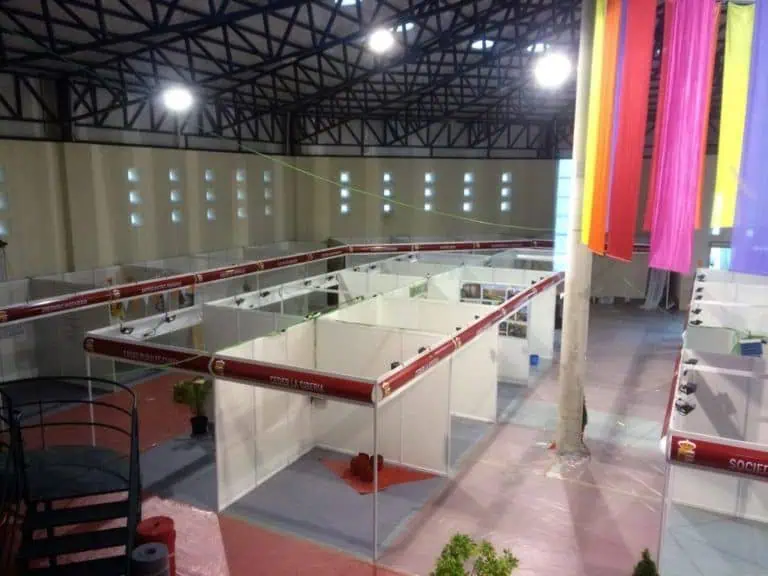
- 9m² shell-scheme upgrade: €3,500-€6,000 turnkey (custom graphics, furniture, basic electrics, branded flooring)
- 18-24m² modular stand: €8,000-€18,000 depending on graphics complexity, storage and AV integration for live product demos
- 36m² custom stand: €18,000-€35,000 for a fully custom build including a meeting room for procurement conversations
- 100m²+ island exhibit: €50,000-€150,000+ for double-decker or complex structural builds with full AV and hospitality
These figures include design, production, transport to IFEMA Madrid, on-site installation and breakdown. They exclude your space rental fee (paid directly to IFEMA’s organiser), electricity orders, and any catering for hosted meetings. Ask any contractor for an itemised quote that separates these lines; a quote that bundles organiser fees into the build price makes it hard to compare bids.
Beyond the build itself, budget separately for AV equipment rental if your demo needs screens or sound beyond a laptop, secure storage for spare units and marketing materials during the three show days, and freight if you are shipping hardware from outside Spain. None of these lines are large individually, but exhibitors who forget to ask about them upfront are the ones who get an unpleasant final invoice after the show closes.
Key takeaway: get space rental, electricity and build costs itemised separately in every quote so you can actually compare contractors on the build price alone.
Booth design that works for teachers, not just buyers
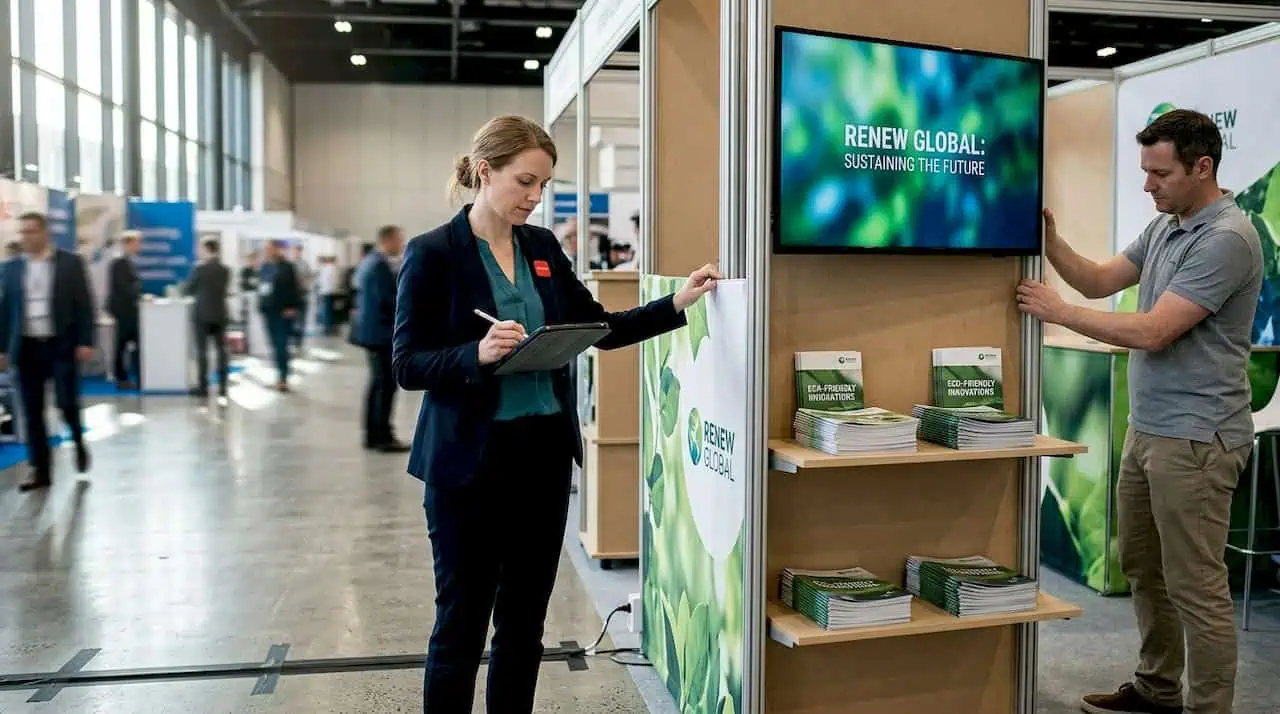
The strongest SIMO Educación stands answer one question fast: what does this actually do in my classroom or school? A wall of logos and feature lists does not answer that. A five-minute live demo, run by someone who can talk in classroom terms rather than sales terms, does.
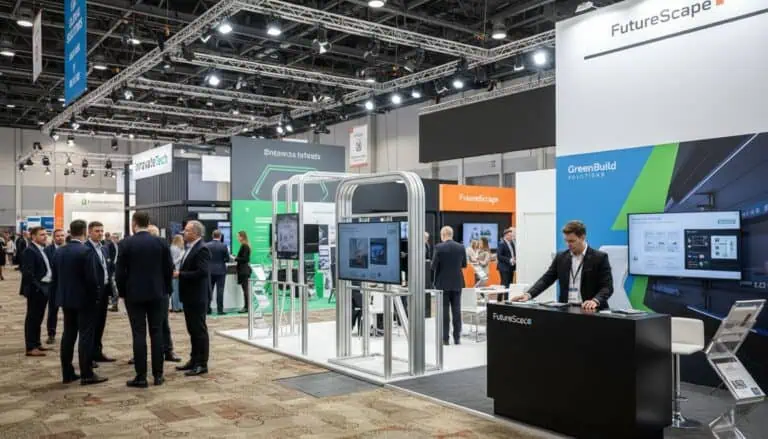
Three formats fit most EdTech exhibitors at this fair. Pick based on your stage and budget, not on what looks most impressive on a render.
| Option | Best for | Typical cost | Trade-off |
|---|---|---|---|
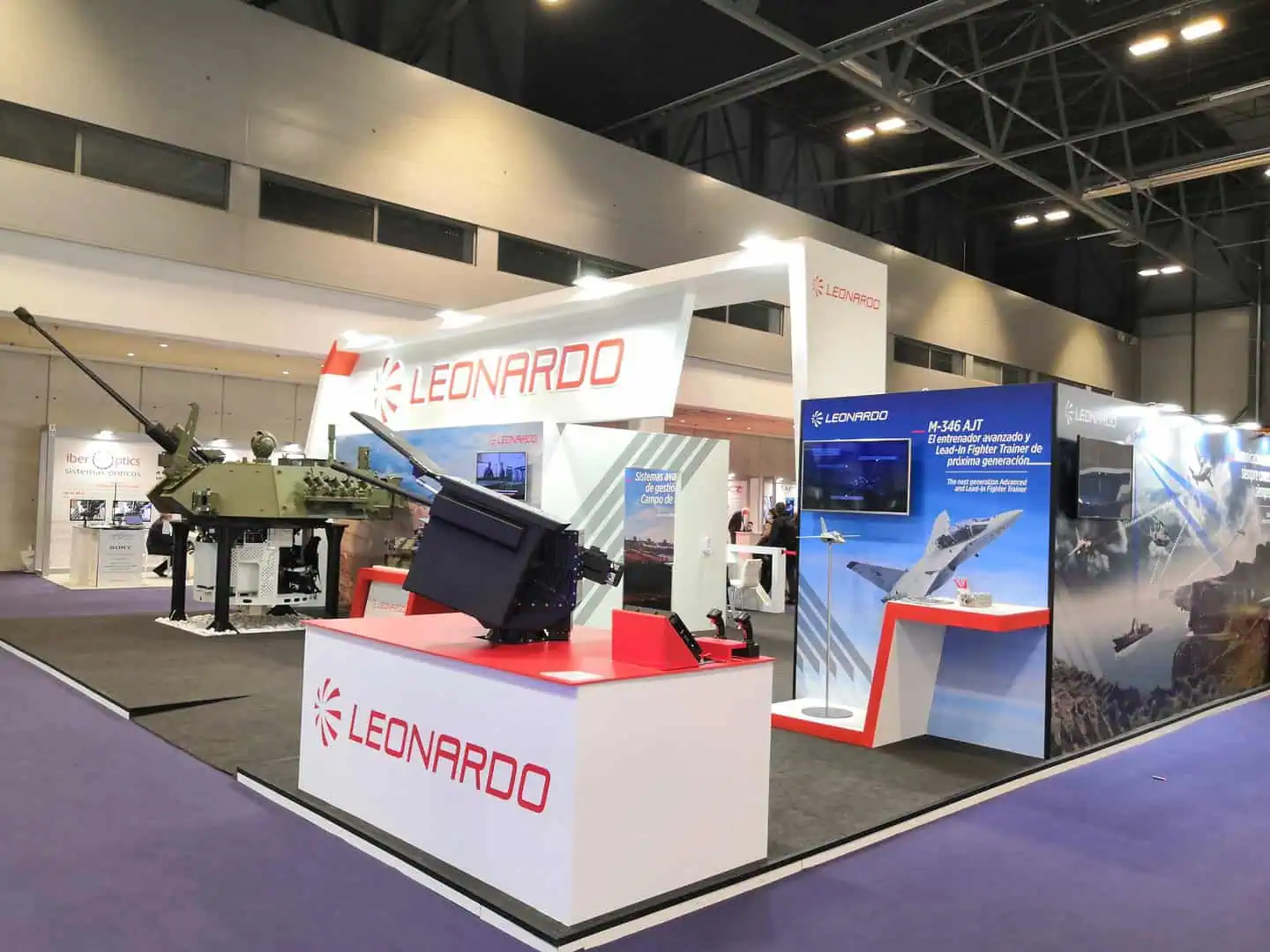
| Custom build | Established EdTech brands making SIMO an annual flagship appearance | €450-€900/m² | Higher upfront cost; not reusable as-is at other shows |
| Modular system | EdTech companies exhibiting at 3+ European education fairs per year | €8,000-€18,000 (18-24m²) | Less bespoke look than a full custom build |
| Shell scheme + upgrades | First-time SIMO exhibitors and early-stage EdTech startups | €3,500-€6,000 (9m²) | Limited space for a private demo or meeting area |
How we approach this: Adam Expo Stand runs an in-house Madrid build team across design, production and on-site installation for IFEMA shows including SIMO Educación. Apply the comparison above to any shortlist, including us.
Our verdict: from our builds at IFEMA, the mistake we see most with first-time SIMO exhibitors is spending the whole budget on the structure and leaving nothing for a proper demo zone. A smaller stand with one working live demo and a seating area for a two-minute conversation consistently outperforms a bigger, emptier one on lead quality.
Your SIMO Educación planning timeline
Work backwards from the 11 November 2026 opening. Confirm your space with IFEMA and brief your stand contractor by early September, since accreditation for stand builders must reach IFEMA at least 4 weeks before build-up and most custom or modular builds need 6-10 weeks of design and production lead time before that. Finalise stand design and demo content by early October so your team has time to rehearse the floor pitch, not just the slide deck. Confirm staffing, badge scanning and lead-capture logistics in the final two weeks, since these details get forgotten when the focus shifts entirely to the physical build.
Why a Madrid-based in-house builder reduces your risk
IFEMA build-up windows are short and shared across every exhibitor on the same hall schedule. When something goes wrong at load-in, a crew that has to be flown or driven in from another country cannot always fix it inside the window. Adam Expo Stand’s production and installation team is based in Madrid and works IFEMA shows year-round, including FITUR, SIMA and Fruit Attraction, so the same people who built your stand are on-site during build-up and can resolve a problem without a second freight run or a subcontractor handoff.
This matters more for SIMO Educación specifically because several exhibitors are first-time participants from outside Spain, per the organiser’s own exhibitor mix, and an unfamiliar venue is exactly where local, on-site support earns its cost.
For a sense of what an in-house Madrid build looks like in practice, see the published case studies for the Alphacan stand at VETECO IFEMA Madrid and the Aristo stand at Intergift, IFEMA Madrid, both built by the same Madrid team that would handle a SIMO Educación stand.
Turning 10,000 education visitors into qualified leads
Badge scans are not leads at an education fair; a badge scan with a school name, role and a specific timeline is. Brief your stand staff to ask three things in every conversation: what grade level or subject they teach or manage, whether their school or district has a live budget cycle or committee decision pending, and what a useful next step would be (a pilot, a follow-up demo, a meeting with their tech coordinator). That third question is what turns a SIMO conversation into a real sales pipeline instead of a spreadsheet of names.
Because a large share of SIMO’s visitors attend for INTEF-recognised professional development rather than procurement, consider a short, genuinely useful takeaway (a lesson-plan template, a checklist, a trial account) tied to your product rather than a generic branded giveaway. It gives the majority of visitors, who are not buyers today, a reason to act on your stand instead of walking past.
Key takeaway: train stand staff to log school name, role and timeline for every conversation; a badge scan alone is close to worthless for a slow, committee-driven education sale.
Which strategy fits your situation?
You’re an EdTech startup exhibiting on a tight budget
A 9m² shell-scheme upgrade with sharp branded graphics and one working demo beats a bigger, half-empty stand. Spend the saved budget on staff training and a genuine takeaway for visitors rather than on square metres you cannot fill with content.
You’re a SaaS platform scaling into the Spanish or European education market
An 18-24m² modular stand gives you room for a proper demo area plus a small seated meeting space, and the same modular system can travel to other European education and B2B fairs across the year, spreading the cost.
You’re a hardware or robotics company needing a large demo area
Budget for a 36m²+ custom build. Interactive hardware needs safe clearance space and a queue area so a crowd around one demo does not block the rest of your stand from other visitors.
You’re exhibiting at SIMO Educación for the first time
Confirm your contractor’s IFEMA accreditation timeline before anything else. First-time exhibitors lose more time to avoidable venue paperwork than to design changes.
Quick check: SIMO Educación readiness
How far before build-up must stand-builder accreditation reach IFEMA?
Frequently asked questions
When is SIMO Educación 2026?
SIMO Educación 2026 runs from 11 to 13 November 2026 at IFEMA Madrid, its 12th edition.
Who visits SIMO Educación?
IFEMA reports 10,000+ trade visitors, with 98% from the education sector: teachers, school leadership and education decision-makers.
How much space do I need for a demo-heavy EdTech stand?
Most software or app demos work in an 18-24m² modular stand with a dedicated demo corner. Hardware or robotics exhibits generally need 36m² or more for safe clearance around a live demo.
Do I need to be based in Spain to exhibit?
No. SIMO Educación regularly draws exhibitors from around 14 countries; a Madrid-based build team simply removes the logistics risk of shipping and staffing a stand from abroad.
What’s the biggest mistake first-time SIMO exhibitors make?
Spending the full budget on the stand structure and leaving no space or plan for a live demo and lead-qualification conversation, which is what actually converts a teacher’s visit into a pipeline lead.
Can a stand be reused after SIMO Educación?
Modular stands can typically be reconfigured and reused at other European education or B2B fairs, which is why exhibitors doing 3 or more shows a year often choose modular over a one-off custom build.
Recommended reads
Adam Expo Stand: exhibition stand design and build for European trade fairs. Based in Madrid, Spain, serving IFEMA, Fira Barcelona, Messe Frankfurt and 50+ fairs across Europe. Email: [email protected] – Phone: +34 697 715 015.
Planning a stand for SIMO Educación 2026?
Get an itemised quote and a 3D concept from an in-house Madrid build team.
Further reading: Adam Expo Stand on Medium – Adam Expo Stand on Substack – Adam Expo Stand on LinkedIn.