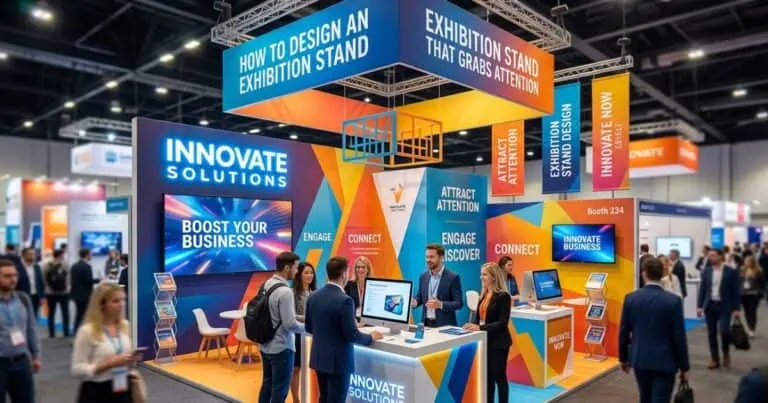
An exhibition stand power plan lists every electrical device, its manufacturer-rated demand, connection needs, location and operating hours, then passes that information to the authorised installer for design and venue coordination. Floor area alone does not describe what a demonstration stand needs. Lighting, screens, machinery and hospitality equipment can have very different requirements.
Published 10 October 2026. Planning guidance by Adam Expo Stand.
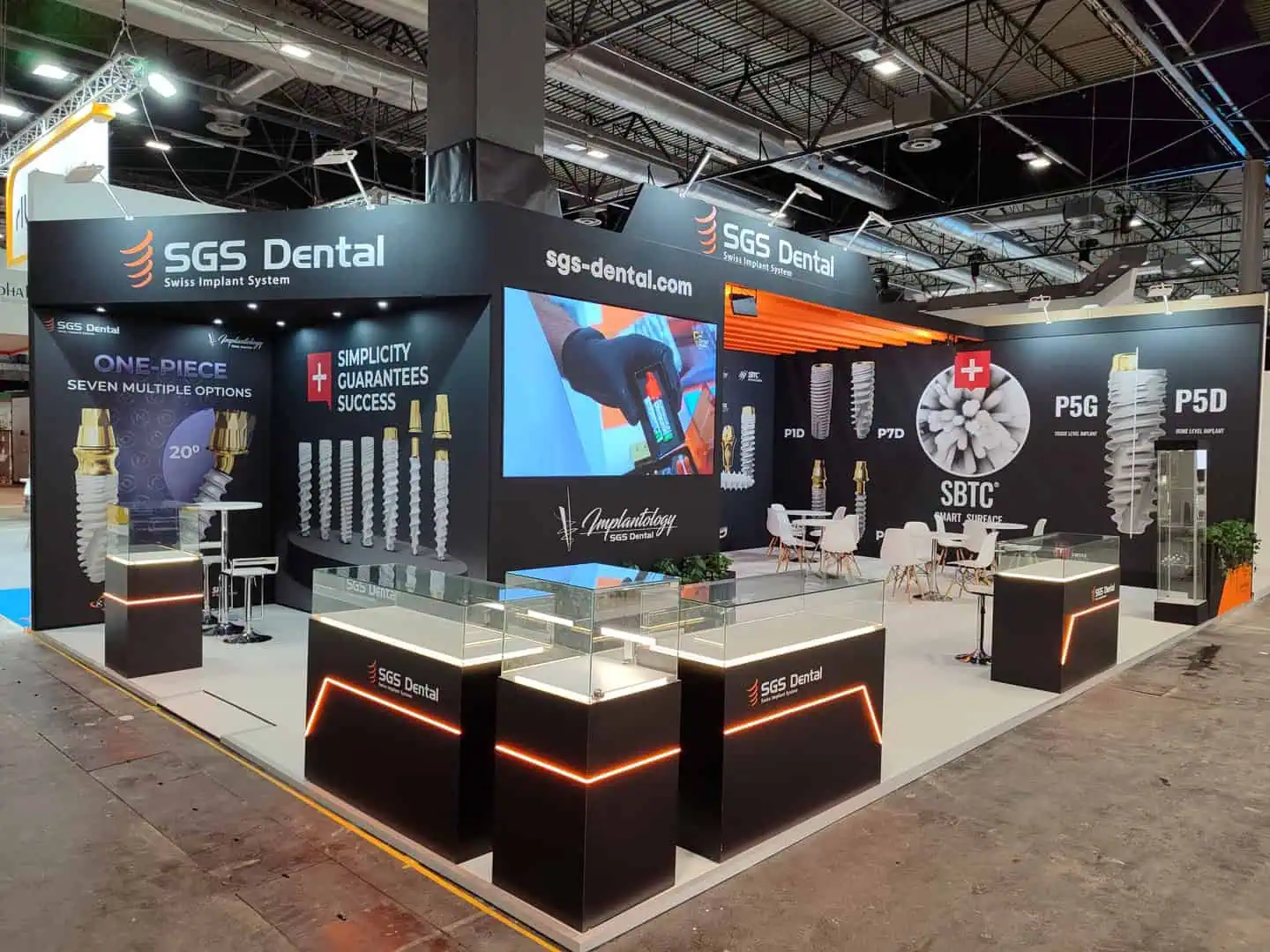
Exhibition stand power schedule: what to include
| Schedule field | Required information |
|---|---|
| Device and quantity | Exact model, equipment owner and number of units |
| Rated demand | Manufacturer’s electrical data, with units and supporting datasheet |
| Connection | Voltage, phase, frequency, connector and any special requirements |
| Operating pattern | When devices run together, startup behaviour and overnight needs |
| Position | Reference on the latest floor plan and required socket location |
| Responsibility | Who provides equipment, installation, connection and testing |
Do not substitute a marketing brochure’s performance figure for electrical input data. If a specification is missing, mark it as unresolved and obtain it from the equipment supplier. The installer should decide demand, circuit arrangement, protection and any required allowance; the exhibitor’s schedule is an input to that work.
Six steps from equipment list to opening-day test
- Freeze the equipment list. Include hidden loads such as media players, charging stations, refrigerators and counter lighting. Record hired items as well as equipment brought by the exhibitor.
- Map the positions. Give each outlet a reference on the current plan. Check that cables can reach equipment without crossing visitor routes or blocking access panels.
- Separate operating periods. Show exhibition hours, setup tests and any genuinely continuous loads. Ask the organiser how overnight supply is ordered and controlled.
- Confirm the service boundary. Identify the venue supply, stand distribution, equipment connection and documentation responsibilities. A socket shown on a drawing does not prove it has been ordered.
- Obtain technical review. Send the schedule and equipment data to the authorised installer. Confirm the event’s application process, inspection requirements and deadlines using its current manual.
- Test the real operating scenario. Run the planned demonstrations, screens and hospitality equipment together after approved connection. Record faults and the person responsible for resolving them.
Venue supply and stand installation are separate decisions
IFEMA MADRID’s exhibitor services include supplies and technical support. Its participation regulations for externally organised fairs describe installation documentation and electrical connection procedures. Use these as background, then obtain the current rules applicable to your particular event and installation.
For sensitive demonstrations, discuss continuity requirements with both the equipment supplier and venue. A UPS or other protective arrangement must be correctly specified and permitted; it should not be improvised after a failure. This article is a coordination template, not instructions for carrying out electrical work.
Common omissions that create late changes
- A coffee machine is added after the electrical order has been approved.
- A screen is moved but its outlet remains behind a closed display.
- A refrigerator needs overnight operation but only show-hours supply was requested.
- The demonstration supplier assumes the stand builder has ordered a special connection.
- Different teams use different revisions of the floor plan.
Exhibition stand power questions
Can I calculate the final order by adding device watts?
The sum helps describe equipment, but the final supply and installation design require technical review. Startup demand, simultaneous operation, phases and venue conditions can affect the decision.
Does turnkey construction always include venue electricity?
No universal scope applies. Check the quotation for supply orders, consumption, distribution, inspections and equipment connection, including exclusions.
When should the power plan be prepared?
Prepare it during design, before service-order deadlines and fabrication decisions fix outlet locations. Reissue it whenever equipment or layout changes.
Coordinate your stand’s technical brief
Combine this schedule with your IFEMA planning documents, an itemised turnkey scope and the stand handover checklist. Send Adam Expo Stand your event, layout and equipment list for a project-specific review.
Follow our exhibition planning guides
Choose Adam Expo Stand as a preferred source to help you find our exhibition guides and updates on Google.
Add as a preferred source on GoogleGoogle may ask you to sign in and confirm your choice.