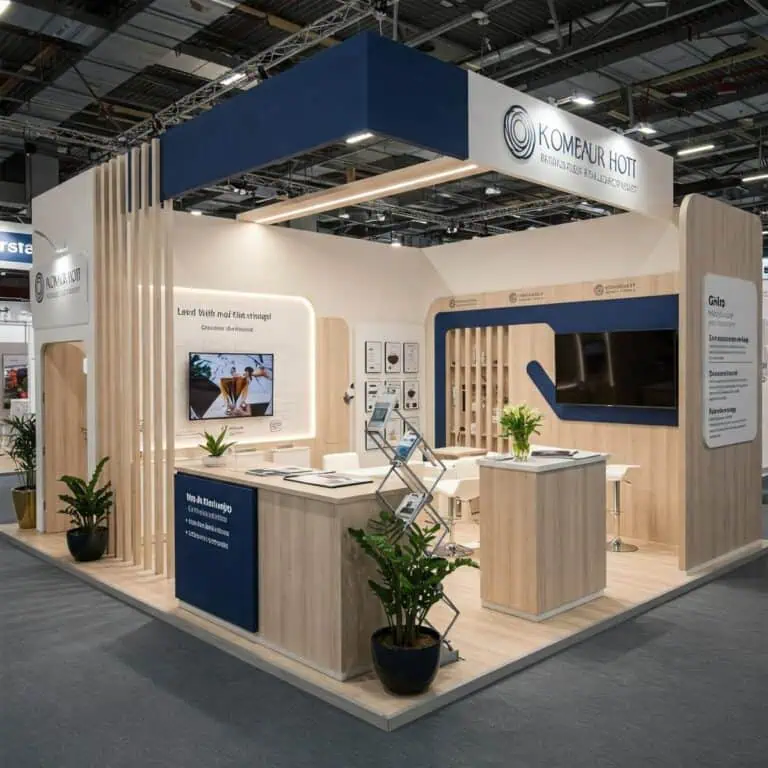
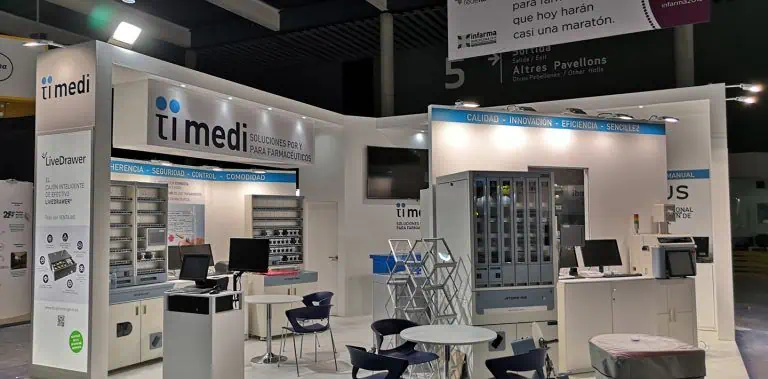
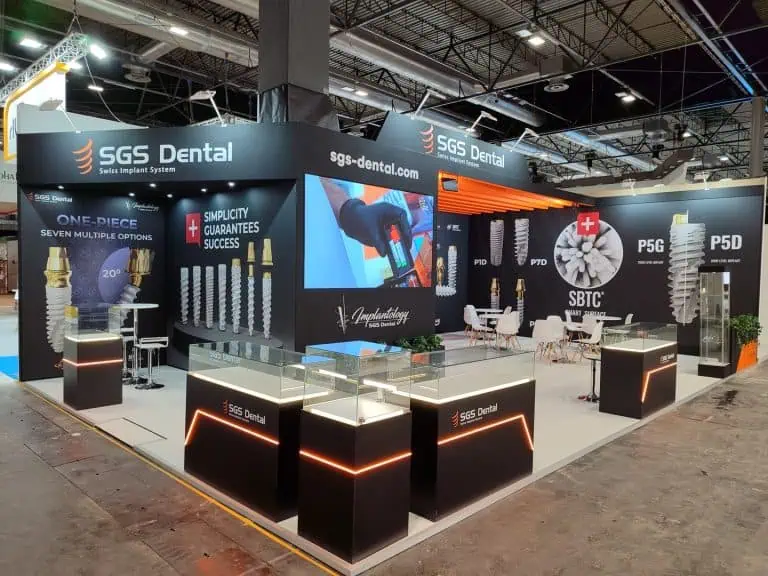
You can feel it in the first 30 seconds of a trade show: the booths that look intentional pull people in, and the ones that feel improvised get walked past. That difference rarely comes from “more budget.” It comes from clearer decisions made earlier – before production begins, before freight is booked, and definitely before your team lands in a new city and realizes the plan was never truly build-ready.
That’s the real value of a 3d exhibition stand design service. It’s not just a prettier rendering. It’s a decision-making tool that turns your goals, space, and constraints into a booth your stakeholders can approve and your build team can execute without surprises.
What a 3D exhibition stand design service really includes
A serious 3D service is a bridge between marketing intent and show-floor reality. It should start with your brief (or help you tighten one) and end with a design that can be costed, engineered, produced, and installed.
The best projects typically begin with a short discovery phase: what you’re launching, who you need to attract, what “success” looks like (demos booked, meetings scheduled, distributors recruited), and how your team will work inside the space. From there, 3D design transforms those answers into layout, traffic flow, and brand presence.
Just as important, a reliable 3D service also accounts for the unglamorous factors that decide whether a booth succeeds: rigging restrictions, height limits, sightlines, storage needs, cable routes, accessibility, and lead capture practicality. When those details are handled early, your team is free to focus on the conversations that matter.
Why 3D design matters more than ever for European trade shows
Exhibiting across Europe adds variables that can derail a project even when the creative direction is strong. Venues differ. Regulations differ. Build windows are tight. And many brands are managing approvals across multiple countries and internal teams.
3D design helps reduce that risk in three ways.
First, it aligns stakeholders faster. A floor plan alone is easy to misread. A 3D view makes it obvious how open the stand feels, how visible your messaging is from aisles, and whether the meeting area is truly private.
Second, it protects the timeline. When you can validate layout, graphics, and key structural decisions early, you avoid last-minute redesigns that drive up costs and force compromises.
Third, it improves execution in unfamiliar venues. If you’re exhibiting abroad, you need a design that anticipates real on-site constraints. A thoughtful 3D process is where that anticipation happens.
The outcomes you should expect from the right service
A 3D rendering is only the beginning. The outcomes that matter are practical.
You should expect a booth layout that supports your staff. That means clear zones for product, demos, meetings, and storage, with traffic flow that doesn’t block your own team. It also means a design that matches how you qualify leads – quick conversations at the edge, deeper discussions inside.
You should expect brand presence that earns attention from the aisle. Height, lighting, and graphic hierarchy are all easier to judge in 3D than in a static plan. A strong concept makes your offer readable at a glance and your brand recognizable from a distance.
And you should expect fewer surprises later. When 3D design is connected to production thinking, it becomes a tool for accurate costing and feasibility, not a creative exercise that needs to be “fixed” once the build team gets involved.
Custom vs modular vs rental – what 3D design changes
Not every exhibitor needs a fully custom build. The smart choice depends on goals, frequency, and logistics.
Custom builds
Custom stands maximize impact because they’re designed around your brand and your story. In 3D, you can evaluate signature features like suspended elements, architectural shapes, or integrated demo stations before committing to production. The trade-off is that custom builds demand more coordination and earlier decisions, especially for approvals and print deadlines.
Modular systems
Modular stands are ideal when you’re doing multiple shows and need flexibility across different footprints. A good 3D service shows how the same system adapts to a 3×3, 6×3, or island configuration while keeping the brand consistent. The trade-off is creative freedom: you’ll get speed and repeatability, but not the same architectural uniqueness as fully custom.
Rental stands
Rentals are often the most efficient path for occasional exhibitors or teams entering a new market. 3D design still matters here because it’s where you tailor the rental structure with your graphics, lighting, and layout so it doesn’t look generic. The trade-off is that certain structural elements are predetermined, so the design work focuses on smart customization and flawless finishing.
How the 3D design process should work (and where delays come from)
A dependable process is clear, paced, and transparent. Most delays don’t come from “design taking too long.” They come from unclear inputs and late-stage changes.
A well-run project typically moves through three stages.
1) Briefing and space planning
This is where you lock in essentials: booth size, open sides, must-have areas, product display needs, and meeting capacity. It’s also where you decide what the booth needs to do for you – attract, educate, convert, or host.
If you’re short on time, this stage becomes even more important. A tighter brief speeds everything downstream.
2) 3D concept and refinement
You’ll review 3D visuals that show the layout, brand elements, and key touchpoints. Refinement should focus on decisions that affect performance: signage placement, demo visibility, lighting emphasis, and how people enter and move through the stand.
This is also the moment to pressure-test practicality. Where do staff store personal items? Where do you keep literature? Can two demos run at once without crowding? In 3D, those questions are answerable.
3) Build-ready drawings and production alignment
A professional 3D exhibition stand design service doesn’t stop at “approved visuals.” It transitions into technical drawings and a plan that production and on-site crews can follow. If you need reliable delivery, this handoff is non-negotiable.
What to look for in a 3D exhibition stand design partner
You’re not buying artwork. You’re buying a deliverable that has to survive approvals, deadlines, shipping, and installation.
Look for a partner who designs with build logic. That means they can explain how the stand will be constructed, how long it will take, and what choices affect cost and timeline.
Look for speed without chaos. Tight deadlines happen – especially when internal approvals land late or you add a show. The partner should have a process that can compress responsibly without sacrificing the details that make on-site execution predictable.
Look for project management that keeps you out of the weeds. Your team should not be coordinating multiple vendors, deciphering technical constraints, and chasing updates while also preparing messaging and meetings. One accountable partner reduces friction and risk.
Common mistakes that make 3D designs fail on the show floor
Even strong-looking 3D visuals can translate poorly if the design is disconnected from real event behavior.
One common mistake is overdesigning the entrance. If visitors don’t immediately understand where to step in, they hesitate. A booth should feel welcoming and intuitive, not like a showroom people are afraid to enter.
Another mistake is treating graphics as decoration instead of communication. Your top messages should be readable quickly from the aisle, with a clear “why you” statement. Fine print and crowded layouts don’t perform in busy halls.
A third is underestimating operational needs. Storage, power access, staff movement, and quick lead capture aren’t glamorous, but they protect your team’s energy across long show days.
When you’re on a tight deadline, 3D design becomes your control center
Last-minute exhibiting is common: a competitor drops out, your sales team pushes for presence, or a new market opportunity opens. Under time pressure, 3D design is where you keep control.
A fast, disciplined 3D process forces smart decisions early: what features are essential, what can be simplified, and how to deliver impact without overcomplicating production. It also gives internal stakeholders something concrete to approve quickly – which is often the real bottleneck.
If you need a partner built for that reality, Adam Expo Stand Solutions operates as a turnkey design-and-build team, aligning 3D design, production, logistics, and on-site support so tight timelines don’t turn into show-floor stress. You can see the full scope at https://adamexpostand.com/.
A closing thought to guide your next booth
Before you approve any 3D concept, ask one question that cuts through style and hype: “Can we build this exactly as shown, on time, in this venue?” If the answer is confident – backed by drawings, a clear timeline, and accountable execution – you’re not just buying design. You’re buying a calmer, more successful show.