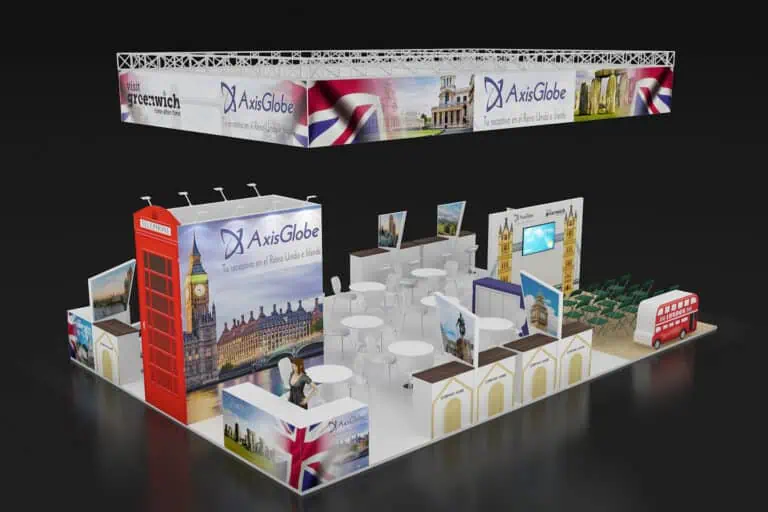
What Is an Exhibition Stand? Complete Guide
An exhibition stand is the space and display used by an exhibitor at a trade fair, exhibition or congress to present products, explain services and meet visitors. It may include a structure, graphics, lighting, furniture and demonstration equipment. The booked floor area, event package and construction method are separate decisions.
Table of Contents
- Defining Exhibition Stands And Their Purpose
- Popular Types Of Exhibition Stands Compared
- Essential Features And Design Elements
- Exhibition Stand Setup And Management Process
- Costs, Rental Options, And Common Pitfalls
Key Takeaways
| Point | Details |
|---|---|
| Define the activities | Plan the stand around product presentation, visitor discussions and the event objectives. |
| Separate the categories | Construction methods, space packages and aisle layouts describe different aspects of the stand. |
| Confirm technical scope | Check drawings, equipment, service positions, accessibility and approval owners. |
| Compare the complete budget | Include event packages, build services, transport, removal and planned reuse costs. |
Defining Exhibition Stands and Their Purpose
An exhibition stand brings the exhibitor’s message and activities into an allocated event space. Start with what visitors should see or do, then plan the footprint, display equipment, staff positions and meeting space around those activities.
A stand can support product demonstrations, discussions and arranged meetings. Its value depends on the audience, staff preparation and event objectives as well as the design. An attractive structure alone does not guarantee leads or sales.
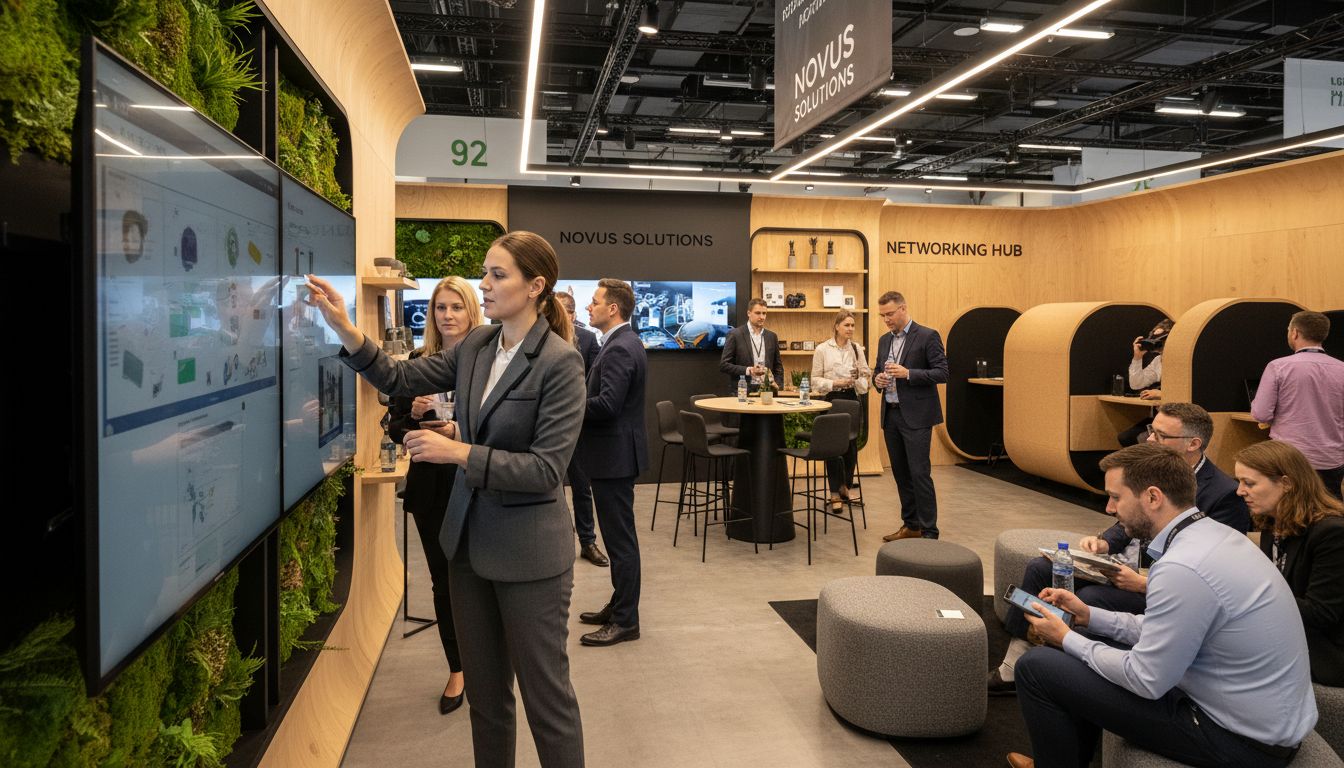 Use the stand brief to identify the main message, products and visitor activities.
An exhibition stand can support the following objectives; choose those relevant to your event:
- Brand Visibility: Creating a standout visual presence that distinguishes a company from competitors
- Lead Generation: Facilitating direct interactions with potential customers and industry decision makers
- Product Demonstration: Providing interactive platforms to showcase product features and capabilities
- Networking: Establishing professional connections and exploring partnership opportunities
- Market Research: Gathering real-time feedback and insights from industry professionals
For practical layout checks, see our guide to effective booth design elements. Define the activity before choosing equipment or decorative features.
Popular Types of Exhibition Stands Compared
Stand descriptions use several different categories. Modular, custom and hybrid describe construction approaches; shell scheme and space only describe event packages; inline, corner, peninsula and island describe how the footprint opens onto aisles. These categories can overlap.
Modular stands use repeatable components. Custom designs use elements fabricated for a brief, and hybrid builds combine approaches. A shell-scheme package usually includes a basic structure, with inclusions set by the organiser; space-only packages require a separate build scope. Confirm package terms and the allocated open sides before comparing designs.
The table separates these categories. The existing illustration below is a simplified visual reference; use the definitions and event documents for planning.
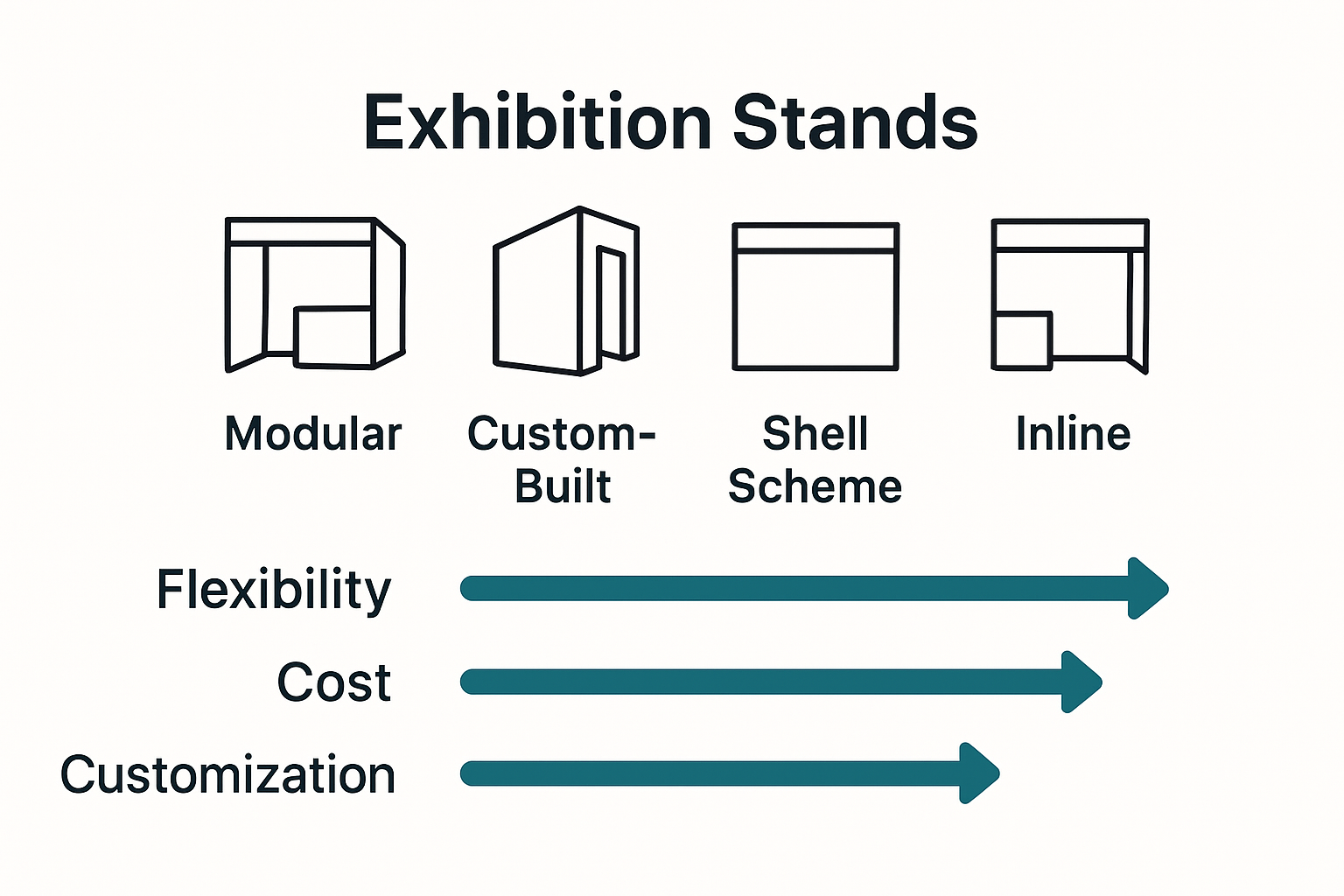
| Stand Type | Category | Cost | Design Limits | Best Suited For |
|---|---|---|---|---|
| Modular | Component-based construction | Price the full scope | Within system and technical limits | Briefs suited to repeatable components |
| Custom-Built | Fabrication for the brief | Price the full scope | Within fabrication and technical limits | Specific product, activity or architectural needs |
| Shell Scheme | Organiser-provided package | Check package inclusions and upgrades | Within package and event restrictions | Briefs that fit the supplied structure |
| Inline | Aisle-access layout | Depends on package and construction | One open side in a standard row layout | Layouts with access from the front aisle |
For construction choices and reuse checks, see our modular, custom and hybrid comparison. For selecting a supplier, compare proposals using the same footprint and written service scope.
Essential Features and Design Elements
Plan clear messages, readable graphics, appropriate lighting and space for the intended activities. Check how visitors approach the stand and where demonstrations, queues and meetings fit within the booked footprint.
Confirm structural information, materials, equipment loads and required approvals with the responsible providers. Include power, data, accessibility and a fallback for digital demonstrations in the brief. AUMA’s stand-design guidance discusses functional zones, product presentation and visitor dialogue.
Useful design checks include:
- Visual Branding: Seamless incorporation of brand colors, logos, and visual identity
- Spatial Optimization: Intelligent layout planning to maximize visitor flow and interaction
- Technology Integration: Embedded digital displays, interactive touchscreens, and multimedia presentations
- Functional Zones: Dedicated areas for product demonstrations, private conversations, and networking
- Aesthetic Sophistication: Clean lines, professional finishes, and contemporary design principles
Use our stand design planning guide to develop a brief before approving artwork and production.
Exhibition Stand Setup and Management Process
Stand setup and management cover the steps from the initial brief to installation, opening, dismantling and return. Identify who owns each decision, approval and order rather than assuming one supplier handles everything.
Agree a layout, technical drawings, artwork versions and a schedule based on the organiser’s actual deadlines. Confirm the production and transport plan, crew access, service connections and handover checks. Any required venue or organiser approval should be assigned to a named owner.
The management process should cover:
- Pre-Event Planning: Developing comprehensive design concepts, creating detailed technical specifications
- Design Visualization: Producing 3D renderings, scale models, and interactive design prototypes
- Fabrication: Constructing stand components using specialized materials and manufacturing techniques
- Logistics Management: Coordinating transportation, shipping, and on-site delivery of stand components
- On-Site Assembly: Precise installation and configuration of stand elements within event space
- Performance Monitoring: Tracking visitor interactions, collecting real-time engagement metrics
- Post-Event Evaluation: Analyzing stand performance, gathering feedback for future improvements
Our exhibition booth management guide explains responsibilities, approvals, delivery and handover in more detail.
Costs, Rental Options, and Common Pitfalls
Budget from the event package and a written build proposal. Compare design, structure, graphics, furnishings, equipment, services, freight, installation and removal. Record quantities, exclusions, currency, tax treatment and change charges so proposals can be assessed on the same basis.
Rental and ownership can apply to modular components, furniture and parts of a custom or hybrid design. Confirm what is rented, what you own and what returns to the supplier. For a repeat programme, include adaptation, replacement graphics, packaging, storage and maintenance; no construction label is always the cheapest.
Common planning pitfalls include:
- Budget Underestimation: Failing to account for hidden costs like transportation, installation, and on-site modifications
- Design Inflexibility: Creating stands that cannot be repurposed or adapted for multiple events
- Overlooking Logistics: Neglecting comprehensive planning for stand assembly, dismantling, and storage
- Technology Integration Challenges: Inadequate planning for digital display and interactive element requirements
- Brand Misalignment: Designing stands that do not authentically represent company visual identity
- Performance Tracking Gaps: Lack of mechanisms to measure exhibition stand effectiveness and ROI
Our exhibition stand budget guide explains how to compare the full project cost. Use the turnkey buyer’s guide to check which services a combined proposal includes.
Exhibition Stand Meaning and Professional Stands Exhibition Management
The meaning of an exhibition stand is the exhibitor’s physical display and meeting space at an event. It can range from a simple organiser-provided package to a larger separately designed structure. Set the objectives and confirm the allocated space before deciding the build scope.
Stands Exhibition Management
Exhibition management includes planning, approvals, installation, daily operations, dismantling and return. A project manager can coordinate these tasks, but the proposal should identify the responsible parties, exclusions and deadlines. Supplier involvement does not automatically transfer every exhibitor responsibility.
Elevate Your Brand with Expert Exhibition Stand Solutions
Before requesting a design, prepare the event name, current floor plan, footprint, open sides, visitor activities, product dimensions, budget and delivery dates. Include technical equipment and any future reuse plans.
Discuss the available project scope with Adam Expo Stand: design, drawings, production, transport, installation, handover and removal. Ask for relevant examples and identify any specialist work or organiser orders. Consult our supplier proposal comparison guide before choosing.
Confirm the final scope, exclusions, artwork versions, approval owners and production dates in writing before committing the stand to manufacture.
Frequently Asked Questions
What is the primary purpose of an exhibition stand?
An exhibition stand gives the exhibitor a defined event space to present products or services and meet visitors. Choose the layout and staff activities around the event’s objectives; business results depend on more than the structure.
What are the different types of exhibition stands?
Modular, custom and hybrid describe construction. Shell scheme and space only describe event packages. Inline, corner, peninsula and island describe aisle access. Confirm the booked package and open sides, then choose an appropriate build.
How can I effectively design an exhibition stand?
Begin with visitor activities, footprint, open sides and product requirements. Plan readable graphics, circulation, staff positions, lighting and services, then confirm technical review and approval responsibilities before production.
What are some common pitfalls in exhibition stand management?
Common pitfalls include incomplete scope and budget, missing approvals or service orders, unclear delivery and removal responsibilities, poor circulation and no plan for storage or reuse. Agree handover checks and how the event’s objectives will be evaluated.
Recommended
- Success Exhibiting at IFEMA Madrid: The Ultimate Exhibitor Guide
- Types of Exhibition Stands | Choose the Best for Your Brand
- The Ultimate Guide to Custom Exhibition Stands in Europe | Adam Expo Stand Solutions
- The Ultimate Guide to Creating an Unforgettable Exhibition Stand Experience
Follow our exhibition planning guides
Choose Adam Expo Stand as a preferred source to help you find our exhibition guides and updates on Google.
Add as a preferred source on GoogleGoogle may ask you to sign in and confirm your choice.