

How to Create Modular Stands for Trade Show Success
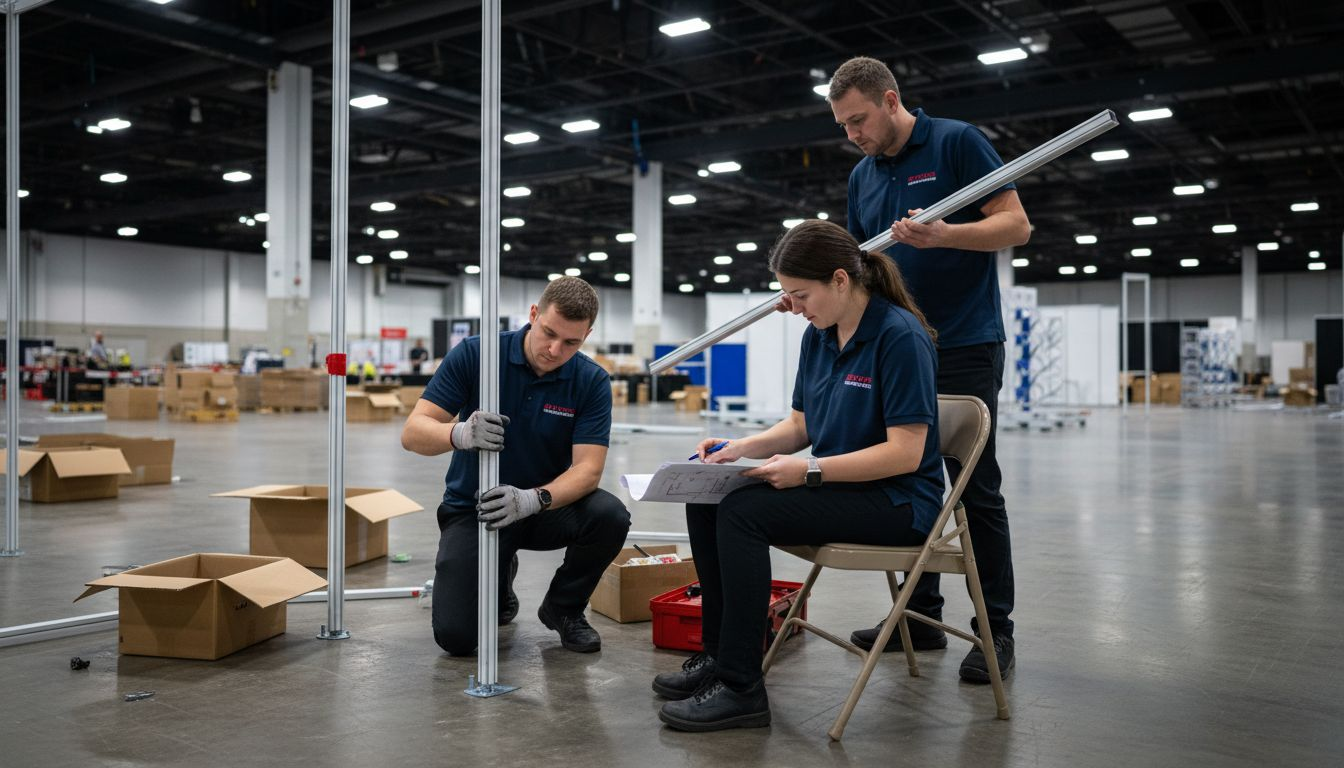
Standing out at a major international trade show can feel like a puzzle for every European tech company. The pressure to maximize brand visibility and drive engagement starts long before booth setup. From the initial preliminary assessment of event goals and space requirements to choosing smart, flexible layout options, each decision shapes your stand’s impact. This guide delivers clear strategies to help event marketing managers translate modular stand design into memorable brand moments.
Table of Contents
- Step 1: Assess Event Goals And Space Requirements
- Step 2: Design Modular Layouts To Showcase Branding
- Step 3: Select Materials And Sustainable Components
- Step 4: Assemble Stand Components With Precision
- Step 5: Verify Quality And Test Stand Functionality
Quick Summary
| Main Insight | Explanation |
|---|---|
| 1. Assess Goals and Space Needs | Define exhibits’ purpose and space to align design with objectives, enhancing engagement and effectiveness. |
| 2. Design for Brand Storytelling | Create a visual hierarchy in booth layout to convey your brand narrative and connect products meaningfully. |
| 3. Choose Sustainable Materials | Opt for lightweight, reusable materials to boost brand image and demonstrate environmental responsibility, while minimizing costs. |
| 4. Assemble Components Meticulously | Organize and assemble stand parts carefully to ensure structural integrity and a polished presentation. |
| 5. Verify Quality and Functionality | Conduct thorough testing of all booth elements to prevent failures and ensure a seamless experience at trade shows. |
Step 1: Assess event goals and space requirements
Successfully designing a modular trade show stand begins with a strategic evaluation of your event objectives and spatial constraints. This crucial initial phase determines the foundation for your entire exhibition strategy.
Start by conducting a comprehensive preliminary assessment of your event goals. Ask yourself critical questions like: What specific outcomes do you want to achieve? Are you launching a new product, generating leads, or building brand awareness? Each objective requires a different spatial and design approach. For tech companies participating in international trade shows, this means carefully mapping out how your stand will communicate your brand narrative.
Your space requirements will directly impact your stand’s design and effectiveness. Consider these key factors when evaluating your exhibition space:
- Total square footage available at the venue
- Booth location and proximity to high-traffic areas
- Electrical and technical infrastructure requirements
- Potential restrictions on stand height and configuration
- Accessibility for attendees and equipment
Effective space planning transforms your booth from a mere physical location into a strategic brand engagement platform.
Collaborate closely with venue managers and event organizers to understand precise spatial limitations and opportunities. Many international trade shows have specific guidelines about booth construction, so obtaining detailed technical specifications early in the planning process is essential.
Pro tip: Always request a digital floor plan and create a scaled 3D mockup of your proposed stand to visualize potential spatial challenges before final design commitment.
Step 2: Design modular layouts to showcase branding
Designing an effective modular stand requires strategic thinking that transforms your booth into a powerful brand communication platform. Your layout must not just display products but tell a compelling visual story about your company’s identity and value proposition.

Start by developing a clear visual hierarchy that guides attendees through your brand narrative. This means carefully orchestrating design elements to create an intuitive flow that highlights your key messaging. For tech companies, this often involves creating distinct zones that showcase different product lines or innovation stages, ensuring each section feels connected yet distinctly purposeful.
Consider these critical branding design principles for your modular layout:
- Consistent color palette matching corporate brand guidelines
- Strategic placement of company logos and brand marks
- Integrated multimedia displays that reinforce brand messaging
- Flexible component arrangements allowing custom configurations
- Seamless technology integration for interactive experiences
A well-designed modular stand transforms spatial constraints into storytelling opportunities.
Adopt a flexible approach that allows modular exhibition stand workflow adaptability across different event contexts. This means selecting components that can be easily reconfigured, scaled, or repurposed to suit varying venue requirements while maintaining a consistent brand identity.
Pro tip: Create a digital mockup of your stand design and conduct virtual walkthroughs to identify potential visual bottlenecks or engagement barriers before final production.
Step 3: Select materials and sustainable components
Choosing the right materials for your modular trade show stand is a critical decision that impacts both your brand image and environmental responsibility. Your selections will determine not just the visual appeal of your exhibit but also its sustainability and long-term cost-effectiveness.
Focus on lightweight and reusable materials that offer maximum flexibility and minimal environmental impact. Modern exhibition design prioritizes components that can be easily transported, reconfigured, and repurposed across multiple events. For tech companies, this means selecting materials that reflect innovation while demonstrating environmental consciousness.
Consider these key criteria when selecting sustainable components:
- Recyclable aluminum frame structures
- Lightweight composite panels with low carbon footprint
- Modular fabric graphics with minimal waste generation
- Reusable connection mechanisms
- Materials with third-party sustainability certifications
- Components that enable easy disassembly and future reuse
Sustainable material selection transforms your trade show presence from a single-use display to a strategic, environmentally responsible brand statement.
Prioritize materials that offer a balance between durability, aesthetic appeal, and ecological considerations. Look for inspiring examples of booth designs that demonstrate innovative approaches to sustainable exhibition construction.
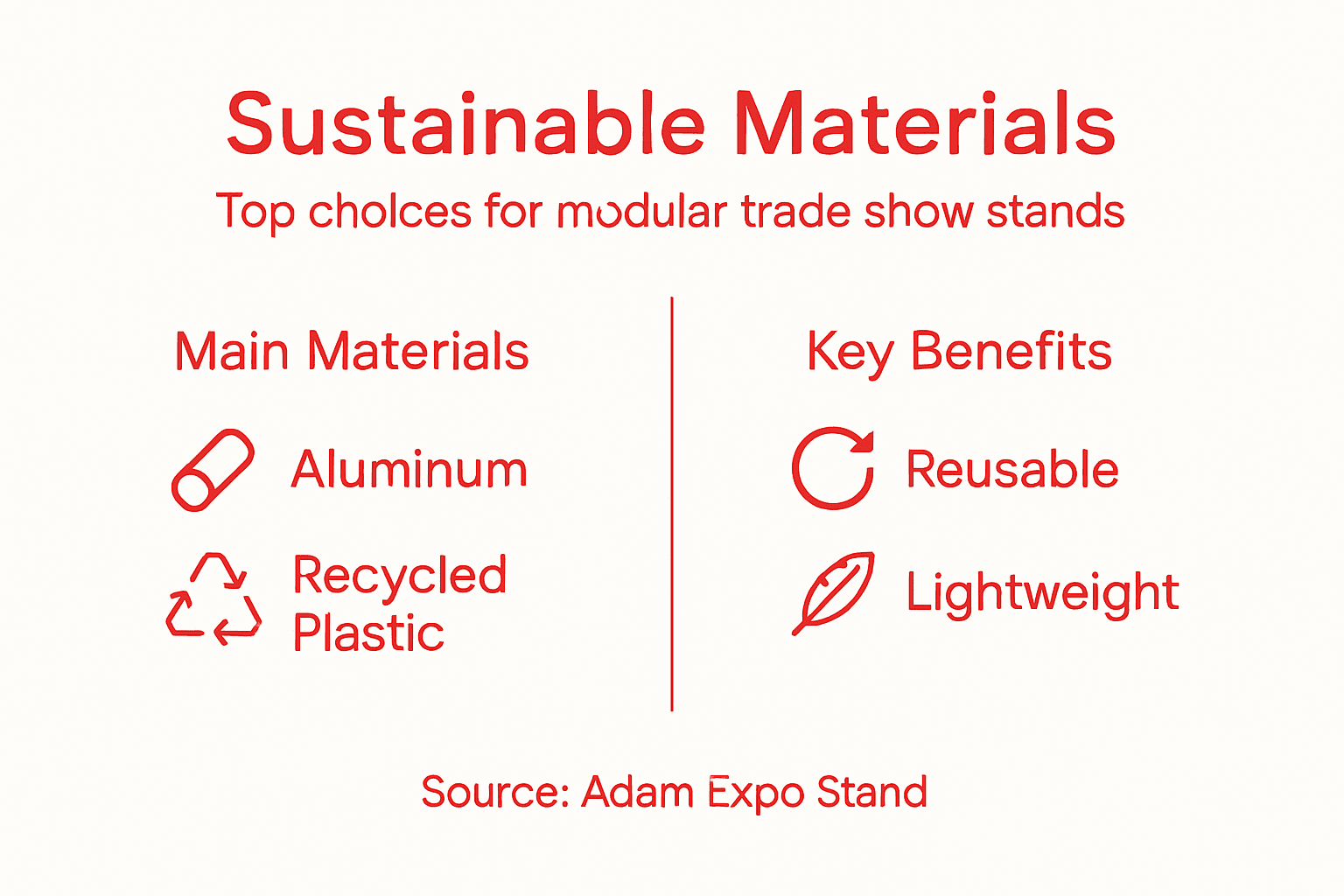
Pro tip: Request material specification sheets from suppliers to verify exact sustainability credentials and calculate the potential carbon reduction of your modular stand design.
Use this quick reference to guide sustainable material choices:
| Material Type | Environmental Benefit | Reusability |
|---|---|---|
| Aluminum Frames | Fully recyclable, low impact | High—multiple uses |
| Composite Panels | Low carbon footprint | Moderate—easy transport |
| Modular Fabric Graphics | Reduces waste | High—reprints possible |
Step 4: Assemble stand components with precision
Assembling your modular trade show stand requires a methodical approach that balances technical skill with strategic planning. Your goal is to transform individual components into a cohesive, professional display that represents your brand with maximum impact and minimum complexity.
Begin by organizing your components systematically before assembly. Lay out all materials in a logical sequence, matching connection points and verifying that each piece corresponds to your design blueprint. For tech companies, this means treating stand assembly like a sophisticated engineering project where precision matters more than speed.
Follow these critical assembly guidelines:
- Inventory all components before starting
- Use manufacturer-recommended connection tools
- Check structural alignment at each connection point
- Verify load-bearing capabilities of frame structures
- Implement progressive assembly techniques
- Test connections for stability and rigidity
Precision in assembly transforms individual components into a powerful brand communication platform.
Take time to understand the modular exhibition stand workflow that ensures optimal component integration. Each connection should feel intentional and engineered for both aesthetic appeal and structural integrity.
Pro tip: Create a digital reference guide with assembly photos and annotated connection instructions to streamline your setup process and train your team effectively.
Step 5: Verify quality and test stand functionality
Quality verification is the critical final checkpoint that transforms your meticulously planned modular stand from a design concept into a reliable, professional exhibition platform. Your comprehensive testing ensures that every component performs exactly as intended, preventing potential issues during the actual trade show event.
Begin with a systematic functional assessment that goes beyond visual inspection. This means conducting thorough tests of structural integrity, technological integrations, and interactive elements. For tech companies, this process mirrors rigorous product testing protocols, where every connection, display, and interactive feature must function flawlessly under potential exhibition stress conditions.
Implement these essential quality verification steps:
- Perform full structural load testing
- Check all electrical and technology connections
- Test interactive display responsiveness
- Verify graphic panel alignment and tension
- Assess overall stability across different configurations
- Validate weight distribution and balance
Quality verification is not just about preventing failures but creating a seamless brand experience.
Prioritize inspiring examples of booth designs that demonstrate exceptional attention to functional detail and presentation quality. Each test should simulate real-world trade show conditions to guarantee optimal performance.
Pro tip: Create a standardized checklist with specific pass/fail criteria to ensure consistent and objective quality assessment across multiple stand configurations.
Here’s a summary comparing modular stand priorities at each design step:
| Step | Primary Focus | Key Business Impact |
|---|---|---|
| Assess Goals | Align objectives & space | Maximizes visitor engagement |
| Design Layout | Brand storytelling | Enhances brand perception |
| Select Materials | Sustainability | Improves image & reduces costs |
| Assemble Components | Precision assembly | Ensures professional presence |
| Quality Verification | Testing & reliability | Prevents failures & builds trust |
Elevate Your Trade Show Presence with Expert Modular Stand Solutions
Creating an effective modular stand can feel overwhelming when balancing event goals, space constraints, sustainable materials, and flawless assembly. If you are challenged by how to precisely align your stand design with your brand narrative while ensuring flexibility and high-quality functionality you are not alone. Many tech companies face the pressure of transforming limited exhibition spaces into memorable, sustainable brand experiences that engage visitors and build lasting impressions.
At Adam Expo Stand we specialize in turning these exact challenges into your biggest competitive advantage. Our comprehensive services cover everything from innovative 3D visualizations to turnkey modular stand fabrication and on-site assembly. We help you craft bespoke, sustainable exhibits that align perfectly with your objectives and venue requirements. Whether you want detailed guidance on modular exhibition stand workflow or inspiration from the best booth design examples explore our full range of solutions at Adam Expo Stand.
Ready to stop worrying about the complexity of your next trade show stand and start captivating attendees with a flawless, reusable design Discover how our personalized, end-to-end exhibition services can boost your brand visibility and streamline your event logistics today Visit Adam Expo Stand to learn more and begin transforming your trade show success now.
Frequently Asked Questions
How do I assess event goals for my modular stand?
To assess event goals, start by identifying your specific objectives, such as product launches, lead generation, or brand awareness. Ask yourself what outcomes you want to achieve and plan your stand’s design and layout accordingly to support these goals.
What factors should I consider when evaluating space requirements for a trade show stand?
Consider the total square footage available, booth location, electrical needs, and any restrictions on height or configuration. Understanding these factors will help you create a design that effectively utilizes your space and enhances visitor engagement.
How can I create an effective branding layout for my modular stand?
Develop a clear visual hierarchy by organizing your design elements to guide attendees through your brand narrative. Use consistent colors, strategic logo placement, and multimedia displays to create a cohesive brand experience that highlights your products.
What materials should I choose for a sustainable modular stand?
Select lightweight, reusable materials like recyclable aluminum and low-impact composite panels. Prioritize options that have third-party sustainability certifications to ensure your stand is both environmentally friendly and visually appealing.
What are the key steps to accurately assemble my modular stand?
Begin by organizing all components and verifying their alignment according to your design. Follow the manufacturer’s assembly guidelines, ensuring each connection is secure and stable to create a professional and impactful display.
How do I verify the quality and functionality of my modular stand before the event?
Conduct a thorough functional assessment, checking structural integrity, electrical connections, and interactive features. Test each component under conditions similar to the trade show to ensure reliable performance and prevent potential issues during the event.


