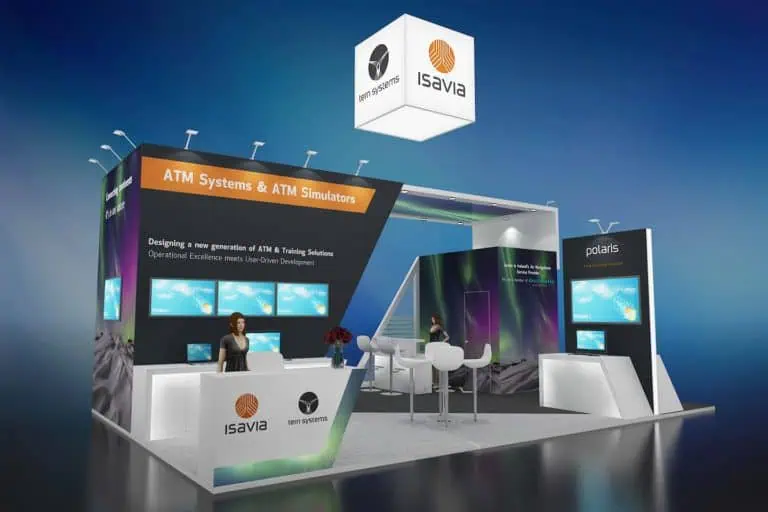
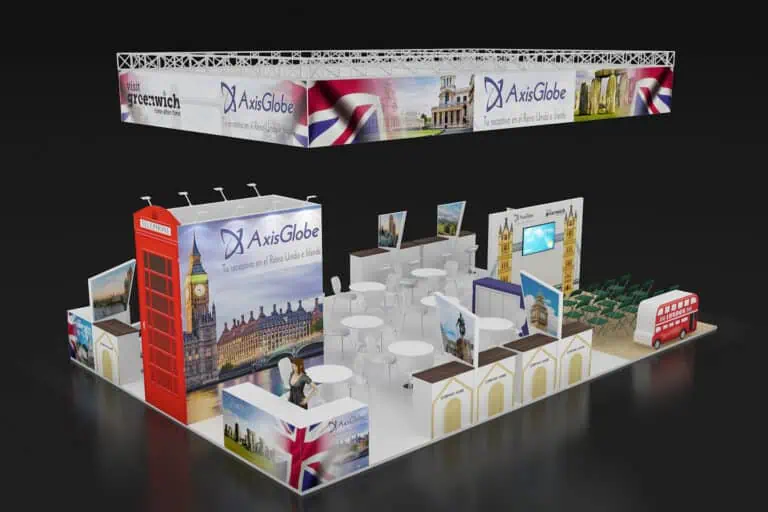
Modular exhibition stands use a system of repeatable components to create a stand that can be assembled, dismantled and reconfigured. They can suit an exhibitor attending different European events, but flexibility depends on the selected system, the booked spaces and the support available between shows. A useful decision starts with your exhibition programme, rather than an assumed saving or a standard installation time.
This article explains what to compare and what to confirm. For project-specific design, quotation and delivery discussions, see our modular exhibition stand service.
What makes an exhibition stand modular?
A modular system may use reusable frames, panels, connectors and graphic surfaces. Depending on its design, it can accommodate elements such as counters, storage, lighting or screens. Those additions still need a defined installation method, suitable supports and access for maintenance.
Modular does not mean universal. Dimensions, connectors, graphic attachments and permitted configurations can differ between suppliers and product ranges. Ask which components belong to the proposed system, which are rented or purchased, and whether replacement parts and compatible additions will be available for later events.
Plan flexible exhibition stands around real layouts
Start with the floor plans for your likely events: area, open sides, neighbouring stands, column positions and access to services. A layout that works on an island space may need substantial changes on a corner or inline plot. Draw the visitor route, product demonstrations, meetings and storage before choosing a kit.
Ask the supplier to show proposed configurations for those spaces, with an itemised component list. Identify what can move, what must be replaced and what requires additional parts. Consider the packed dimensions as well as the assembled footprint: a compact-looking stand can still need specialist handling, suitable transport or substantial storage.
Check compatibility, graphics and equipment
- Structure: confirm the exact frame and connector range, intended loads, permitted spans, fixing methods and any required structural documentation with the supplier.
- Graphics: request artwork templates, visible dimensions, attachment details and replacement costs. A new layout may change panel joins, message order or the amount of reusable print.
- Equipment: confirm screen mounts, demonstration loads, power distribution, cable routes and service access. Do not assume a decorative frame can support equipment.
- Ownership: record who owns the components, graphics and design files, and who can adapt, repair or install them at the next show.
Arrange approval of the final artwork and configuration before production. Keep a component schedule and an assembly plan so the next installation is based on the actual supplied system, rather than a photograph alone.
Rent, buy, custom or modular: compare the programme
Rental can be useful when the future event schedule is uncertain or you want the supplier to manage the stock. Confirm availability for each event, the return condition, damage charges and whether graphics or bespoke additions become your property.
Purchase gives you components to use again, but brings storage, inspection, maintenance, stock management and transport responsibilities. Compare the expected number and type of events, not simply the first invoice. Ask what happens if a product range changes or a component needs replacing.
Custom construction can accommodate a particular shape, finish or product requirement. Modular construction can provide a repeatable base. A hybrid proposal may combine both, but each bespoke element needs its own reuse and packing plan. Compare equivalent drawings, finishes and services across the options.
Build the budget around the full scope
Request an itemised proposal covering design, components, graphics, flooring, furniture, lighting, equipment, packing, transport, installation and dismantling. Establish whether storage, repairs, replacement graphics and future configuration drawings are included. Event services and charges may be separate from the contractor’s quotation.
For a programme comparison, record the initial cost and the anticipated costs at each subsequent event, using actual supplier offers and logistics routes. Include the labour and access requirements confirmed for each venue. Our European exhibition stand cost guide provides a broader budgeting framework; it does not replace a quotation for your specific system and event.
Review each event’s technical requirements
Reusing a structure does not carry an approval from one exhibition to another. Review the current organiser and venue instructions for your booked space, including height, open sides, floor loading, accessibility, electrical work, fire documentation and any design-submission requirements.
Suspended signs, enclosed areas, raised floors and multi-level structures can require additional review. Obtain supplier documentation and competent technical input appropriate to the actual design. Confirm who prepares and submits the drawings, pays any applicable fees and closes approval questions. Set the installation sequence using confirmed access times and crew requirements; there is no universal weight, staffing level or build time for modular stands.
Make reuse and sustainability claims measurable
Reusable components create an opportunity to avoid remaking parts, but they do not guarantee lower cost or environmental impact. The result depends on how often components are used, transport distances, repairs, graphic replacements, storage and what happens at the end of their useful life.
Keep a record of which components return to stock, their condition and the replacements needed. Request evidence for material composition, relevant certifications or environmental claims from the supplier. When comparing alternatives, use the same event programme and clearly defined boundaries. Avoid describing an entire stand as sustainable solely because its frames can be reused.
Prepare a brief that can be quoted
Send your event list, booked floor plans, required functions, brand files, equipment details and any existing stand inventory. State whether you prefer rental or ownership, where stock would be stored and who will manage it. Flag uncertain dates or future layouts so they are treated as assumptions, not commitments.
Use our modular stand planning tips for the next checks, and browse the project gallery for layout and presentation ideas. The gallery is visual project evidence; it does not establish that every pictured stand uses a modular system.
Ready to compare a modular option with your brief? Contact Adam Expo Stand with the event, venue, dates, stand size and reuse plans so the proposal can define the configuration, responsibilities and scope.
Follow our exhibition planning guides
Choose Adam Expo Stand as a preferred source to help you find our exhibition guides and updates on Google.
Add as a preferred source on GoogleGoogle may ask you to sign in and confirm your choice.