

Sustainable exhibition stand design and materials help you cut waste, meet tightening European requirements, and still capture attention on the showfloor.
At Adam Expo Stand, we help exhibitors build award-winning, modular, eco-forward stands across Europe with fast, turnkey execution. Proof points: we support over 639 exhibitors and event organizers across Europe, and we deliver solutions for 100+ European trade shows.
Key Takeaways
| What to choose | Modular systems, FSC-certified wood, recycled aluminum, PET graphics, low-VOC finishes |
| What makes it sustainable | Design-for-disassembly, reuse across events, documented lifecycle thinking |
| 2026 trend focus | Carbon reporting and aligned planning for reusability, recyclability, and carbon tracking |
| Cost reality | Sustainable material builds can cost more upfront (€€18,000 vs €€15,000), but often improve 3-year totals |
| Best for | Multi-show brands needing consistent visuals with lower waste and better lifecycle control |
| Next step | Use our criteria checklist, then request a fast proposal within 24 hours at Adam Expo Stand |
- Definition shortcut: eco-friendly stands are holistic systems designed for reuse and recyclable end-of-life.
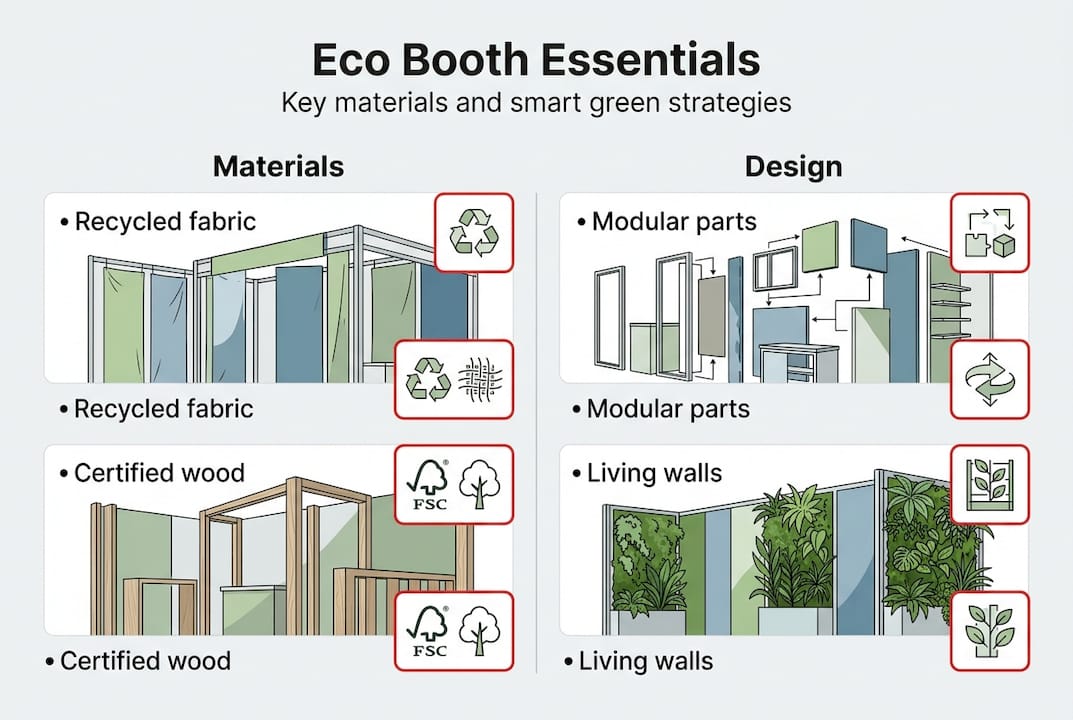
- Core materials: modular aluminum frames, recycled fabrics, FSC-certified wood, low-VOC finishes, and PET-based graphics.
- 2026 decision drivers: lifecycle documentation and carbon tracking aligned with current European expectations.
- Quick comparison example: sustainable build total can be lower over 3 years (see section “Costs & ROI”).
- Common mistake: buying “green-looking” materials without design-for-disassembly and reuse planning.
- Internal guides to use now: Eco-Friendly Exhibition Stand Design, Sustainable Exhibition Stands in 2026: The Complete Guide.
What does sustainable exhibition stand design and materials mean in 2026?
Sustainable exhibition stand design and materials means designing your trade show booth as a system, not a one-off build. In 2026, we focus on materials and structure that support reuse, recyclability, and documented lifecycle thinking.
From our experience, the strongest sustainable stands reduce waste in three ways: (1) they are reusable by design, (2) they use verifiable eco-forward materials, and (3) they track and plan for end-of-life, not just production day decisions.
Core definition (snippet-ready)
Eco-friendly exhibition stands are holistic systems designed for reuse and recyclable end-of-life, using modular components and sustainable materials. In 2026, the best projects also include lifecycle documentation for carbon tracking and supplier transparency.
What 2026 buyers ask for
- Modular, reconfigurable components (so you can change layouts without rebuilding everything)
- Materials that can be separated for disassembly
- Lower-emission choices like FSC-certified wood, recycled metals, and PET graphics
- Finishes that support better indoor air quality (low-VOC finishes)
- Documentation that helps you answer sustainability questions with confidence
If you want a simple starting point, read our practical guide: eco-friendly exhibition booths: sustainable trade show guide for a checklist-style breakdown.
How do you choose materials for a sustainable exhibition stand in 2026?
Choosing sustainable exhibition stand design and materials in 2026 is less about a single “green” product and more about matching materials to how you will reuse the stand over multiple events. We recommend building with components that can be disassembled and reconfigured.
Best-fit sustainable materials (and why they matter)
- FSC-certified timber: supports responsible sourcing while keeping design flexibility for walls, counters, and structural elements.
- Recycled aluminum framing: lightweight and durable, ideal for modular systems that need repeat setup cycles.
- PET graphics and fabrics: useful for branded visuals with replaceable panels, reducing waste between events.
- Low-VOC finishes: improves on-site air quality considerations and keeps coatings performance-focused.
- Recycled plastics and biodegradable panels (where appropriate): selected to reduce impact while still delivering brand-safe durability.
2026 principle: design-for-disassembly
Even the best materials can fail sustainability goals if they are locked together. In 2026, we plan joints, fasteners, and panel systems so elements can be reused, refurbished, or recycled at end-of-life.
Quick decision matrix
| Material choice | Use where | How it supports reuse |
| FSC timber | Brand walls, storage elements | Segmented panels and replaceable graphics layers |
| Recycled aluminum | Frames, reusable structures | Interchangeable components across event layouts |
| PET-based visuals | Branded wall graphics, fabric displays | Replace visuals while keeping the base system |
Tip from our workshop approach: when we produce parts, we keep documentation and assembly logic so your team can maintain reusability, even under tight deadlines and last-minute project changes.
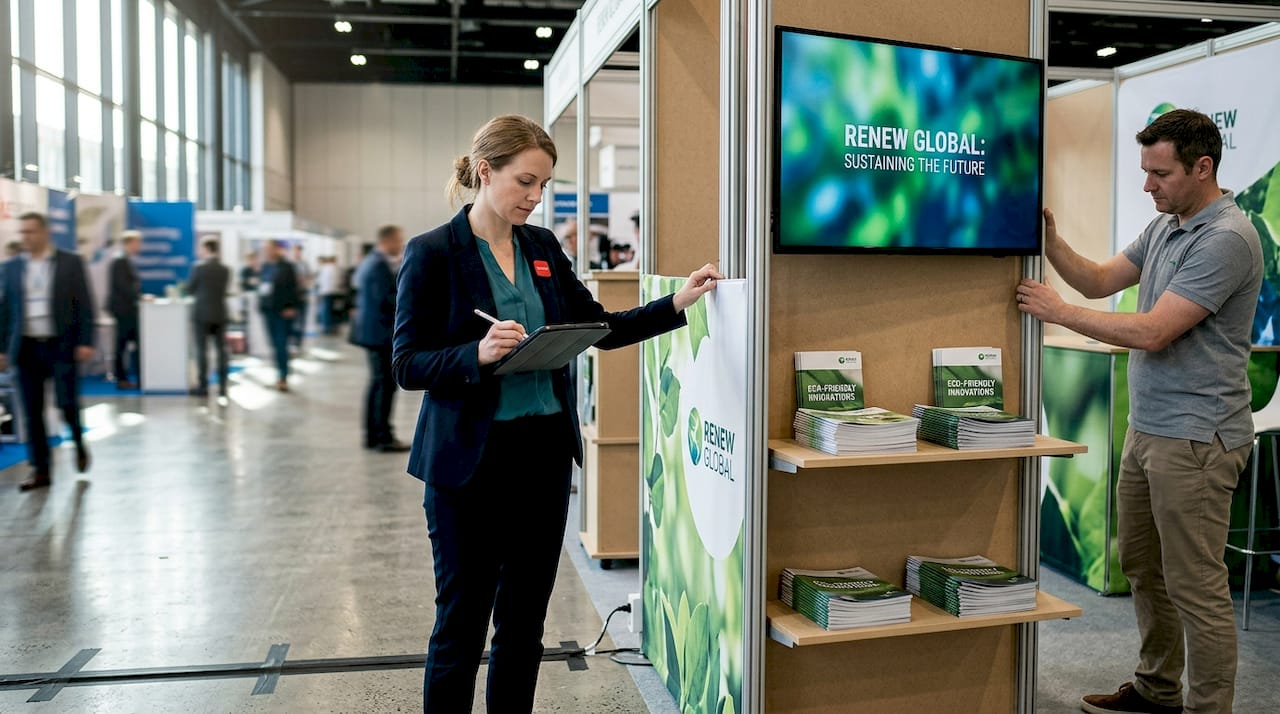
Which design approach is best for sustainable exhibition stand design and materials: modular or custom?
This is one of the most common buying questions in 2026. In general, modular stands give you the clearest pathway for sustainable exhibition stand design and materials because they are designed to be reconfigured, reused, and updated across multiple events.
That said, custom can still be sustainable when it follows the same rules: disassembly planning, standardized components where possible, and replaceable visual elements.
Modular stands, in plain terms
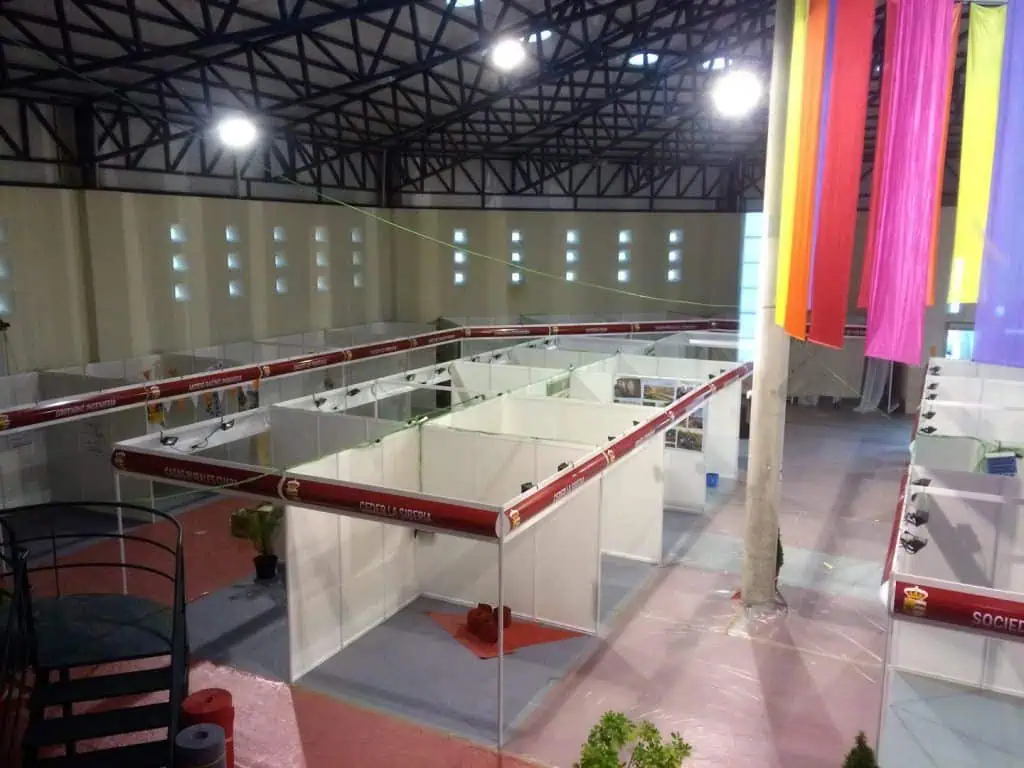
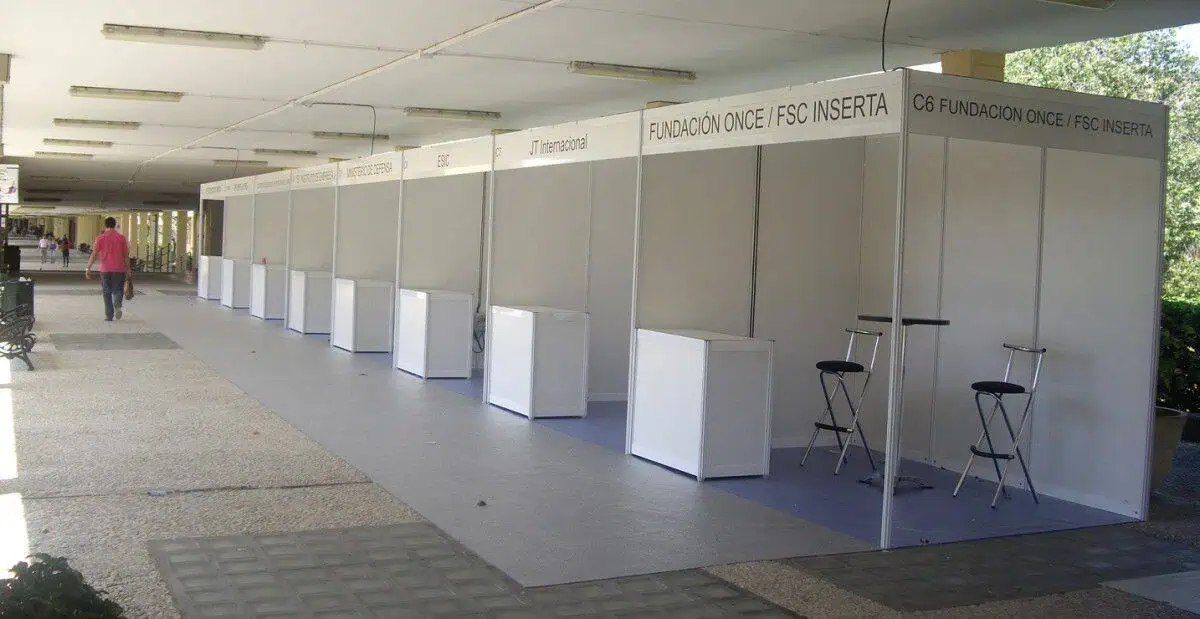
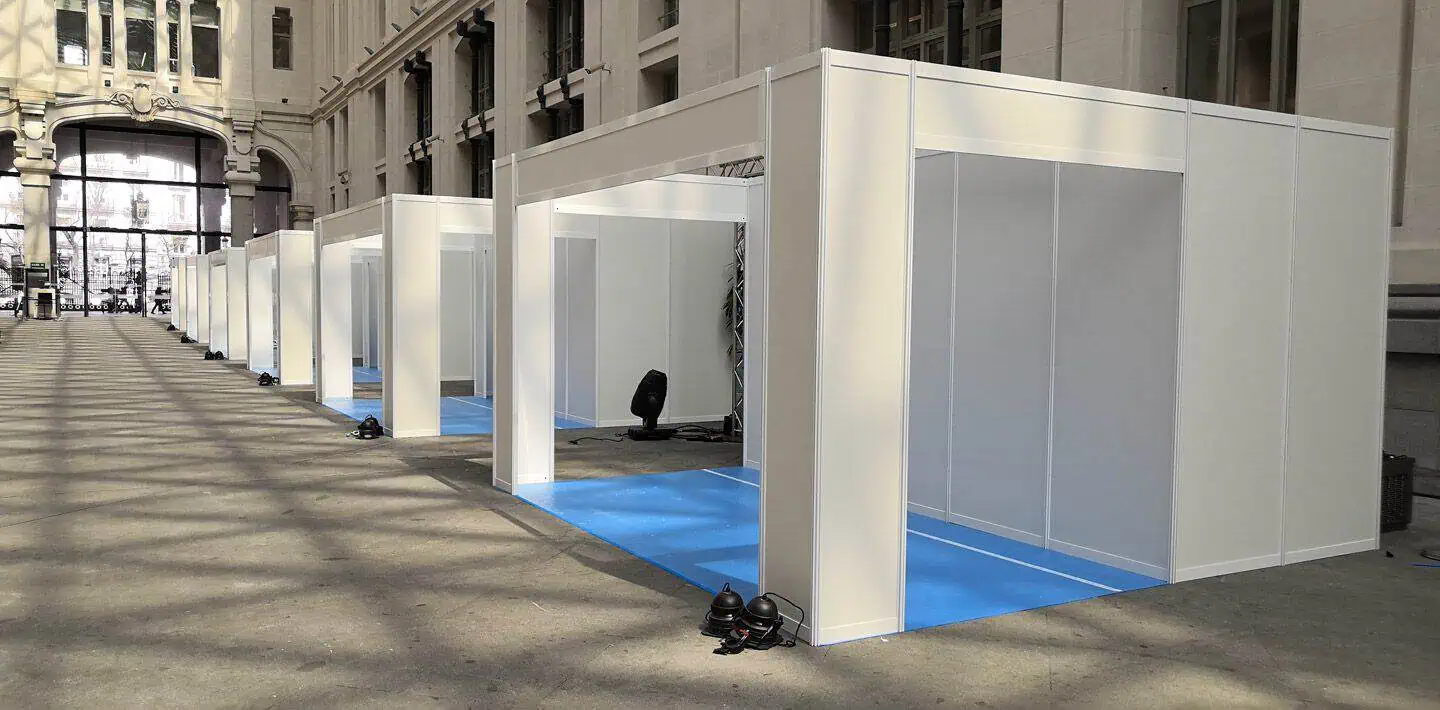
Modular exhibition stands are built from reusable components and adaptable layouts. They can scale from smaller footprints up to larger formats, and they reduce waste by reusing frames, walls, and recurring elements.
Custom vs modular (how we recommend weighing it)
- Choose modular if you attend multiple shows or need fast changes in branding for 2026 calendars.
- Choose custom if your brand must maintain a signature architecture that cannot be expressed with modular blocks, but require strict design-for-disassembly.
- Ask for a lifecycle plan either way, so sustainability is measured over real reuse, not just initial materials.
Where modular shines for sustainability
- Reusability: interchangeable walls and graphics
- Flexibility: configuration changes without full rebuilds
- Lower lifecycle emissions: fewer replacements across event years
- Quick on-site assembly: helps you keep timelines tight
If you want more practical detail, see Modular Exhibition Stands for the benefits and how we design modular structures across European fairs.
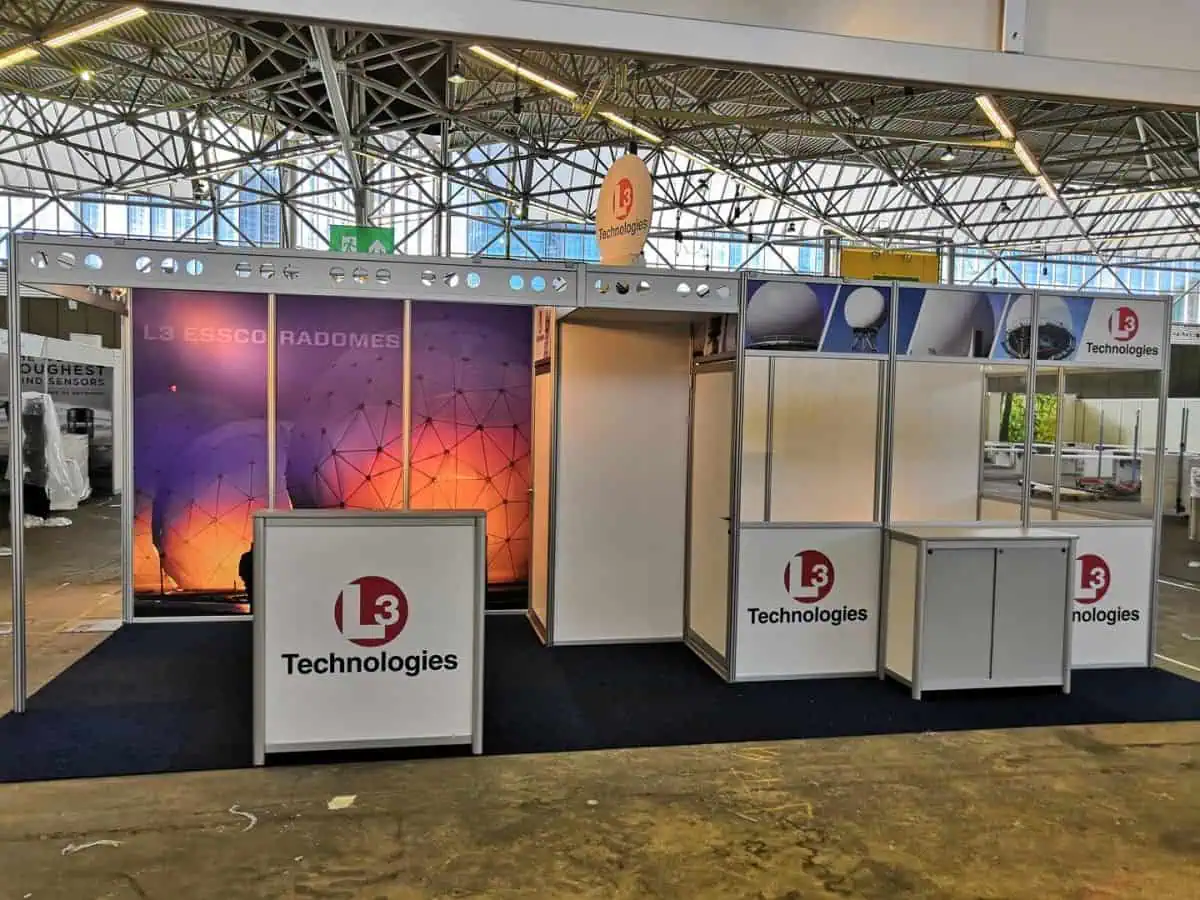
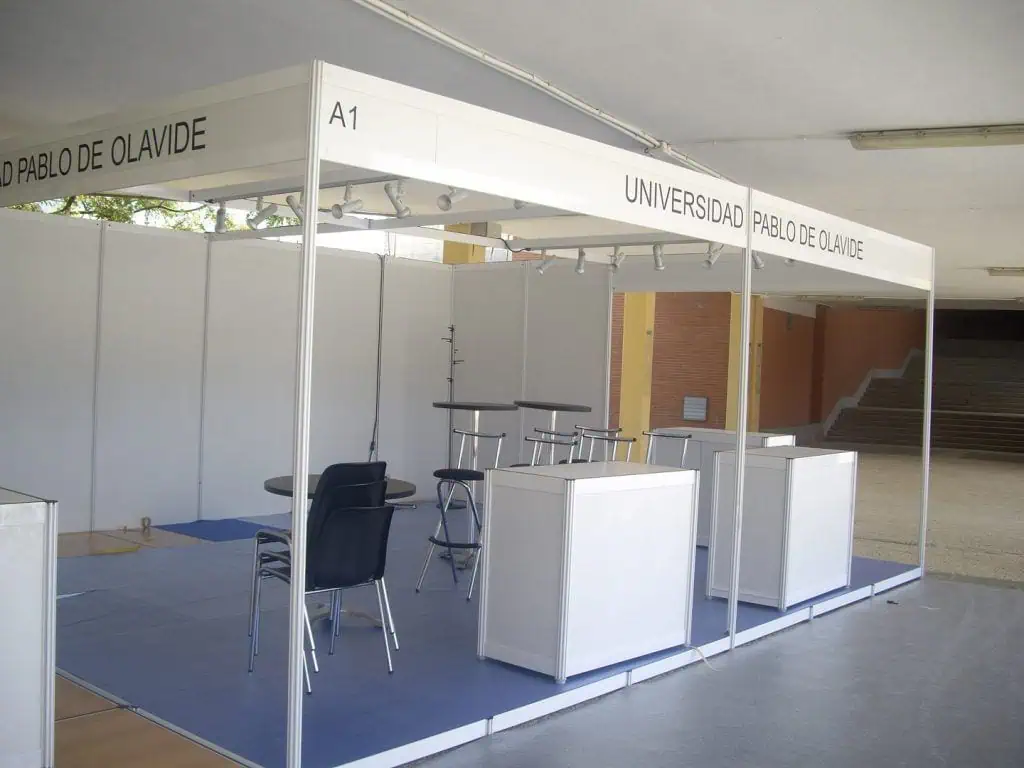
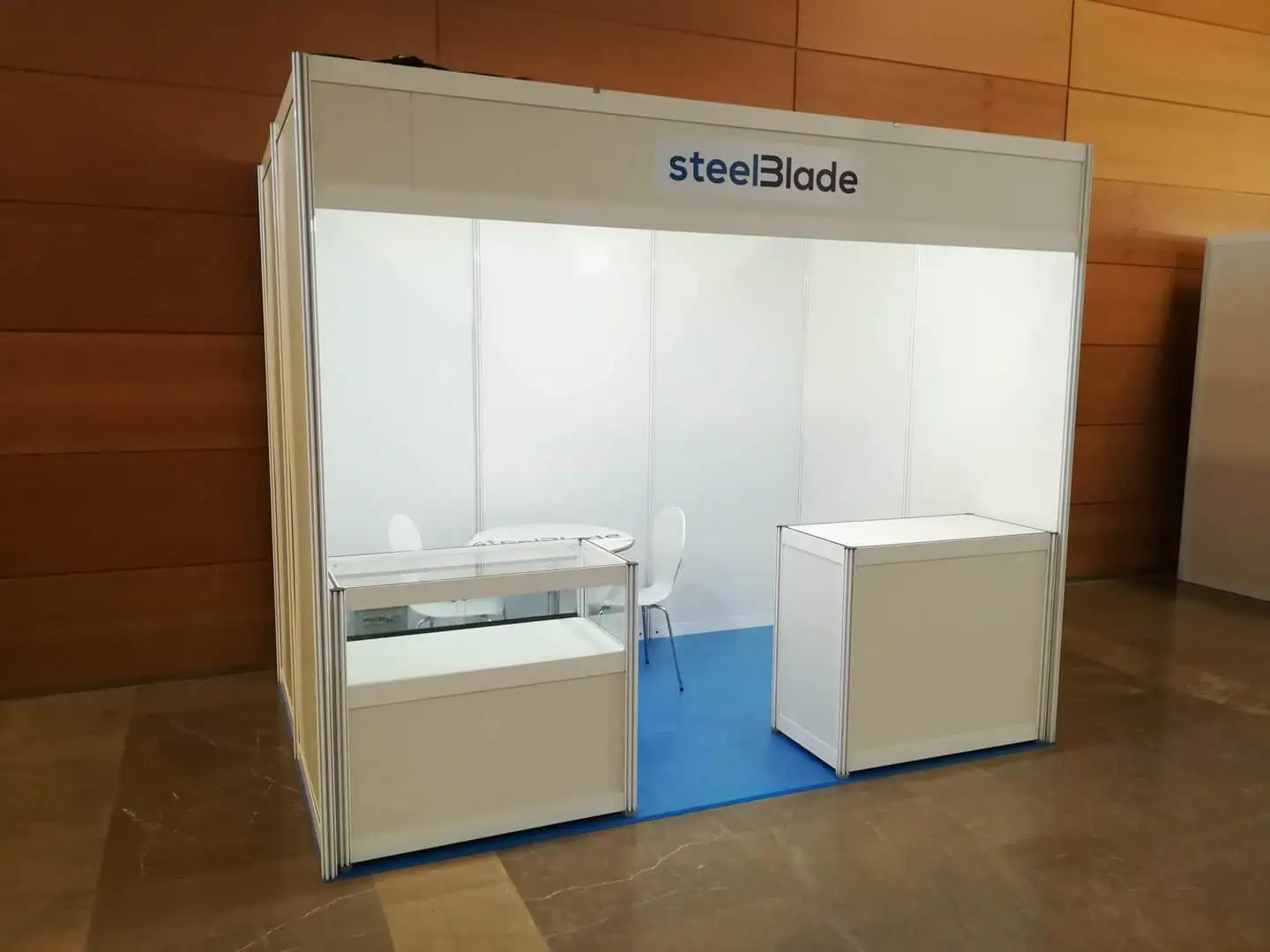

What is the process for building sustainable exhibition stands?
We build sustainable exhibition stands with an “enduring process” workflow that keeps sustainability practical. In 2026, we combine custom management, 3D Design, Production in our workshop, and Build up / Dismantle so reuse is engineered, not hoped for.
From concept to completion (our step-by-step)
- Custom management: align sustainability targets with your show schedule and footprint constraints.
- 3D Design: model how panels and components separate, so materials can be reused across events.
- Production in our workshop: manufacture modular frames and replaceable elements using eco-forward materials.
- Transport, build up, dismantle: assemble quickly on-site and dismantle with the same logic designed for reuse.
What we include in the sustainability planning
- Material audit inputs: FSC wood, recycled aluminum, PET graphics, low-VOC finishes
- Design-for-disassembly: component separation logic and documentation mindset
- Lifecycle and carbon tracking readiness: aligned with ISO 20121 and current European expectations
- Performance checks: ensure sustainable choices still support brand communication and visitor flow
If you want to see our approach condensed into a decision flow, use Sustainable Exhibition Stands in 2026: The Complete Guide.
How much do sustainable exhibition stand design and materials cost, and what ROI can you expect in 2026?
Costs for sustainable exhibition stand design and materials depend on how long you will reuse the system. In 2026, we usually recommend you calculate ROI across multiple events, because modularity drives lifecycle savings.
Here is a clear pricing example we use when comparing traditional versus sustainable builds from our guide content.
Cost comparison example (based on our pricing guidance)
| Scenario | Initial cost | 3-year total |
| Traditional materials (baseline) | €€15,000 | €€23,500 |
| Sustainable materials (FSC timber, recycled aluminum, PET graphics) | €€18,000 | €€20,200 |
What improves ROI in 2026
- Reuse frequency: the more shows you attend, the more you benefit from replaceable graphics and modular frames.
- Lower replacement cycles: you refresh visuals instead of rebuilding the entire booth.
- Better planning control: lifecycle and disassembly logic reduces last-minute waste and ensures components stay usable.
- Operational savings: efficient assembly and dismantle can reduce time pressure and related costs.
Where sustainability still wins even if the upfront budget is tighter
Even with a higher initial cost for sustainable materials (example above), 2026 projects can be cheaper over time when you reuse core structures and only update branded elements that wear out or change.
For additional cost and ROI framing, read Eco-Friendly Exhibition Stand Design: Maximize ROI with Sustainability.
What mistakes should you avoid with sustainable exhibition stand design and materials?
Most sustainability failures in 2026 happen because the stand looks sustainable, but the system does not behave sustainably. We see repeat problems when teams skip design-for-disassembly or treat eco materials as a one-time upgrade.
Common mistakes (and what we do instead)
- Mistake: choosing materials without planning component separation.
Fix: design details so panels, frames, and visuals can be reused or recycled. - Mistake: replacing the entire stand for every new show.
Fix: use modular layouts with interchangeable graphics to reduce waste. - Mistake: focusing on materials only, ignoring lifecycle documentation.
Fix: plan for lifecycle and carbon tracking readiness aligned with ISO 20121 and current European expectations. - Mistake: underestimating on-site logistics.
Fix: confirm fast build up and dismantle processes so sustainability plans match real show conditions. - Mistake: over-indexing on “green” without measuring performance.
Fix: validate visitor flow, brand visibility, and messaging performance for your stand footprint.
Quick “sustainability readiness” checklist for 2026
- Can the stand be reconfigured without rebuilding the frame?
- Are graphics designed to be replaced cleanly?
- Are materials selected for durability and separation at end-of-life?
- Do we have lifecycle documentation inputs ready for carbon reporting questions?
- Will the stand still deliver strong brand communication at your event in 2026?
If you want practical eco-friendly booth definitions and pitfalls, use eco-friendly exhibition booths: sustainable trade show guide.
Best sustainable exhibition stand ideas for 2026 (with real material options)
The best sustainable exhibition stand design and materials in 2026 combine eco-forward materials with strong brand impact. European brand managers need the stand to stop foot traffic, communicate values instantly, and meet tightening material and energy expectations.
Top ideas we build around (practical and reusable)
- Modular stands with eco-forward frames: lightweight structures that can scale up or down and be reused across shows.
- Replaceable PET-based graphics: keep the architecture, refresh the message, reduce visual waste.
- FSC timber highlights: use timber where it improves finish quality and perceived value, while maintaining a reusable system.
- Low-VOC finishes: select finishes that support healthier indoor environments.
- Experience zones with biophilic design cues: where appropriate, incorporate natural-inspired visuals while keeping materials modular.
Where our sustainable materials and design show up most
- Pharma and healthcare events, where clean finishes and reusable layouts matter for compliance and operations.
- Multi-city brand roadmaps, where modular reconfiguration keeps your look consistent across 2026 calendars.
- European trade shows with accelerating requirements for material and energy standards.
For a deeper list of sustainable stand solutions and selection criteria, read Top sustainable exhibition stand ideas to boost your brand.
Why Adam Expo Stand is a strong partner for sustainable exhibition stand design and materials
We help teams turn sustainability goals into real sustainable exhibition stand design and materials that perform on the showfloor. With over 20 years of experience, we deliver modular, eco-forward stands for any exhibition space from 9m² to 2,000m².
In 2026, speed and control both matter. We keep your project organized through our custom management workflow, then execute production in our workshop and handle build up and dismantle with the same sustainability logic.
Real-world example: when clients work with us for events at major venues such as IFEMA Madrid and Fira Barcelona, the goal stays the same, strong branding and smooth logistics with sustainability built in from the start.
If you want to compare stand concepts quickly, we also offer a free stand design proposal within 24 hours. Start at Adam Expo Stand.
Conclusion
Sustainable exhibition stand design and materials work best in 2026 when you treat the booth as a multi-event system, using modular design, FSC-certified wood, recycled aluminum, PET graphics, and low-VOC finishes. The ROI improves when you reuse what matters and replace only what needs refreshing.
At Adam Expo Stand, we help you plan the lifecycle, build for disassembly, and deliver a stand that captures attention while reducing waste. Have a question or need a concept for your next event in Europe? Contact our team and request your fast proposal within 24 hours.
Frequently Asked Questions
What materials are best for sustainable exhibition stand design and materials in 2026?
In 2026, the most reliable choices for sustainable exhibition stand design and materials are FSC-certified wood, recycled aluminum framing, PET-based fabrics/graphics, and low-VOC finishes. These work best when the design also supports disassembly and reuse across multiple events.
Is a modular stand actually more sustainable than a one-off custom build in 2026?
Often, yes, because modular systems are designed for reuse and reconfiguration, which reduces waste over time. The sustainability value increases further when sustainable exhibition stand design and materials are selected with design-for-disassembly and replaceable graphics.
How do I calculate ROI for sustainable exhibition stand design and materials in 2026?
Calculate ROI across your reuse cycle, not only initial spend. Use sustainable exhibition stand design and materials cost comparisons like €€18,000 initial for sustainable builds versus €€15,000 for traditional, then check the multi-year total (example: €€20,200 vs €€23,500 over 3 years).
Do eco-friendly exhibition booths still need to meet brand performance expectations in 2026?
Yes. Sustainable exhibition stand design and materials must still stop foot traffic and communicate your message quickly. We pair eco-forward materials with stand layouts and branded visuals that support visitor flow and engagement on the showfloor.
What is design-for-disassembly and why does it matter for sustainable exhibition stands in 2026?
Design-for-disassembly means planning how parts separate so they can be reused, refurbished, or recycled at end-of-life. It matters because sustainable exhibition stand design and materials only deliver real impact when the structure and graphics can be handled sustainably over multiple events.
Can low-VOC finishes be part of sustainable exhibition stand design and materials?
Yes. Low-VOC finishes are included as part of sustainable exhibition stand design and materials strategies because they support healthier on-site environments while keeping surface quality and durability for repeat use.
Where can I find practical guidance and examples for sustainable exhibition stand design and materials?
Use our 2026 planning resources like Sustainable Exhibition Stands in 2026 and Eco-Friendly Exhibition Stand Design. They cover material selection, ROI thinking, and common pitfalls you should avoid.
Also Read
- Eco-Friendly Exhibition Stand Design: Materials, Certifications & Real Cost Savings — the best eco materials, the certifications that matter (ISO 14001), and where reuse delivers real cost savings.

