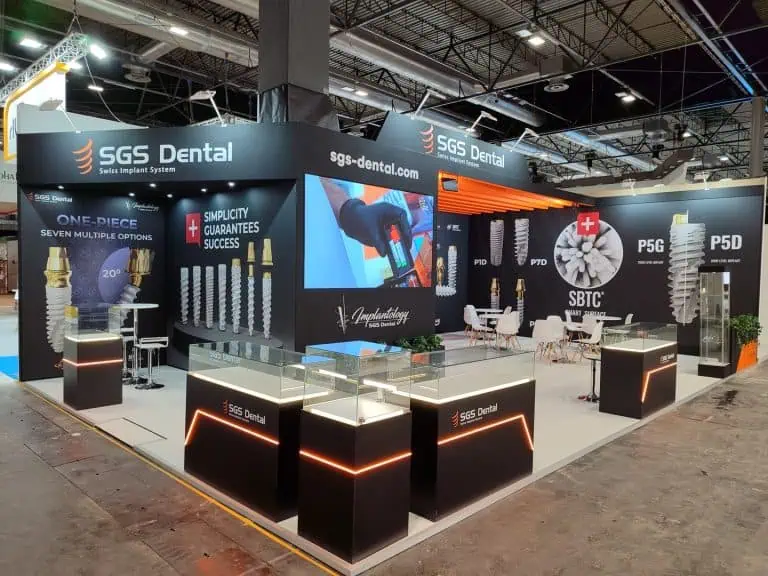
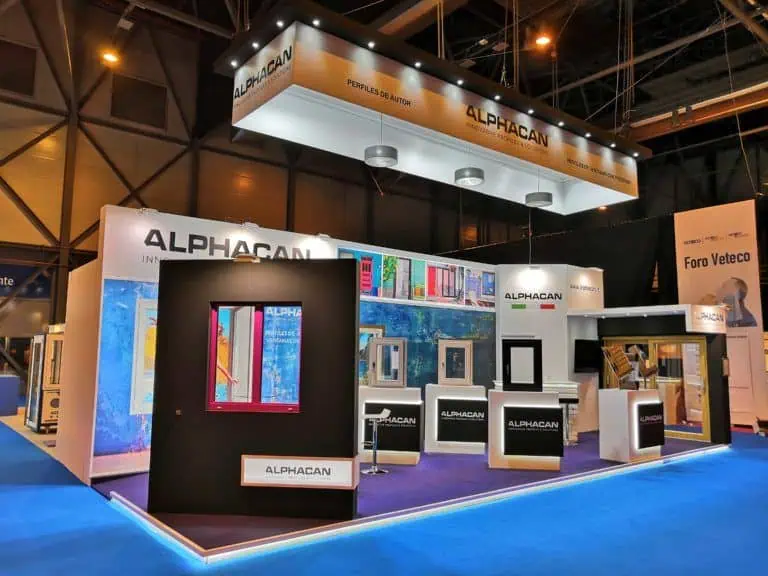
What is experiential booth design? A guide for trade shows
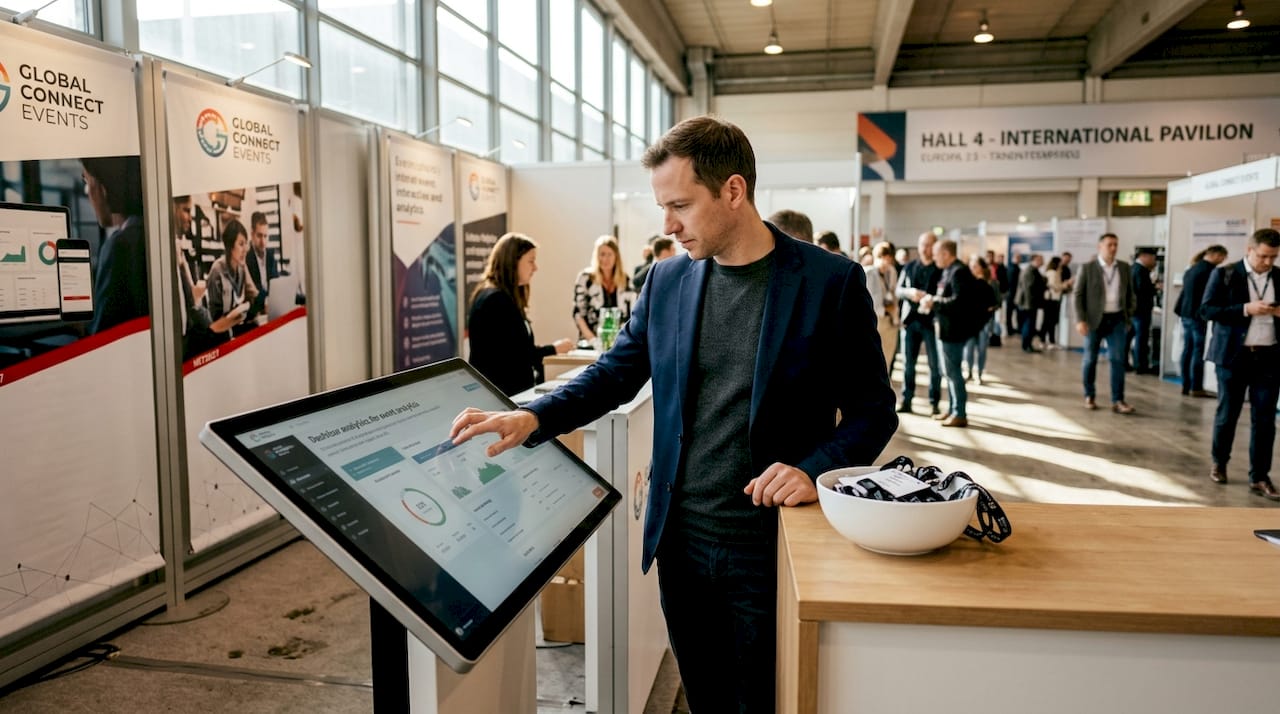
Trade shows across Europe are no longer won by the brand with the biggest banner. Interactive booths generate 5x more leads and 30 to 40% longer dwell times compared to traditional displays, a benchmark that should reshape how marketing and brand managers allocate their exhibition budgets. The assumption that a booth is simply a branded space is outdated. Today, your stand is a dynamic communication platform, and the brands that treat it as such are pulling ahead of competitors who still rely on static graphics and passive branding.
Experiential Trade Show Booth: What It Is and Why It Works
An experiential trade show booth is a stand environment designed around participation, not passive viewing. Unlike traditional display stands that present products on shelves or graphics, an experiential booth immerses visitors in a brand story—using interactive technology, sensory stimuli, live demonstrations, or narrative environments to create memories rather than just impressions. The core principle of experiential booth design is that people remember what they do, not what they see.
Table of Contents
- Defining experiential booth design
- Why invest in experiential design? ROI and impact data
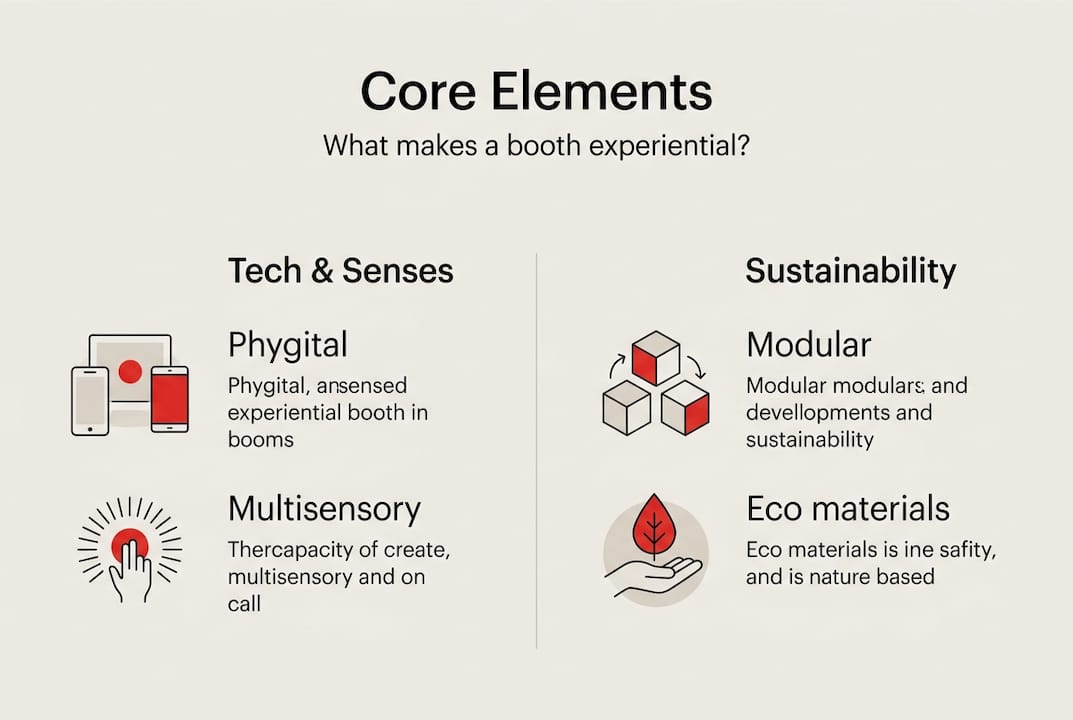
- Core elements: What makes a booth experiential?
- Design strategies for European trade shows
- Measuring success: KPIs and common pitfalls
- Turning insights into action: Practical steps for your next event
- Enhance your exhibition presence with expert booth solutions
- Frequently asked questions
Key Takeaways
| Point | Details |
|---|---|
| Immersive experiences win | Experiential booth design delivers dramatically higher engagement and lead quality than static displays. |
| Multisensory and tech integration | Combining senses and interactive technology creates compelling, memorable brand touchpoints. |
| ROI is measurable | Track leads, dwell time, and qualified minutes to justify and optimize experiential investments. |
| Design for Europe | Modular, sustainable, and compliant strategies are essential for success at European trade shows. |
| Action beats aesthetics | Purposeful strategy and pre/post-show marketing drive results far beyond visually impressive setups alone. |
Defining experiential booth design
To build a strategic approach, it is essential to understand what experiential booth design truly means and why it is reshaping the industry. At its core, experiential booth design moves beyond visual presentation to create immersive, memorable interactions that engage visitors on multiple levels. Rather than asking attendees to read a panel or watch a looping video, it invites them to participate, explore, and feel something.
Core mechanics include multisensory elements, interactive technology, purposeful visitor journeys, and cohesive brand storytelling. These are not decorative additions. They are structural features that determine whether a visitor spends 90 seconds at your booth or 15 minutes.
Key features that distinguish experiential booths from shell schemes or static displays include:
- Multisensory environments: Deliberate use of lighting, spatial audio, tactile materials, and even scent to create a distinct atmosphere
- Interactive technology: Augmented reality (AR), virtual reality (VR), touchscreens, and motion sensors that respond to visitor behavior
- Purposeful visitor journeys: Layouts designed to guide attendees through a narrative, not just a product catalog
- Brand storytelling: Every element, from flooring to ceiling graphics, reinforces a single, coherent brand message
- Phygital integration: Seamless connection between physical booth elements and digital content or data capture
“The most effective experiential booths are not built around products. They are built around the visitor’s experience of discovering those products.”
For inspiring booth design examples that illustrate these principles in practice, reviewing real-world case studies is a valuable starting point.
Why invest in experiential design? ROI and impact data
Once you understand what makes an experiential booth distinct, it is important to assess whether the investment truly pays off for both attendees and your business goals. The data is compelling.
Experiential elements now make up 35% of booth design budgets, up from 19% in 2023. More significantly, experiential booths deliver ROI of 150 to 600% and generate three times more qualified leads compared to traditional formats. These are not marginal gains. They represent a fundamental shift in what trade show participation can achieve.
| Metric | Traditional booth | Experiential booth |
|---|---|---|
| Average dwell time | 2 to 3 minutes | 8 to 12 minutes |
| Lead generation uplift | Baseline | Up to 5x higher |
| Qualified lead ratio | Low to moderate | 3x higher |
| Estimated ROI range | 20 to 80% | 150 to 600% |
| Budget share (2026) | 65% | 35% and growing |
Statistic to note: Exhibitors who allocate budget toward experience-driven elements report measurably higher post-show conversion rates, not just foot traffic.
Understanding modular booth ROI in 2026 provides additional context for how design choices translate into measurable financial outcomes across different event formats.
Core elements: What makes a booth experiential?
With ROI in mind, the next step is to understand the specific features that transform a booth from static to unforgettable. These elements work together as a system, not as isolated features.
- Multisensory environments: Lighting temperature, directional audio, and material textures create an atmosphere that signals quality and intentionality before a visitor reads a single word.
- Interactive technology: AR product demonstrations, VR walkthroughs, and gamified engagement tools give visitors a reason to stay and return. A European technology company using AR to let attendees visualize product configurations in real time reported a 40% increase in qualified conversations per show day.
- Open, participatory layouts: Removing barriers, both physical and psychological, encourages exploration. Closed counters and narrow corridors signal “do not enter.” Open layouts signal “come in and discover.”
- Phygital integration: Connecting physical interactions to digital outcomes, such as a touchscreen that emails a personalized product summary, bridges the gap between event engagement and post-show follow-up.
- Cohesive brand narrative: Every sensory and interactive element should serve the same story. Fragmented experiences confuse visitors. Unified ones build brand recall.
Phygital integration and multisensory elements are central to engagement at European shows in 2026, reflecting a broader shift toward experience-led marketing across the continent.
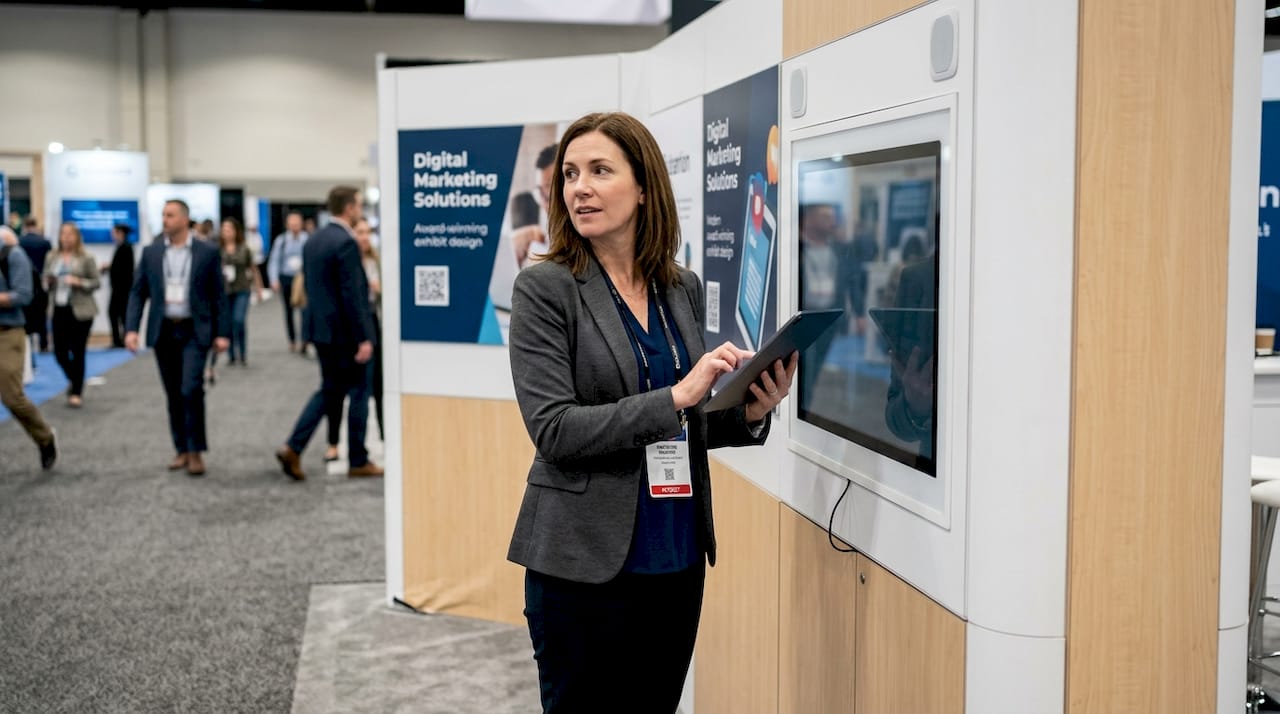
Pro Tip: When briefing your design team, define the single emotional response you want visitors to leave with. Every design decision should serve that outcome. If you cannot articulate it in one sentence, the booth will likely feel scattered.
For brands prioritizing environmental responsibility, sustainable booth designs demonstrate that experiential impact and ecological accountability are not mutually exclusive. You can also explore how to boost brand impact through modular configurations that support both creativity and reuse.
Design strategies for European trade shows
Design choices must also align with regional regulations and best practices, especially across diverse European venues. What works at a large-format show in Frankfurt may require adaptation for a boutique event in Milan or a sector-specific exhibition in Amsterdam.
For European trade shows, focus on modular, sustainable designs compliant with local regulations, and integrate AR and VR for phygital experiences that boost dwell time and lead quality. Modularity is not a compromise. It is a strategic advantage that allows you to adapt the same core booth architecture to different floor plans, ceiling heights, and power configurations without rebuilding from scratch.
| Design consideration | Why it matters for European shows |
|---|---|
| Modular construction | Adapts to varied venue specs across countries |
| Sustainable materials | Meets EU sustainability directives and buyer expectations |
| Open layout planning | Complies with fire and safety egress requirements |
| AR/VR integration | Differentiates in competitive, high-traffic environments |
| Local language support | Ensures brand messaging resonates with regional audiences |
Top considerations for 2026 European trade shows:
- Verify venue-specific height restrictions and rigging rules before finalizing design
- Source materials that meet EU environmental standards to avoid compliance issues
- Design for multilingual signage from the outset, not as an afterthought
- Plan power and data infrastructure requirements early, as European venues vary significantly
- Build in flexibility for last-minute floor plan changes, which are common at large European events
Pro Tip: Request a venue technical manual at least 12 weeks before the event. It contains critical specifications that will affect your booth design, including load-bearing limits, electrical access points, and rigging restrictions.
Exploring modular booth solutions and customizable booth stands can help you identify configurations that balance creative ambition with practical constraints.
Measuring success: KPIs and common pitfalls
Solid design is only part of the puzzle. Effective measurement and continuous learning set exceptional booths apart from those that simply look impressive.
Success hinges on strategy over aesthetics and avoiding pitfalls like clutter, poor visitor flow, and untested technology. Many exhibitors invest heavily in design and then measure success only by the number of business cards collected. That approach misses the full picture.
Metrics every manager should track:
- Dwell time: Average minutes spent at the booth, segmented by zone if possible
- Qualified engagement minutes (QEM): Time spent in meaningful conversation or interaction, not just passive presence
- Lead quality score: Percentage of leads that meet predefined qualification criteria
- Navigation friction: Points where visitors hesitate, turn back, or disengage
- Post-show conversion rate: Percentage of booth leads that progress to a sales conversation within 30 days
- Net Promoter Score (NPS): Collected via brief post-interaction surveys at the booth
Measure QEM, navigation friction, and tie experiential spend to KPIs to build a performance framework that justifies future investment and identifies areas for improvement.
Common pitfalls to avoid include visual clutter that dilutes the brand message, interactive technology that has not been stress-tested under real show conditions, and layouts that create bottlenecks during peak traffic hours. Each of these mistakes is preventable with proper pre-show planning.
Pro Tip: Assign one team member specifically to observe visitor behavior during the first two hours of the show. Their observations will reveal flow problems and engagement gaps that no amount of pre-show planning can fully anticipate.
The complete trade show guide offers a structured framework for aligning booth design decisions with measurable business outcomes.
Turning insights into action: Practical steps for your next event
To close the loop, here is how you can apply what you have learned to achieve measurable impact at your next event. Pre and post-show marketing amplifies impact fivefold, while strategic design avoids the common pitfalls that erode ROI.
- Define your experiential objective: Identify the single business outcome the booth must support, whether that is lead generation, product launch awareness, or partner recruitment.
- Audit your current booth: Evaluate existing assets against the experiential framework. Identify which elements can be upgraded and which need to be replaced.
- Select vendors with European experience: Choose design and build partners who understand local venue regulations, logistics, and compliance requirements.
- Pilot all technology integrations: Test AR, VR, and interactive systems in a controlled environment at least four weeks before the event. Do not rely on on-site testing.
- Build a pre-show marketing campaign: Use email, LinkedIn, and targeted digital advertising to drive qualified traffic to your booth before the event opens.
- Assign clear roles for show days: Every team member should know their zone, their conversation objectives, and how to capture lead data consistently.
- Conduct a post-show debrief within 48 hours: Capture qualitative observations while they are fresh, and compare them against your pre-defined KPIs.
Pro Tip: Brief your booth staff on the experiential narrative, not just the product features. Visitors remember how they felt at your booth far longer than what they were told.
Reviewing modular booth rental benefits can help you determine whether renting or owning your booth infrastructure better supports your event calendar and budget cycle.
Enhance your exhibition presence with expert booth solutions
Applying experiential design principles at European trade shows requires more than creative vision. It demands technical expertise, regional knowledge, and a partner who can manage the full process from concept to on-site installation. Adam Expo Stand specializes in designing, manufacturing, and installing custom and modular exhibition stands across Europe, with a track record of delivering immersive, brand-consistent booths for clients in technology, healthcare, manufacturing, and retail. Whether you are planning a flagship presence at a major European trade fair or a targeted activation at a sector-specific event, our team can support every stage of your experiential journey. Explore why modular booths are becoming the preferred format for brands that need flexibility, sustainability, and impact at scale.
Frequently asked questions
What is the difference between experiential and traditional booth design?
Experiential booth design centers on multisensory engagement and interactivity to create memorable visitor journeys, while traditional designs prioritize static displays and passive branding. The distinction lies in whether visitors participate or simply observe.
How can I measure the ROI of my experiential booth?
Track leads, dwell time, qualified engagement minutes, and post-event conversion rates to assess ROI beyond surface-level metrics. Interactive booths generate 5x more leads and deliver 150 to 600% ROI compared to traditional displays.
What mistakes should I avoid in experiential booth design?
Avoid clutter, untested technology, and poor visitor flow at all costs. Always align every experiential feature directly with your defined business KPIs to ensure design decisions serve measurable outcomes.
Does experiential booth design work for small companies?
Yes. With modular and AR/VR phygital integration accessible across various budgets, smaller brands can drive strong engagement and generate qualified leads at European trade shows without requiring large-format custom builds.