Key factors in trade show booth selection success
Many marketers believe booth size alone determines trade show success, but that’s only part of the story. Your booth’s location, design, budget alignment, and engagement strategy play equally critical roles in attracting visitors and generating leads. Selecting the right booth involves balancing multiple factors that work together to amplify your brand presence and meet specific marketing objectives. This guide walks you through the essential considerations that transform a simple booth into a powerful marketing tool, helping you make informed decisions that maximize return on investment and create memorable experiences for your target audience at every exhibition.
Table of Contents
- Key takeaways
- Understanding the essential factors in trade show booth selection
- Comparing booth types and layouts for your brand
- Material and design considerations for durability and engagement
- Navigating event rules and budgets to optimize selection
- Maximizing brand impact through strategic planning and engagement
- Discover expert trade show booth solutions
- FAQ
Key Takeaways
| Point | Details |
|---|---|
| Integrated booth factors | Successful booth selection relies on coordinating location, design, budget, and goals to maximize impact and return on investment. |
| Location visibility tradeoffs | Choosing location requires weighing visibility advantages against budget constraints. |
| Size versus layout | A compact, well designed space can outperform a larger booth when layout and engaging elements drive visitor interaction. |
| Budget comprehensive planning | Budget should cover design, materials, shipping, storage, setup labor, and technology rentals to maximize return. |
| Objectives drive design | Marketing goals determine booth layout and features tailored to lead generation or brand awareness. |
Understanding the essential factors in trade show booth selection
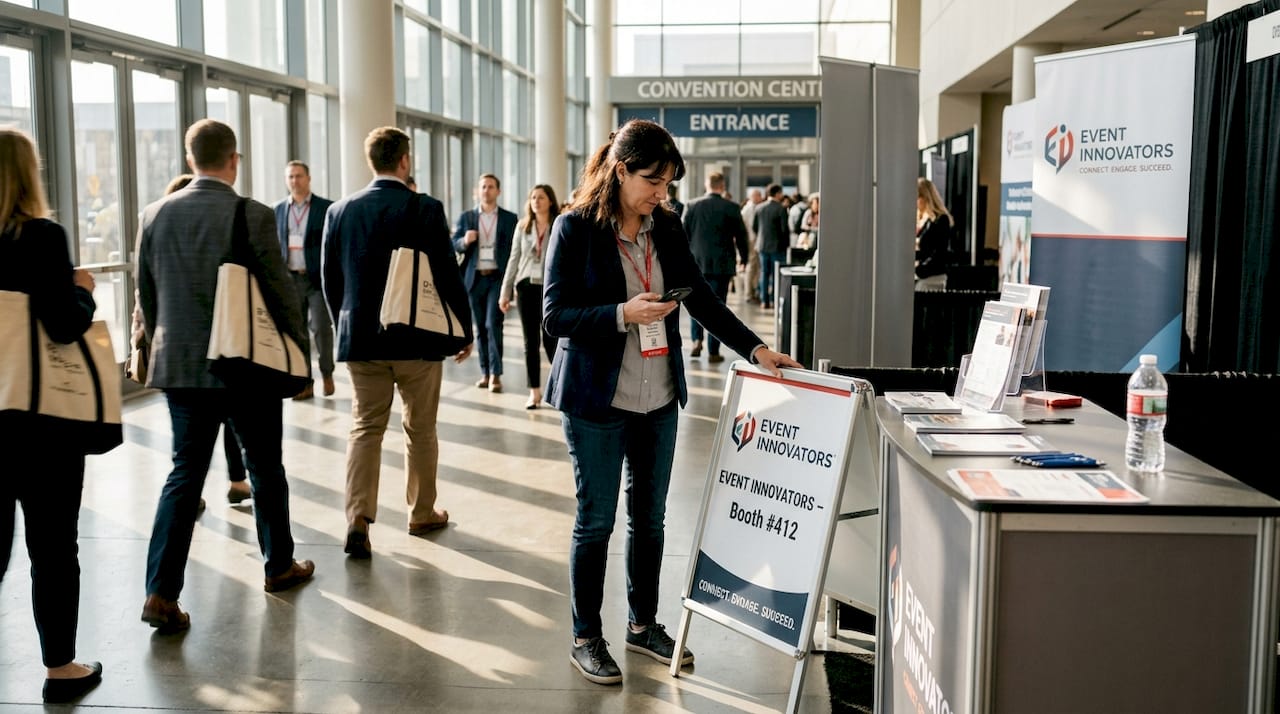
Your booth’s location within the event venue dramatically impacts who sees your brand and how often. Corner booths offer visibility from multiple angles, while aisle positions capture passing traffic. High-traffic areas near entrances, food courts, or main stages naturally attract more visitors, but they also come with premium pricing. You need to weigh this visibility advantage against your budget constraints.
Booth size matters, but it’s not the deciding factor many assume. A compact, well-designed space often outperforms a larger booth that lacks strategic layout or engaging elements. Your space must accommodate anticipated visitor volume while leaving room for product displays, demonstrations, and comfortable conversations. Consider how many staff members you’ll have and what activities you’re planning before committing to dimensions.
Budget considerations extend beyond the booth rental itself. Factor in design costs, construction materials, shipping, storage, setup labor, and technology rentals. Selecting the right booth requires balancing location, design, budget, and objectives for maximum impact. A realistic budget helps you prioritize features that deliver the strongest return rather than stretching resources too thin across unnecessary elements.
Your marketing objectives should drive every booth selection decision. Are you launching a new product, generating leads, building brand awareness, or meeting existing clients? Each goal demands different spatial requirements and design approaches. A lead generation focus needs private meeting areas, while brand awareness prioritizes open, inviting spaces with bold visual elements.
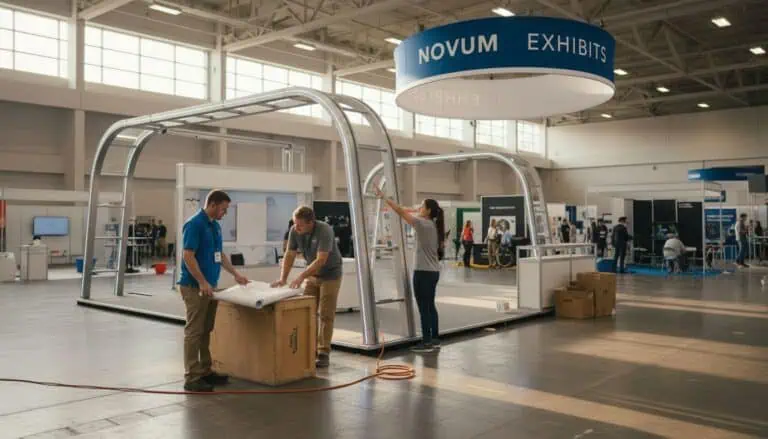
Logistics often get overlooked until problems arise. Verify electrical outlet locations, internet connectivity options, and load-in times before finalizing your booth choice. Some venues restrict setup hours or require union labor, adding unexpected costs and complexity. Understanding these operational details prevents last-minute scrambling and ensures your team can execute the planned experience smoothly.
Pro Tip: Visit the venue during a previous event if possible to observe traffic patterns and identify prime locations that fit your budget and goals.
Comparing booth types and layouts for your brand
Inline booths line exhibition hall perimeters with one open side facing the aisle. They’re the most affordable option and work well for companies with limited budgets or those testing a new event. The single-entry design limits visitor flow but creates an intimate environment for focused conversations. You’ll need strong graphics and signage to stand out among neighboring exhibitors competing for the same aisle traffic.
Peninsula booths open on three sides, offering significantly better visibility and accessibility. Visitors can approach from multiple directions, creating natural flow and reducing bottlenecks during busy periods. This configuration suits brands wanting prominent positioning without island booth costs. Different booth types and layouts significantly influence brand visibility and visitor interaction patterns throughout the event.
Island booths stand alone with access from all four sides, delivering maximum exposure and design freedom. You can create immersive brand experiences with 360-degree storytelling, but you’ll need compelling design on every side to justify the premium investment. These booths work best for established brands with substantial budgets and ambitious engagement goals. The open layout demands more staff to manage visitor flow from multiple entry points.
| Booth Type | Visibility | Cost Level | Best For |
|---|---|---|---|
| Inline | Limited (one side) | Low | Budget-conscious exhibitors, first-time participants |
| Peninsula | High (three sides) | Medium | Growing brands seeking better positioning |
| Island | Maximum (four sides) | High | Established brands with large budgets |
| Split Island | Very High (shared space) | Medium-High | Partnerships or multi-product showcases |
Split island configurations divide a large island space between two exhibitors, offering island benefits at reduced individual cost. This arrangement works when you’re partnering with a complementary brand or showcasing distinct product lines that benefit from separation. Coordinate design elements carefully to maintain cohesive branding while respecting the shared space dynamics.
Your chosen layout must reinforce brand identity through strategic use of colors, materials, and spatial design. Creative trade show booth ideas help translate brand messaging into physical experiences that resonate with visitors. Consider how your trade show booth design guides visitors through your story, from initial attraction to deeper engagement and lead capture.
Event regulations often dictate which booth types you can select based on your space assignment. Review the exhibitor manual thoroughly before committing to a design concept, as height restrictions, hanging sign rules, and structural requirements vary significantly between venues and booth classifications.
Material and design considerations for durability and engagement
Fabric structures offer lightweight portability and vibrant graphics that create visual impact without heavy construction. Tension fabric systems stretch printed material over aluminum frames, producing seamless displays that pack compactly for shipping. These materials work exceptionally well for companies exhibiting at multiple events annually, as they withstand repeated assembly and disassembly while maintaining appearance. The main limitation is structural flexibility for hanging monitors or heavy product displays.
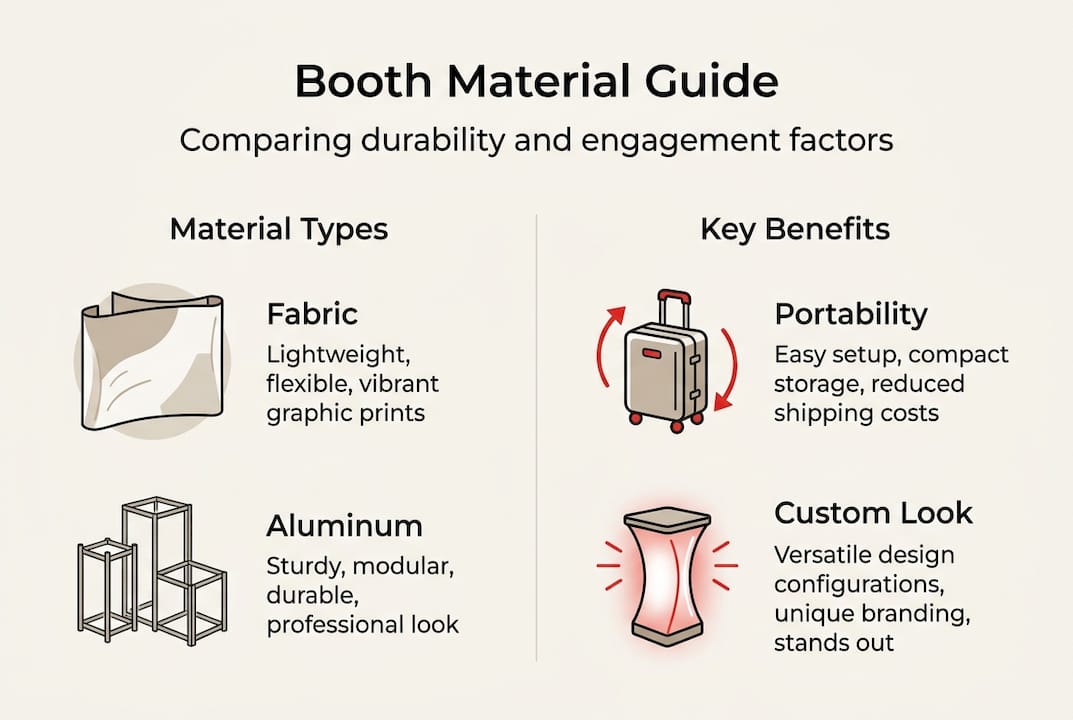
Aluminum extrusion systems provide modular frameworks that adapt to different booth sizes and configurations. You can reconfigure the same components for various events, maximizing your investment across multiple shows. These systems accept interchangeable panels, graphics, and accessories, giving you design flexibility without starting from scratch each time. The industrial appearance requires careful finishing to achieve premium aesthetics that match your brand standards.
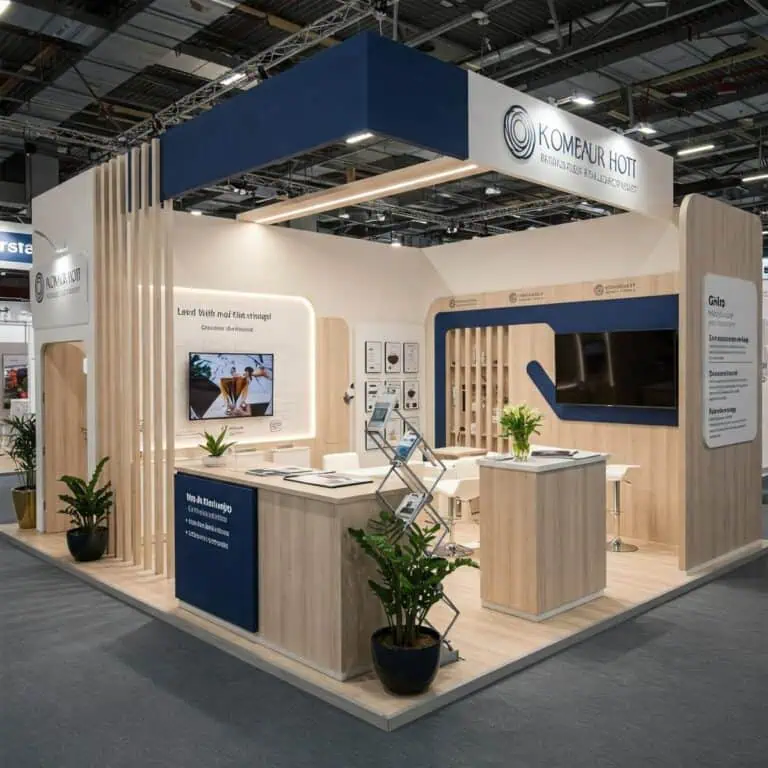
Wood construction delivers custom, high-end aesthetics that communicate quality and permanence. Properly finished wood booths photograph beautifully and create sophisticated environments for luxury brands or professional services. Choosing the right materials ensures booth durability and enhances visitor experience throughout multi-day events. However, wood adds significant weight and shipping costs while requiring more complex assembly than modular alternatives.
Plastic and composite materials balance durability with lighter weight than traditional wood construction. Modern composites mimic wood grain or other finishes while resisting damage from handling and transport. These materials suit brands seeking custom appearance without wood’s logistical challenges, though they may lack the authentic feel that some luxury positioning demands.
Lighting transforms booth atmosphere and draws attention from across crowded exhibition halls. LED systems consume minimal power while offering programmable color changes and dramatic effects. Strategic lighting highlights key products, creates depth, and ensures graphics remain vibrant under varying venue conditions. Plan electrical requirements early, as additional lighting often requires upgraded power service that impacts your budget.
Graphics quality directly affects brand perception, so invest in high-resolution printing on appropriate substrates. Large-format graphics must remain sharp and color-accurate when viewed up close. Consider backlit options for added impact, but verify that your booth structure can accommodate the necessary lighting and power infrastructure.
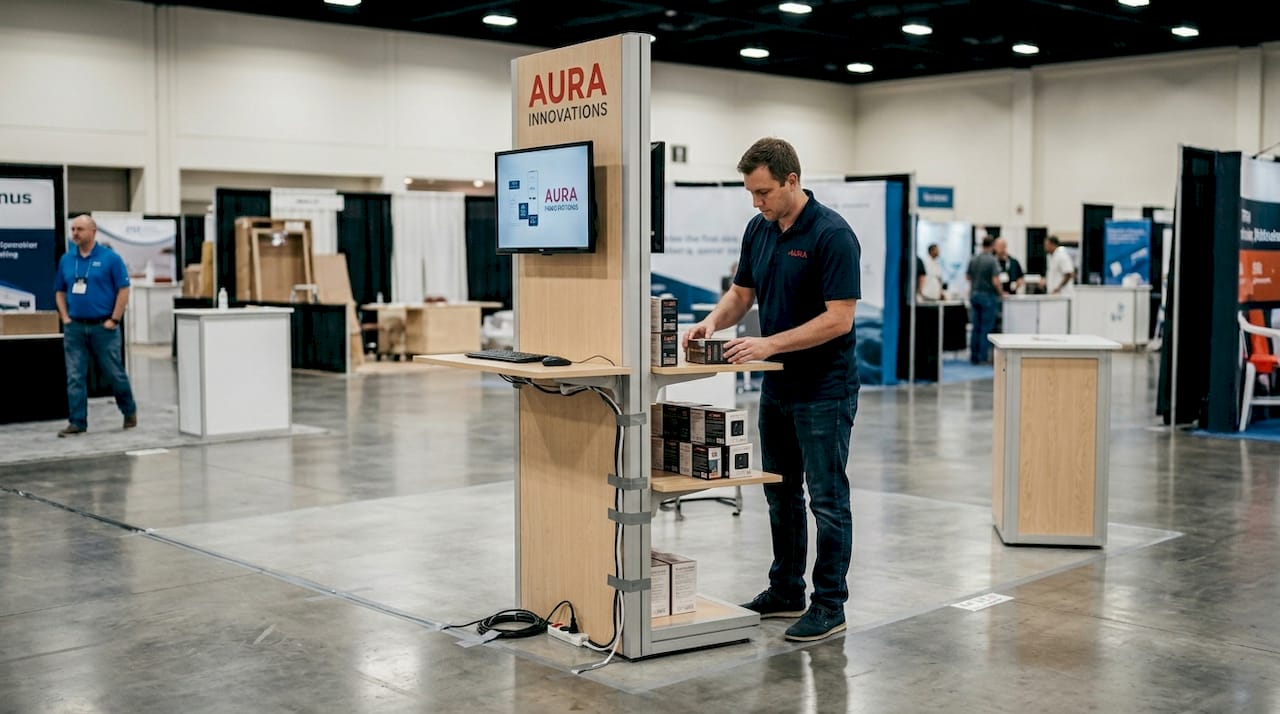
Technology integration ranges from simple monitor mounts to interactive touchscreens and virtual reality experiences. Ensure your chosen materials can support the weight and power requirements of planned technology. Essential trade show materials include not just structural components but also the accessories that bring your booth to life and facilitate meaningful visitor interactions.
Pro Tip: Request material samples and test graphics under different lighting conditions before approving final production to avoid costly surprises at the event.
Navigating event rules and budgets to optimize selection
Event organizers impose regulations that directly impact your booth design and setup process. Height restrictions typically range from 8 to 16 feet depending on booth type and location, with inline booths facing stricter limits to preserve sightlines. Exceeding height limits without approval can result in mandatory modifications at your expense or even booth closure until compliance is achieved.
Material restrictions often prohibit open flames, certain fabrics, or construction methods that pose safety risks. Some venues require flame-retardant certification for all fabric materials, while others ban specific fastening methods that damage floors. Review these requirements during the design phase to avoid discovering incompatibilities after construction begins. Understanding and adhering to event rules is critical for hassle-free and effective booth setup.
Sound level restrictions protect neighboring exhibitors from disruptive demonstrations or presentations. If your booth includes audio components, verify acceptable volume levels and operating hours. Some events prohibit continuous audio loops or require headphone-only demonstrations in certain zones. Plan your engagement strategy within these parameters rather than hoping for exceptions.
- Review the exhibitor manual thoroughly as soon as you receive it, noting all deadlines and requirements
- Create a comprehensive budget spreadsheet that includes booth rental, design, construction, shipping, and setup labor
- Add a 15-20% contingency fund for unexpected costs or last-minute changes
- Prioritize spending on elements that directly support your primary marketing objectives
- Obtain required insurance certificates and submit all paperwork before deadlines to avoid penalty fees
- Coordinate with show services for electrical, internet, and furniture rentals well in advance
- Schedule setup crew and confirm their credentials meet any union or venue requirements
| Budget Category | Typical Allocation | Priority Level |
|---|---|---|
| Booth Space Rental | 25-35% | Essential |
| Design & Construction | 30-40% | High |
| Graphics & Printing | 10-15% | High |
| Shipping & Storage | 8-12% | Medium |
| Technology & AV | 5-10% | Medium |
| Setup Labor | 5-8% | Essential |
| Contingency | 10-15% | Essential |
Conducting cost-benefit analysis helps you evaluate which booth features deliver meaningful return versus those that simply consume budget. A large video wall might attract attention, but if your product requires hands-on demonstration, investing in multiple demo stations could generate more qualified leads. Align every expenditure with measurable outcomes tied to your event goals.
Many exhibitors overspend on structural elements while underfunding the trade show engagement strategies that actually convert visitors into customers. Balance your investments across booth infrastructure, staff training, promotional materials, and follow-up systems for optimal results.
Maximizing brand impact through strategic planning and engagement
Digital displays and interactive elements transform passive viewing into active participation. Touchscreens allow visitors to explore product catalogs, configure options, or access technical specifications at their own pace. These tools capture attention while gathering valuable data about visitor interests and preferences. Interactive experiences create memorable moments that differentiate your booth from competitors relying solely on static displays.
Your booth staff determines whether visitors become leads or simply pass through. Train team members on greeting approaches, qualifying questions, and smooth handoffs between initial contact and deeper conversations. Schedule adequate breaks so staff remain energetic and attentive throughout long event days. Assign specific roles so everyone knows whether they’re attracting traffic, conducting demos, or capturing lead information.
Product demonstrations scheduled at regular intervals create natural gathering points and give passersby reasons to stop. Announce demo times through signage and social media to build anticipation. Keep presentations concise and focused on solving specific problems rather than listing every feature. Allow time for questions and hands-on exploration after each demonstration.
Giveaways and branded materials serve dual purposes as traffic drivers and brand reminders. Choose items that align with your brand positioning and offer genuine utility to your target audience. High-quality, relevant giveaways get used repeatedly, extending your brand exposure long after the event ends. Avoid generic trinkets that get discarded immediately.
A well-planned booth enhances visitor interaction and maximizes brand impact by creating intentional touchpoints that guide prospects through awareness, interest, and action stages of the buyer journey.
Pre-show marketing dramatically increases booth traffic by giving your target audience reasons to seek you out. Announce your booth location, special presentations, or exclusive offers through email campaigns, social media, and your website. Attract visitors to your exhibition stand by creating compelling reasons for them to prioritize your booth among hundreds of options competing for their limited time.
Personalized invitations to key prospects and existing clients ensure you connect with high-value contacts during the event. Schedule specific meeting times to guarantee face-to-face conversations with decision makers who might otherwise get pulled in different directions. These pre-arranged meetings often generate more qualified opportunities than random booth traffic.
Social media amplification during the event extends your reach beyond physical attendees. Share live updates, demonstration videos, and visitor testimonials to engage your broader audience. Encourage booth visitors to post about their experience using event hashtags and tagging your brand. This organic content builds credibility and attracts additional traffic from attendees monitoring social feeds. Learn how to attract visitors at trade shows through integrated marketing that connects pre-show promotion, live engagement, and post-event follow-up into a cohesive strategy.
Discover expert trade show booth solutions
Implementing the strategies outlined in this guide requires careful planning, design expertise, and flawless execution. Partnering with experienced exhibition professionals streamlines the entire process from concept to teardown. Professional trade show booth services provide turnkey solutions that handle design, construction, logistics, and on-site setup so you can focus on engaging visitors and achieving your marketing objectives. Expert guidance helps you navigate venue regulations, optimize your budget allocation, and create booth experiences that genuinely resonate with your target audience. Whether you’re exhibiting across Europe or focusing on specific markets, specialized booth builders bring the technical knowledge and creative vision that transform exhibition spaces into powerful brand platforms.
FAQ
What factors should I prioritize when selecting a trade show booth?
Location, budget, event regulations, and design suitability form the foundation of effective booth selection. Prioritize factors that directly support your specific marketing goals, whether that’s lead generation, brand awareness, or product launches. Balance visibility needs with budget realities while ensuring compliance with all venue requirements.
How do event regulations affect booth selection and design?
Event-specific rules dictate booth dimensions, height limits, materials, and setup processes that directly constrain your design options. Non-compliance can result in mandatory modifications, penalty fees, or booth closure until issues are resolved. Review the exhibitor manual thoroughly during the planning phase to ensure your design meets all requirements before construction begins.
What are cost-effective ways to enhance booth engagement?
Interactive demonstrations, compelling graphics, and well-trained staff create engagement without massive budgets. Pre-show promotion through email and social media drives targeted traffic to your booth, maximizing return on your space investment. Focus spending on elements that facilitate meaningful conversations rather than expensive features that simply attract brief glances.
How do I choose between custom and modular booth systems?
Custom booths deliver unique designs that perfectly reflect your brand but require higher investment and longer lead times. Modular systems offer flexibility, reusability across multiple events, and faster setup at lower cost. Choose custom when brand differentiation justifies the investment, or select modular when you exhibit frequently and need adaptable configurations.
What role does booth location play in exhibition success?
Location determines your visibility, foot traffic volume, and accessibility to target attendees throughout the event. Premium positions near entrances, main aisles, or popular amenities attract more visitors but command higher rental fees. Evaluate location options based on your budget and traffic generation strategy, considering whether prime positioning or enhanced booth features deliver better return on investment.