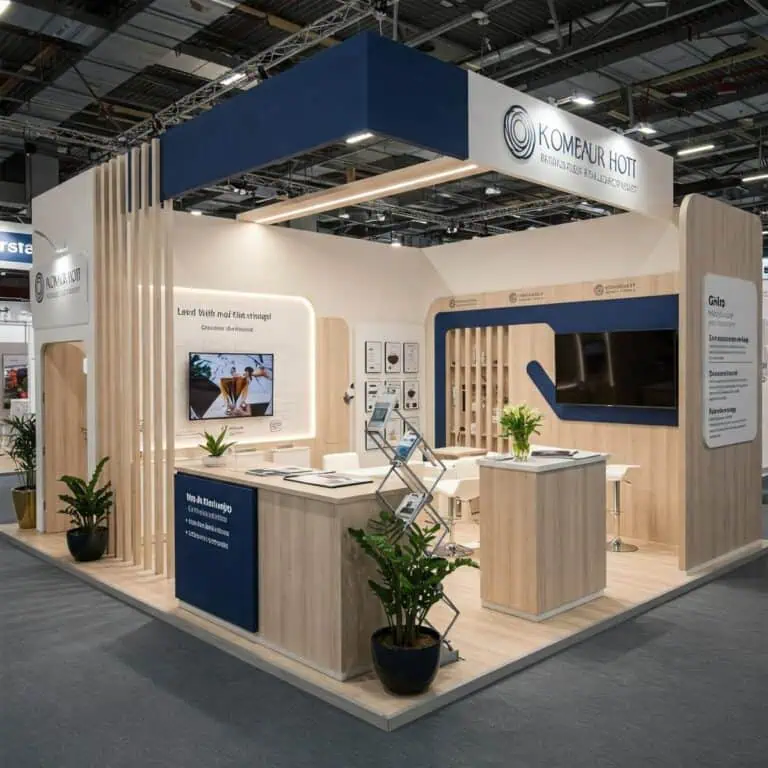
Trade Show Engagement Strategies to Maximize Booth Impact
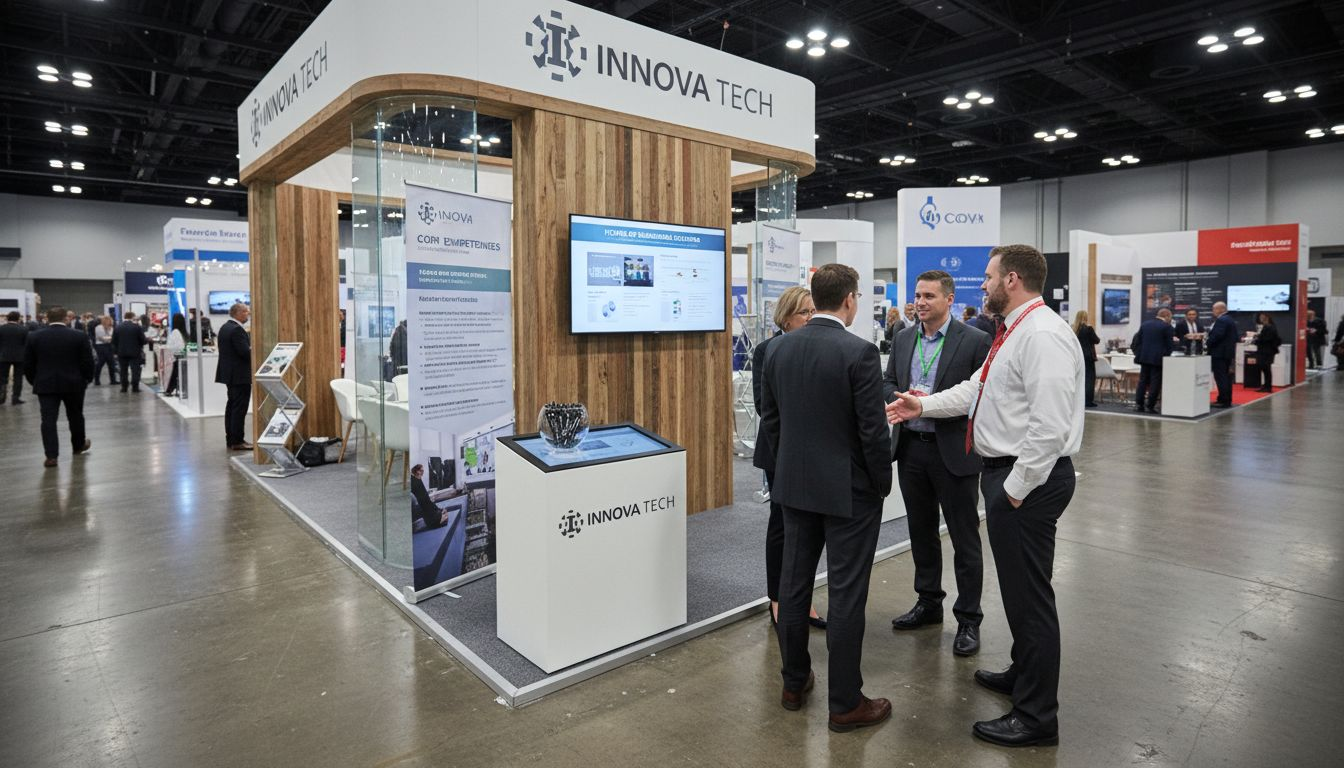
Standing out at a European trade show takes more than eye-catching graphics and free merchandise. Many exhibitors overlook the impact of clearly understanding attendee profiles and setting targeted objectives, even though research shows only 29% of companies set specific trade show goals. By adopting a strategic approach, you can reshape your booth experience with tailored engagement tactics that increase brand presence and create lasting attendee connections.
Table of Contents
- Step 1: Identify Attendee Profiles And Set Booth Engagement Goals
- Step 2: Design Interactive Displays And Select Engagement Tools
- Step 3: Deploy Staff For Dynamic Attendee Interaction
- Step 4: Monitor Attendee Behavior And Refine Engagement Tactics
- Step 5: Evaluate Engagement Outcomes And Improve Future Strategies
Quick Summary
| Key Insight | Explanation |
|---|---|
| 1. Develop Attendee Profiles | Analyze demographic data to create attendee profiles, enhancing engagement strategies tailored to their interests and needs. |
| 2. Create Interactive Displays | Design engaging booth experiences with interactive technologies to captivate attendees and strengthen brand connections. |
| 3. Train Staff for Engagement | Prepare booth staff with targeted training to facilitate dynamic interactions and personalize attendee experiences. |
| 4. Utilize Real-Time Monitoring | Implement monitoring tools to observe attendee behavior, allowing for immediate adjustments to enhance engagement. |
| 5. Conduct Comprehensive Evaluations | Post-event analysis should focus on metrics and qualitative insights to improve future trade show strategies and performance. |
Step 1: Identify attendee profiles and set booth engagement goals
Successful trade show participation begins with understanding your audience and establishing clear, strategic engagement objectives. By developing precise attendee profiles and setting targeted interaction goals, you can transform your booth from a passive display into an active networking powerhouse.
To effectively identify attendee profiles, start by reviewing the event’s demographic data and registration information. Look for key characteristics such as professional roles, industries represented, career levels, and potential business interests. Research indicates that only 29% of companies set specific trade show objectives, presenting a significant opportunity to differentiate your approach.
Key Steps for Attendee Profile Development:
- Analyze previous event attendee data
- Review registration materials and event demographics
- Survey potential attendees before the event
- Consult event organizers for detailed attendee insights
Once you have developed a comprehensive understanding of attendee profiles, establish specific engagement goals that align with your marketing and business objectives. Consider metrics like:
Here’s a quick comparison of trade show engagement approaches:
| Approach | Passive Booth Display | Strategic Booth Engagement |
|---|---|---|
| Attendee Interaction | Limited, unstructured | Targeted, goal-oriented |
| Lead Generation | Low-quality leads | High-quality leads |
| Brand Impact | Minimal impression | Lasting connections |
| Data Collection | Rarely analyzed | Systematically tracked |
- Number of meaningful conversations
- Quality leads generated
- Product demonstrations conducted
- Contact information collected
Strategic booth engagement requires understanding attendee motivations and tailoring your approach to meet their professional needs.
Successful exhibitors recognize that modern attendees pre-plan their event experiences with specific agendas. By mapping booth interactions to attendee expectations, you dramatically increase the likelihood of meaningful engagement.
Pro tip: Create a detailed attendee persona document that your entire booth team reviews before the event to ensure consistent, targeted communication strategies.
Step 2: Design interactive displays and select engagement tools
Transforming your trade show booth from a static display into an immersive experience requires strategic design of interactive displays and carefully selected engagement tools. By creating sensory-rich, compelling environments, you can captivate attendees and forge memorable brand connections that extend far beyond the event floor.
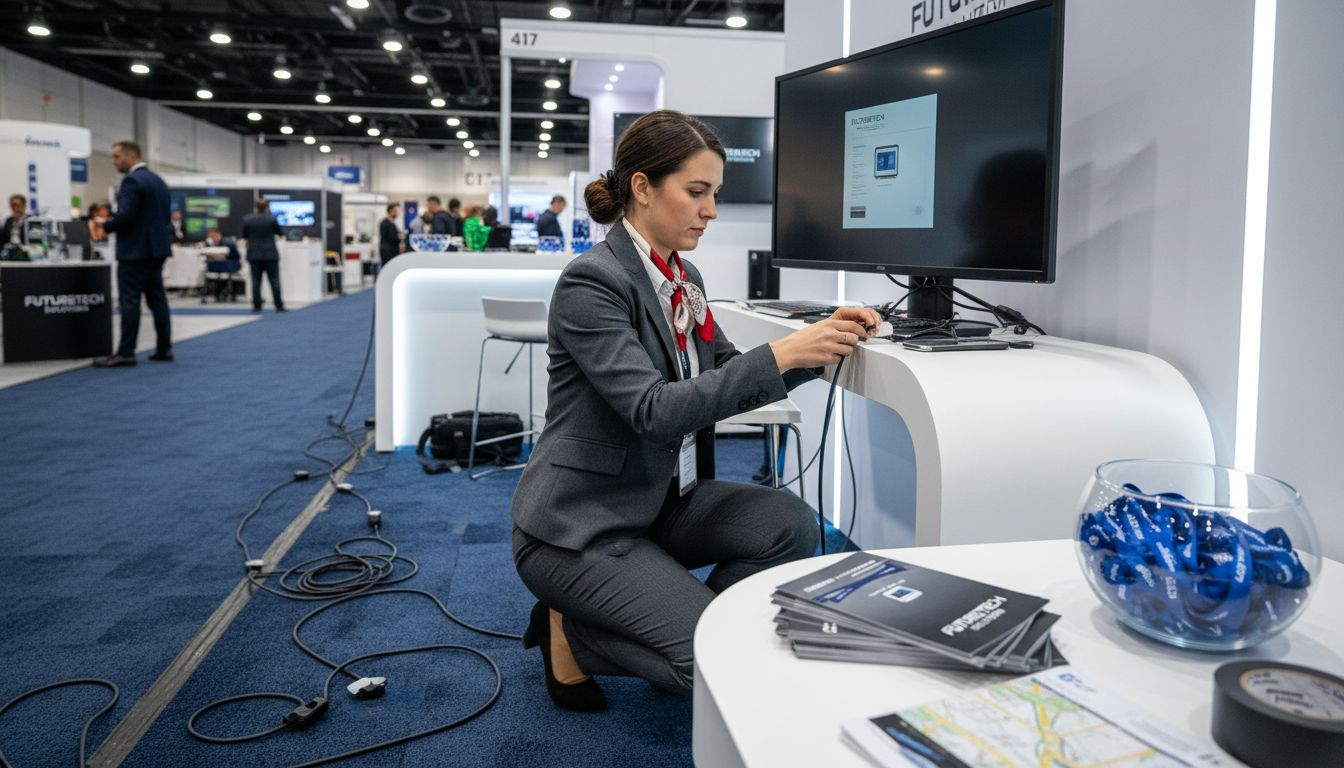
Effective booth design combines visual aesthetics with interactive technologies that invite attendees to engage directly with your brand. Consider incorporating digital touchpoints that encourage active participation, such as touchscreen displays, interactive product demonstrations, and gamified experiences that transform passive viewing into dynamic interaction. Research shows that experiential marketing strategies which create physically and emotionally engaging environments significantly elevate booth impact.
Interactive Display Options:
- Touchscreen product exploration stations
- Live demonstration zones
- Virtual reality product experiences
- Augmented reality brand interactions
- Interactive digital games related to your industry
When selecting engagement tools, prioritize experiences that align with your brand narrative and provide genuine value to attendees. Innovative booth features should not merely entertain but also educate and facilitate meaningful connections.
Strategic booth design transforms passive observers into active participants, creating lasting brand impressions.
Consider developing multi-sensory experiences that appeal to different learning styles and engagement preferences. Some attendees might prefer detailed technical demonstrations, while others are drawn to gamified interactions or immersive storytelling approaches.
- Assess your target audience’s preferences
- Select technologies matching their interaction style
- Create seamless, intuitive engagement pathways
- Train booth staff to guide interactive experiences
Pro tip: Prototype and test your interactive displays before the event to ensure smooth functionality and identify potential user experience challenges.
Step 3: Deploy staff for dynamic attendee interaction
Transforming your trade show presence from passive display to active engagement requires strategic staff deployment and comprehensive interaction training. Your booth team becomes the critical bridge between your brand’s message and potential attendees, turning brief encounters into meaningful connections.
Successful staff deployment involves more than simply positioning team members around your booth. Develop a strategic interaction plan that empowers each staff member to engage attendees proactively, understand their unique needs, and create personalized experiences. Research indicates that well-trained staff who can facilitate dynamic interactions significantly enhance attendee engagement and booth effectiveness.
Key Staff Deployment Strategies:
- Assign specific interaction roles to each team member
- Create detailed attendee engagement scripts
- Establish clear communication protocols
- Develop targeted conversation starters
- Implement real-time feedback mechanisms
Consider creating a staff interaction matrix that outlines different attendee profiles and corresponding engagement approaches. Exhibition booth management requires a nuanced understanding of how to adapt communication styles for diverse visitor types.
Effective booth staff are not just representatives, but active storytellers who transform brand narratives into compelling personal experiences.
Prepare your team through comprehensive training that covers:
- Product knowledge depth
- Active listening techniques
- Nonverbal communication skills
- Handling diverse attendee personalities
- Capturing and qualifying leads efficiently
Pro tip: Conduct role-playing scenarios before the event to help staff practice dynamic interaction techniques and build confidence in handling various attendee encounters.
Step 4: Monitor attendee behavior and refine engagement tactics
Successful trade show performance requires continuous observation and adaptive strategies that respond to real-time attendee interactions. By implementing sophisticated monitoring techniques, you can transform raw data into actionable insights that dynamically enhance your booth’s engagement and effectiveness.
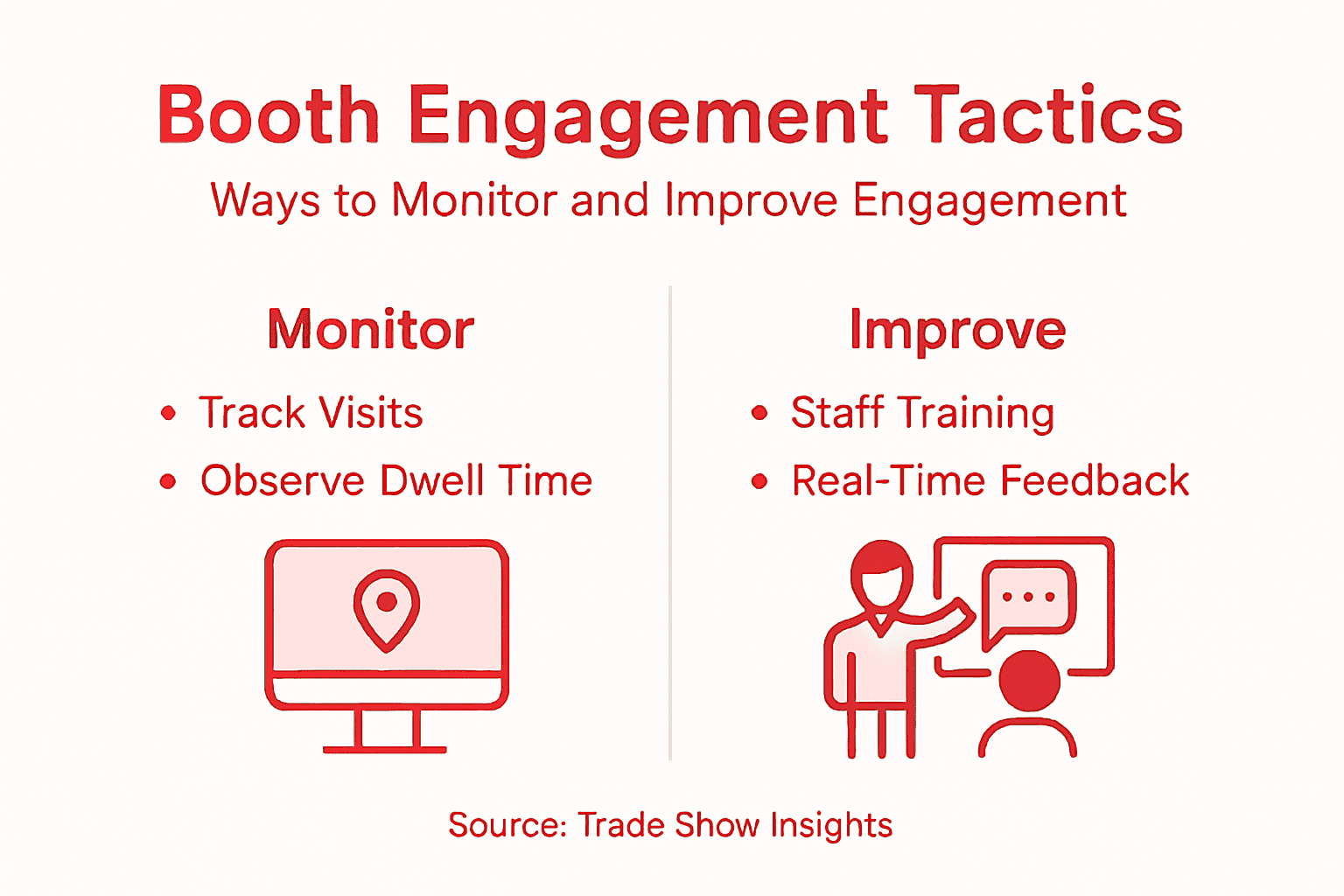
Modern trade show strategies leverage advanced technologies to track and analyze attendee behavior. Digital monitoring tools enable you to capture nuanced interaction patterns, measuring everything from booth traffic flow to attendee sentiment and engagement levels. Research indicates that real-time behavioral analysis allows exhibitors to make immediate adjustments that significantly improve overall attendee experience and interaction quality.
Key Behavioral Monitoring Methods:
- Utilize video tracking technologies
- Implement heat mapping software
- Conduct quick exit interviews
- Track digital interaction metrics
- Use emotional AI sentiment analysis
Innovative booth management demands a proactive approach to understanding attendee dynamics. Your team should develop a flexible framework that allows rapid tactical shifts based on observed behaviors and engagement patterns.
Real-time monitoring transforms passive observation into strategic interaction optimization.
Establish a systematic approach to behavioral tracking:
- Define specific engagement metrics
- Create real-time data collection protocols
- Train staff in observation techniques
- Develop quick adaptation strategies
- Review and adjust tactics continuously
Pro tip: Designate a dedicated team member to continuously monitor and interpret attendee behavior data during the event, ensuring immediate tactical refinements.
Step 5: Evaluate engagement outcomes and improve future strategies
The true measure of trade show success extends far beyond the event itself, requiring a comprehensive approach to post-event analysis and strategic refinement. By systematically evaluating your engagement outcomes, you transform raw event data into a powerful blueprint for future marketing and interaction strategies.
Performance evaluation involves more than simply counting leads or scanning business cards. Research indicates that successful exhibitors conduct deep, multidimensional assessments that analyze quantitative metrics and qualitative insights. Your post-event analysis should create a holistic understanding of your booth’s performance, identifying both strengths to amplify and opportunities for strategic improvement.
Key Evaluation Metrics:
- Total number of meaningful interactions
- Quality and conversion potential of generated leads
- Attendee sentiment and engagement levels
- Staff performance and interaction effectiveness
- Alignment with pre-event engagement goals
Exhibition booth management requires a systematic approach to transforming event data into actionable insights. Develop a structured evaluation framework that goes beyond surface-level measurements.
To streamline your post-event improvements, review these evaluation focus areas:
| Evaluation Aspect | Importance | Outcome Benefit |
|---|---|---|
| Lead Quality | Drives sales potential | Improves future targeting |
| Attendee Sentiment | Measures brand perception | Refines engagement tactics |
| Staff Effectiveness | Boosts interaction success | Enhances training results |
| Goals Alignment | Assesses strategy success | Guides next event planning |
Comprehensive post-event analysis is the cornerstone of continuous improvement in trade show marketing.
Implement a strategic evaluation process:
- Compile comprehensive interaction data
- Conduct team and stakeholder debriefings
- Analyze lead quality and conversion potential
- Compare outcomes against initial objectives
- Document lessons learned and improvement strategies
Pro tip: Create a standardized post-event evaluation template that can be used consistently across different trade show events to track performance trends and improvements.
Trade Show Booth Engagement and In-Booth Engagement Strategies
Maximizing trade show booth engagement requires a deliberate, multi-layered approach that combines environment design, staff training, and technology. The most successful exhibitors understand that tradeshow engagement begins before the event — through pre-show outreach, social media teasers, and personalized meeting invitations — and continues through every touchpoint on the show floor. Your booth is not just a backdrop; it is an active participant in starting conversations that convert to pipeline.
In-Booth Engagement Strategies That Work
Effective in-booth engagement strategies include interactive product demonstrations, gamification elements (such as spin-to-win mechanics or quiz kiosks), augmented reality experiences, and live consultation zones. These tactics transform passive observers into active participants, increasing dwell time and giving your sales team more opportunities to qualify and connect with prospects. Staff should be positioned at the perimeter — not gathered at the back of the booth — to maximize exhibitor and attendee engagement.
How to Improve Trade Show Engagement and Increase Results
Brands wondering how to improve trade show engagement often focus too heavily on visual design while neglecting the human element. The fastest way to increase trade show engagement is to invest in staff training: teach booth personnel to open conversations with open-ended questions, disqualify non-prospects quickly, and guide interested visitors through a structured discovery process that ends with a clear next step — whether that’s a demo booking, a brochure handoff, or a follow-up call scheduled on-site.
Elevate Your Trade Show Impact with Custom Exhibition Solutions
The challenge of transforming your trade show booth into a dynamic engagement hub is clear from the proven strategies in the article. You need to bridge attendee profiling, interactive booth design, strategic staff deployment, real-time monitoring, and thorough post-event evaluation to maximize your presence and generate meaningful leads. Common pain points include creating personalized, immersive experiences that resonate, ensuring your team connects effectively, and capturing measurable results to improve continuously.
At Adam Expo Stand, we specialize in crafting custom and modular exhibition booths that align perfectly with your brand goals and the engagement tactics outlined. Our turnkey services—from 3D design visualization to on-site assembly and sustainable rental options—make standing out effortless. Whether you want interactive displays or streamlined exhibition booth management, our expert team supports every step to turn your trade show challenges into opportunities for lasting connections.
Ready to transform your trade show strategy and captivate attendees like never before Contact us today at Adam Expo Stand to explore tailored solutions that will amplify your booth impact and deliver measurable engagement outcomes. Don’t wait to turn your next event into a standout success.
Frequently Asked Questions
How can I identify the right attendee profiles for my trade show booth?
To identify the right attendee profiles, analyze previous event data, review registration materials, and consult with event organizers for insights. Collect detailed information on professional roles, industries, and interests to tailor your engagement approach effectively.
What are effective engagement goals to set for my trade show booth?
Effective engagement goals include the number of meaningful conversations, quality leads generated, and product demonstrations conducted. Aim for at least a 20% increase in high-quality leads compared to your last event.
What types of interactive displays should I consider for my trade show booth?
Consider incorporating touchscreen exploration stations, live demonstration zones, virtual reality experiences, or gamified interactions. Selecting at least two types of interactive displays can significantly enhance attendee engagement and brand connection.
How can I train my booth staff for dynamic attendee interactions?
Train your booth staff by equipping them with product knowledge, active listening techniques, and effective communication skills. Conduct role-playing scenarios before the event to improve their confidence in engaging with diverse attendee personalities.
What metrics should I monitor to evaluate my trade show engagement success?
Monitor metrics such as total meaningful interactions, lead quality, attendee sentiment, and staff performance. Evaluating these metrics will guide you in refining future strategies and improving your next event’s outcomes.
How can I create a post-event evaluation template for my team?
Create a standardized post-event evaluation template that includes sections for interaction data, team debriefings, lead quality analysis, and lessons learned. Using this template consistently across events will help you track performance trends and identify areas for improvement.