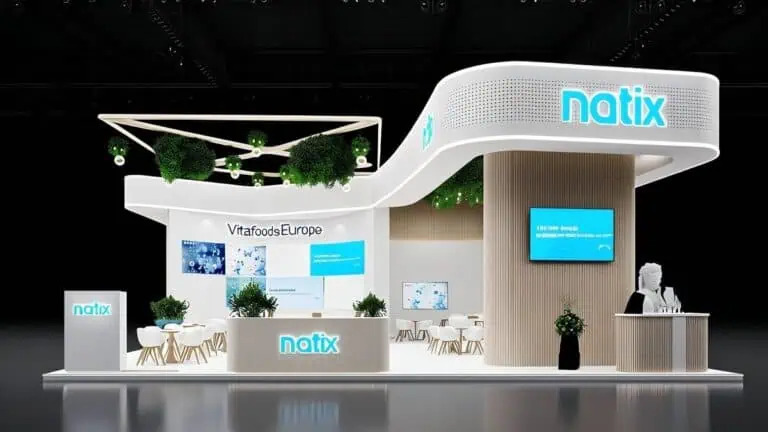
How to maximize trade show ROI: proven steps for 2026
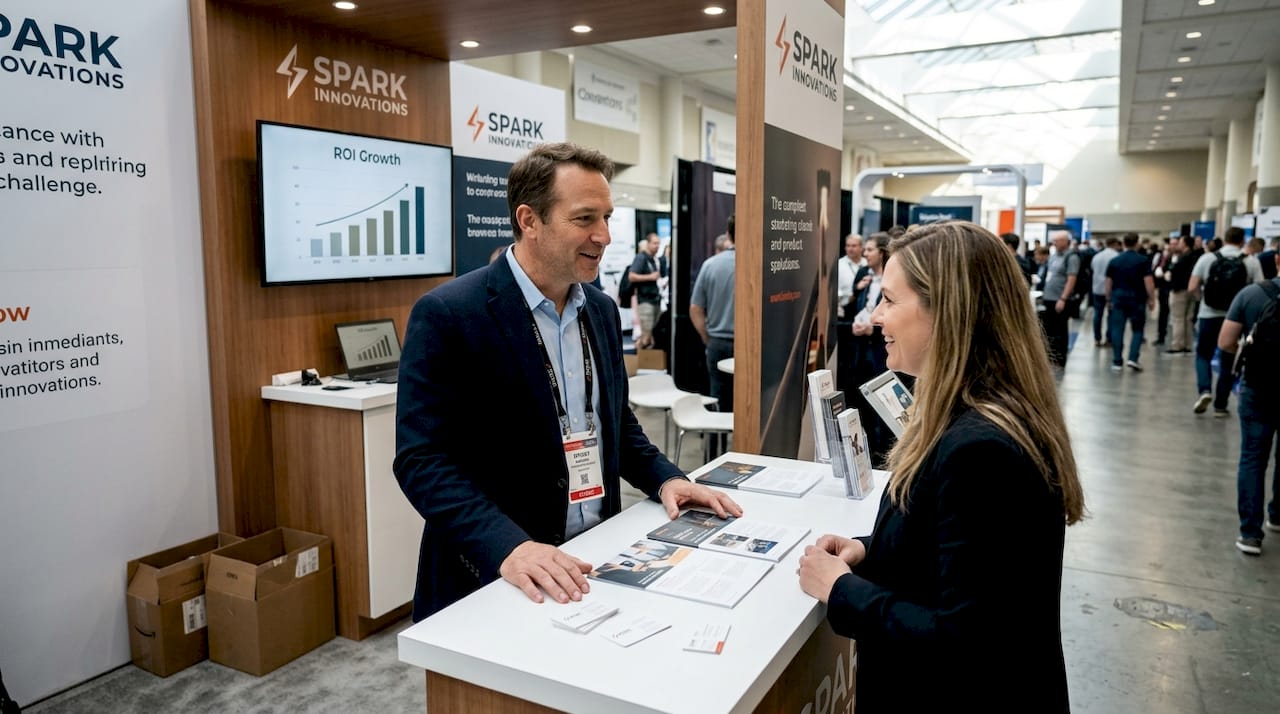
TL;DR:
- Structured goal-setting and measurable KPIs are essential to predict and improve trade show ROI.
- Engaging booth design utilizing interactivity and storytelling maximizes attendee impact and brand recall.
- Digital lead capture and prompt follow-up are crucial for converting leads and analyzing event success.
Trade shows represent one of the most significant line items in a marketing budget, yet the returns can feel frustratingly difficult to predict or control. Companies invest heavily in booth space, travel, and materials, only to walk away with a stack of business cards and no clear picture of what they actually earned. The gap between investment and measurable return is not inevitable. With a structured approach that spans goal-setting, booth design, digital lead capture, and post-show analysis, your team can transform exhibition participation from a costly gamble into a reliable growth engine.
Table of Contents
- Set measurable goals and ROI benchmarks
- Design booths for engagement and brand storytelling
- Leverage digital tools for lead capture and data integration
- Post-show follow-up and ROI analysis for optimization
- Why focusing on attendee experience is the real ROI multiplier
- Take your trade show results further with expert support
- Frequently asked questions
Key Takeaways
| Point | Details |
|---|---|
| Set clear ROI goals | Defining measurable objectives is essential for tracking results you can act on. |
| Build engaging booths | Experiential, story-driven designs create stronger brand recall and better leads. |
| Embrace digital tools | CRM integration and QR codes streamline lead capture and ROI analysis. |
| Prioritize post-show follow-up | Fast, systematic lead nurture and review distinguishes top-performing teams. |
| Focus on attendee experience | Standout real-world experiences pay dividends beyond traditional metrics. |
Set measurable goals and ROI benchmarks
Every successful trade show strategy begins with a measurement foundation built before the event, not after. Without clearly defined objectives, your team has no way to evaluate success or justify the investment to leadership. Start by identifying what you actually need from the event: a specific number of qualified leads, signed partnerships, product demos delivered, or measurable brand lift among a target segment.
Once your objectives are defined, calibrate your expectations against industry reality. Structured measurement typically yields a 3.2x average return, with common benchmarks ranging from 3:1 to 5:1 ROI and standout examples reaching up to 295%. These figures give your team a realistic target range and a baseline for evaluating whether your current strategy is performing or underperforming.
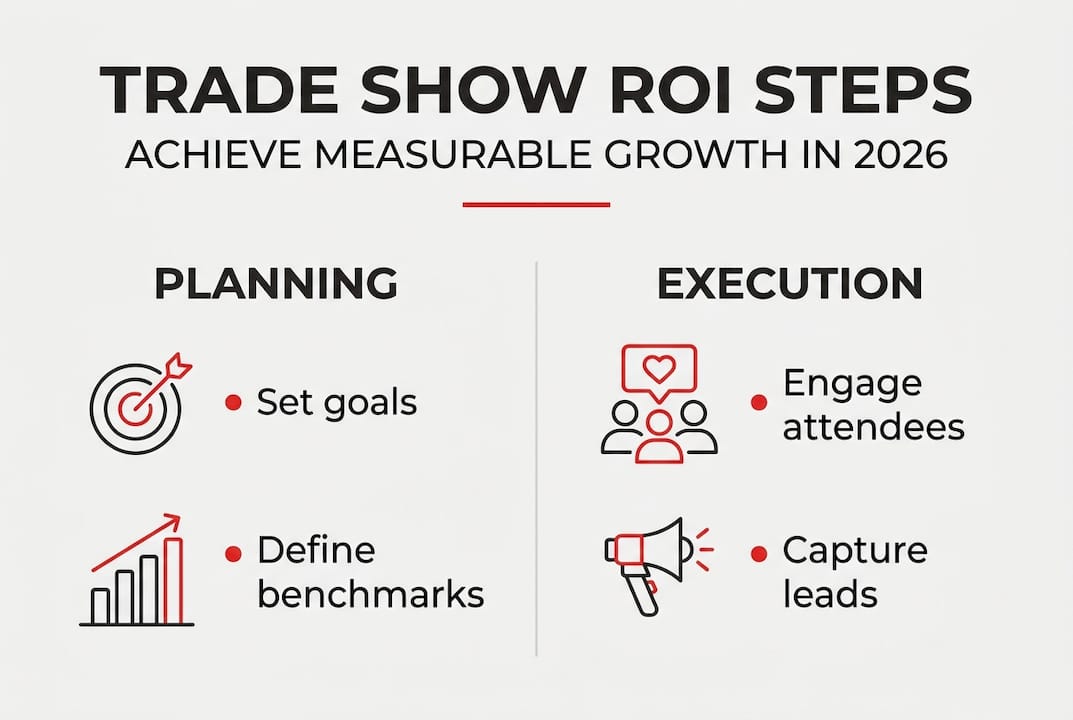
Choosing the right KPIs is equally important. Consider this framework for structuring your reporting:
| Objective | Primary KPI | Secondary KPI |
|---|---|---|
| Lead generation | Qualified leads captured | Cost per lead |
| Sales pipeline | Pipeline value added | Meetings scheduled |
| Brand awareness | Booth traffic count | Social mentions |
| Partnerships | Deals initiated | Follow-up meetings booked |
To build your reporting structure, follow these steps:
- Assign a dedicated measurement owner on your team before the event.
- Set numeric targets for each KPI based on past event data or industry benchmarks.
- Use an exhibitor ROI calculator to model expected returns against planned costs.
- Align KPI targets with your broader marketing and sales goals for the quarter.
- Schedule a post-event debrief within 72 hours while data is still fresh.
Review your trade show ROI best practices to ensure your framework reflects current standards.
Pro Tip: Avoid vanity metrics like total booth visitors or social impressions unless they tie directly to a revenue outcome. Prioritize numbers your CFO would recognize as meaningful.
Design booths for engagement and brand storytelling
With measurable goals set, ensure your booth maximizes in-person impact with smart design. Your exhibition stand is not simply a backdrop. It functions as a three-dimensional billboard, a strategic launchpad, and a dynamic communication platform all at once. The physical environment you create either draws attendees in or lets them walk past.
Immersive booth strategies consistently outperform static displays by engaging multiple senses and guiding visitors through a brand narrative rather than simply presenting products. The contrast is significant:
| Feature | Traditional booth | Immersive storytelling booth |
|---|---|---|
| Visitor engagement | Passive, browse-based | Active, experience-driven |
| Brand recall | Low to moderate | High, multi-sensory |
| Staff interaction | Reactive | Structured and guided |
| Lead quality | Mixed | Pre-qualified through experience |
| Flexibility | Fixed layout | Modular, adaptable |
The booth features that most strongly drive attendee engagement include:
- Interactive technology: Touchscreens, AR product demos, and live configurators give visitors agency and keep them at your stand longer.
- Sensory design elements: Lighting, sound, and material textures create atmosphere and emotional association with your brand.
- Trained booth staff: Well-briefed team members who guide conversations rather than simply answer questions convert interest into qualified leads.
- Clear visual hierarchy: A strategic layout that directs foot traffic and communicates your core message within three seconds of approach.
- Modular adaptability: Flexible structures that can be reconfigured for different floor plans or event scales without sacrificing brand consistency.
Explore creative booth ideas and booth design inspiration to see how leading brands translate these principles into physical spaces. For a deeper technical perspective, the guide on how to design booths for impact covers spatial planning and visitor flow in detail.
Pro Tip: Design your booth experience around one core brand message. Attendees who leave with a single, clear impression of what you do are far more likely to follow up than those overwhelmed by multiple competing messages.
Leverage digital tools for lead capture and data integration
Beyond booth design, capturing and managing leads efficiently is crucial for ROI. Manual lead collection methods, such as paper forms or badge scanning without qualification tags, create data silos that slow down your sales team and reduce conversion rates. Digital lead capture with CRM integration, QR codes, and qualification tagging eliminates these bottlenecks and enables data-driven follow-up from day one of the event.
Setting up an integrated digital lead capture system requires deliberate preparation. Follow this process:
- Select a lead capture app that integrates directly with your CRM before the event.
- Define qualification tiers (hot, warm, cold) and map them to specific follow-up sequences in your CRM.
- Create QR codes linked to landing pages tailored to each product or service you are showcasing.
- Train booth staff on the qualification criteria and data entry protocol at least one week before the show.
- Test the full data flow from capture to CRM entry using a simulated lead before the event opens.
- Set up real-time dashboards so your team can monitor lead volume and quality throughout the event.
Statistic: Teams using digital integration, including QR codes and event apps, report significantly extended reach and ROI measurement capability compared to those relying on manual methods.
The custom booth design process can incorporate digital capture touchpoints directly into the physical structure, making data collection feel seamless for visitors. 3D booth visualization tools also allow your team to plan the placement of interactive kiosks and QR code stations before fabrication begins.
Pro Tip: Real-time lead qualification during the event saves hours of post-show sorting and significantly boosts conversion rates. Assign one team member specifically to monitor incoming lead data each day and flag high-priority contacts for same-day follow-up.
Post-show follow-up and ROI analysis for optimization
After the event, continued effort is key to converting contacts and learning for next time. The work done on the show floor only delivers returns if your post-show process is equally structured. Most lost ROI happens in the days immediately following an event, when momentum fades and leads go cold.
Follow these steps for systematic post-show execution:
- Send personalized follow-up emails to all qualified leads within 48 hours of the event closing.
- Segment your lead list by qualification tier and route each group to the appropriate sales or nurture sequence.
- Conduct a team debrief within 72 hours to capture qualitative feedback on booth performance, staff experience, and visitor reactions.
- Compile all KPI data against your pre-event benchmarks and calculate your actual ROI using the formula: (Revenue generated minus total costs) divided by total costs, multiplied by 100.
- Document findings in a structured report and share with leadership, including recommendations for the next event.
Common pitfalls that erode post-show ROI include:
- Slow follow-up: Waiting more than five business days to contact leads dramatically reduces conversion probability.
- Poor data hygiene: Duplicate records, missing qualification tags, and inconsistent field entries make CRM data unreliable.
- No feedback loop: Skipping the debrief means repeating the same strategic errors at the next event.
- Ignoring top booth designs: Failing to update your stand based on competitor analysis and attendee feedback leaves performance gains on the table.
“Companies that skip structured ROI reviews after trade shows are essentially flying blind at their next event. Without a documented feedback loop, the same budget gets spent on the same underperforming strategies, year after year.”
Review modular booth strategies to understand how flexible stand systems can reduce costs across multiple events while maintaining brand consistency, which directly improves your long-term ROI profile.
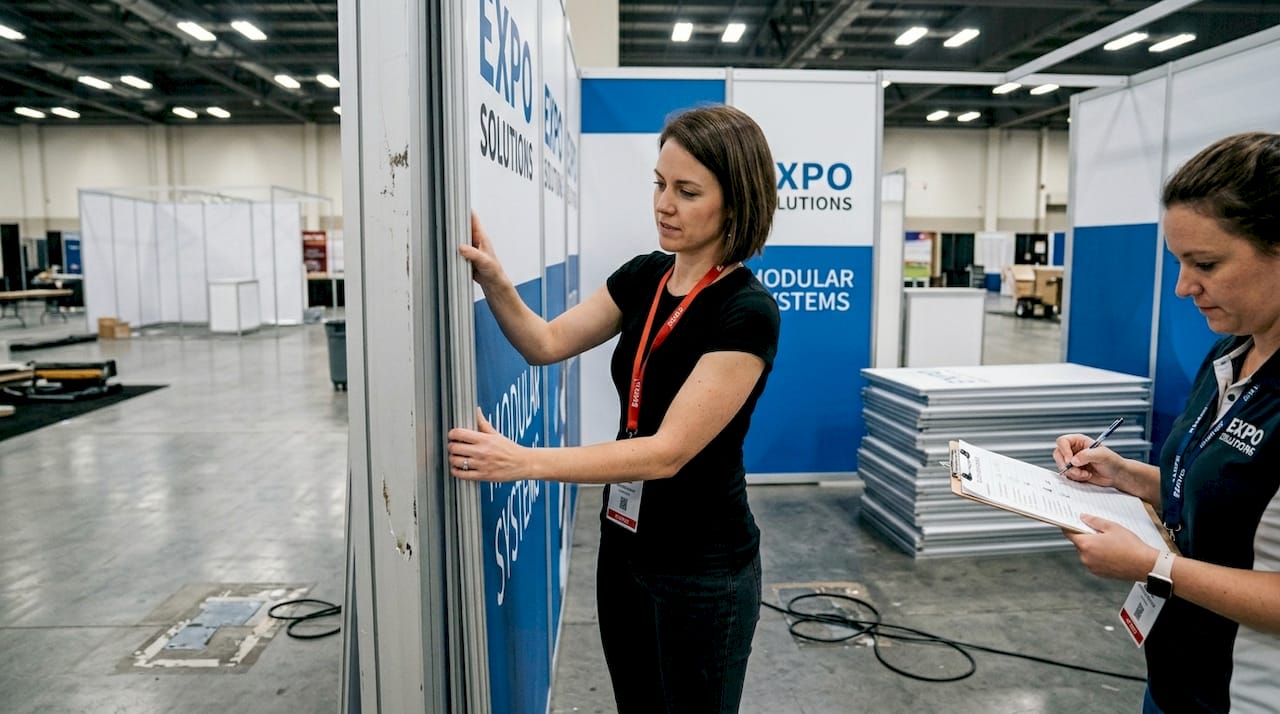
With structured ROI measurement, teams consistently achieve that 3.2x average return, but only when the post-show process is treated with the same rigor as pre-event planning.
Why focusing on attendee experience is the real ROI multiplier
Most marketing teams approach trade show ROI as a purely financial calculation, and that narrow focus often causes them to miss the bigger picture. Immediate revenue metrics matter, but the indirect returns from a genuinely memorable attendee experience frequently outperform any single deal closed on the show floor.
When visitors leave your booth feeling informed, inspired, or genuinely helped, they carry that association forward. They mention your brand in conversations, share their experience on professional networks, and return to future events with pre-existing positive sentiment. These outcomes are harder to quantify, but they compound over time in ways that a single closed deal cannot.
Prioritizing experience also makes your investment more “sticky.” A prospect who had a meaningful interaction at your booth is far more likely to respond to follow-up outreach than one who simply picked up a brochure. The engaging booth design tips that drive this kind of interaction are not about spectacle for its own sake. They are about creating conditions where genuine brand value is communicated and remembered.
The most effective exhibitors we observe treat ROI as a long-term relationship metric, not just an event-level transaction score.
Take your trade show results further with expert support
If you are ready to move from unpredictable returns to a repeatable, high-performance trade show strategy, the right partner makes a measurable difference. Adam Expo Stand specializes in designing and building exhibition stands that are engineered for engagement, brand consistency, and measurable impact across European events. From immersive custom builds to flexible modular systems, every solution is tailored to your specific objectives and audience.
Start by using the ROI calculator tool to model your next event’s potential return before committing your budget. Then explore the full range of creative and consulting services available to help you execute with confidence.
Trade Show Marketing Strategy: Pre-Show Campaigns That Multiply ROI
A trade show marketing strategy that integrates pre-show digital campaigns with on-floor execution consistently produces 40–60% higher qualified lead volumes than a stand-alone event presence. The show floor is too late to start building awareness — the most effective exhibitors are already in conversation with target prospects six to eight weeks before the event opens.
Pre-show campaign integration follows a three-phase model. In the awareness phase (six to eight weeks before the show), targeted LinkedIn campaigns, email sequences to your CRM database, and show-app advertising establish your presence for attendees who will encounter your booth. In the engagement phase (two to four weeks before), content assets — case studies, product previews, or whitepaper downloads — generate tracked engagement from prospects you can prioritise for on-floor conversations. In the appointment phase (one to two weeks before), direct outreach to engaged prospects converts digital interest into pre-booked stand meetings.
Adam Expo Stand’s exhibitor guides recommend that at least 30% of your exhibition investment should be allocated to pre-show and post-show activities — not solely to the stand build. Exhibitors who balance on-floor investment with surrounding campaign activity report a 2.1× improvement in cost per qualified lead compared to those who invest exclusively in physical stand presence.
The most effective pre-show content formats for trade fair contexts are: a 60-second product or brand teaser video shared via LinkedIn and email (generates 3× higher pre-show appointment booking rates than text-only outreach), a downloadable trend report or benchmarking data relevant to your target audience (positions your brand as an authority before physical contact), and a personalised invitation to a show-floor product launch or keynote session (creates an appointment-booking hook that combines exclusivity with value).
Trade Show Budget Allocation: Where to Invest for Maximum ROI
Trade show budget allocation directly determines your ROI ceiling before the event begins. The most common budgeting error is over-investing in stand space and structure while under-investing in the activities — pre-show campaigns, staff training, and post-show follow-up — that convert physical presence into revenue.
Adam Expo Stand recommends the following budget allocation model for European trade fair exhibitors targeting maximum ROI:
- Stand space rental: 25–30% of total budget
- Stand design, build, graphics and technology: 30–35%
- Pre-show marketing and appointment setting: 15–20%
- Staff costs (travel, accommodation, training): 10–15%
- Post-show follow-up and lead nurture: 5–10%
Exhibitors who follow this model consistently achieve a 3:1 to 5:1 ROI ratio. Those who allocate more than 60% of their total budget to space and stand construction — with minimal pre-show or post-show investment — rarely exceed a 1.5:1 return, even when the stand itself is visually outstanding.
Modular stand systems reduce the design and build cost line for exhibitors attending multiple European events annually. A modular system designed once and reused across four to six events per year reduces per-event design and construction costs by 35–50%, freeing budget for the pre-show and post-show activities that directly drive conversion. Explore Adam Expo Stand’s modular exhibition stands for cost and flexibility options suited to your exhibition schedule.
Frequently asked questions
How do I calculate trade show ROI?
Subtract your total event costs from the revenue or pipeline value generated, divide that figure by your total costs, and multiply by 100 to get your ROI percentage. Industry benchmarks suggest a 3:1 to 5:1 return is a realistic target for well-structured programs.
What is a good ROI for trade shows?
A 3:1 to 5:1 return is the most commonly cited benchmark, with a 3.2x average reported among teams using structured measurement practices. Exceptional programs have documented returns as high as 295%.
What digital tools help with trade show ROI?
CRM-integrated lead capture apps, event-specific QR codes, and real-time analytics dashboards are the most effective tools. Digital lead capture with qualification tagging eliminates manual data entry errors and accelerates post-show follow-up significantly.
What are common mistakes when trying to maximize trade show ROI?
The three most damaging mistakes are entering an event without numeric KPI targets, failing to follow up with leads within 48 hours, and relying on static booth displays that fail to engage attendees or communicate a clear brand story.