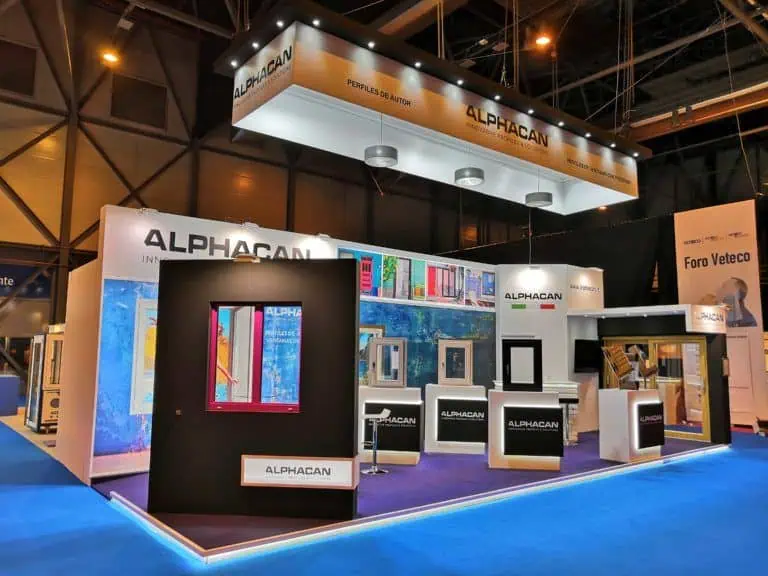
How stand builders work: boosting trade show results
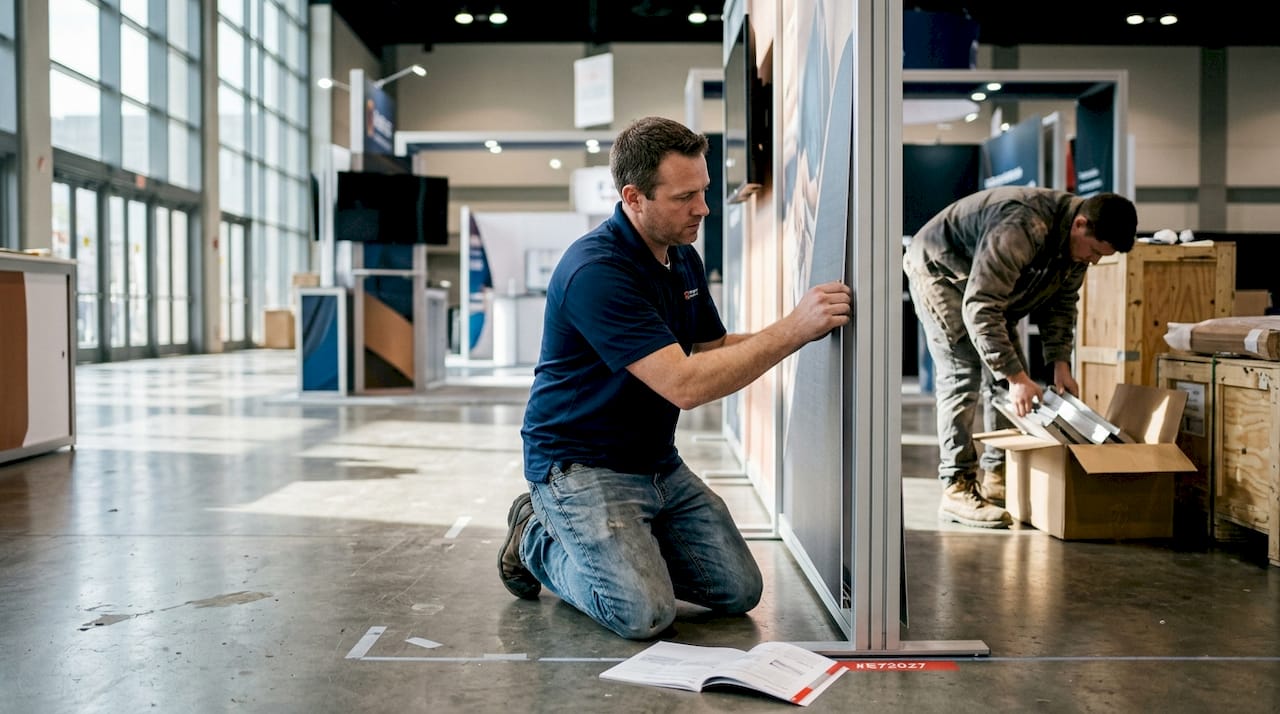
Most marketing managers walk into a trade show planning conversation focused on graphics, colors, and logo placement. That instinct is understandable, but it misses the deeper architecture of what actually drives results on the show floor. A well-executed exhibition stand is a three-dimensional billboard, a strategic launchpad, and a dynamic communication platform all at once. The professionals who build these environments do far more than assemble panels and hang signage. Custom stands yield 35-40% more qualified leads than standard shell schemes, with ROI ranging from 150% to 600% depending on pipeline depth. This guide breaks down exactly how stand builders operate, what the process looks like from brief to breakdown, and how you can use that knowledge to make smarter decisions for your next event.
Table of Contents
- What do stand builders actually do?
- The stand building process: Step-by-step
- Custom vs modular stands: Choosing the right build approach
- The science of visitor flow: Planning booths that convert
- Maximizing ROI: Measuring success with the right metrics
- Bring your brand vision to life with expert stand builders
- Frequently asked questions
Key Takeaways
| Point | Details |
|---|---|
| Stand builders add value | Professional builders do far more than assemble booths, shaping visitor experience and ROI. |
| Custom stands drive ROI | Custom exhibition stands generate significantly higher quality leads and return on investment. |
| Visitor flow matters | Strategic layout and traffic planning are critical for maximizing booth engagement and conversion. |
| Data and measurement | Tracking the right performance metrics helps you continually improve event outcomes. |
What do stand builders actually do?
Stand builders are specialists in designing, engineering, and assembling custom exhibition booths that serve specific marketing and business objectives. They are not contractors who simply follow instructions. They are strategic partners who translate your brand identity and campaign goals into a physical environment that performs.
Their core responsibilities span the entire project lifecycle:
- Concept design: Translating brand briefs into spatial layouts and visual narratives
- Material selection: Choosing substrates, finishes, and structural components that balance aesthetics with durability
- Project management: Coordinating timelines, vendor relationships, and logistics across multiple stakeholders
- On-site assembly: Managing installation crews, electrical setups, and last-minute adjustments
- Dismantling and storage: Handling teardown, transport, and reuse planning after the event
Stand builders also collaborate directly with your marketing team to ensure brand consistency across every touchpoint, from the entrance arch to the product display counter. They integrate structural, aesthetic, and experiential elements that go well beyond visuals. Understanding the full exhibition stands design process helps marketing managers set realistic expectations and brief their builders more effectively.
“The best stand builders don’t just build what you ask for. They challenge your assumptions and push your brief toward a design that actually performs on the floor.”
Custom stands yield higher lead quality and ROI than shell schemes, which is why the choice of builder and build approach matters so much from the very start.
The stand building process: Step-by-step
Understanding the roles and value of stand builders, here’s how the typical stand building process unfolds in practice. Each phase builds on the last, and skipping steps is where projects go wrong.
- Initial consultation: Your builder discovers your event goals, target audience, budget parameters, and design preferences. This is where strategic alignment begins.
- Concept design: Sketches, 3D renders, and digital walk-throughs give you a clear picture of the finished stand before a single component is manufactured.
- Engineering review: Structural integrity, lighting plans, material specifications, and safety compliance are all assessed and finalized.
- Pre-build: Key structural elements are fabricated off-site, tested for fit, and prepared for efficient on-site assembly.
- On-site assembly: Logistics coordination, electrical setup, flooring installation, and signage placement happen in a compressed timeframe.
- On-site finishing: Branding elements, technology integrations such as screens and interactive displays, and visitor engagement features are activated.
- Dismantle and logistics: Teardown is managed efficiently, with components stored or repurposed for future events.
Pro Tip: Clarify your primary objective before the first consultation. Whether you want to generate leads, launch a product, or build brand awareness, that single decision shapes every design choice that follows.
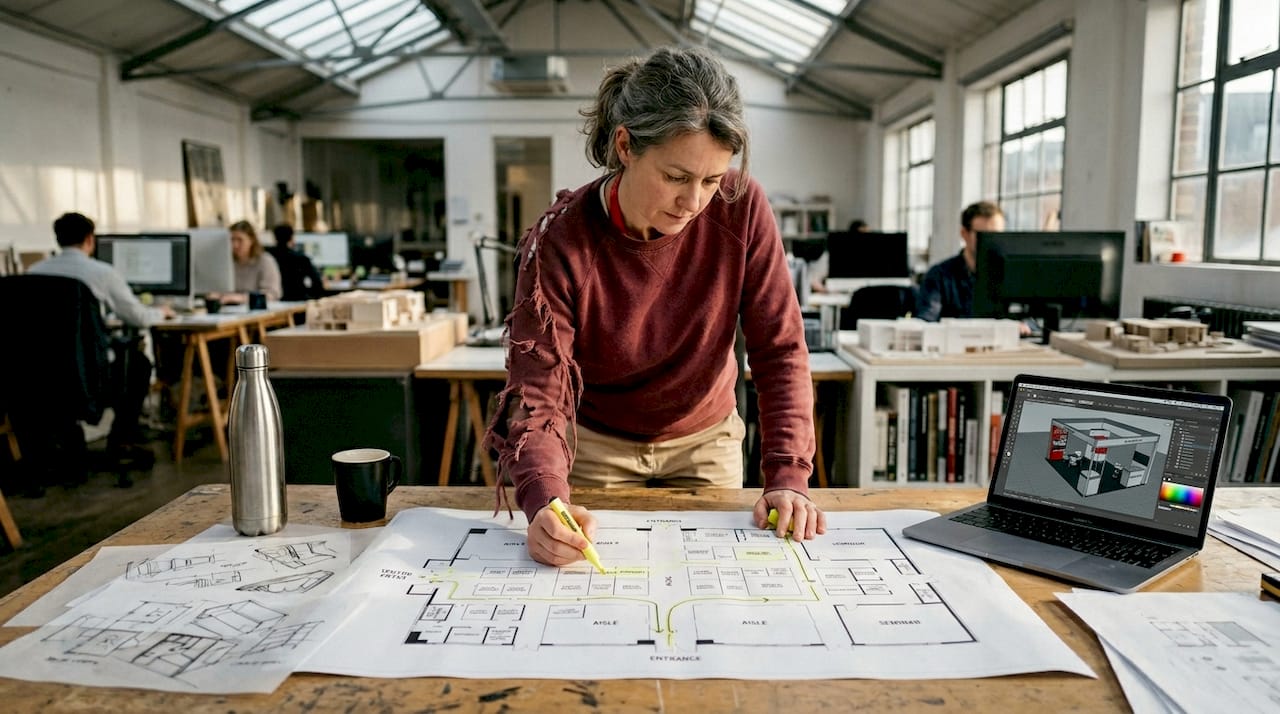
Visitor flow is built into the process from the earliest design stages. Visitor flow planning is critical to stand performance, using a three-zone model of attract, engage, and convert, with left-right traffic patterns and sight-line dominance at 1.5 to 2 meters height. Reviewing the full stand builder workflow gives marketing teams a clearer picture of what to expect at each milestone.
Custom vs modular stands: Choosing the right build approach
With the process in mind, it’s important to choose between custom and modular approaches. Each has distinct advantages depending on your brand objectives, event frequency, and budget.
| Feature | Custom stand | Modular stand | Shell scheme |
|---|---|---|---|
| Cost | Higher upfront | Mid-range | Lowest |
| Flexibility | Low (event-specific) | High (reconfigurable) | None |
| Lead generation | 35-40% more qualified leads | Moderate improvement | Baseline |
| Sustainability | Depends on materials | High reusability | Low |
| Brand impact | Maximum | Strong | Minimal |
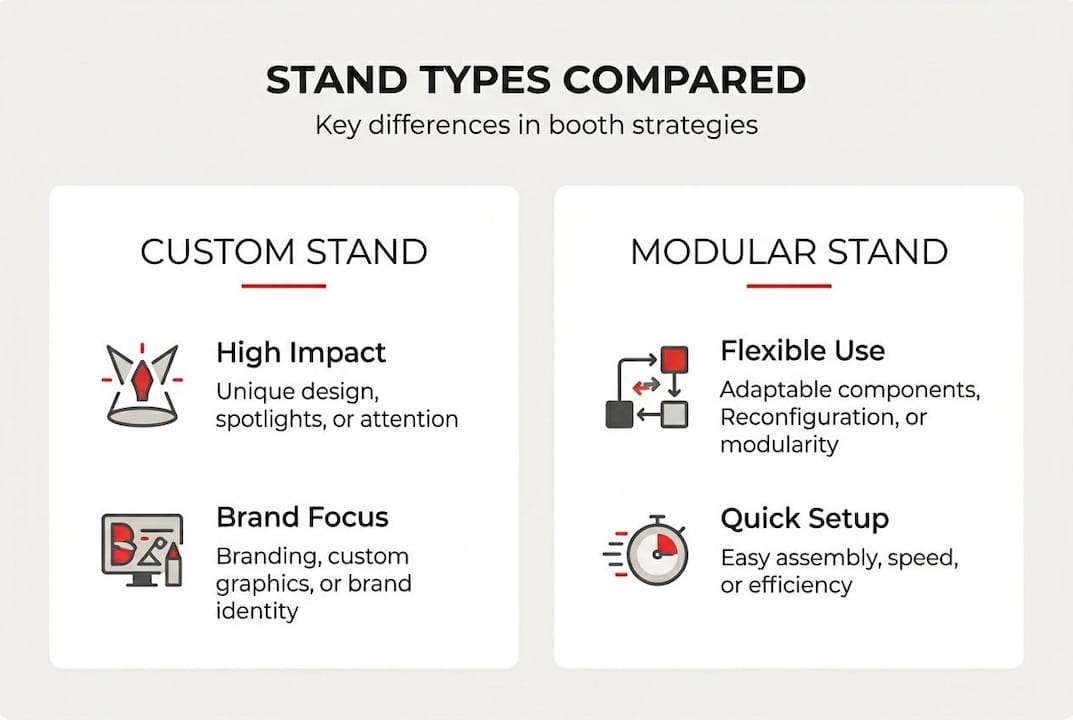
Custom stands generate 35-40% more qualified leads than shell schemes, making them the preferred choice for brands with high-value products or competitive show environments. Modular stands offer a compelling middle ground, particularly for companies exhibiting at multiple events annually.
Key considerations when choosing your build approach:
- Event frequency: If you exhibit three or more times per year, modular systems reduce per-event costs significantly
- Brand positioning: Premium brands in competitive sectors benefit most from fully custom environments
- Space allocation: Larger floor plans justify custom investment; smaller spaces often perform better with well-designed modular systems
- Sustainability goals: Modular stands support reuse and reduce material waste across events
Exploring the differences between modular vs custom stands in detail helps marketing managers align their stand strategy with both budget realities and brand ambitions.
The science of visitor flow: Planning booths that convert
Your choice of stand type ties directly to layout and visitor flow. Professional stand builders don’t arrange furniture by instinct. They apply spatial science to guide visitor behavior from the moment someone spots your stand across the hall.
The three-zone model is the foundational framework:
- Attract zone: The outer perimeter, designed to capture attention at distance through height, lighting, and bold visual cues
- Engage zone: The mid-space where visitors interact with products, staff, and demonstrations
- Convert zone: A quieter, more private area for qualified conversations, demos, and lead capture
| Booth zone | Primary goal | Avg. dwell time | Conversion rate |
|---|---|---|---|
| Attract | Stop traffic | 5-15 seconds | N/A |
| Engage | Build interest | 2-5 minutes | 40-60% proceed deeper |
| Convert | Qualify leads | 8-20 minutes | 1 MQL per 3-5 visitors |
“Elevation and orientation are invisible guides. A raised platform or angled display wall can redirect foot traffic without a single word of signage.”
Sight-line dominance at 1.5 to 2 meters is where most purchasing decision-makers naturally focus their gaze, making that vertical range the most valuable real estate on your stand. Left-right traffic patterns also influence where visitors naturally drift, and experienced builders account for this in every layout decision. Proper event power setup is equally critical, since lighting and technology integrations depend on reliable electrical infrastructure. Reviewing booth conversion strategies gives marketing teams a practical framework for applying these principles to their specific event context.
Pro Tip: Ask your stand builder to show you the visitor flow simulation during the 3D design phase. Most experienced builders model traffic patterns digitally before finalizing the layout.
Maximizing ROI: Measuring success with the right metrics
Design and engagement drive results, but truly successful stand projects are measured in numbers. Marketing managers who track the right metrics can not only justify their exhibition investment but also continuously improve stand performance across events.
Start with these core metrics:
- Marketing qualified leads (MQLs): Visitors who meet your ideal customer profile and express genuine purchase intent
- Engagement rate: The percentage of booth visitors who move from the attract zone into the engage or convert zones
- Cost per lead: Total stand investment divided by the number of MQLs generated
- Brand impressions: Estimated reach based on foot traffic data and social media activity during the event
- Pipeline ROI: Revenue attributed to leads generated at the event, tracked through your CRM over 6 to 12 months
The numbers are compelling. ROI of 150-300% short-cycle and 400-600% full pipeline are achievable benchmarks for well-executed custom stands, with an industry standard of one MQL per three to five engaged visitors. These figures make a strong case for investing in professional stand design rather than defaulting to the cheapest available option.
After each event, schedule a structured debrief with your stand builder. Review what worked, what underperformed, and what visitor behavior data revealed about your layout. This feedback loop is how brands continuously improve their exhibition ROI. Exploring modular stand ROI strategies provides additional frameworks for tracking and improving performance across multiple events.
Bring your brand vision to life with expert stand builders
With data-backed frameworks and expert partners, your next stand can deliver record results. The insights in this guide, from visitor flow science to ROI benchmarking, represent the strategic thinking that separates high-performing exhibition programs from forgettable ones. Working with expert stand builders means gaining access to that expertise from the very first consultation, with turnkey solutions that cover concept design, engineering, on-site assembly, and post-event logistics. Adam Expo Stand also offers sustainable stand solutions for brands committed to reducing their environmental footprint without compromising on impact. If your next trade show deserves more than a standard shell scheme, reach out to explore a tailored exhibition strategy built around your specific goals, audience, and budget.
Frequently asked questions
How early should I hire a stand builder for a major trade show?
Ideally, engage a stand builder 4 to 6 months before your event. Custom stands require multiple phases including design, engineering, and pre-build, and compressing that timeline increases both cost and risk.
What’s the main difference between a custom and modular stand?
Custom stands are tailor-made for your specific brand, space, and objectives, while modular stands use adaptable components that can be reconfigured for different layouts and budgets across multiple events.
How do stand builders measure engagement during the show?
Builders and brand teams track metrics like dwell time, engaged visitor counts, and qualified leads. An industry benchmark of 1 MQL per three to five engaged visitors provides a useful baseline for evaluating booth performance.
Can a stand builder help us with sustainable or reusable booth solutions?
Yes. Many professional builders now specialize in modular designs and sustainable materials that reduce waste and improve reusability. Modular stands support sustainability while also delivering strong ROI across repeated use at different events.