7 Event Branding Ideas to Boost Trade Show Engagement
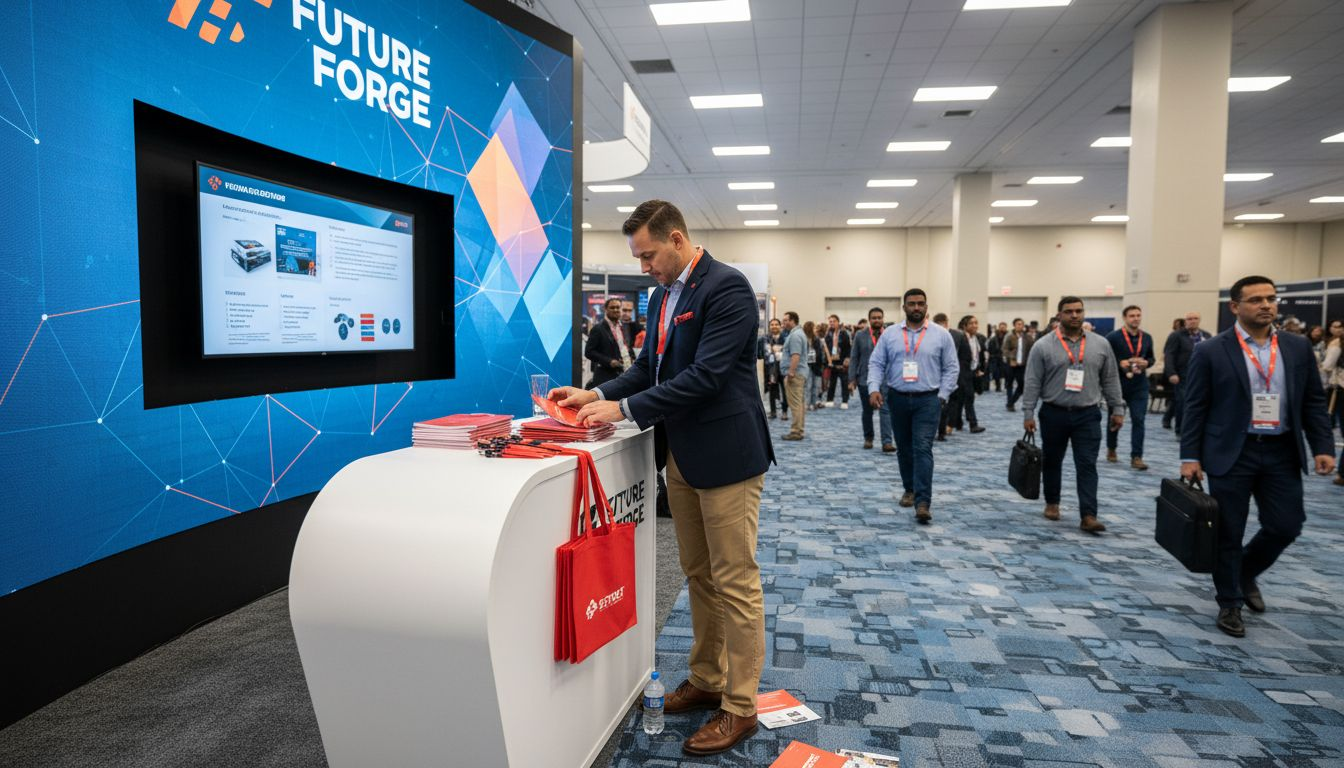
Event branding connects your message, graphics, product display and staff conversations. Start with the visitor you want to meet and the activity you want to support. Choose from these seven ideas according to your allocated space, audience, event rules and budget.
Use this guide to prepare a production brief and compare options. A custom stand, screen or giveaway does not guarantee qualified enquiries. Define the next action you want visitors to take, then test whether each proposed feature helps them understand your offer.
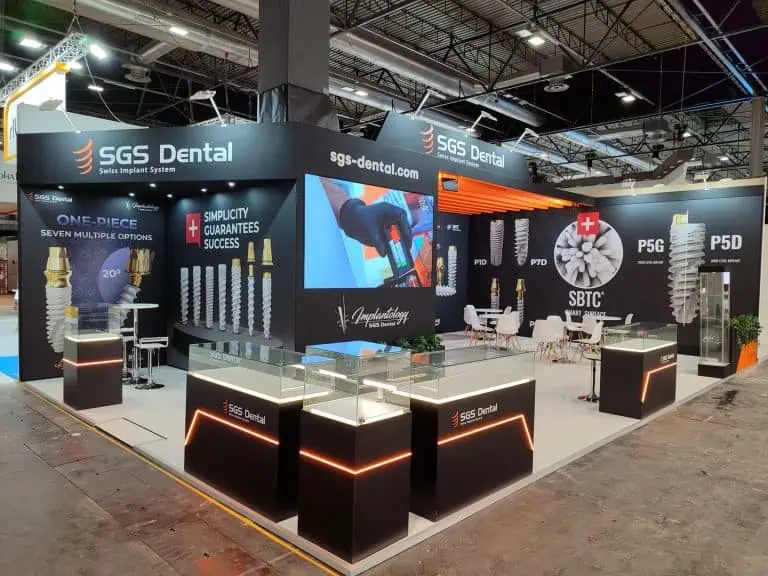
At Adam Expo Stand, our published projects provide examples of exhibition branding decisions. Review the Just Juice and Lost Vape project for a shared branded presence and the SGS Dental project for a product display and meeting brief. These accounts illustrate design choices; they do not report measured ROI or conversion gains.
Table of Contents
- Design A Custom Booth For Brand Impact
- Leverage High-Impact Visual Graphics
- Incorporate Interactive Digital Elements
- Offer Branded Giveaways And Swag
- Use Consistent Brand Messaging Everywhere
- Create Immersive Themed Experiences
- Embrace Sustainable Branding Solutions
Quick Summary
| Takeaway | Explanation |
|---|---|
| 1. Custom Booths Enhance Brand Engagement | Plan the layout around products, demonstrations and conversations; compare formats for the same scope. |
| 2. High-Impact Visuals Capture Attention | Effective graphics should communicate your brand message clearly and quickly, drawing in attendees from a distance while maintaining clarity. |
| 3. Interactive Digital Elements Foster Connection | Choose an activity that helps explain the product; test instructions, capacity and staff support. |
| 4. Branded Giveaways Extend Brand Visibility | Useful, high-quality giveaways keep your brand top-of-mind post-event, serving as continual reminders of your company’s value. |
| 5. Consistent Messaging Builds Brand Recognition | Ensuring uniform messaging across all touchpoints is crucial for clarity and helps visitors remember your core value proposition. |
1. Design a Custom Booth for Brand Impact
Choose the stand format around your products, conversations and presentation needs. Custom work can accommodate a specific brief, while rental or modular components may also meet it. Compare the same scope before selecting a format.
Ask the designer to explain how the layout supports a welcome, product demonstration, meeting and storage. A standard system is not evidence of a weak brand, and custom construction is not evidence of better commercial results.
Custom booth design allows you to solve real problems your target audience faces. Rather than forcing your message into a pre-made template, you create an environment specifically engineered to facilitate conversations, demonstrate products, and guide visitors through a journey that aligns with your business objectives. The layout, traffic flow, seating areas, and technology placement all work together as a cohesive system.
Consider the practical dimensions of effective design. Your booth needs clear sight lines that draw people in from the aisle. It requires designated zones for different activities, whether that’s product demonstrations, one on one consultations, or casual networking. The color palette and materials should reflect your brand identity while standing out visually from neighboring booths. Lighting becomes crucial for highlighting key elements and creating an inviting atmosphere. When you work with experienced design professionals, these elements combine strategically rather than haphazardly.
European event marketers particularly benefit from custom booth design because trade shows across Europe vary significantly in scale, attendee demographics, and cultural preferences. What works brilliantly at a Frankfurt trade fair may need adjustment for a Madrid exhibition. A custom approach lets you adapt your brand presentation to regional nuances while maintaining global brand consistency. You’re not locked into a one size fits all solution that compromises your effectiveness in different markets.
Compare the full programme cost, including graphics, installation, venue orders, transport, storage and later changes. Measure qualified conversations and attributable opportunities against agreed objectives. This guide does not establish that custom stands have a lower cost per lead.
Beyond the immediate event, custom booth design creates valuable marketing assets. Your design can be photographed and featured in promotional materials, case studies, and social media content leading up to and following the event. The booth becomes part of your brand story. You’re building recognition and credibility that extends well beyond the three or four days of the actual trade show.
Use a real project to discuss the design brief: the shared Just Juice and Lost Vape stand shows a branding example. Ask which choices apply to your own products and event; do not infer visitor or sales gains from a photograph.
Start by clarifying what success looks like for your specific event. Are you launching a new product? Building awareness in a new market? Deepening relationships with existing customers? Your design should directly support those objectives rather than simply looking impressive. Work with designers who understand both your brand and your business goals, not just aesthetics. The best custom booths balance visual impact with functional purpose.
Pro tip: Create a detailed brief that outlines your event goals, target visitor profile, key products or services to highlight, and must-have functional elements like meeting areas or demonstration zones, then use that brief to evaluate design proposals to ensure alignment with your business objectives rather than getting distracted by purely stylistic considerations.
2. Leverage High-Impact Visual Graphics
Give the visitor a clear visual hierarchy: company name, product category, one main message and supporting details. Test the artwork at its actual production size and at the distances expected on your stand.
Choose readable text, appropriate contrast and an approved message. Review graphics with a colleague who is unfamiliar with the offer and ask what they understand. Correct confusing wording before production.
Think about how your graphics function as a visual hierarchy. Your primary messaging should be readable from 20 feet away, even by someone walking quickly through the aisle. Secondary details become visible as visitors move closer and show genuine interest. Your booth’s color palette should reflect your brand identity while commanding attention against neighboring displays. This layered approach ensures that both passersby and engaged prospects get the right message at the right distance.
Technological advances have fundamentally transformed what’s possible with trade show graphics. Digital displays allow you to refresh content throughout the event, feature video testimonials, showcase product demos, or highlight real time social media engagement. LED lighting creates dynamic visual interest and draws the eye toward your most important messaging. Three dimensional installations and dimensional lettering add depth and tactile interest that flat graphics simply cannot match. Compare the screen or lighting proposal with a static graphic that communicates the same message. Select the option that suits the content, viewing conditions, support needs and available budget.
Consider how different graphic elements work together strategically. A compelling backdrop establishes your visual identity and provides an excellent photo opportunity that visitors share on social media. Clear signage guides visitors through your booth and explains what you do. Product photography or illustration helps visitors understand your offerings at a glance. Pull quotes from customer testimonials or relevant statistics add credibility and relevance. Digital displays can showcase different use cases or customer success stories in rotation. Each element serves a purpose in your overall communication strategy.
For European event marketers managing multiple trade shows across different regions, think about adaptability in your graphic strategy. Modular graphic systems allow you to maintain core brand elements while customizing messaging for specific events or markets. A graphic that works perfectly at a technology conference in Berlin may need different messaging at a regional industry event in Madrid. Rather than creating entirely new graphics for each event, you can swap messaging panels or update digital content while keeping your visual system consistent.
Use your approved brand palette and check contrast, lighting and legibility with the actual materials. A colour alone does not establish trust, credibility or suitability for a particular industry.
High-impact graphics balance aesthetics with clear messaging and brand identity reinforcement through a strategic approach that includes planning, execution, and measuring impact to ensure graphics not only attract attendees but engage them meaningfully.
Measuring the impact of your graphics involves more than subjective impressions. Track how many conversations you initiate, how long visitors spend in your booth, and whether they express genuine interest in your offerings. Compare performance across events to see which graphic approaches generate the strongest attendee response. Did a particular message resonance strongly? Did the digital display generate more engagement than you expected? Use this feedback to refine your graphics for future events. Graphics are business tools, not art projects, and they should be evaluated based on their contribution to your event objectives.
Start with one core message and provide supporting details for visitors who want them. Do not assume a fixed visitor attention span; observe whether the intended audience can find and understand the information.
Pro tip: Test your graphics readability by viewing them from increasing distances in your workspace, starting at 30 feet away, to confirm text sizes and color contrasts work effectively before production, then ask colleagues unfamiliar with your company to explain your key message based solely on what they see in your graphics to validate clarity.
3. Incorporate Interactive Digital Elements
Select an interactive activity only when it helps explain the product or supports a useful discussion. A staffed physical display or concise presentation may suit the brief better than a touchscreen or headset.
Test the activity with first-time users. Record whether they understand the instructions and product connection, how long the sequence takes, and whether staff can manage the flow. Participation alone does not prove recall, qualification or a sale.
Interactive touchscreen displays allow visitors to explore your products, navigate through use cases, or customize solutions based on their specific needs. Rather than explaining features to each visitor individually, your display does the heavy lifting while you focus on having meaningful conversations with genuinely interested prospects. A manufacturing company might use interactive displays to show product configurations. A software provider might use them to demonstrate workflows. A service provider might use them to calculate cost savings based on visitor inputs. The technology adapts to your specific offering.
Virtual and augmented reality technologies have become increasingly accessible for trade show use. Virtual reality experiences let visitors explore environments they couldn’t access otherwise. An architecture firm could show a virtual walkthrough of a completed project. A construction equipment manufacturer could let visitors experience operating heavy machinery in a simulated environment. Augmented reality overlays digital information onto the physical world, allowing visitors to visualize how your products fit into their spaces or workflows. These experiences create memorable moments that generate word of mouth discussion after the event.
Define the measurement and visitor-information process before installing a digital activity. Record only the information needed for the agreed next step, with the exhibitor’s responsible team reviewing the process. Interaction time is not proof of buying intent.
Use pre-show communications to explain a specific demonstration or meeting offer. After the event, follow up on the next step agreed with the visitor. Avoid assuming that detailed behaviour tracking is available or appropriate.
For European event marketers managing booths across multiple cities, digital flexibility offers significant advantages. Rather than completely redesigning your physical setup for each event, you can update your digital content to reflect regional differences, local case studies, or translated messaging. A digital display showing customer success stories from German businesses works perfectly at a Berlin trade show, then updates to feature Dutch customers for an Amsterdam event. Your physical infrastructure stays consistent while your messaging adapts.
The complexity of digital installations ranges dramatically. A simple tablet app allowing visitors to play a game or take a quiz requires minimal investment but creates engagement and collects contact information. An advanced interactive display system with gesture recognition and haptic feedback delivers a premium experience that differentiates your booth significantly. A full VR experience represents substantial investment but creates buzz and memorable moments. Your choice depends on your budget, your brand positioning, and your audience expectations.
Effectively deploying interactive digital elements can differentiate a brand, provide measurable engagement metrics, and align trade show experiences with digital marketing strategies, crucial in the evolving event ecosystem.
When selecting interactive digital tools, think about your booth staff capacity. Can your team comfortably manage visitor flow through your interactive experience while also having meaningful conversations? Will the technology distract from your core message or enhance it? Does it genuinely serve your event objectives or is it technology for technology’s sake? The best interactive elements feel like natural extensions of your brand and offerings, not novelties that overshadow your actual value proposition.
Testing your interactive elements before the event is non-negotiable. You want to understand how intuitive the experience is for first time users. Are there common mistakes people make? How long does the average interaction take? Do visitors understand the connection between your technology and your core business? Use feedback from testing to refine instructions, adjust timing, or simplify workflows. A confusing interactive experience frustrates visitors and damages your brand perception.
Staffing your interactive elements requires different skills than traditional booth coverage. Your team members need to be comfortable with technology, able to troubleshoot basic issues, and skilled at moving visitors from technology engagement into meaningful conversations about your offerings. Invest in thorough training so your staff can keep the experience running smoothly while making genuine connections with prospects.
Pro tip: Place your most visually compelling interactive element where it’s clearly visible from the main aisle to draw foot traffic into your booth, then position secondary interactive experiences deeper into your space to encourage visitors to spend extended time and explore your full offering.
4. Offer Branded Giveaways and Swag
Branded giveaways seem simple on the surface, but they’re actually strategic tools that extend your brand visibility long after the trade show ends. The right giveaway sits on someone’s desk, rides in their bag, or gets used daily, keeping your company name visible to them and their colleagues repeatedly. The wrong giveaway ends up in a drawer and forgotten within weeks.
The fundamental principle behind effective swag is usefulness. An item that attendees actually want to use becomes a miniature billboard that travels with them. Every time they reach for your branded water bottle during a meeting, they’re reminded of your company and your value proposition. Every time a colleague notices the item and asks where it came from, you’re getting free word of mouth marketing. The best giveaways are those that attendees use regularly, keeping your brand visible beyond the trade show environment.
Consider what your target audience actually needs. Tech workers appreciate power banks and charging cables because they live their lives managing device batteries. Office professionals value quality pens, notepads, and desk organizers because they use them constantly. Outdoor enthusiasts want durable water bottles and gear. Busy executives appreciate premium coffee cups and travel accessories. Your giveaway should reflect the lifestyle and interests of your ideal customer, not just be something with your logo slapped on it.
Quality matters enormously. A cheap pen that breaks after two uses damages your brand perception more than offering no giveaway at all. An attendee using a flimsy promotional item at an important client meeting reflects negatively on your company’s apparent standards and professionalism. Investing in high quality items that your target audience genuinely appreciates sends a message about your brand values and attention to detail. This approach builds stronger connections with prospects than discount bin merchandise ever could.
If considering a giveaway with an environmental claim, request evidence for its materials, production and intended use. Bamboo, recycled content or reusability alone does not establish a lower overall environmental impact. Compare quantities, transport and likely disposal as well.
Branded giveaways serve multiple strategic purposes simultaneously. They attract foot traffic into your booth because visitors want to collect swag. They encourage longer booth visits as people browse your collection of items. They provide conversation starters when attendees notice appealing options. They create positive emotions associated with your brand when people receive something they genuinely want. They generate social media content when people photograph or mention your branded items online. Each of these functions contributes to your overall trade show success.
Think strategically about your giveaway distribution. Should every visitor receive something, or do you reserve giveaways for qualified leads who’ve had meaningful conversations with your team? Some companies use smaller, inexpensive items as conversation starters and reserve premium swag for genuine prospects. Others give everyone access to a collection and let visitors choose what appeals to them most. Your approach depends on your budget, your lead qualification process, and your booth traffic expectations.
Branded giveaways should align with the target audience’s interests and brand values, balancing practicality with creativity, extending brand exposure after the event through high quality items that attendees use regularly.
The presentation of your giveaways matters as much as the items themselves. A well organized display that showcases your options invites browsing. Items arranged by category or use case help visitors find what resonates with them. Clear signage explaining the benefits or features of different options adds value. A poorly organized pile of swag, on the other hand, feels chaotic and discourages engagement. Your giveaway display is part of your overall booth experience and should reflect your brand’s professionalism and attention to detail.
Choose personalisation when the item, production method and timing suit the intended visitor. If an item needs attendee information, agree what information is necessary and how the responsible team will handle it. Compare a small set of relevant items or packs with the same budget, stock and distribution plan, and use visitor feedback to assess the choice.
Confirm samples, artwork approval, production and delivery dates with the supplier before ordering. Lead times depend on the item, quantity, personalisation and shipping route. Record the required arrival date and contingency in your brief.
Measure the success of your giveaway strategy by tracking which items generate the most engagement and interest. Do certain options attract more people into your booth? Which items do visitors seem most excited to receive? Are there any items left over at the end of the show, suggesting they weren’t appealing? Use this feedback to refine your selections for future events. Your giveaway strategy should evolve based on what you learn about your audience’s genuine preferences.
Pro tip: Offer a small, relevant choice of items where stock and staffing allow, and agree display, distribution and replenishment responsibilities before the event.
5. Use Consistent Brand Messaging Everywhere
Imagine a visitor walks past your booth and sees one message on your main banner, then reads your staff’s business cards and finds different messaging, then views your digital display and encounters yet another angle on what your company does. That visitor leaves confused about your actual value proposition. Consistent brand messaging eliminates that confusion and builds recognition that compounds across every touchpoint.
Your brand message represents the core promise you make to customers. It answers the fundamental question of why someone should choose your company over competitors. That message needs to appear consistently across your booth signage, staff uniforms or name badges, business cards, digital displays, printed collateral, and even the conversations your team members have with visitors. When every touchpoint reinforces the same core message, visitors leave with clarity rather than conflicting impressions.
Consistency builds brand recognition through repetition. When someone hears your core message multiple times from different elements within your booth, it sticks in their memory more effectively than hearing it once. They remember your company name. They remember what you do. They remember why you matter to their business. That repetition is not annoying when executed well. It’s actually reassuring because it demonstrates that your company knows who you are and what you stand for.
Start by defining your core brand message in a single, clear sentence. What is the one thing you want every booth visitor to understand about your company? Everything else flows from that foundation. Your tagline, your elevator pitch, your key benefits, your customer testimonials, your case studies, and your calls to action should all support and reinforce that core message rather than introducing conflicting ideas.
Consider how messaging consistency works across different booth elements. Your primary banner communicates your headline message and core value proposition. Your secondary signage breaks down specific benefits or solutions. Your digital displays showcase real world applications of your offerings. Your staff’s conversations deepen understanding based on each visitor’s specific interests. Each element builds on the previous one rather than contradicting it. A visitor might first notice your banner headline, then read signage about benefits, then watch a video demonstrating how you solve a specific problem, then talk to your team about their particular needs. That journey feels cohesive because every element reinforces the same overarching brand narrative.
Your booth staff members are living brand ambassadors. Their understanding of your core messaging determines whether conversations reinforce or undermine your booth strategy. Two staff members discussing your company with different prospects should communicate the same fundamental message, even though they might emphasize different aspects based on each prospect’s industry or role. This requires training that goes beyond listing product features. Your team needs to understand your brand narrative and how to communicate it authentically in different conversation contexts.
Brand messaging extends to visual consistency as well. Your color palette, typography, imagery style, and overall aesthetic should be consistent across all booth elements. This visual consistency creates an immediate sense of professionalism and intentionality. A visitor scanning the exhibition floor should instantly recognize your booth as yours before even reading your company name, because the visual identity is distinctive and consistent. Inconsistent visuals, on the other hand, make your booth appear disorganized or amateurish even if individual elements are well designed.
When managing multiple booths across different trade shows, maintaining message consistency becomes more challenging but infinitely more important. Regional variations may be necessary, but your core message should remain constant. A technology company might tailor specific use cases or customer examples to regional preferences, but their fundamental message about innovation or reliability or customer focus should remain consistent. Attendees at different events should come away with the same understanding of your core brand positioning regardless of which specific booth they visited.
Consistent messaging also extends to your pre show and post show communications. The message you communicate on your website and social media should align with your booth messaging. Attendees who see your promotional content before the event arrive with certain expectations. Your booth should deliver on those expectations and reinforce the messaging they already encountered. After the event, your follow up emails should reference the same brand narrative, creating continuity that strengthens the relationship initiated during the show.
Consistent brand messaging across every booth touchpoint builds recognition through repetition, eliminates visitor confusion about your value proposition, and demonstrates that your company knows who you are and what you stand for.
When you discover that messaging inconsistencies exist, address them immediately. If one staff member is emphasizing product features while another emphasizes customer benefits, have a conversation about your core message and how different staff members can communicate it authentically based on their strengths. If your digital display is highlighting something different from your main signage, decide which message is more important and ensure alignment. If your business cards feature a tagline that contradicts your booth messaging, update them before the next event. Small inconsistencies compound over time and gradually erode your brand positioning.
Testing your messaging consistency is straightforward. Ask a colleague unfamiliar with your booth planning to walk through and note every message they encounter. What do they think your company does based on your signage? What benefits do they understand you offer based on the information they absorbed? Do all the messages point toward the same conclusion? If they express confusion about what you actually do, you’ve identified a messaging consistency problem that needs correction.
Document your core brand message in a booth team briefing document. Include your core message, your key supporting points, examples of how different team members might communicate this in different conversation contexts, and any visual or design guidelines that support brand consistency. This document becomes your team’s reference guide, ensuring that everyone understands the narrative they’re reinforcing and can communicate it authentically rather than robotically.
Pro tip: Create a messaging audit checklist before your trade show and review every booth element, staff uniform detail, digital display, and printed material against your core brand message, noting any instances where messaging diverges from your core narrative, then address those inconsistencies before the event begins.
6. Create Immersive Themed Experiences
A themed booth experience transports visitors into a carefully constructed world that tells your brand story rather than simply displaying your products. When done effectively, this immersive approach captures attention, deepens emotional connection, and transforms your booth from a transactional space into a memorable destination that attendees actively want to visit.
Immersive experiences work because they engage multiple senses simultaneously. Rather than asking visitors to passively read information or listen to a pitch, themed environments invite them to participate in a narrative that brings your brand to life. When participants become active participants instead of passive observers, engagement deepens dramatically. The sensory feedback creates a stronger sense of presence and emotional connection that elevates the impact of your branded environment at the trade show.
Theme selection should connect directly to your brand identity and business objectives. A financial services company might create a themed experience around security, trust, and growth. A technology company might theme their booth around innovation or future possibilities. A sustainable product company might create an experience celebrating environmental responsibility. An industrial equipment manufacturer might simulate the operational environment where their products function. The theme works best when it tells a story that resonates with your target audience’s aspirations or challenges.
Consider how spatial design combines with technology to create immersion. Advanced digital media displays can show environments that extend your physical booth space virtually. Augmented reality overlays information onto the real world in ways that feel magical and memorable. Lighting design guides visitor attention and creates emotional tone. Sound design, whether through ambient audio or interactive responses to visitor actions, adds another sensory layer. Thematic spatial design creates a holistic environment where every element reinforces the narrative you’re communicating.
Physical environment design matters as much as technology. The layout of your booth should guide visitors naturally through a journey that mirrors your intended narrative. Different zones might represent different stages or aspects of your story. Seating areas or interactive stations invite deeper engagement. Materials, textures, and finishes should feel intentional and aligned with your theme. A tech startup might use sleek modern materials and minimalist design. A heritage brand might incorporate classical elements or natural materials. The physical environment becomes part of your communication strategy.
Assess the theme against what visitors need to understand. Test the sequence and staff handover, and record meaningful conversations separately from participation. A themed experience does not guarantee stronger commercial outcomes.
Implementing an immersive theme requires coordination across multiple elements. Your visual graphics need to reinforce the theme. Your staff uniforms or styling should feel appropriate to the themed environment. Any interactive elements, whether digital or physical, should support the narrative. Your giveaways and collateral materials should reflect the theme. Even small details like ambient music or scent, if used subtly and appropriately, can reinforce immersion. The more cohesively everything supports the central theme, the more powerful the experience becomes.
For European event marketers managing trade shows across multiple countries, themed experiences offer interesting adaptability opportunities. A core theme can remain consistent while cultural details or local references change to resonate with regional audiences. A sustainability themed booth might highlight different environmental initiatives depending on whether you’re in Germany or Spain. A customer success story themed experience might feature different customer examples from different regions. The fundamental immersive approach stays consistent while content adapts to regional relevance.
Immersive experiences increase mental imagery, sense of presence, and emotional connection, elevating the impact of branded environments where audiences are fully engaged with exhibition content through active interaction and sensory feedback.
Testing your themed experience before the event is essential. Does the narrative flow logically for first time visitors? Are visitors confused about where to go or what to do next? Does the theme feel forced or does it feel natural and engaging? Does every element genuinely support the theme or do some elements feel disconnected? Gather feedback from people unfamiliar with your company and use their reactions to refine the experience. A visitor who walks through your booth confused about your narrative is a wasted opportunity.
The complexity of themed experiences ranges from relatively simple to highly elaborate. A basic themed booth might simply use consistent visual elements and signage to tell a story that guides visitors through your space. A mid-level approach might integrate interactive elements or digital displays that enhance the narrative. A premium immersive experience might include interactive and innovative booth features like virtual reality, augmented reality, multi-sensory elements, and sophisticated spatial design that creates a fully immersive world. Your budget, resources, and business objectives should guide how elaborate you make your themed experience.
Staffing a themed booth requires team members who understand and can authentically embody your theme. They’re not just answering questions about products. They’re guides who help visitors navigate and understand your themed narrative. They’re storytellers who explain how specific products or services fit into the larger story you’re telling. They’re performers who maintain the environment and energy of the experience. This requires different training and a different mindset than traditional booth staffing. Your team members need to be comfortable with this more theatrical, narrative-driven approach to customer engagement.
Measure the success of your themed experience by tracking visitor reactions and engagement metrics. How many people stop to experience your booth versus walking past? How long do visitors spend in your space on average? How many qualified leads do you generate? Do visitors mention the theme or experience in conversations or follow up communications? Do you see increased social media mentions or engagement related to your booth? Use this feedback to understand what aspects of your theme resonated most strongly and apply those insights to future events.
Pro tip: Design your themed experience with a clear narrative arc that has a beginning, middle, and end, guiding visitors through a journey that resolves with a specific call to action or takeaway, rather than creating an immersive environment that looks impressive but leaves visitors unclear about what they should do or remember next.
7. Embrace Sustainable Branding Solutions
Make environmental branding specific to the practices you can document. Describe retained components, material evidence and the planned recovery route rather than making broad claims about how every visitor chooses a supplier.
Ask for evidence before printing an environmental claim. Keep the claim within the documented scope and explain the relevant project decision. This guide does not establish that green branding improves loyalty or sales.
Plan component ownership, storage, repair, refurbishment and recovery after the show. Reuse can avoid making replacement components, but it does not eliminate all waste. Review the reuse and material-evidence guide when preparing your specification.
Consider how you source and display your branded giveaways. Sustainable swag options like organic cotton apparel, bamboo based products, recycled material items, or reusable containers demonstrate that you’re making intentional choices aligned with your values. Attendees who receive these items feel better about your company because you’re not contributing to the mountains of plastic promotional merchandise that typically accumulate at trade shows. That positive feeling gets reinforced every time they use a sustainable giveaway that you provided, creating ongoing brand association with environmental consciousness.
Digital integration supports sustainability goals by reducing paper waste. Rather than printing extensive collateral materials, use digital displays or QR codes that direct attendees to online resources. Rather than printing visitor feedback forms, use tablet based systems to collect information. Rather than requiring printed catalogs, direct people to downloadable digital versions. These changes reduce your environmental footprint while often improving efficiency and data collection. Modern attendees expect and appreciate digital options, and your willingness to offer them signals that you understand contemporary business practices.
Sustainable branding requires aligning your products and services with environmental consciousness trends among consumers. If you manufacture products, can you highlight sustainable sourcing or manufacturing practices? If you provide services, can you demonstrate how clients reduce their environmental impact by working with you? If you’re a technology company, can you emphasize energy efficiency or sustainable computing practices? The specific approach depends on your business, but the principle remains constant. Find the legitimate environmental dimension of what you do and communicate it authentically.
Keep environmental evidence separate from marketing results. Record material and reuse decisions, then measure visitor feedback and business outcomes independently. A material choice does not prove customer loyalty.
Sustainable branding efforts that integrate ecological constraints into business practices and promote green branding foster deeper engagement and consumer loyalty while achieving long-term competitive differentiation.
The communication of sustainability should feel authentic rather than performative. Greenwashing, where companies claim environmental commitment without genuine backing, damages brand reputation when discovered. Your sustainability claims should be specific and verifiable. Rather than simply saying you’re “committed to sustainability,” explain exactly what that means for your booth, your giveaways, your materials, and your business practices. Back up claims with concrete details that demonstrate genuine commitment rather than marketing language.
Your booth staff should understand and be able to articulate your sustainability commitment. When visitors ask why you’ve made particular choices, your team should be able to explain the environmental reasoning behind those decisions. This isn’t just about booth design. It’s about demonstrating that sustainability is genuinely woven into how your company operates. Staff who can speak credibly about your environmental practices reinforce the message far more effectively than any signage could.
Measuring the impact of your sustainable branding involves tracking both quantitative metrics and qualitative feedback. How many conversations does your sustainability commitment generate? What percentage of visitors mention environmental responsibility when discussing why they’re interested in your company? Do social media mentions reference your environmental practices? Do attendees specifically remember your booth as the sustainable option compared to competitors? This feedback helps you understand whether your sustainability emphasis resonates with your target audience and informs decisions for future events.
Implementing sustainable expo stands and solutions requires coordination between your branding strategy and your physical booth infrastructure. Work with experienced booth providers who understand both sustainability goals and effective trade show design. Sustainable materials and practices don’t require compromising on visual impact or functionality. In fact, many attendees find minimalist, thoughtfully designed sustainable booths more impressive than elaborate displays filled with disposable materials.
Think about the lifecycle of your booth investment. Rather than building a brand new booth for each major trade show, consider modular systems that can be updated and reconfigured while maintaining the core structure. Rather than single use materials, specify durable components that maintain quality across multiple events. Rather than renting booth components from providers with questionable practices, partner with companies prioritizing sustainability in their operations. These choices cost more initially but reduce waste and often provide better long term financial returns through reusability and durability.
Sustainability can also extend to how you handle logistics and transportation. Working with show management to optimize shipping routes, consolidating shipments, or using local suppliers for booth materials reduces your carbon footprint. Some events are beginning to measure and recognize exhibitor sustainability efforts, providing recognition for companies that prioritize environmental responsibility. Being early in adopting sustainable practices positions your company as a leader in this increasingly important area.
Pro tip: Select three to five specific sustainability practices that genuinely reflect your company values, communicate them clearly in your booth messaging and staff training, and be prepared to explain the environmental reasoning behind each practice so visitors perceive authentic commitment rather than superficial green branding.
Below is a comprehensive table summarizing the main strategies, benefits, and steps for successful trade show booth design and engagement strategies based on the article provided.
| Key Focus | Description | Benefits |
|---|---|---|
| Custom Booth Design | Create a tailored booth that communicates brand identity effectively. | Provides space for the agreed display, demonstration and conversations. |
| High-Impact Visual Graphics | Use visually striking and clear graphics that communicate your key messages. | Attracts passersby to stop and engage, increasing booth traffic. |
| Interactive Digital Elements | Incorporate touchscreens, VR, or AR to create an immersive experience. | Prolongs visitor engagement and provides insightful data on interests. |
| Branded Giveaways | Offer practical and branded items relevant to your audience. | Keeps the brand top-of-mind and supports continued brand visibility. |
| Consistent Messaging | Ensure coherence across all visual and verbal communication. | Builds recognition and eliminates confusion about brand promises. |
| Immersive Themed Experiences | Develop a booth environment around a central, engaging theme. | Captures attention and fosters an emotional connection to the brand. |
| Sustainable Solutions | Utilize eco-friendly materials and practices in booth design and giveaways. | Aligns with modern consumer priorities and builds positive brand perception. |
This table encapsulates the diverse approaches and benefits outlined in the article, emphasizing their vital role in creating effective trade show strategies.
Trade Show Branding Strategies That Drive Engagement
Powerful trade show branding is the foundation of any high-performing exhibit. Your booth isn’t just a display—it’s a three-dimensional brand statement that communicates your values, expertise, and personality in seconds. Effective trade event branding aligns every touchpoint—graphics, lighting, staff uniforms, giveaways, and digital content—into a single coherent brand experience that visitors remember long after the show ends.
Trade Show Branding Tips for Maximum Impact
Use approved colours, test the main message at the actual viewing distance, and check that supporting information is readable. Ask the organiser about any placement outside your allocated footprint, including aisle graphics or sponsored services. Confirm permissions before adding these items to the brief.
Affordable Event Branding Ideas and Creative Roadshow Ideas
Compare fabric systems, modular walls and rented screens using the same artwork, installation and venue-service scope. For roadshows, confirm packed dimensions, transport, staffing and assembly responsibilities with the supplier. Test any game or prize activity against its purpose and event rules; do not assume it increases qualified conversations.
Elevate Your Trade Show Presence with Expert Booth Solutions
Trade shows demand more than just presence they require strategic, immersive, and visually impactful exhibition stands that truly engage attendees. If you’ve been exploring creative event branding ideas like custom booth design, high-impact visuals, or interactive digital elements you understand the challenge of crafting an experience that resonates and converts. The frustration of generic displays and inconsistent messaging can hold your brand back in competitive European markets.
At Adam Expo Stand, we specialize in turning those branding ambitions into reality with tailored exhibition stand design, fabrication, and management services. Our team works closely with you to create functional, sustainable, and visually dynamic booths that reflect your core message consistently across all touchpoints. From 3D design visualization to on-site assembly and logistics we prepare the design and delivery scope around your event brief, with responsibilities and exclusions agreed before production.
Take action today to transform your trade show impact. Discover how our custom booth solutions combine innovative design with practical expertise to help you capture attention, foster meaningful connections, and generate qualified leads for your business. Visit Adam Expo Stand now and start planning a booth experience that sets your brand apart at your next event.
Effective trade show branding ideas and professional exhibition event branding work together to create a cohesive, memorable presence that reinforces your brand identity at every touchpoint — from the stand graphics and staff uniforms to branded giveaways, digital screens, and personalised meeting materials. Consistency across all these elements transforms a trade fair booth into a complete brand experience that visitors remember long after the event ends.
Frequently Asked Questions
What are some effective ideas for branding at trade shows?
Custom booth design, high-impact visual graphics, interactive digital elements, and themed experiences are just a few ideas to enhance your branding. Implement these strategies to create a memorable presence and boost visitor engagement.
How can I measure the success of my event branding strategies?
Define a relevant conversation, agreed next action and opportunity before the event. Assign follow-up owners and a reporting period suited to the sales cycle. Compare results with the full programme cost; visitor counts and interaction time are supporting measures rather than revenue.
What types of giveaways can increase booth traffic at trade shows?
Useful branded items such as high-quality pens, reusable water bottles, and eco-friendly products tend to attract visitors. Choose giveaways that resonate with your target audience to increase foot traffic and engagement.
How can I ensure consistent brand messaging across all booth materials?
Define your core brand message clearly and use it as a guide for all signage, digital displays, and staff communications. Review and adjust all elements before the event to ensure alignment.
What role does sustainability play in event branding?
Sustainable branding demonstrates your commitment to environmental responsibility, which can enhance your brand’s appeal and trustworthiness. Embrace eco-friendly practices in your booth design and giveaways to resonate with today’s conscious consumers.
How do interactive elements boost engagement at trade shows?
Choose an interactive feature only if it helps explain the offer and your staff can operate it. Test instructions, capacity, equipment and a fallback presentation. A physical demonstration or conversation may serve the objective without an additional digital feature.
Recommended
- Success Exhibiting at IFEMA Madrid: The Ultimate Exhibitor Guide
- The Ultimate Guide to Trade Booth Rental Design in Europe | Adam Expo Stand Solutions
- The Ultimate Guide to Trade Show Booth Types and Strategies | Adam Expo Stand Solutions
- Creative Trade Show Booth Ideas That Attract Visitors
- 7 Key Advantages of Disco Lighting for Every Event – Mirror Balls
Follow our exhibition planning guides
Choose Adam Expo Stand as a preferred source to help you find our exhibition guides and updates on Google.
Add as a preferred source on GoogleGoogle may ask you to sign in and confirm your choice.