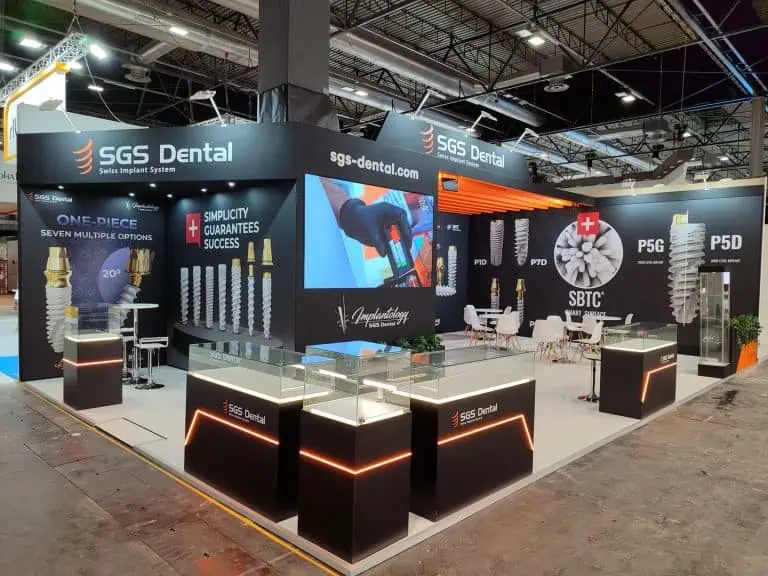
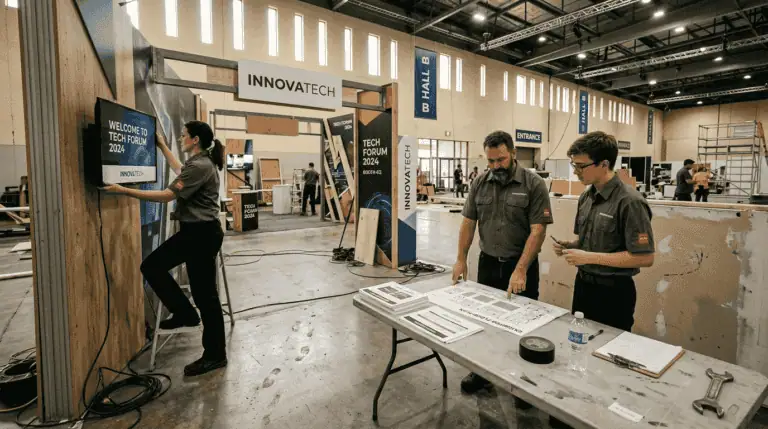
An Alimentaria and Hostelco stand needs a product and operating brief before its layout is approved. Define what visitors will see, taste or test, then specify equipment, storage, staff activities and services. Coordinate the design with the current Gran Via and event requirements, and compare complete delivery scopes rather than relying on generic food-show prices.
Alimentaria and Hostelco stand planning: prepare for the joint event
The organiser’s official closing announcement confirms the next Alimentaria+Hostelco edition for 20–23 March 2028 at Fira de Barcelona’s Gran Via venue. The two names form a joint food, beverage, foodservice and hospitality-equipment event. Plan for that edition rather than assuming Hostelco takes place in an intervening odd-numbered year.
Start with the booked hall, plot, open sides and space package. Obtain the new edition’s exhibitor documents as they become available. As checked in October 2026, the public website still includes information about the completed 2026 programme and app. Confirm the edition of any timetable or service instruction before using it in a 2028 project.
Read Fira’s participation and technical-regulations page alongside the event documents. Ask the responsible organiser or technical reviewer which requirements apply to your stand and activity. Record the submission owner, required evidence, service-order dates and decisions still outstanding.
Choose the product experience before the counter shape
Identify whether visitors need to examine packaged products, taste a sample, watch preparation, see an appliance operating or discuss a supply agreement. Each activity creates different needs. Give the designer the actual products, equipment specifications and staff process before choosing a counter, platform or demonstration position.
| Activity | Requirements to define in the brief |
|---|---|
| Packaged-product display | Product references, visible quantities, information, stock and replenishment |
| Chilled or frozen sample | Specified storage conditions, suitable equipment, power continuity and monitoring responsibility |
| Tasting | Permission checks, serving process, product information, supervision and waste |
| Live preparation | Equipment, preparation workflow, relevant services, ventilation checks and cleaning |
| Hospitality-equipment demonstration | Dimensions, weight, connections, operating clearance, handling and competent staff |
| Buyer meeting | Relevant commercial information, staff availability, meeting space and agreed next steps |
Choose a presentation that makes the product understandable from the available approach. A U-shaped or L-shaped counter is an option, not a universal best layout. Test whether staff can serve, replenish and explain the product while visitors remain inside the booked stand. Keep access and emergency routes clear.
Specify the demonstration kitchen and equipment interfaces
Prepare an equipment schedule identifying each appliance, dimensions, weight, operating requirements and supplier. Include the work area needed by the demonstrator, stock preparation, washing or cleaning, waste handling and equipment maintenance. Ask the responsible specialists which electrical, water, drainage, ventilation or other services are required and permitted for the proposed activity.
Do not specify a universal counter height, power allowance or gas connection for every food stand. Use the actual equipment instructions and operator requirements. Ask the organiser how the proposed activity must be reviewed, and confirm the resulting design and service positions before fabrication. A rendering alone cannot establish that a kitchen is ready to operate.
Coordinate installation order with the appliance supplier and stand builder. Large equipment may need to enter before walls, counters or flooring are completed. Record unloading assistance, suitable handling, delivery date, packaging removal and who connects and tests the appliance. Keep an agreed alternative if a demonstration cannot run.
Assign food-handling and refrigeration responsibilities
Have the exhibitor’s responsible food team define the appropriate storage, handling, product information, allergen communication, serving and cleaning process. Share the resulting space and equipment needs with the designer. A general design guide cannot determine whether a particular product or preparation process is suitable for sampling.
Confirm refrigeration capacity for the actual stock and replenishment schedule. Ask the electrical provider about supply arrangements during preparation, public opening, overnight periods and dismantling. Agree who checks conditions, responds to an interruption and decides whether products remain suitable for use. Avoid assuming that the stand’s daytime electrical order automatically covers every operating period.
Locate storage and preparation so staff can replenish without crossing a busy serving point. Allow space for used utensils, packaging and waste. Agree the cleaning and removal arrangements with the responsible providers and brief staff before the first demonstration. Keep the process usable when several visitors arrive together.
Make the buyer conversation part of the layout
Prepare the product references, pack formats, applications and commercial information that your team can accurately discuss. Decide who answers technical questions and who handles distribution or purchasing enquiries. A successful tasting creates an opportunity for a relevant conversation; it does not guarantee an order or a qualified lead.
Give visitors a clear route from product discovery to an explanation or meeting. Keep any queue within your footprint and provide a way for someone with a specific enquiry to reach the appropriate colleague. Use the exhibitor’s approved process for contact information and record the next step actually agreed.
Compare the full stand budget
Separate space rental and included fittings from design, structure, graphics, furniture, appliances, refrigeration, services, product stock, serving materials, staffing, cleaning, freight, handling, installation and removal. Include taxes and any required specialist documentation. The stand budget guide helps organise these items.
Ask each supplier to quote the same functional brief and list quantities, assumptions and exclusions. Confirm whether equipment is rented or supplied by the brand, who orders venue services and which party supports the stand during opening. A turnkey label needs an explicit scope; it does not eliminate every delivery or operating risk.
For repeated participation, compare rental, modular and reusable custom components using adaptation, replacement graphics, storage, maintenance and transport costs. Request evidence for specific material claims. Plan the next use and recovery route rather than assuming every modular stand is automatically cheaper or environmentally superior.
Plan delivery, testing and dismantling
Build the schedule from current technical submissions, service dates, artwork decisions, supplier capacity and actual access windows. Confirm the receiving contact, freight route, handling requirements, empty-case storage and collection arrangements. Do not transfer another edition’s deadlines into a new booking or assume all services can be added at the last moment.
Before handover, test equipment, service connections and the demonstration workflow with the responsible staff. Check graphics, stock access, storage, serving arrangements, circulation and the fallback plan. Record outstanding work and support contacts. After the show, agree product handling, equipment collection, retained components, waste responsibilities and return transport.
To discuss a scoped proposal, contact Adam Expo Stand with the booked edition and plot, product activities, equipment list and delivery requirements. The bespoke stand guide provides further questions for the design brief.
Follow our exhibition planning guides
Choose Adam Expo Stand as a preferred source to help you find our exhibition guides and updates on Google.
Add as a preferred source on GoogleGoogle may ask you to sign in and confirm your choice.