

Turnkey booth solutions: 20x ROI at trade shows in 2026
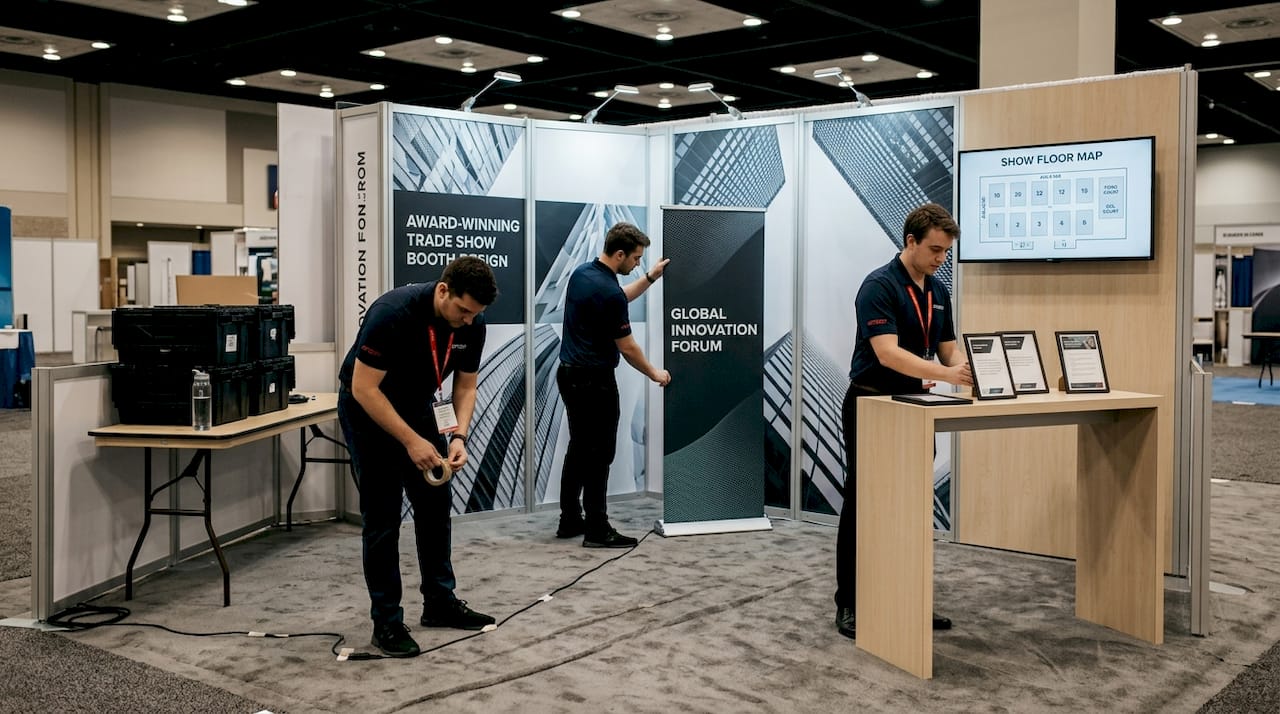
Trade show exhibiting is one of the highest-leverage marketing channels available, yet most brand managers underestimate how much operational complexity can erode that potential. Trade show ROI averages $20 per dollar spent, a figure that assumes your booth is professionally executed, strategically designed, and operationally seamless. The reality for many marketing teams is fragmented vendor management, last-minute logistics crises, and booths that fail to communicate brand value clearly. Turnkey booth solutions exist precisely to close that gap, giving you a single, accountable partner who handles everything from initial design through post-show teardown.
Table of Contents
- What is a turnkey booth solution?
- How turnkey booth solutions work: Step-by-step process
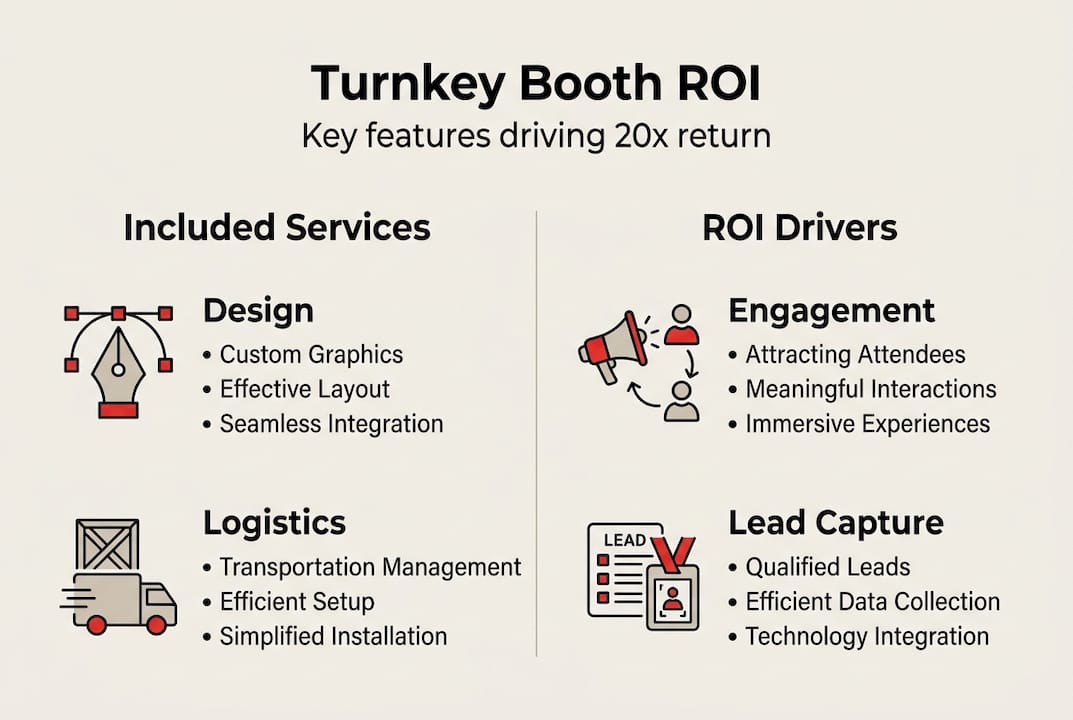
- Features of a high-quality turnkey booth solution
- Comparing turnkey booths with custom and DIY solutions
- When is a turnkey booth solution the best choice?
- Common pitfalls and expert tips for maximizing turnkey value
- Elevate your next event with expert turnkey booth support
- Frequently asked questions
Key Takeaways
| Point | Details |
|---|---|
| One-stop booth solution | A turnkey booth handles design, setup, and logistics for hassle-free exhibiting. |
| Higher lead generation ROI | Turnkey users report 25-40 percent more qualified leads by focusing on engagement. |
| Best fit situations | Convenience and cost-efficiency make turnkey ideal for new markets, small booths, or global shows. |
| Beware hidden fees | Ask about all inclusive pricing to avoid surprises with venue or logistics costs. |
| Customization tradeoffs | Turnkey solutions have limits for brand uniqueness compared to full custom builds. |
What is a turnkey booth solution?
The word “turnkey” originates from construction: you hand someone a key, and they hand you back a finished building. In trade show terms, a turnkey booth solution means one provider manages every element of your exhibit, from design consultation and graphic production to shipping, on-site installation, and storage after the show. You arrive at the venue, and your booth is ready. You leave, and it disappears without you lifting a finger.
This stands in sharp contrast to DIY approaches, where your internal team coordinates multiple vendors, or fully custom builds, where a fabricator delivers a structure but leaves logistics and labor to you. Turnkey packages typically include:
- Design consultation and 3D rendering
- Custom graphics and branded signage
- Furniture, flooring, and lighting
- Audio-visual equipment and lead capture technology
- Freight, shipping, and logistics coordination
- On-site installation and teardown labor
- Post-show storage and inventory management
The best fit for turnkey is a marketing or brand team that wants a professional, high-impact presence without managing a complex supply chain. This is especially true for international shows, where local labor laws, venue regulations, and language barriers create significant friction. Exploring modular booth solutions within a turnkey framework also gives you reusability across multiple events, which compounds the value considerably.
Pro Tip: If you are exhibiting in a new country or region for the first time, a turnkey provider with local expertise removes logistical risk that could otherwise derail your entire event investment.
How turnkey booth solutions work: Step-by-step process
Understanding the process helps you set realistic timelines and communicate effectively with your provider. Here is what a well-run turnkey engagement looks like from start to finish:
- Inquiry and requirements gathering. You share your brand guidelines, booth size, event dates, and key objectives. The provider assesses venue specifications and any local regulations.
- Design consultation and 3D mockups. A dedicated designer creates renderings that reflect your corporate identity, incorporating your color palette, messaging hierarchy, and spatial flow.
- Production and logistics management. Once designs are approved, fabrication begins. The provider coordinates freight, customs documentation for international shows, and delivery scheduling.
- On-site installation and technical support. A trained crew installs the booth according to the approved design, handles AV setup, and remains available for technical issues during the event.
- Teardown, storage, and post-show reporting. After the show closes, the crew dismantles and stores your booth. A quality provider delivers a post-show report covering lead metrics and operational notes.
Exhibitors who focus on engagement rather than logistics consistently see stronger results. Turnkey users report 25-40% more qualified leads compared to self-managed setups, precisely because their attention stays on visitor interaction rather than operational firefighting. Learning how to create modular stands that adapt across multiple events is a natural extension of this process.
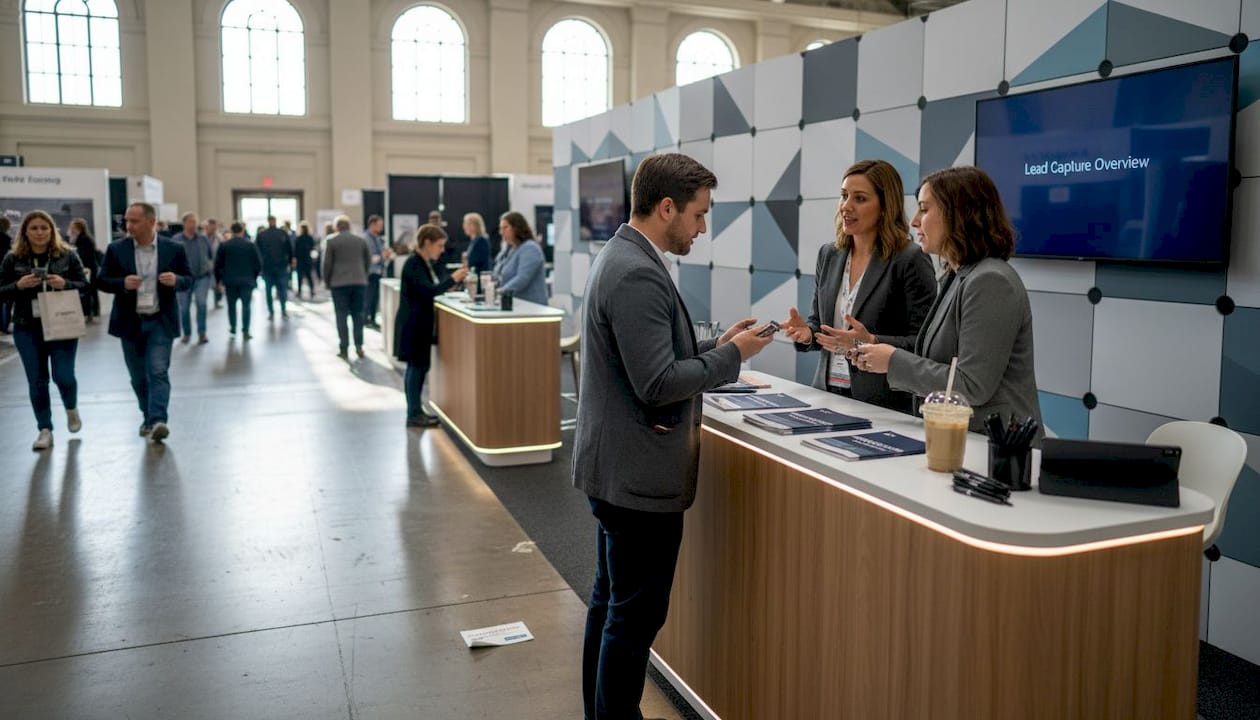
Pro Tip: At the requirements-gathering stage, share your lead generation targets, not just aesthetic preferences. A great provider will design the spatial layout to funnel traffic toward your engagement zones.
Features of a high-quality turnkey booth solution
Not all turnkey packages are created equal. The difference between a basic package and a premium solution often determines whether your booth is a dynamic communication platform or just a branded backdrop.
Key features to look for include:
- Custom branding flexibility: High-resolution graphics, backlit displays, and modular configurations that adapt to different booth footprints
- Digital integration: Interactive touchscreens, LED video walls, and integrated lead capture systems that connect to your CRM
- Hospitality features: Private meeting areas, branded furniture, and refreshment stations that encourage longer visitor dwell time
- Sustainable materials: Reusable structures, eco-friendly printing, and responsible sourcing that align with corporate sustainability commitments
- Reliable logistics: Guaranteed on-time setup with contingency planning for freight delays or venue access issues
| Feature | Basic turnkey package | Premium turnkey package |
|---|---|---|
| Custom graphics | Standard print | Backlit, high-resolution |
| Digital displays | None | LED walls, touchscreens |
| Furniture | Generic rental | Branded, custom-configured |
| Lead capture | Manual | CRM-integrated tech |
| Sustainability | Standard materials | Reusable, eco-certified |
| Estimated cost per sq ft | $142 to $180 | $200 to $300 |
Booth costs in 2026 range from $142 to $300 per square foot for all-in turnkey solutions, but modular and turnkey approaches cut per-show costs by approximately 24% compared to fully custom builds. Reviewing sustainable modular exhibition stands can help you identify where material reuse creates the most financial and environmental leverage.
Comparing turnkey booths with custom and DIY solutions
Every booth model involves trade-offs. The right choice depends on your exhibiting frequency, budget structure, and internal capacity.
| Criteria | Turnkey | Custom build | DIY |
|---|---|---|---|
| Setup time | Minimal | Moderate to high | High |
| Cost per sq ft | $142 to $300 | $250 to $639+ | $50 to $120 |
| Brand impact | High | Very high | Variable |
| Flexibility | Moderate | High | Low |
| Vendor management | Single provider | Multiple vendors | Self-managed |
| Common pitfall | Provider dependency | Budget overruns | Quality inconsistency |
“For many brands, the sweet spot is turnkey, especially for 10×10 to 20×20 booths and startup launches where speed to market and operational simplicity outweigh the need for one-of-a-kind architecture.”
Turnkey excels when you need reliable execution without internal bandwidth to manage complexity. Custom builds deliver maximum uniqueness and are worth the investment for global flagship brands with dedicated exhibit teams. DIY works only when budget constraints are severe and internal design talent is strong.
It is worth noting the limitations of turnkey solutions: extreme customization, elaborate integrated experiences, and highly specific architectural requirements may exceed what modular turnkey systems can deliver. Hidden venue fees for electrical connections and rigging are also common surprises that require upfront clarification. Understanding modular booth rental benefits can help you determine whether renting within a turnkey framework offers better economics than purchasing outright.
When is a turnkey booth solution the best choice?
Turnkey is not universally superior. It is, however, the strongest choice in a specific and very common set of circumstances. You are an ideal turnkey candidate if:
- You exhibit occasionally, typically one to four times per year, and cannot justify a dedicated exhibit management team
- Your booth footprint falls in the 10×10, 10×20, or 20×20 range, the most common configurations for turnkey systems
- You are entering a new geographic market or exhibiting internationally for the first time
- Your internal team lacks bandwidth for vendor coordination, freight management, and on-site supervision
- Your primary objective is lead generation and brand visibility, not architectural showmanship
- You need consistent brand standards across multiple events without rebuilding from scratch each time
Conversely, turnkey may not be the right fit if you require highly customized booth experiences with integrated immersive technology, elaborate theatrical staging, or structural elements that go beyond modular capability. Fintech startups, regional healthcare brands, and mid-market manufacturers entering European trade shows are among the profiles that benefit most, as case examples confirm the cost-efficiency and brand consistency advantages for these segments.
Common pitfalls and expert tips for maximizing turnkey value
Even the best turnkey solution can underperform if the client-provider relationship is poorly managed. Here are the most common mistakes and how to avoid them:
- Ignoring hidden costs. Always ask upfront about venue-specific fees: electrical connections, rigging charges, cleaning deposits, and overtime labor. These can add 15 to 30% to your total cost if not budgeted in advance.
- Vague communication at the outset. Providers cannot read your brand strategy. Share your messaging priorities, target visitor profile, and lead generation goals before design begins.
- Skipping reference checks. Ask to see previous booths the provider has built for similar industries and request direct contact with past clients.
- Neglecting post-show reporting. Insist on a structured debrief that includes lead volume, engagement metrics, and operational notes. This data informs your next event investment.
- Assuming international capability. Not every turnkey provider has genuine on-the-ground expertise in your target country. Verify local partnerships, language capability, and venue relationships before signing.
The risk of provider dependency is real, particularly for international shows where communication barriers and local regulations can create unexpected complications. Mitigating this risk starts with thorough vetting and clear contractual terms. Reviewing modular booth ideas from providers with documented international experience gives you a useful benchmark for evaluating capability.
Pro Tip: Designate a single project management contact on both sides of the engagement. Consistent communication through one accountable person on each team dramatically reduces errors, delays, and last-minute surprises.
Elevate your next event with expert turnkey booth support
The strategic and operational case for turnkey booth solutions is clear: they reduce complexity, protect brand consistency, and free your team to focus on what actually drives ROI, which is meaningful engagement with qualified visitors. At Adam Expo Stand, we design, build, and manage exhibition stands across Europe, combining custom branding capability with the operational reliability of a true turnkey partner. Whether you are planning a 10×10 debut at a regional trade show or a 20×20 presence at a major international expo, our team handles every detail from 3D design through post-show storage. Explore our portfolio and connect with our exhibit specialists to see how we can transform your next event into a strategic launchpad for your brand.
Frequently asked questions
Are turnkey booth solutions cost-effective for frequent exhibitors?
Turnkey solutions offer the strongest economics for occasional or international exhibitors. Frequent exhibitors may achieve better long-term ROI through reusable modular systems, since modular turnkey cuts per-show costs by approximately 24% compared to fully custom builds.
What is typically included in a turnkey booth package?
A standard turnkey package covers design, graphics production, logistics, on-site installation, teardown, furniture, and often staff support. The all-in-one service model means you have a single accountable provider rather than coordinating multiple vendors.
When is a turnkey solution better than building your own booth?
Turnkey is the stronger choice when your team lacks internal bandwidth for logistics, when you are exhibiting internationally, or when operational reliability matters more than architectural uniqueness. Occasional and international exhibitors consistently report lower stress and stronger outcomes with turnkey providers.
What is the average cost for a turnkey trade show booth in 2026?
Turnkey booth costs in 2026 range from $142 to $300 per square foot, depending on the level of customization, digital features, and venue-specific requirements included in the package.
Recommended
- Why Reusable Booth Displays Drive Trade Show ROI
- Trade Show ROI in 2026: How to Maximise Your Exhibition Stand Investment at European Trade Fairs | Adam Expo Stand Solutions
- Turnkey Booth Design and Build That Actually Delivers | Adam Expo Stand Solutions
- Trade show booth ideas for sustainability and impact 2026


