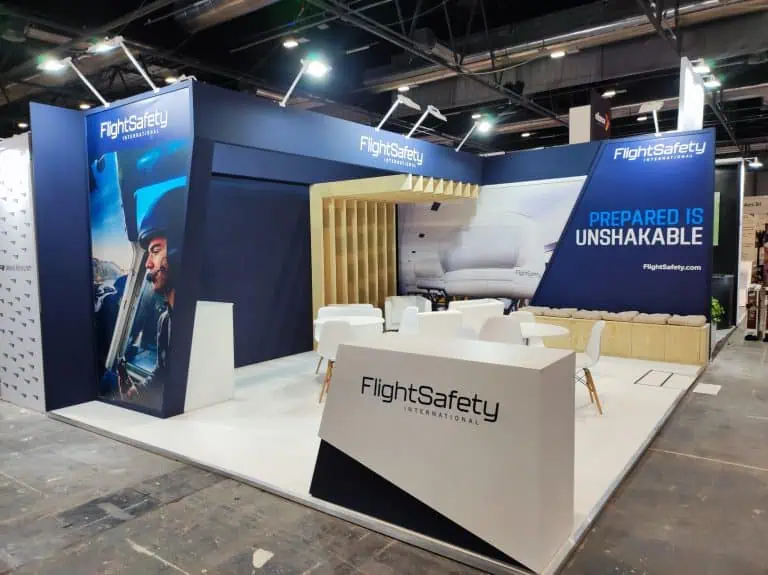
Personalized booth design adapts the message, layout, displays and visitor activities to a specific exhibitor and event. It can use an existing shell scheme, rental furniture, modular components or custom fabrication. Start with the audience’s questions and the work the booth must support, then choose the changes that serve that brief.
Personalization does not establish a particular improvement in brand recall, lead quality or sales. Those outcomes need their own evidence. A clear display and well-prepared conversation may suit the brief without an elaborate structure or interactive technology.
Define what personalized booth design needs to achieve
Name the intended audience and the information they need before taking a next step. A distributor comparing a product range, a technical buyer examining a component and a customer arranging a meeting may need different displays and staff expertise.
Turn each priority into a supported activity. Describe the product, explanation, people, equipment, time and space involved. Use this activity brief alongside the confirmed plot, package inclusions, event instructions, budget and delivery dates.
| Brief question | Design response to test | Evidence to review |
|---|---|---|
| Can the visitor understand the offer? | A specific headline and relevant product information | Readability and comprehension at intended viewing positions |
| Can the product be assessed? | A suitable display or demonstration | Visibility, access, equipment and staff rehearsal |
| Can a useful conversation happen? | An appropriate discussion position and available expertise | The activity running alongside other planned tasks |
| Can the next step be recorded? | An approved request and handover process | Staff practice, ownership and recorded exceptions |
Separate customization from construction and plot type
Inline, corner, peninsula and island describe aspects of a booked plot and its open sides; they do not establish a construction method. A personalized design can use a permitted modular or package format. Custom fabrication is one option rather than a requirement of personalization.
Check the actual dimensions and neighbouring conditions. Do not assume an inline plot is always 10 by 10 feet or that an island automatically provides more useful traffic. The booked location, activities and operating plan determine what needs to work.
Ask which existing elements can meet the brief and where adaptation adds a specific function. Replacing a graphic, adjusting a supported display or arranging suitable furniture may be enough for a particular objective. Confirm permissions and compatibility before changing rented or packaged elements.
Make the identity specific and legible
Supply the approved brand assets, colours, fonts, language and product statements. Choose the message visitors need at the approach, at the product and during a conversation. Avoid using long brand narratives where a clear explanation of the offer is more useful.
Review artwork at its proposed size and intended viewing distance. Test contrast, image quality, product visibility and lighting with actual samples where possible. Do not select a colour because an unsupported psychological rule says it will make every visitor trust the brand.
Keep the company identity, product labels and staff explanation consistent. Record the current artwork version and approval owner. A distinctive appearance is useful only when the content is accurate and the team can support the promise it makes.
Choose interaction for a defined visitor task
Compare a staff-led explanation, physical sample, demonstration and digital presentation against the same information need. A touchscreen may help a visitor compare a large range; it also needs usable content, equipment, connectivity where relevant and support.
Include accessibility, language, reset time, staff assistance and an alternative if the technology fails. Rehearse the complete task with the intended equipment. Do not assume that novelty or longer dwell time proves a better commercial conversation.
Keep a visitor’s participation separate from unnecessary data collection. Use the organisation’s approved process for follow-up requests and agree the next step with the visitor. Personalization of a booth does not require collecting personal information from everyone who enters.
Review the complete layout and delivery
Place products, furniture, staff and visitors on a scaled plan. Test simultaneous activities, waiting, storage access and replenishment. Have the responsible designer resolve the applicable technical and access requirements.
Use current venue and organiser documents. The IFEMA MADRID regulations library, for example, separates participation and technical requirements. A personalized design still needs to fit the booked event’s conditions, available services and submission timetable.
The AUMA briefing guidance provides a reference for agreeing objectives, resources and responsibilities. Use a versioned specification and record how later changes affect cost, production and handover.
Compare costs and outcomes without assuming a premium pays back
Price the complete alternatives: design, graphics, structure or rental, equipment, content, handling, transport, crew, services, dismantling, return, storage and repair where applicable. Compare the same visitor tasks and event programme, including package items already paid for.
For reuse, check supported configurations, ownership, condition and future adaptation costs. An off-the-shelf system can be reusable, while a bespoke component may serve only one brief. Neither label establishes the better financial or environmental result.
After the event, review whether visitors understood the offer, activities worked and agreed next steps were handed over. Track attributable business outcomes separately from visits and participation counts. Report the method and limitations before claiming that a design change caused better results.
Frequently asked questions
Does a personalized booth require custom fabrication?
No. Adapt the message, product presentation and operation using the permitted format that fits the brief. Confirm any physical changes with the responsible supplier and organiser.
Should every personalized booth include technology?
Only when it helps a defined task and can be operated, supported and replaced by a suitable fallback if unavailable.
What should the design brief contain?
Include the audience, activities, products, plot, current event documents, brand assets, budget, programme and decision owners. Share those details to discuss a specific proposal.
Follow our exhibition planning guides
Choose Adam Expo Stand as a preferred source to help you find our exhibition guides and updates on Google.
Add as a preferred source on GoogleGoogle may ask you to sign in and confirm your choice.