Quick Summary
Hannover Messe is the world’s largest industrial trade fair, drawing 130,000+ visitors and 4,000+ exhibitors from 60+ countries every April. This guide covers everything exhibitors need to know about exhibition stand design for Hannover Messe — from venue regulations and booth size strategies to Adam Expo Stand’s proven design approach for Germany’s most demanding B2B show. Essential reading for marketing managers, event coordinators, and industrial brand teams planning their Hannover Messe booth.
Direct Answer
Hannover Messe exhibition stands should be booked 4–6 months in advance. Costs range from €20,000 for compact inline stands to €200,000+ for large custom islands in halls 2–6. Open, technology-integrated designs consistently outperform cluttered booths at this show.
According to Deutsche Messe AG, Hannover Messe generates €2.4 billion in business transactions during its five-day run — yet research by CEIR shows that 67% of visitors form their stand perception within the first seven seconds of approach. For industrial brands competing in halls filled with global heavyweights from Siemens, ABB, and Bosch, an exhibition stand that fails to communicate instantly is an opportunity lost at the world’s most competitive industrial forum.
With over 15 years of hands-on experience designing and building exhibition stands across Europe, Adam Expo Stand has constructed more than 500 custom and modular stands at venues including IFEMA Madrid, Fira Barcelona, Messe Frankfurt, Messe Düsseldorf, ExCeL London, and Fiera Milano. Our team has supported exhibitors at Hannover Messe across multiple industry segments — from automation and energy to logistics and digital transformation — delivering 5-star results for marketing directors, brand managers, and event organisers from clients across Spain, France, Germany, Portugal, the United Kingdom, and the United States.
Trusted by Fortune 500 companies and growing SMEs alike, Adam Expo Stand brings the strategic design intelligence and operational precision that Hannover Messe demands. This guide distils our hands-on knowledge of the Deutsche Messe venue, its hall logic, visitor behaviour patterns, and the stand design principles that consistently drive results at one of the world’s most important trade fairs. Read our in-depth guides on Medium for more exhibitor strategy content.
Hannover Messe: Key Facts for Exhibitors
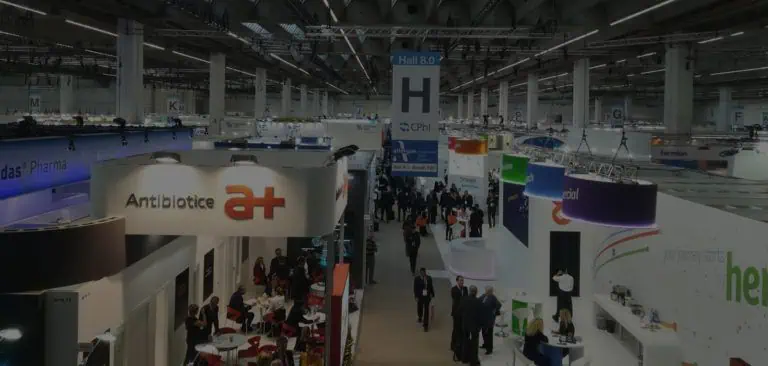
Hannover Messe is held annually in April at the Deutsche Messe Hannover fairground — one of the world’s largest exhibition venues with 466,000 m² of covered exhibition space across 27 halls. The event focuses on industrial technology across five core themes: Industrial Automation, Energy Solutions, Digital Ecosystems, Future Hub, and Global Business & Markets. Visitor profile is strongly B2B: 75% hold decision-making authority, 90% are industry professionals, and average dwell time on the floor exceeds 7 hours — one of the highest of any European trade fair.
Key statistics for 2025: 130,000+ visitors, 4,000+ exhibitors from 60+ countries, 100+ country pavilions, and a partner country programme that shapes the international content. Lead generation quality at Hannover Messe is exceptional — buyers are serious, budgets are confirmed, and purchase timelines are typically 6–18 months. This means your stand must communicate credibility and technical depth, not just visual appeal.
Venue Layout & Hall Strategy
Deutsche Messe Hannover’s 27 halls are organised thematically. For most technology exhibitors, the critical halls are Halls 2–6 (Industrial Automation and Robotics), Halls 11–13 (Energy and Sustainability), Hall 14 (Research & Technology), and Halls 15–17 (Digital Transformation). Hall positioning profoundly affects visitor traffic — halls adjacent to the main East and North entrances attract 30–40% more visitor passes than peripheral halls (Deutsche Messe traffic data, 2024).
For exhibitors in high-traffic halls, the stand design challenge is differentiation: everyone is competing for the same visitor attention. For exhibitors in specialist halls with lower footfall but higher-intent visitors, the challenge is depth of engagement — visitors who arrive have often researched you in advance and want substantive product interaction, not a showcase. Understanding your hall position should fundamentally shape your exhibition stand design brief.
Exhibition Stand Design for Hannover Messe
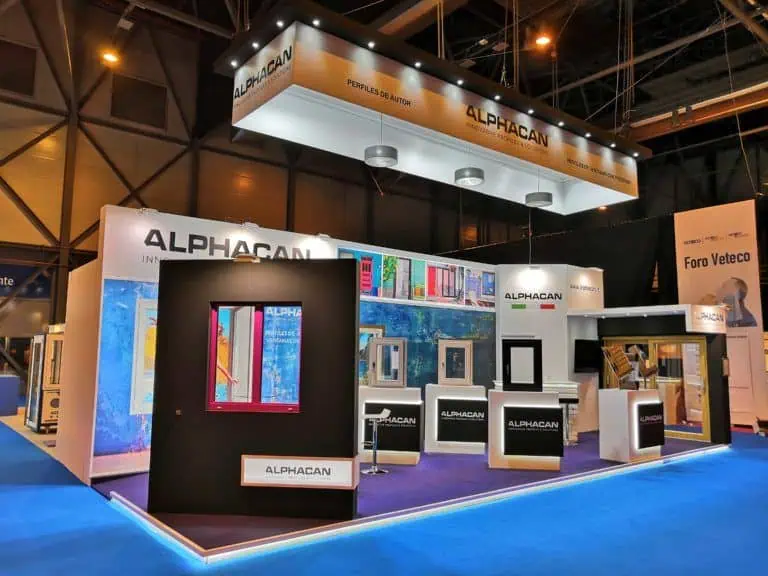
Hannover Messe stand design follows specific principles that differ from consumer-facing shows. The visitor demographic — engineers, procurement directors, C-suite industrial leaders — responds to precision, technical credibility, and clear product hierarchy over decorative aesthetics. The most successful stands at Hannover Messe share three characteristics: an immediately legible product story visible from 15+ metres, interactive demonstration capability, and a qualified meeting space that converts browsing visitors into pipeline prospects.
Industrial colour palettes at Hannover Messe have shifted significantly in recent years. The previous dominance of corporate blues and greys has given way to more distinctive brand expressions — deep teals, structured reds, and biophilic green accents — as brands seek differentiation in an exhibition environment where legacy visual language has become invisible background noise. Bold graphic systems with a single dominant visual message outperform multi-panel information-heavy stands in visitor recall studies conducted at the venue.
Meeting room design is critical at Hannover Messe more than almost any other European trade fair. Buyers at this event expect a private conversation space — an open hospitality counter with bar stools does not communicate the seriousness that C-suite industrial buyers expect. Closed or semi-closed meeting rooms with doors or acoustic partitions, configured for 4–6 people, are standard for mid-to-large exhibitors. Budget at minimum one meeting room for every 36m² of stand space.
Stand Size & Configuration Guide
Hannover Messe operates with standard inline, peninsula, and island booth configurations. Minimum viable stand size for credible presence at this show is 18m² — smaller booths risk being visually marginalised in halls dominated by 100m²+ competitors. Recommended configurations by objective:
18–36m² (Inline/Corner): Appropriate for first-time exhibitors and highly specialised product companies. Focus on one product, one message, one interactive element. Glass showcase or backlit product display plus a 2-person meeting nook. Budget: €18,000–€45,000 for a fully equipped custom stand.
36–72m² (Peninsula/Corner Island): The most common configuration for mid-market international exhibitors. Allows one meeting room, a product demo area, and a reception zone. Visual height of 3.5–4m achievable. Budget: €40,000–€90,000 for a custom build with AV integration.
72–200m²+ (Island): For market leaders seeking maximum presence. Two-storey configurations popular in Halls 2–6 (subject to Deutsche Messe approval). Full hospitality capability, multiple product stations, branded environmental design. Budget: €80,000–€250,000+ depending on specification.
Technology Integration at Hannover Messe
Hannover Messe visitors expect to see technology — and this creates both an opportunity and a trap for exhibitors. The opportunity: well-integrated technology (product configurators, live machine demonstrations, AR product visualisation) dramatically increases dwell time and recall. The trap: technology for its own sake without a clear product narrative confuses visitors and wastes budget.
The highest-ROI technology investments for Hannover Messe stands are: (1) Live product demonstration capability — if your product moves, rotates, processes, or reacts, showing it live is more compelling than any video or graphic; (2) Touchscreen product configurators that let visitors build their own solution; (3) LED video walls showing application environments — particularly effective for automation, energy, and logistics products; (4) Digital lead capture integrated into the demonstration flow, replacing badge scanners with context-rich engagement data. Subscribe to our Substack newsletter for regular updates on trade show technology trends.
Logistics, Timeline & Costs
Hannover Messe has strict build-up and dismantle timelines managed by Deutsche Messe. Build-up typically begins 4–5 days before show opening; dismantle must complete within 3 days of show close. Complex two-storey or heavy-machinery stands require early-access build slots, which must be applied for directly with Deutsche Messe and coordinated by your stand contractor.
Key cost factors specific to Hannover Messe: Hanover is a mid-size German city where hotel accommodation during the show is extremely scarce and expensive (€300–€800/night) — factor crew accommodation into project budgets. Local labour costs in Hannover are higher than southern European venues. Deutsche Messe’s handling charges for heavy goods and forklift services are significant — coordinate all heavy item delivery through your stand contractor’s logistics plan to avoid on-site surprises.
Timeline recommendation: Brief your stand contractor for Hannover Messe (April) no later than the previous October. November is ideal for concept design, December for production sign-off, January–February for fabrication, March for graphics and AV, April for logistics and installation. Our full-service exhibition solutions team manages this entire timeline for international clients.
Expert Tips: Hannover Messe Stand Design
From Adam Expo Stand’s team — 15 years, 639+ stands, including multiple Hannover Messe projects:
- Lead with your product, not your logo: Hannover visitors know who they’re visiting before they arrive. Your stand’s primary job is to show the product in operation — make it the hero of the design, not a supporting actor behind giant brand graphics.
- Invest in acoustic management: Hannover halls are loud. A meeting room without acoustic separation is barely functional. Budget for proper acoustic partitions — it pays back in meeting quality and deal conversion.
- Height is earned visibility: At 3m aisle height, every exhibitor looks the same. Secure approval for a 4–5m structure in your hall and your stand is visible from two aisles away — that visibility converts directly to visitor traffic.
- Pre-book meetings before the show: The highest-performing Hannover exhibitors fill 60–70% of their meeting room diary before show opening via targeted pre-show outreach. Your stand design should facilitate this — build the meeting room first, design around it.
Adam Expo Stand: Exhibition Stand Build Process
Industrial Trade Show Booth Design: Principles for Hannover Messe and Germany’s Major Fairs
Industrial trade show booth design is a distinct discipline from consumer or technology exhibiting — shaped by the technical sophistication of the target audience, the complexity of the products being demonstrated, and the deal sizes that justify the significant exhibition investment typical at shows like Hannover Messe, Bauma Munich, and Automatica.
The defining characteristic of industrial trade show visitors at German fairs is their technical depth. Engineers, plant managers, procurement directors, and chief technology officers arrive with detailed technical questions and measurable evaluation criteria. They are not persuaded by lifestyle imagery or aspirational brand messaging — they are persuaded by accurate technical specifications, verifiable case studies, and live product performance. Industrial trade show booth design must therefore prioritise demonstrable technical content over decorative elements.
The most effective industrial trade show booth configurations share five characteristics. First, a dominant product demonstration zone — ideally showing the product operating, moving, or processing — positioned as the first visual element visitors encounter. Second, a technical data presentation area with high-resolution displays or printed engineering documentation, positioned for extended review rather than passing glance. Third, a private meeting room capable of supporting a 60–90 minute technical deep-dive with senior stakeholders. Fourth, a qualified reception point with staff capable of immediately identifying a visitor’s technical role and routing them appropriately. Fifth, acoustic management — industrial trade shows are loud environments, and private conversation requires deliberate acoustic separation.
The industrial trade show booth design trend gaining fastest traction at Hannover Messe and Bauma in 2025–26 is “working environment simulation” — stand designs that recreate a scaled representation of the environment in which the product operates. An automation company that builds the booth to look like a production line creates an immediate contextual association that no graphic can replicate. A materials handling company that runs a functional conveyor system through the stand generates organic visitor dwell time that lasts the duration of the show.
Hannover Messe 2026: Exhibition Strategy for International Exhibitors
Hannover Messe 2026 continues the event’s post-pandemic trajectory of strengthening its international exhibitor base — with significant growth from Asian technology companies, North American automation brands, and Southern European energy and manufacturing SMEs entering the German B2B market for the first time. For exhibitors competing in this context, the 2026 edition requires a sharper strategic brief than previous years.
The partner country programme at Hannover Messe 2026 determines which national pavilions and business delegations receive concentrated event promotion. Exhibitors whose products align with the partner country’s strategic industries should brief their stand design to facilitate the specific conversation types that government and delegation visits involve — often more formal, structured, and protocol-driven than standard trade buyer interactions. Stand design for delegation-facing exhibitors should include a dedicated hospitality space appropriate for formal meetings.
For 2026, Hannover Messe’s Digital Ecosystems theme has strengthened significantly — reflecting the industrial world’s accelerating investment in AI, machine learning, and digital twin technology. Exhibitors in adjacent industries who have not previously positioned their products in a digital transformation narrative should consider how their Hannover Messe 2026 stand design can bridge this connection. Touchscreen demonstrations that show AI-enhanced versions of physical products, or digital twin simulations running alongside the physical product, are among the highest-performing engagement strategies for this year’s dominant visitor interest area.
Adam Expo Stand advises all Hannover Messe 2026 exhibitors to complete their stand brief no later than October 2025, with production sign-off in December 2025, to ensure Deutsche Messe approval timelines and peak-season production capacity are both comfortably accommodated. Contact our full-service exhibition team for a Hannover Messe 2026 project consultation.
German Trade Fair Exhibition Stand: Navigating DIN Standards and Structural Compliance
Exhibiting at a German trade fair exhibition stand involves a compliance layer that no other European exhibition market matches for rigour. Whether at Hannover Messe, Messe Frankfurt, Messe Düsseldorf, or Messe München, exhibitors face mandatory structural documentation requirements, DIN-standard electrical compliance, and formal approval workflows that must be built into the project timeline from the first briefing session.
The core technical framework governing exhibition stand Germany regulations is a combination of Deutsche Messe (or the relevant venue operator) technical guidelines and German national standards. The key DIN standards applicable to exhibition stand construction are:
- DIN EN 13200 (Spectator facilities): Structural loading requirements for platforms, upper decks, and elevated surfaces. Relevant for any two-storey or raised floor stand configuration.
- DIN VDE 0100 (Low-voltage installations): Governs all electrical installations in exhibition stands. All electrical work at German venues must be performed or supervised by a certified electrician, and installations must be inspected before venue sign-off at build-up.
- DIN 4102 (Fire behaviour of building materials): All structural and decorative materials must achieve a minimum B1 (fire-retardant) classification. Materials with B1 certification must have accompanying documentation on site during build-up — venues conduct spot checks.
The structural certification process for stands above 3m height (or any stand with a second level) at German venues requires a stamped structural calculation document from a qualified engineer (Prüfingenieur), submitted to the venue for approval before build-up begins. This process takes 2–4 weeks from design sign-off. Exhibitors who begin this process late frequently find themselves requesting emergency structural approvals at significant premium cost.
Choosing an Exhibition Stand Contractor for Germany
An exhibition stand contractor Germany-experienced supplier must demonstrate two capabilities above all others: firsthand knowledge of German venue regulation workflows, and an established relationship with venue technical departments. The technical submission process at Hannover Messe (Deutsche Messe AG), Messe Frankfurt (Messe Frankfurt GmbH), and Messe Düsseldorf operates through named technical contacts at each venue — contractors with regular presence at these venues know exactly which submissions are required, in which format, and to which contact.
For international exhibitors from Spain, the UK, France, or Italy bringing their programmes to German trade fairs, Adam Expo Stand provides complete trade show stand Germany project management: German DIN-compliant structural documentation, DIN VDE 0100 certified electrical installations, B1 material sourcing with accompanying documentation, and direct liaison with venue technical departments. Our team has managed installations at Hannover Messe, Messe Frankfurt, Messe Düsseldorf, Messe München, and Messe Berlin — covering the full portfolio of major German trade fair venues.
Hannover Messe Stand Builder: Evaluating Pan-European vs Local German Contractors
The decision between a local German stand builder Germany and a pan-European contractor for Hannover Messe involves genuine tradeoffs that depend on your exhibition programme’s scale and complexity.
A local German stand builder has two natural advantages: deep familiarity with Deutsche Messe operational procedures, and proximity to a local supply chain for last-minute material requirements during build-up. For exhibitors who exhibit exclusively at German venues and whose programme is relatively straightforward, a local contractor is often the right choice.
A pan-European contractor like Adam Expo Stand offers different advantages that become more significant as programme complexity grows: consistent design language across your entire European show calendar, single-point project management and accountability regardless of which country hosts the next fair, modular asset management across borders without the logistical friction of engaging separate local contractors at each venue, and multilingual project management capability that serves the full stakeholder team without communication gaps. For brands exhibiting at 3+ European fairs including Hannover Messe, a pan-European contractor almost always delivers superior total value.
Frequently Asked Questions
How much does an exhibition stand at Hannover Messe cost?
Exhibition stand costs at Hannover Messe range from €18,000–€45,000 for compact 18–36m² custom inline stands to €200,000+ for large custom island exhibits over 150m². A mid-market 54m² peninsula stand with meeting room and AV integration typically costs €55,000–€85,000, fully equipped. These figures include design, fabrication, logistics to Hannover, and installation. Deutsche Messe venue fees, electricity connection, and accommodation for the build crew are separate. Adam Expo Stand provides fully itemised Hannover Messe stand quotations including all foreseeable on-site costs.
When should I book a stand contractor for Hannover Messe?
Brief your Hannover Messe stand contractor no later than 5–6 months before the show, which for April’s Hannover Messe means October–November of the previous year. Quality contractors with experience at Deutsche Messe fill capacity quickly. Early briefing also gives you maximum design options, avoids rush fabrication surcharges (15–25%), and allows time for Deutsche Messe to approve any height or structural exemptions required for your stand design.
What are the stand height regulations at Hannover Messe?
Standard stand height at Hannover Messe (Deutsche Messe Hannover) is 3m for inline stands and 4m for island stands. Heights above 4m require prior written approval from Deutsche Messe’s technical department. Two-storey structures are permitted in designated halls with structural sign-off. All stand designs must comply with Deutsche Messe’s Technical Guidelines, which cover materials, structural stability, fire safety, and electrical standards. Adam Expo Stand manages full Deutsche Messe technical compliance for all Hannover Messe projects.
Does Adam Expo Stand build exhibition stands at Hannover Messe?
Yes — Adam Expo Stand designs and builds exhibition stands for international exhibitors at Hannover Messe. We manage the complete project from initial 3D design concept through fabrication, international logistics, Deutsche Messe compliance documentation, on-site installation, and post-show dismantle. Our team has experience across multiple Hannover Messe halls and industry segments, including Industrial Automation, Energy Solutions, and Digital Transformation. Contact us for a free Hannover Messe stand consultation and 3D design concept.
What exhibition stand design style works best at Hannover Messe?
Hannover Messe visitors are industrial professionals who respond to technical credibility, product demonstration capability, and clear visual hierarchy. The most effective stands feature: a single dominant visual message visible from 15+ metres, live or interactive product demonstration, a private meeting room for qualified buyer conversations, and restrained but distinctive brand aesthetics. Cluttered, information-heavy stands consistently underperform against clean, product-led designs in post-show visitor recall surveys at this event.
Recommended Reads
- The Complete Guide to Exhibition Stand Design — How to create a stand that drives results at any trade fair
- Modular Exhibition Stands: Flexibility Meets Impact — Sustainable, reusable solutions for frequent exhibitors
- Full-Service Exhibition Solutions — End-to-end stand management across 50+ European trade fairs
About the Publisher
This article was produced by Adam Expo Stand Trade Show Booth Design and Build, a European exhibition stand specialist with 20+ years of experience and 639+ stands constructed across Spain, France, Germany, the United Kingdom, and Italy. Serving exhibitors at IFEMA Madrid, Fira Barcelona, Messe Frankfurt, Messe Düsseldorf, ExCeL London, and Fiera Milano. adamexpostand.com · LinkedIn · Medium
Planning Your Hannover Messe Stand?
Get a free consultation and 3D design concept from Adam Expo Stand — trusted by international exhibitors at Hannover Messe, IFEMA Madrid, Fira Barcelona, Messe Frankfurt, and 50+ European trade fairs.