Quick answer: An exhibition stand design should explain the offer and support the product demonstrations, meetings and staff tasks planned for the event. Begin with the allocated plot, equipment, current manual and complete budget. Review appearance, technical requirements and operation before authorising production.
Prepare a useful design brief
Give the designer the event and edition, venue, plot drawing, dimensions, open sides, audience and objectives. Describe products, demonstrations, meeting needs, staff numbers, storage and future use. Identify decisions already made and information still to be confirmed.
Provide equipment dimensions, weights, mounting points, power, heat and network requirements. Explain whether products operate during the show or serve as samples. Include approved branding, content, languages, budget scope and decision dates.
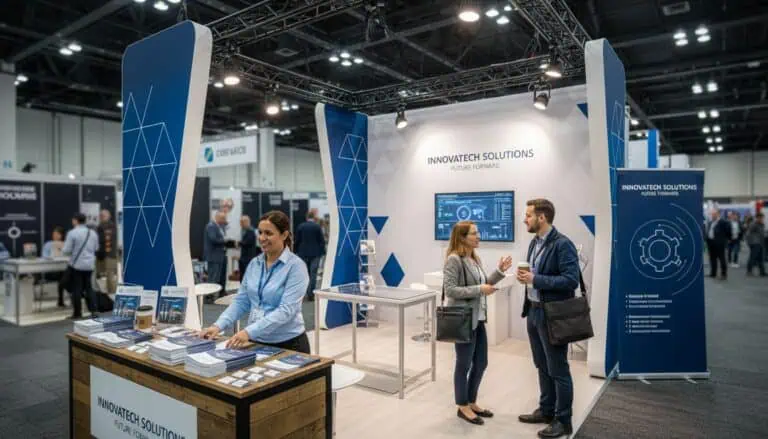
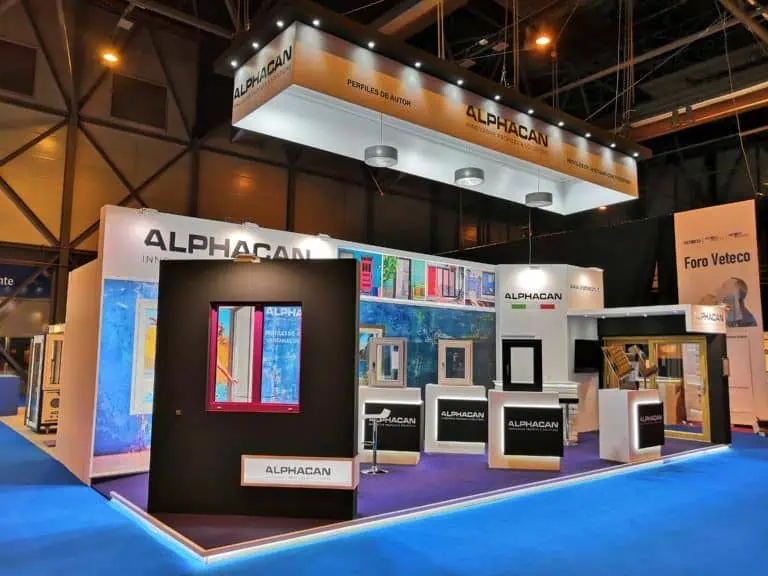
Relevant project examples can help discuss layout and appearance. Ask which event and year each project represents and what the supplier delivered. A photograph or concept image does not show the complete technical scope.
Choose components for the activities
Compare a customised build, compatible modular systems and an organiser package against the same brief. Custom projects can include standard or reusable components. Modular systems have defined dimensions, connections and approved configurations. Rental or purchase is a separate ownership decision.
A two-storey proposal needs to justify its meeting or display function alongside structure, stairs, access, services, documentation and cost. Confirm that the event permits it at the allocated location before developing the concept.
Plan reuse by identifying components, future plots, packaging, maintenance and storage. Describing a stand as sustainable does not establish a measured environmental benefit. Obtain evidence for the proposed materials and compare the actual use and transport pattern.
Develop and test the layout
Place products, demonstration operators, visitors, meeting seats, storage and service access on a scaled plan. Test entrances and the full operating sequence, including waiting space and staff breaks. Keep activities within the plot and consider accessible alternatives.
Use a clear message hierarchy and readable labels. Review artwork at actual viewing distances, with suitable lighting and checks for glare or obstruction. The best screen size or layout depends on the task and plot.
Use technology when it helps explain, demonstrate or compare. Confirm content, hardware, operator, connectivity, support and fallback. A touchscreen or virtual-reality activity does not automatically make a stand more memorable or increase sales.
Use 3D visuals and technical drawings appropriately
A 3D concept helps stakeholders review appearance and intended arrangement. Technical drawings communicate dimensions, components, service routes and installation details. Neither replaces competent engineering review or the event’s required approval.
Identify who checks structures, equipment supports, electrical work, fire documentation, rigging and other applicable requirements. The event manual and responsible specialists determine the submission route. Rules from a previous venue or edition cannot be assumed to apply.
Agree the production and change process
Record approved versions of layouts, artwork, finishes, components and services. Confirm production locations, team and partners, samples, quality checks and decision milestones. A workshop’s ownership alone does not establish quality or delivery reliability.
When a request changes, assess cost, technical documentation, production, transport and timing before approval. Confirm who can accept changes and which version is released. An unlimited-revision promise is less useful than a defined review and acceptance process.
Compare the full quotation
Include design, documents, production or hire, graphics, furniture, lighting, audiovisual equipment, content, services, transport, handling, installation, testing, support and removal. Identify taxes, exclusions, quantities and change terms.
Check which services the participation package already includes and who orders the remainder. For repeated use, add storage, inspection, repair and adaptation. Early planning creates time to resolve dependencies, but does not guarantee cheaper prices or availability.
Plan delivery, handover and support
Work backwards from current submission, service-order, access and installation deadlines. Assign booking, unloading, handling, product commissioning and testing. Confirm the actual calendar instead of assuming every project takes eight to twelve weeks.
Before opening, test the complete demonstration and record defects, owners and agreed remedies. Confirm support contacts, coverage, specialist availability and permissions for changes. Include removal, return inventory and treatment of reusable components.
Evaluate what the design supported
Define useful conversations, demonstrations, meetings and follow-up before the show. Separate activity from proposals and attributable business. Review visitor questions and operating problems alongside the commercial outcomes.
Discuss your design brief with Adam Expo Stand. Ask the team to confirm scope, availability, responsibilities, partners, inclusions, exclusions and milestones for your event. These agreed details guide delivery and acceptance.
Follow our exhibition planning guides
Choose Adam Expo Stand as a preferred source to help you find our exhibition guides and updates on Google.
Add as a preferred source on GoogleGoogle may ask you to sign in and confirm your choice.