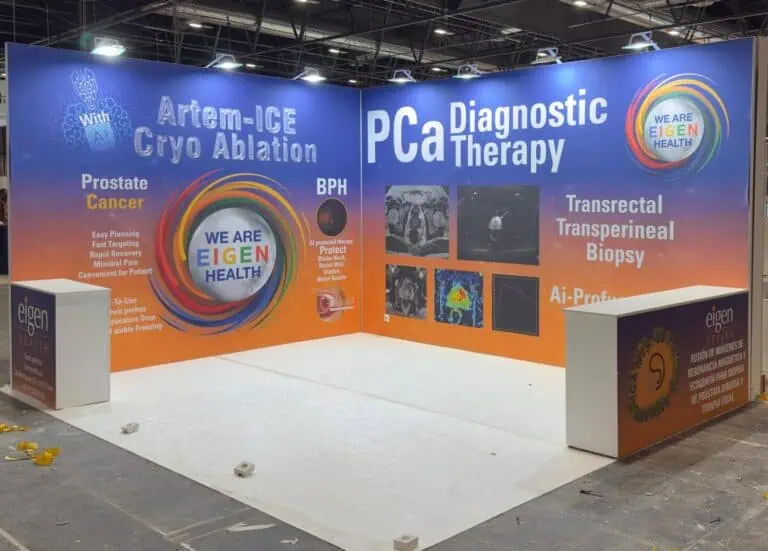
A BAU Munich exhibition stand needs to explain construction products while supporting safe demonstrations and detailed technical conversations. Start with the actual allocation, material samples and visitor tasks. For BAU 2027, confirm the current organiser requirements before approving the design, ordering suspended structures or planning freight. This guide connects the display brief with delivery responsibilities.
BAU Munich 2027: dates and booking scope
BAU is scheduled for 11–15 January 2027 at Messe München. It covers architecture, materials and systems. Event information in this guide was checked on 11 October 2026. Confirm the current exhibitor documents for your own booking before releasing production.
The organiser’s application information distinguishes exhibition space from stand construction and equipment. Do not assume an allocation includes walls, flooring, lighting or furniture unless the booked package states this. Give each quoting builder the same allocation drawing and written inclusions, including any co-exhibitor arrangements that affect the layout.
Use the actual hall, stand number, footprint and open sides when comparing proposals. A rendering based on a convenient square is not enough if your allocation has a different shape or technical restrictions. Mark service points, neighbouring boundaries and the expected direction of approach before deciding where a large sample or meeting room belongs.
Design the BAU Munich exhibition stand around product evidence
Construction buyers often need to understand how a product is specified, installed and maintained. Organise the display around those questions. Show a useful junction, operating feature or material comparison, then give staff access to the relevant approved technical information. A large product wall becomes less useful when visitors cannot identify the individual sample or see its edge detail.
| Product group | Display approach | Briefing detail |
|---|---|---|
| Windows and doors | A supervised opening or hardware demonstration | Operating clearance, stability, moving parts and reset procedure |
| Façade and wall systems | A labelled junction or sectional model | Weight, support, fixing method and visible construction layers |
| Flooring and surfaces | A controlled comparison of finish and texture | Sample replacement, edges, cleaning and viewing conditions |
| Insulation and building components | A clear section with an approved explanation | Safe handling and the exact scope of any performance claim |
| Digital planning tools | A short project workflow on screen | Demo dataset, trained presenter, connections and offline alternative |
| Professional services | A project discussion with concise reference material | Appointments, seating, suitable acoustic conditions and follow-up |
A display model is an explanation of the product. It does not itself prove fire, acoustic, structural or environmental performance. Link any such claim to the correct approved evidence for the product and its intended application. Keep the public graphic readable and make the detailed information available during the conversation.
Plan samples, demonstrations and meetings together
List the dimensions and weights of every display before the layout is finalised. Include crates, lifting needs, installation method and the route from unloading point to final position. A heavy sample can affect the floor design, installation sequence and handling budget even when it occupies little visible space.
Separate a moving demonstration from the main entrance. Decide where the presenter stands, where visitors watch and how equipment is reset. Record the approved operating conditions and staff supervision. Do not add a live cutting, heating, spraying or noisy activity without checking its specific requirements with the responsible exhibitor and organiser teams.
Place the technical conversation close enough to the sample for staff to refer to it. Use storage for literature, replacement samples and personal items, rather than filling every counter with stock. For a small allocation, one well explained assembly can be more useful than a complete product range that prevents access.
Check BAU approvals and suspended structures early
The organiser’s tips and deadlines page identifies plan-submission cases including stands above 3 m, areas above 100 m² and covered areas. This is not a complete approval checklist. Ask the technical team to confirm the documents required for your particular construction, exhibits and activities; do not rely on a blanket rule that every structure over 2.5 m has the same engineering requirement.
The BAU service information lists a suspension-order deadline of 11 November 2026, with a complete order and detailed load plan. It also explains hall-specific load restrictions and distribution requirements. Have the authorised technical provider review the proposed suspended structure; a headline load figure does not establish approval for a concentrated load or a particular hanging design.
Assign one owner for technical submissions and record the accepted drawing revision. Confirm power, internet, lighting, suspended elements and equipment connections against the same plan. Include the required supporting documents in the production schedule so approval work does not become an assumed task for someone else.
Build a realistic delivery and installation plan
The current BAU logistics page publishes general installation dates of 4–10 January 2027, with a shorter schedule for hall B0, and dismantling from 15 January with hall exceptions. Consult the detailed timetable for your hall. The page says the traffic guide will be available nearer the event and still contains a 2025 delivery-address label; obtain the current delivery instructions rather than copying that label.
Arrange the unloading, lifting, empty-case storage and return collection as defined services. Establish who receives the shipment and who is responsible if a vehicle arrives outside its permitted access time. Confirm whether a slot-booking system applies on your delivery day when the current traffic guide is available.
Sequence the installation around the actual products. Heavy display assemblies may need to be positioned before a ceiling, platform or enclosed meeting room restricts access. Allow time for graphics checks, product cleaning, screen tests and staff rehearsal before visitor opening. Photographs of the completed display should record the accepted handover condition.
Compare complete costs and retained components
Ask for separate costs for construction, graphics, furniture, lighting, AV, transport, handling, installation and dismantling. Identify organiser orders, technical submission costs and exclusions. Include storage, refurbishment and replacement graphics if the design is intended for another fair. Our European exhibition stand budget guide helps organise those categories.
Compare custom work, rental and retained modular components for the same display activity and footprint. The modular versus custom comparison explains the practical trade-offs. Do not assume rental is always cheaper or that a reusable frame makes the whole project environmentally preferable. Record what will actually be retained, where it will be stored and how it will fit the next allocation.
Frequently asked questions
When is BAU Munich 2027?
BAU is scheduled for 11–15 January 2027 at Messe München. Use the organiser’s current information and your exhibitor documents for booking and delivery decisions.
Does booking space include a finished stand?
Do not assume so. Check the exact package: exhibition space, construction, equipment and venue services can be separate items.
What information does a BAU stand builder need?
Supply the allocation drawing, product dimensions and weights, demonstration scope, meeting needs, approved content, services and delivery constraints. Request an itemised proposal with named approval and handling responsibilities.
Send our team your BAU allocation and product brief to discuss a stand proposal based on your display, schedule and required services.
Follow our exhibition planning guides
Choose Adam Expo Stand as a preferred source to help you find our exhibition guides and updates on Google.
Add as a preferred source on GoogleGoogle may ask you to sign in and confirm your choice.