Last updated:
Quick answer: Exhibition stand lighting design combines layered track, spot, and backlit fixtures to draw visitors from the aisle into your stand, and it typically costs between 125 and 250 EUR per m2 when bundled into a shell-scheme package, or from roughly 300 EUR per m2 on a custom build with dedicated design furniture. At IFEMA Madrid, any hanging fixture over 5 kg per m2 needs a rigging application filed a month before build-up.
What is the best lighting for a trade show booth?
The best trade show booth lighting layers three levels: even base lighting from ceiling tracks, directional accent spots on products and logos, and backlit or illuminated surfaces for brand messaging. Combine warm white (2700 to 3000K) in hospitality corners with neutral or daylight white (4000 to 5000K) over product zones, keeping the stand brighter than the aisle without causing glare.
- What is exhibition stand lighting design and why does it matter?
- What types of booth lighting should you use?
- How much does stand lighting cost in 2026?
- What are the IFEMA Madrid and Fira Barcelona rigging rules for lighting?
- When should you lock your lighting design? A weeks-out timeline
- Custom build vs shell-scheme lighting: which is right for you?
- Why does a Madrid in-house build team reduce lighting risk and cost?
- Which lighting strategy fits your situation?
Walk any hall at IFEMA Madrid or Fira Barcelona after the lights go up and the difference between a stand that pulls people off the aisle and one that gets walked past is rarely the structure. It is the lighting plan, decided weeks before anyone hangs a wall panel. Exhibitors who treat lighting as an afterthought, something the shell-scheme package throws in for free, end up with flat, even glare that makes every product look the same.
Get it wrong and the cost is not just a duller stand. Poor lighting flattens your graphics, washes out product finishes, and makes staff squint under harsh overheads for eight hours a day, all while the exhibitor next door with a properly layered plan pulls double the foot traffic on the same budget.
This guide walks through exhibition stand lighting design in practical terms: the fixture types that actually work, realistic EUR per m2 cost ranges with the hidden line items most quotes bury, the rigging rules IFEMA Madrid and Fira Barcelona enforce, and a planning timeline that keeps your electrician, your stand builder, and the show organizer’s deadlines aligned.
What Is Exhibition Stand Lighting Design and Why Does It Matter?
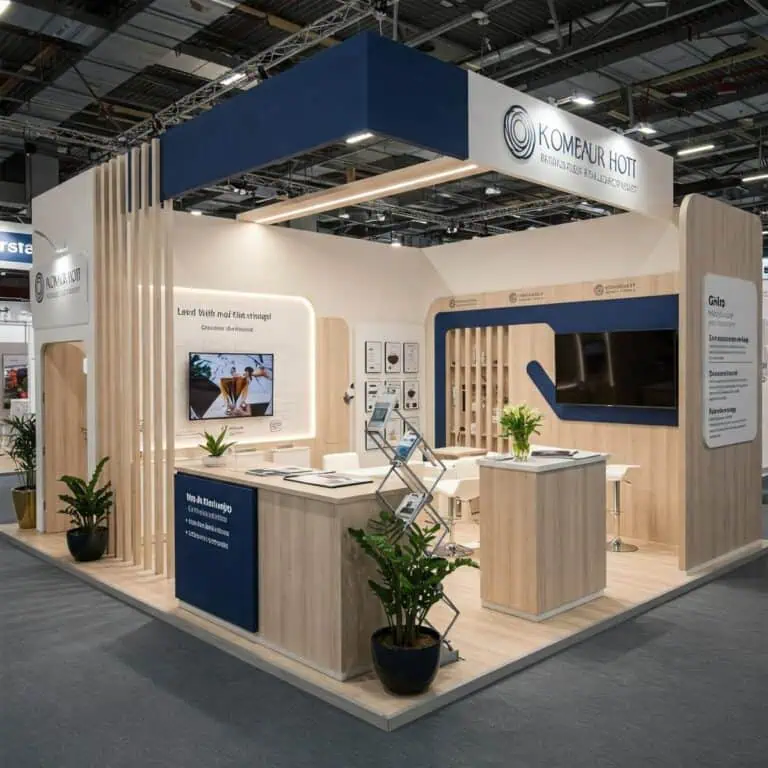
Exhibition stand lighting design is the deliberate planning of fixture type, placement, and color temperature across a stand so that structure, graphics, and products are visible from the aisle and legible up close. It matters because lighting is the fastest way to signal quality before a single conversation happens.
A shell-scheme fitter installs generic ceiling spots because that is what the package includes, not because it flatters your brand. Those fixtures are aimed straight down, which is fine for general visibility but does nothing to separate your logo wall from the neighboring stand’s identical spots. Deliberate lighting design changes the aim, the beam angle, and the color temperature so that specific surfaces, not the whole box, catch the eye.
Key takeaway: Generic shell-scheme spotlights are aimed for coverage, not attention. Redirecting even two or three of them toward your logo wall or hero product costs almost nothing and changes what visitors notice first.
The stakes rise with stand size. A 3x3m shell-scheme booth can survive average lighting because visitors see the whole space in one glance regardless. A 6x6m or larger custom build with sightlines from three or four aisles needs a plan that reads correctly from every angle, which is where most first-time exhibitors underspend and most experienced ones overspend on fixtures they never needed.
What Types of Booth Lighting Should You Use?
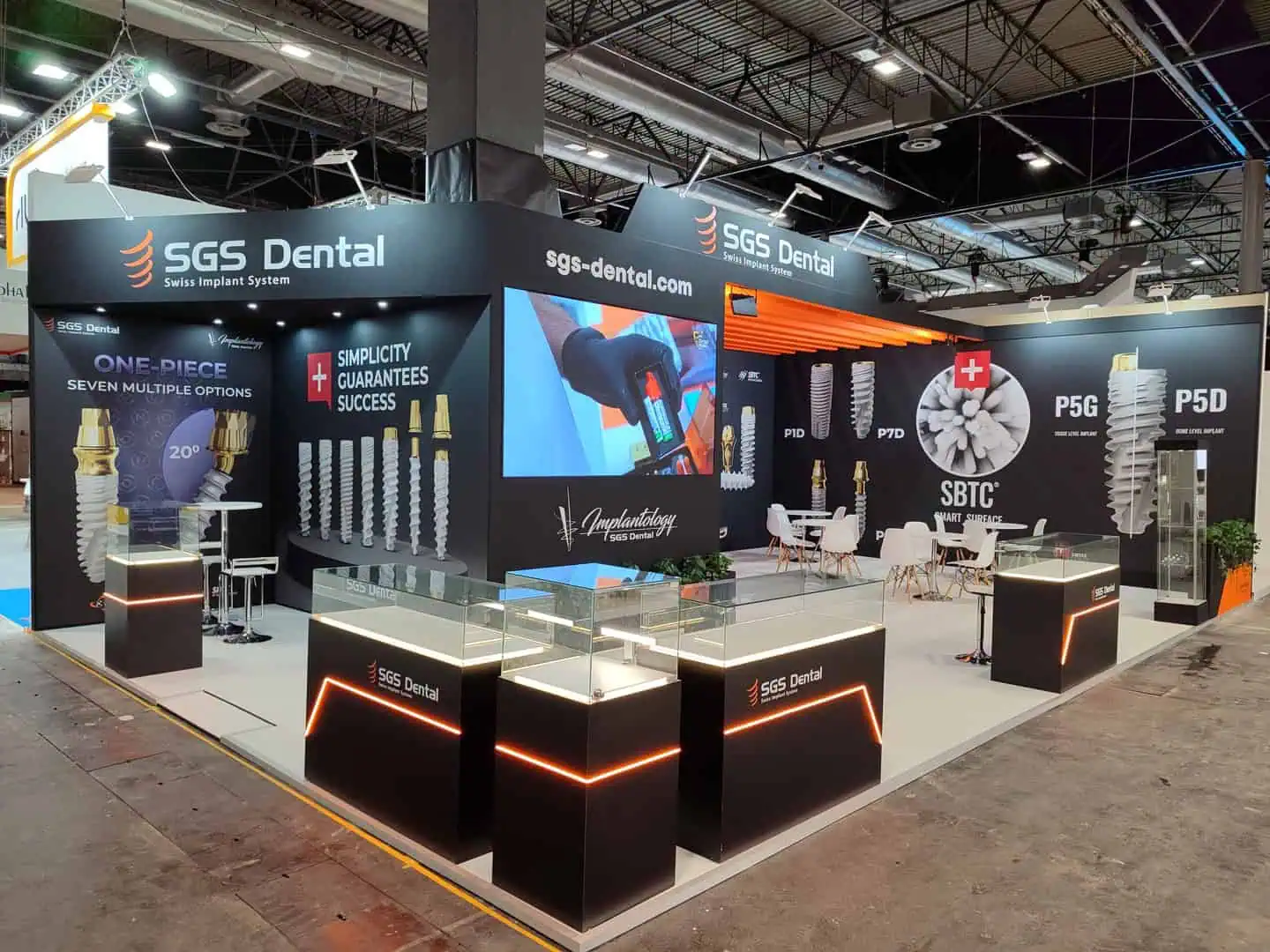
Four fixture types cover almost every exhibition stand: track-mounted spotlights for general coverage, focused LED spots for accent lighting on products and logos, backlit fabric or acrylic walls for brand messaging, and illuminated counters or display cases that make products look more valuable. Combine at least two of the four rather than relying on one.
Track systems remain the workhorse of stand lighting because the spots slide along the rail and can be re-aimed on-site during build-up, which matters when your final layout shifts by half a meter from the CAD drawing. Individual LED spotlights do the finer work: aimed at a product display, a reception desk, or a logo, they create the directional contrast that makes a specific element pop rather than blending into an evenly lit box.
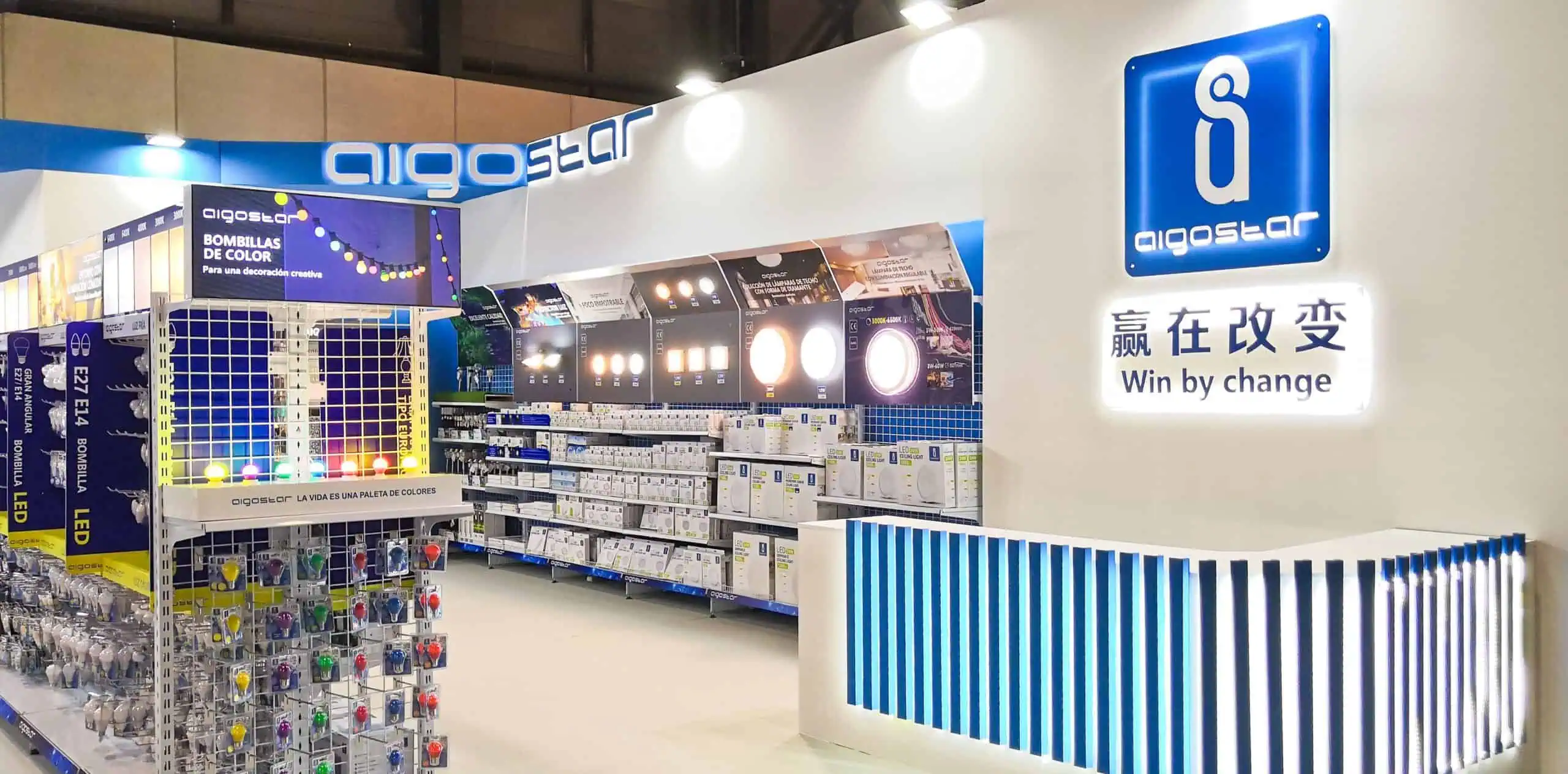
Backlit walls, whether stretched fabric or acrylic panels, turn an entire surface into a glowing brand statement visible from the far end of a hall, which is why most large-format graphics on double-decker and custom stands now specify backlighting by default rather than as an upgrade. Illuminated counters and cases add a third layer at eye level, useful for product-led exhibitors in sectors like jewelry, tech hardware, or pharma where the object itself needs to look premium.
Insider tips from years on the show floor
- Set color temperature by zone, not for the whole stand: 2700 to 3000K (warm white) in hospitality and meeting corners, 4000K (neutral) over general product areas, and 5000K or higher only where technical detail needs to read clearly, such as electronics or medical devices.
- Keep your stand’s overall brightness slightly above the aisle lighting in the hall. Too far above it and you create glare that pushes visitors away rather than pulling them in.
- Test fixture aim during build-up, not on paper. Hall lighting rigs, neighboring stands, and even the color of your own flooring change how a fixture reads once everything else is in place.
How Much Does Stand Lighting Cost in 2026?
Standard shell-scheme packages bundle basic lighting into the space rental at roughly 125 to 250 EUR per m2, covering a handful of ceiling spots and the electrical connection but little else. Custom stands with a dedicated lighting plan start from around 300 EUR per m2 including design furniture.
Those figures leave out one useful reference point: a small custom build with its own lighting rig typically carries a minimum project order of about 10,000 EUR, depending on fixture count and rigging complexity.
Those headline figures hide the costs that actually blow lighting budgets. Power drops beyond the single connection included in your space rental are billed separately by the show’s official electrical contractor, often at a fixed fee per extra outlet. Dimmer or DMX control for programmable lighting adds a line item most quotes list as optional but that experienced exhibitors treat as close to mandatory for any stand larger than a basic 3x3m booth. Rigging safety certification, required whenever fixtures hang from a truss rather than sit on the floor, brings its own documentation cost, and on-site electrician supervision during build-up and dismantling is charged by the hour in most European halls.
Key takeaway: Ask for lighting to be itemized separately from your shell-scheme quote. Power drops, dimmer control, rigging certification, and electrician supervision are the four line items most likely to arrive as budget surprises after the contract is signed.
Our verdict: from our builds across IFEMA Madrid and Fira Barcelona, the exhibitors who come out ahead are the ones who ask for a lighting-specific line item before signing anything, even on a shell-scheme stand. A modest spend on two or three redirected spots and a backlit logo panel routinely outperforms a full re-design later.
What Are the IFEMA Madrid and Fira Barcelona Rigging Rules for Lighting?
At IFEMA Madrid, any spotlight, speaker, or fixture hung from a truss must carry an independent steel safety cable, and rigging applications must reach the venue at least one month before build-up begins, with IFEMA issuing its ruling within seven days. Weight limits vary by hall, so a lighting rig approved for one pavilion is not automatically approved for another.
IFEMA’s published rigging regulations set a maximum load of 5 kN, roughly 500 kg, at beam connections across Halls 1 to 10, dropping to 2.5 kN (250 kg) between connections. Hall 12 is capped lower at 3.0 kN (300 kg), Hall 14.0 at 3.5 kN (350 kg), and Hall 14.1 at 2.5 kN (250 kg). Every hanging fixture needs a safety cable in addition to its main suspension: main cables must be at least 6 mm steel, safety cables at least 8 mm steel with no more than 15 cm of slack, and any nylon rigging element rated to at least 7 kN tensile strength (IFEMA Madrid, Regulations for Rigging Hanging Structures in Exhibition Halls).
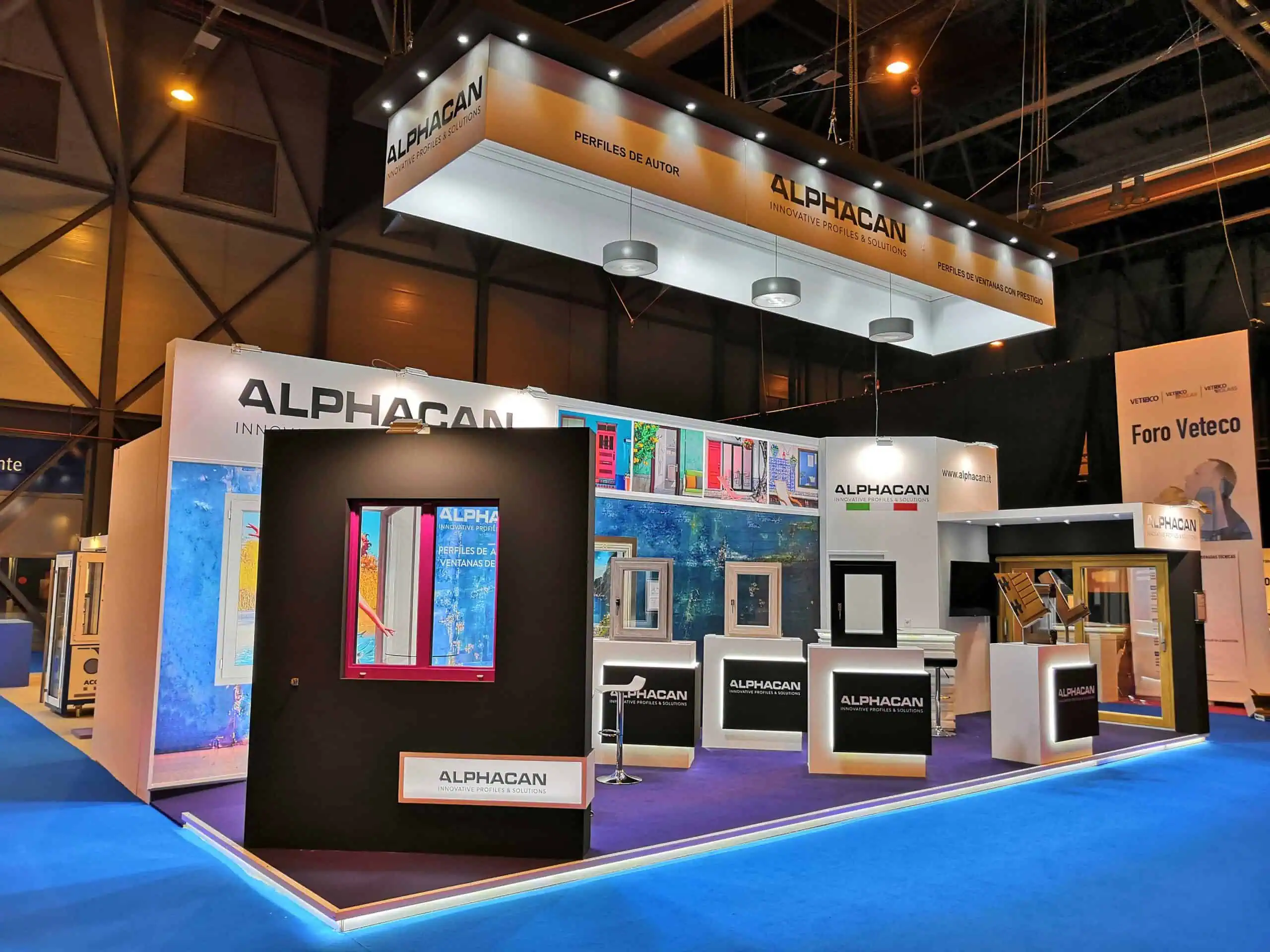
Lightweight signage under roughly 5 kg per m2 is exempt from the full approval process, provided it uses at least three rigging points attached directly to the truss. Anything heavier, including most backlit ceiling banners and multi-fixture lighting rigs, needs the full application with manufacturer certificates covering composition, tensile strength, and corrosion protection. Fira Barcelona runs a comparable process through its own technical services department, and the load limits differ by pavilion there too, so the rig that worked at your last Barcelona show is not a safe assumption for the next one without a fresh check.
When Should You Lock Your Lighting Design? A Weeks-Out Timeline
Lock your lighting concept 8 to 10 weeks before the show, submit any rigging application at least 4 weeks out to meet IFEMA’s one-month minimum, and confirm your final fixture count and power draw with your stand builder 2 weeks before build-up begins. Miss that deadline and floor-standing lights replace the ceiling rig you designed.
10 weeks out is when the lighting plan should move from a rendering to a fixture list: how many track spots, how many LED accents, whether any wall is backlit, and what the total power draw looks like against your allocated electrical connection. 4 weeks out is the rigging deadline for venues like IFEMA that require a month’s notice, and this is also when your stand builder should confirm dimmer or DMX requirements with the venue’s official electrical contractor, since only accredited contractors are usually permitted to make power connections inside the hall.
Two weeks before build-up, confirm the final fixture count against what was actually ordered, not what was originally specified, since design changes in the interim are common. On-site, budget half a day of the build schedule purely for lighting aim and color temperature adjustment once walls, graphics, and flooring are in place, because a plan that looked right in CAD rarely needs zero adjustment once the physical stand exists under hall lighting.
Custom Build vs Shell-Scheme Lighting: Which Is Right for You?
The right lighting approach depends less on total budget and more on how much control you need over fixture placement, color temperature, and rigging height across your stand. Larger, multi-aisle stands generally need custom lighting; small, fixed-budget stands do well with an upgraded shell-scheme package. The table below compares three common paths.
| Option | Best for | Typical cost | Trade-off |
|---|---|---|---|
| Custom build lighting | Larger stands, multi-aisle sightlines, strong brand identity | from approx. EUR 300/m2 | Requires rigging approval and longer lead time |
| Shell-scheme plus upgrades | Small to mid stands on a fixed budget | €125–250/m2 base, plus upgrade fees | Limited fixture positions, fewer accent options |
| Modular reusable rig | Exhibitors running the same stand across multiple shows | Higher upfront, lower per-show cost | Less venue-specific optimization each time |
How we approach this: Adam Expo Stand runs an in-house Madrid build team across design, production, and on-site installation, and specifies lighting as part of the initial design rather than as a late addition. Apply the comparison above to any shortlist of builders, including us.
Why Does a Madrid In-House Build Team Reduce Lighting Risk and Cost?
An in-house build team removes the coordination gap between the company that designs your lighting plan and the crew that installs it, which is where most rigging delays and last-minute fixture substitutions happen on subcontracted builds. When design, production, and installation sit inside one team, a rigging application error surfaces during production rather than on-site the night before doors open.
Subcontracted installation crews typically see a stand’s lighting plan for the first time on build-up day, working from a drawing rather than a design brief. If a fixture does not fit as specified, whether due to a truss height mismatch or a hall-specific weight limit the original designer did not check, the on-site crew has limited authority to redesign on the spot. An in-house team based in Madrid, working IFEMA and Fira Barcelona regularly, checks hall-specific rigging limits against the design before production starts, not during installation.
Key takeaway: Ask any prospective stand builder who physically installs your lighting rig. If the answer is a subcontractor neither the designer nor the account manager has worked with before, budget extra contingency time for on-site changes.
Which Lighting Strategy Fits Your Situation?
Your lighting plan should match your stand size, budget, and how many shows you are running this year rather than a generic best-practice list. The four scenarios below cover the situations exhibitors ask about most: tight budgets, first shows, small footprints, and B2B versus consumer audiences.
Small booth budget
Redirect two or three of your included shell-scheme spots toward your logo wall and one hero product rather than paying for new fixtures. This single change costs little to nothing and is the highest-leverage lighting decision available on a tight budget.
First-time exhibitor
Ask your stand builder to itemize lighting separately from the shell-scheme quote before you sign, and confirm in writing who is responsible for filing any rigging application. First-time exhibitors are the group most likely to discover a rigging deadline has passed.
Small 3x3m stand
Prioritize one backlit panel over multiple small spotlights. At 9 square meters, visibility from a distance matters more than layered accent lighting that only reads up close.
B2B tech expo vs consumer show
B2B tech stands benefit from neutral to daylight white (4000 to 5000K) over demo areas where technical detail needs to read clearly, while consumer-facing stands generally perform better with warmer tones (2700 to 3000K) that feel inviting rather than clinical.
Quick check: lighting readiness
How far in advance should you submit a rigging application at IFEMA Madrid?
Frequently Asked Questions
Do I need special lighting for a 3x3m shell-scheme stand?
Not necessarily new fixtures. Redirecting the ceiling spots your shell-scheme package already includes toward your logo wall or hero product is usually enough at 9 square meters, where the whole stand is visible from the aisle in one glance.
How much does exhibition stand lighting add to a custom build?
A dedicated lighting plan typically pushes a custom build to around 300 EUR per m2 including design furniture, compared with 125 to 250 EUR per m2 for a shell-scheme package with basic bundled lighting.
What is the deadline for rigging approval at IFEMA Madrid?
Applications must reach IFEMA at least one month before build-up begins. IFEMA issues its ruling within seven days of receiving a complete application.
What color temperature should exhibition stand lighting be?
Use warm white (2700 to 3000K) in hospitality and meeting areas, neutral white (4000K) over general product zones, and daylight white (5000K or higher) only where fine technical detail needs to read clearly.
Can I hang lighting from a truss without rigging approval?
Only lightweight signage under roughly 5 kg per m2, using at least three rigging points attached directly to the truss, is exempt from full approval. Any heavier fixture, including most lighting rigs, needs the complete application.
Does Fira Barcelona use the same rigging weight limits as IFEMA Madrid?
No. Fira Barcelona sets its own load limits by pavilion through its technical services department, so a rig approved at IFEMA Madrid needs a fresh check before reuse at a Barcelona show.
Recommended reads
Adam Expo Stand: exhibition stand design and build for European trade fairs. Based in Madrid, Spain, serving IFEMA, Fira Barcelona, Messe Frankfurt and 50+ fairs across Europe. Email: [email protected]. Phone: +34 697 715 015.
Planning your stand lighting for an upcoming show?
Get an itemised quote and a 3D concept from an in-house Madrid build team.