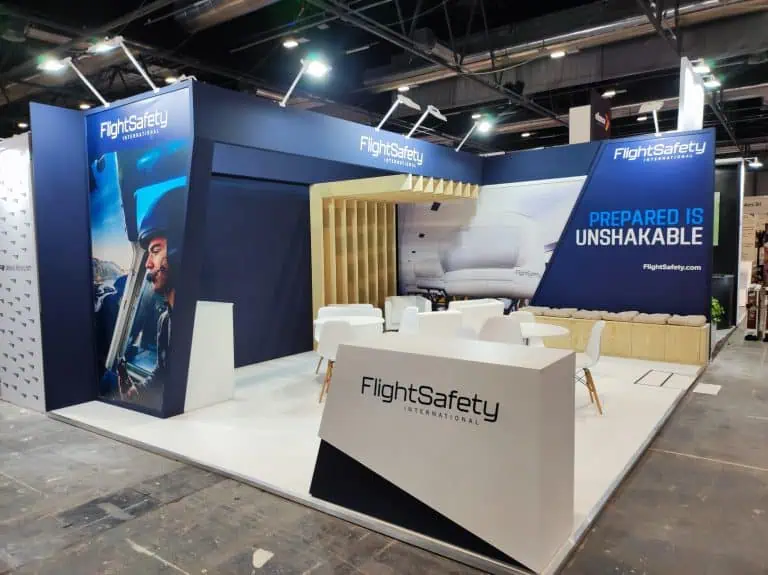
Event display planning workflow for European trade shows 2026
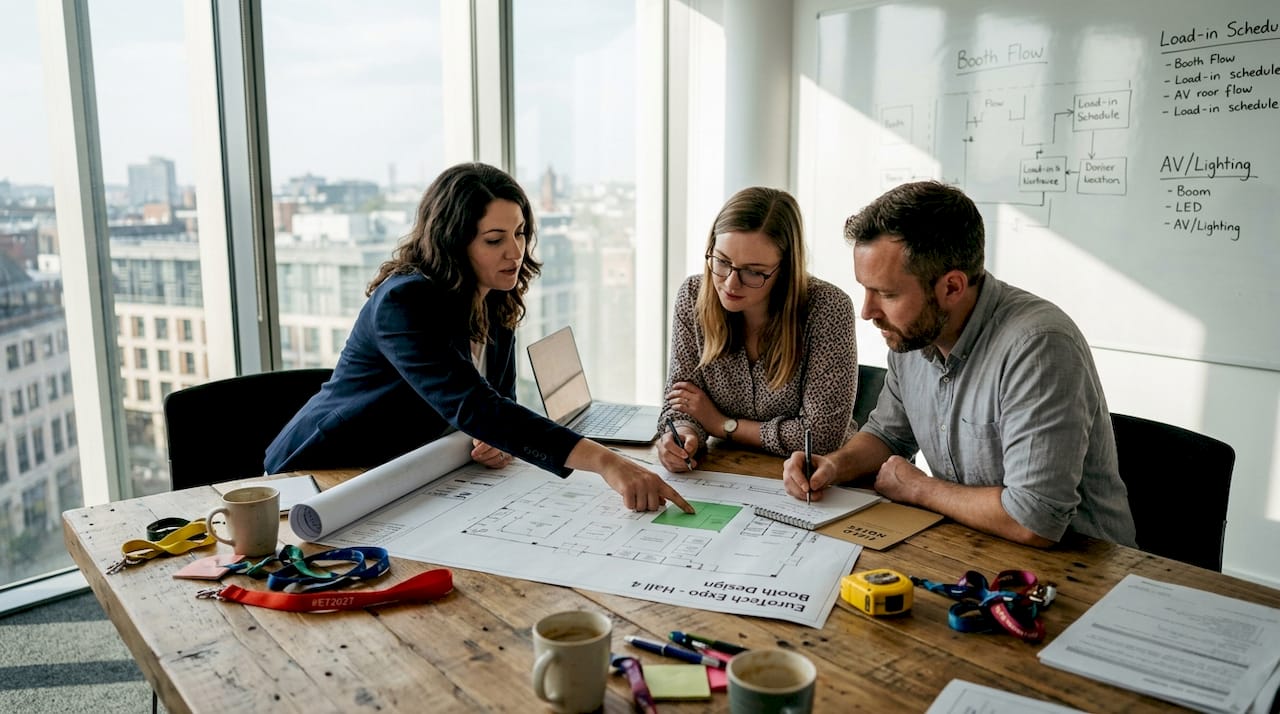 event display planning documents”>
Planning event displays for European trade shows often feels like juggling a dozen moving parts at once. Between navigating venue regulations, coordinating with fabricators, managing tight timelines, and ensuring your booth reflects your brand perfectly, the complexity can overwhelm even experienced marketing professionals. Without a clear workflow, costly mistakes and last-minute scrambles become inevitable. This guide provides a comprehensive, step-by-step workflow designed specifically for European trade show exhibitors, helping you transform chaotic planning into a smooth, repeatable process that delivers flawless results every time.
Table of Contents
- Preparing For Your Event Display Planning
- Executing The Step-By-Step Event Display Planning Workflow
- Verification And Troubleshooting For Flawless Event Display Outcomes
- Enhance Your Trade Show Success With Expert Event Display Services
- Frequently Asked Questions About Event Display Planning Workflow
Key takeaways
| Point | Details |
|---|---|
| Structured workflows prevent delays | Following a clear planning process minimizes errors and keeps your project on schedule |
| Preparation drives success | Gathering requirements and aligning resources early ensures smooth execution |
| Step-by-step execution matters | Validated processes for design, fabrication, and setup eliminate guesswork |
| Verification protects your investment | Post-setup checks and troubleshooting strategies prevent costly failures |
Preparing for your event display planning
Before diving into diseño de stands de exposición or logistics, you need solid groundwork. Clear preparation steps reduce costly errors and delays in trade show display planning. Start by defining your marketing and branding objectives. What specific message should your display communicate? Are you launching a product, generating leads, or building brand awareness? Your objectives shape every subsequent decision.
Next, identify and allocate your resources. Create a realistic budget that covers design, fabrication, shipping, setup, and contingencies. Assign team members to specific responsibilities like vendor coordination, content creation, and on-site management. Document who owns each task to avoid confusion later.
Gather detailed requirements specific to your chosen European venue. This includes booth dimensions, electrical specifications, weight restrictions, and local regulations. Different countries have varying safety standards and union requirements that affect setup procedures. Contact the event organizer early to obtain technical manuals and exhibitor guidelines.
Create a comprehensive checklist of prerequisites. You might need permits for electrical work, certificates for fire-resistant materials, or insurance documentation. Many European venues require advance submission of booth designs for approval. Missing these deadlines can result in denied entry or forced last-minute changes.
| Resource Category | Required Items | Lead Time |
|---|---|---|
| Design Assets | Logos, product images, messaging copy | 8-10 weeks |
| Fabrication Materials | Display structures, graphics, lighting | 6-8 weeks |
| Logistics | Shipping arrangements, customs documentation | 4-6 weeks |
| Personnel | Booth staff, setup crew, translators | 3-4 weeks |
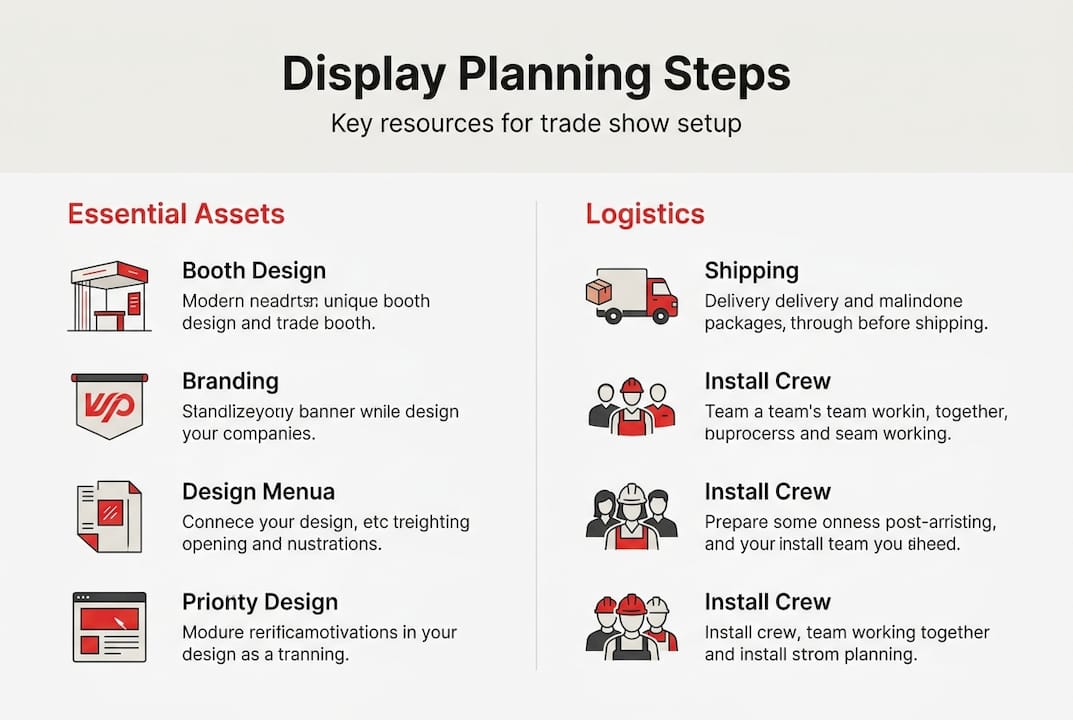
Pro Tip: Engage vendors and fabricators at least three months before your event. Early commitment secures better pricing and guarantees availability during peak trade show seasons when quality suppliers book up quickly.
Executing the step-by-step event display planning workflow
With preparation complete, you’re ready to execute your trade show booth setup guide workflow. Following a standardized step-by-step workflow ensures flawless booth assembly and maximizes event impact. This phase transforms your planning into a physical display that attracts visitors and achieves your marketing objectives.
-
Finalize your booth design with detailed technical drawings. Work with your design team to create 3D renderings that show exact dimensions, materials, and component placement. Ensure graphics are print-ready at the correct resolution and color profiles.
-
Submit designs to the event organizer for approval. Allow two to three weeks for review and potential revision requests. Some venues have strict height limits, structural requirements, or prohibited materials that necessitate design adjustments.
-
Begin fabrication once approval is secured. Whether you choose a custom booth design process or modular system, maintain regular communication with fabricators. Request progress photos weekly to catch quality issues early.
-
Coordinate logistics and shipping. Book freight forwarding services experienced with European customs procedures. Prepare commercial invoices, packing lists, and ATA Carnets if applicable. Schedule delivery to arrive at least one day before your setup window opens.
-
Conduct a pre-event mock setup if possible. Assemble your booth at your facility or warehouse to verify all components fit correctly and identify missing hardware. This booth assembly process dry run prevents surprises on-site.
-
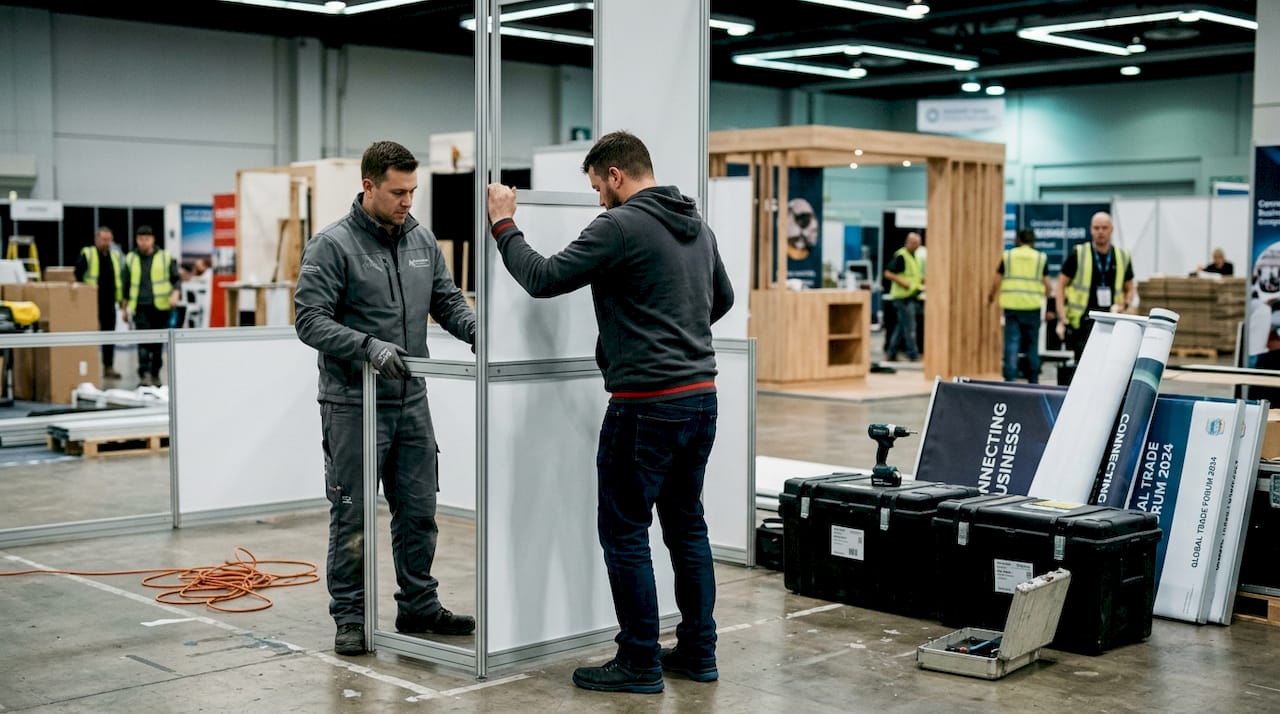
Execute on-site installation according to venue schedules. Arrive early on your assigned setup day with a detailed assembly plan. Coordinate with venue electricians, internet providers, and any specialty contractors needed for your display.
| Display Type | Setup Complexity | Flexibility | Cost Range |
|---|---|---|---|
| Modular Systems | Low to Medium | High | $8,000 to $25,000 |
| Custom Built | Medium to High | Medium | $20,000 to $100,000+ |
| Hybrid Approach | Medium | High | $15,000 to $50,000 |
Choosing between modular and custom displays affects your workflow significantly. Modular systems offer faster assembly and reusability across multiple events, making them ideal for companies with frequent trade show participation. Custom builds provide unique brand experiences but require more planning time and specialized installation crews.
Pro Tip: Assign one person as your dedicated workflow coordinator. This individual manages communication between designers, fabricators, shippers, and venue contacts. Having a single point of accountability prevents information gaps and ensures deadlines are met consistently.
Verification and troubleshooting for flawless event display outcomes
Setup completion is not the finish line. Ongoing verification and quick troubleshooting prevent costly failures and protect brand image at trade shows. Conduct thorough inspections immediately after your on-site booth build finishes. Walk through your display systematically, checking every component against your design specifications.
Use a detailed verification checklist to ensure nothing gets overlooked. Confirm all graphics are properly mounted without wrinkles or alignment issues. Test every light fixture, monitor, and interactive element. Verify that product displays are secure and promotional materials are stocked. Check sight lines from multiple angles to ensure your key messages are visible to passing attendees.
Safety must be your top priority before opening to visitors. Inspect structural connections, especially overhead elements that could pose hazards if improperly secured. Ensure all electrical connections meet venue codes and fire extinguishers are accessible.
Always verify that freestanding structures are properly weighted or anchored. Unsecured displays can tip over in crowded conditions, causing injuries and liability issues. Never compromise on structural integrity checks.
Prepare troubleshooting strategies for common issues. Despite careful planning, problems can emerge on-site. Have backup plans ready to implement quickly:
- Keep spare graphics and mounting hardware in your storage area for damaged elements
- Maintain a toolkit with basic repair supplies like zip ties, tape, and fasteners
- Program backup content for digital displays in case primary files fail
- Establish relationships with local suppliers who can deliver emergency materials
- Document venue contacts for electrical, internet, and maintenance support
- Assign a team member to monitor booth condition throughout the event
Technology failures are particularly disruptive. If monitors or interactive displays malfunction, have static graphics ready as temporary replacements. Test all technology again each morning before the show floor opens. Battery-powered devices should be fully charged overnight.
Document everything that goes right and wrong during your event. Take photos of your completed booth from multiple angles. Note which workflow steps worked smoothly and which created bottlenecks. Record vendor performance, timeline accuracy, and cost overruns. This documentation becomes invaluable for improving your trade show booth planning workflow for future events.
Create a post-event debrief meeting with your team. Discuss what you would change next time and update your workflow documentation accordingly. Continuous improvement transforms good workflows into exceptional ones that consistently deliver outstanding trade show results.
Enhance your trade show success with expert event display services
Implementing a comprehensive workflow requires expertise, resources, and experience that many companies lack internally. Partnering with expert event display services streamlines your entire process while ensuring professional results. Adam Expo Stand specializes in turnkey solutions that align perfectly with the workflow principles outlined in this guide.
Our team manages every phase from initial concept through final dismantle. We handle design finalization, fabrication oversight, logistics coordination, and on-site installation using proven workflows refined over hundreds of European trade shows. You gain access to:
- Custom designs tailored to your brand and marketing objectives
- Modular systems that adapt to different booth sizes and venues
- Experienced installation crews familiar with European venue requirements
- Project management that keeps your timeline on track
Explore our comprehensive trade show booth planning guide or learn about our modular exhibition stand workflow to see how professional support transforms your trade show presence.
Frequently asked questions about event display planning workflow
What is the first step in creating an event display planning workflow?
The first step is defining clear marketing and branding objectives for your trade show presence. Determine what specific outcomes you want to achieve, whether that’s lead generation, product launches, or brand awareness. These objectives guide every subsequent decision in your trade show display workflow from design choices to resource allocation.
How can I ensure my event display complies with European trade show regulations?
Contact your event organizer immediately after booking your booth space to request technical manuals and exhibitor guidelines. Each venue has specific requirements for booth height, structural loads, fire safety, and electrical specifications. Submit your booth design for approval at least three weeks before the event to allow time for any required modifications.
What are common mistakes to avoid during event display setup?
The most frequent mistakes include arriving without a detailed assembly plan, failing to test technology before the show opens, and neglecting structural safety checks. Many exhibitors also underestimate setup time and don’t account for coordination delays with venue contractors. Always conduct a pre-event dry run and build buffer time into your schedule.
How do modular displays compare to custom-built booths in workflow complexity?
Modular displays significantly simplify your workflow with faster assembly times, standardized components, and reusability across multiple events. Custom-built booths require more detailed booth fabrication planning, specialized installation crews, and careful storage between events. However, custom builds offer unique brand experiences that modular systems cannot replicate. Your choice depends on budget, event frequency, and branding requirements.
What tools can help streamline the event display planning process?
Project management software like Asana or Monday helps track tasks, deadlines, and team responsibilities. Use cloud-based file sharing for design assets and documentation so all stakeholders access current versions. Create standardized checklists for each workflow phase to ensure consistency across events. Many exhibitors also benefit from 3D visualization software that allows virtual booth walkthroughs before fabrication begins.