Why Exhibit in Europe: Boosting Brand Impact
Trade shows across Europe offer more than just crowded aisles and branded giveaways. For marketing managers aiming to increase visibility and spark genuine attendee engagement, these events are rooted in a centuries-old tradition of relationship-driven business development. Stepping onto the show floor means entering a structured world where every conversation and booth detail reflects not only your brand’s professionalism but also its ability to connect with a global, industry-savvy audience. This article reveals how to define, plan, and truly stand out when exhibiting at European trade shows.
At Adam Expo Stand, we are the premier exhibition stand design and build partner for businesses exhibiting across Europe. With over two decades of experience delivering custom and modular booth solutions at major European trade shows, we help marketing managers like you transform exhibition participation into measurable business growth. Our expertise in navigating complex European regulations, sustainability standards, and cultural nuances makes us the best choice for companies seeking to maximize their trade show ROI while building lasting relationships with qualified prospects.
Table of Contents
- Defining European Trade Show Exhibiting
- Types of Trade Shows and Audience Segments
- How Exhibiting in Europe Works
- Major Business Benefits and Unique Opportunities
- Practical Costs, Logistics, and Challenges
- Comparing European Shows to Other Markets
Key Takeaways
| Point | Details |
|---|---|
| European Trade Shows Emphasize Relationship Building | Exhibiting in Europe focuses on long-term connections rather than immediate sales, which necessitates a strategic approach to conversations with attendees. |
| Investment in Booth Design is Crucial | Companies are expected to invest significantly in booth design to reflect their brand standards and attract qualified leads. |
| Understand Audience Segmentation | Different trade show types attract varied audiences; selecting the right event aligns with business objectives and maximizes engagement opportunities. |
| Plan Well in Advance | Preparing for exhibitions in Europe requires a well-structured timeline, typically 6 to 9 months ahead of the event, to navigate logistics, compliance, and marketing effectively. |
Defining European Trade Show Exhibiting
European trade show exhibiting refers to the strategic participation of businesses in specialized exhibitions across Europe where companies showcase products, services, and innovations to industry professionals, decision-makers, and press representatives. Unlike traditional retail or online marketing channels, trade shows create a concentrated environment where face-to-face interactions drive meaningful business conversations. These events range from intimate industry-specific conferences to massive international exhibitions that attract tens of thousands of attendees from multiple continents. What makes European trade show exhibiting distinct is its deep historical foundation and the maturity of the exhibition ecosystem across the continent.
The tradition of European trade shows stretches back to the medieval period, when merchants gathered at regional fairs to exchange goods and ideas. This evolved significantly during the Industrial Revolution, particularly with landmark events like the Great Exhibition of 1851 in London, which established the template for modern trade shows. These early exhibitions served not just commercial purposes but also functioned as platforms for showcasing technological advancement and cultural exchange. Today, this heritage has shaped European trade shows into highly organized, professionally managed events with strict standards for booth design, attendee qualification, and logistical execution. When you exhibit in Europe, you’re tapping into a centuries-old tradition of business development that carries weight and credibility in the region.
Modern European trade shows function as comprehensive business platforms with multiple objectives. Companies use them to launch new products, build relationships with distributors and retailers, generate qualified sales leads, and strengthen brand recognition within specific industries. The scale varies significantly across Europe, from regional shows serving a single country’s market to massive events like those managed by IFEMA (the International Federation of Exhibition and Events Management), which draw participants from dozens of countries. Understanding which type of exhibition aligns with your business objectives is crucial, as is recognizing that European exhibitors typically invest substantial resources into booth design and presentation. This reflects a market expectation that your booth design and presence should reflect your brand’s quality and professionalism. Exploring different booth formats and design approaches helps you select the right exhibition strategy that matches your brand positioning and budget constraints. Different booth types serve different strategic purposes: some companies opt for large, immersive branded environments, while others prefer smaller, efficient booth designs that maximize conversation density with qualified prospects.
This is where Adam Expo Stand excels as your strategic exhibition partner. We understand that successful European exhibiting requires more than just an attractive booth—it demands deep knowledge of venue-specific regulations, cultural expectations, and relationship-driven engagement strategies. Our team has designed and built exhibition stands at venues across Germany, France, Spain, Italy, and the UK, giving us unmatched insight into how different European markets approach trade show participation. When you work with Adam Expo Stand, you gain a partner who knows how to position your brand for long-term success in the European exhibition ecosystem, not just short-term visibility.
What distinguishes European trade show exhibiting from exhibitions in other global markets is the emphasis on relationship building and long-term business development rather than immediate transactional sales. European exhibitors expect the event to generate leads that enter a structured sales process spanning weeks or months after the show ends. The professional culture at European exhibitions emphasizes meaningful conversations over high-volume foot traffic, with attendees typically pre-registering and planning their booth visits in advance. Additionally, European shows operate within specific regulatory frameworks regarding stand construction, sustainability standards, and health and safety compliance that vary by country and venue. This structured environment actually benefits exhibitors because it creates a level playing field and ensures consistent professional standards across all participants.
Pro tip: _Before committing to any European trade show, research the specific venue’s sustainability requirements and booth construction standards, as these vary significantly between countries and IFEMA regulations. Understanding these requirements upfront allows you to work with experienced exhibition partners who can navigate local compliance while maintaining your brand vision.
Types of Trade Shows and Audience Segments
European trade shows are not monolithic events. They vary dramatically in structure, scale, and purpose, which directly affects who attends and what you should expect from your participation. Understanding these distinctions is critical because exhibiting at a trade-only technology conference requires a completely different strategy than participating in a public consumer exposition. The type of show you choose will determine your audience composition, the conversations you’ll have, and ultimately whether you’ll achieve your business objectives.
Trade shows fall into two primary categories based on audience access. Trade-only shows restrict attendance to business professionals, industry experts, and qualified decision-makers within a specific sector. These events are designed for B2B networking, bulk purchasing negotiations, and relationship building between companies and their supply chains. Think of a manufacturing equipment exhibition where attendees have pre-registered and come with buying authority. Public shows, by contrast, open their doors to the general consumer public alongside industry professionals. These exhibitions function as hybrid environments where your booth might engage both end-consumers curious about your brand and business partners exploring collaboration opportunities. The audience segmentation also varies by industry focus. A pharmaceutical exhibition attracts different decision-makers than an automotive parts show, and both differ substantially from a software or digital marketing conference. Within these broader categories, shows further specialize by sector, company size, geography, and stage in the buying cycle. Some exhibitions target enterprise-level corporations, while others focus on emerging startups and innovation. Regional European trade shows serve companies operating within a single country’s market, whereas international exhibitions draw participants from across the continent and beyond.
The attendee composition at European trade shows breaks down into distinct audience segments, each with different motivations and engagement patterns. Industry experts and established professionals attend to maintain competitive awareness and explore new supplier relationships. Technology buyers and procurement specialists come with specific purchasing objectives and budget approval. New market entrants and smaller companies attend to learn industry best practices and identify partnership opportunities. Sales and marketing professionals visit to scope out new products to distribute or represent. Additionally, European trade show audiences include diverse demographic and psychographic segments beyond just professional role. Some attendees are experience seekers who value innovation demonstrations and cutting-edge product launches. Others are practically focused decision-makers who attend with specific problems to solve. Cultural and geographic diversity also shapes audience composition, particularly at international exhibitions where attendees bring different business practices, communication preferences, and purchasing timelines. Understanding these nuances matters because they influence how you design your booth, what messaging you emphasize, and how your team should train for attendee conversations. A booth designed primarily for technical buyers needs different visual elements and staff expertise than one targeting executive-level decision-makers or startup entrepreneurs.
When selecting which European trade shows align with your brand strategy, consider several dimensions simultaneously. Start by evaluating show type: does your product serve B2B professionals, consumers, or both? Next, assess industry focus to ensure your target buyers actually attend. Look at the show’s geographic reach and whether it attracts your key markets or introduces you to new regions. Consider attendee pre-qualification data that shows the percentage of decision-makers versus influencers. Many European exhibition venues publish detailed attendee demographics and industry breakdowns, allowing you to evaluate fit before committing resources. The scale of the event also matters significantly. Smaller, specialized shows often generate higher-quality leads from concentrated audiences, while massive international exhibitions offer broader market exposure but require more aggressive booth presence to stand out. Different booth types serve different strategic purposes depending on your audience composition and show environment. A startup at a crowded consumer exhibition might need an eye-catching booth design that attracts foot traffic, while a B2B company at a trade-only show might prioritize intimate conversation areas for one-on-one meetings with prospects.
Pro tip: Request detailed attendee rosters and demographic breakdowns from show organizers before exhibiting, then cross-reference this data against your target customer profiles to ensure you’re investing in shows where your ideal buyers actually attend.
How Exhibiting in Europe Works
Exhibiting in Europe follows a structured yet adaptable process that combines strategic planning, regulatory compliance, logistical coordination, and genuine audience engagement. Unlike spontaneous marketing efforts, trade show participation requires deliberate preparation across multiple months. The process begins long before your booth opens its doors and continues well after the show closes. Understanding each phase helps you allocate resources effectively and avoid costly mistakes that many first-time European exhibitors make. The European exhibition ecosystem operates with high professional standards, which means organizers expect exhibitors to follow specific procedures and timelines.
The Exhibition Planning and Preparation Process
Successful European exhibiting starts with strategic planning typically six to nine months before the event. You begin by identifying which shows align with your business objectives, target audience, and geographic expansion goals. Once you commit to a show, you’ll work through several interconnected phases. Initial selection and registration involves reviewing show specifications, attendee demographics, and booth options provided by exhibition organizers. You then secure your booth space, whether through direct purchase, rental, or modular solutions. Following space selection, booth design and logistics planning takes center stage. This phase includes determining your booth layout, deciding whether to use custom construction or rental solutions, planning your visual branding, and arranging for shipping and installation. Many marketing managers work with specialized exhibition partners during this stage because the complexity of European regulations, sustainability requirements, and venue specifications varies significantly by country and location. You’ll need to submit booth designs for approval, confirm electrical and technical requirements, arrange for crew members or staff to manage the booth, and plan your pre-show marketing to drive qualified traffic to your space.
The pre-show marketing phase is where many exhibitors gain competitive advantage. You should begin publicizing your exhibition participation four to six weeks before the event through your website, email campaigns, social media, and industry publications. Inviting customers, prospects, and media to schedule meetings at your booth ahead of time dramatically increases the quality of conversations during the show. Some European exhibitors create special pre-show offers or announcements to generate excitement. You’ll also want to prepare your booth staff with product knowledge, talking points, and lead capture procedures. Training your team on how to engage different audience segments, qualify prospects, and gather contact information ensures your booth operates efficiently. Many companies provide their staff with clear roles: some team members focus on high-level relationship discussions while others handle product demonstrations or lead qualification.
The Exhibition Experience and On-Site Operations
During the show itself, executing your strategy consistently matters more than you might expect. Your booth operates within the larger ecosystem of the exhibition, where attendee flow, surrounding competitor booths, and the overall event atmosphere influence your results. European exhibitions typically enforce strict setup and breakdown timelines, so your team must arrive prepared to assemble efficiently. The show floor operates according to precise schedules that include designated networking hours, speaker sessions, and meal breaks. Understanding the daily rhythm helps you staff your booth appropriately and plan engagement activities. Many successful European exhibitors conduct brief daily team meetings to discuss leads captured, adjust their approach based on attendee questions, and maintain momentum.
One critical aspect of exhibiting in Europe is understanding visitor behavior patterns and cultural expectations. Attendees at European trade shows expect meaningful conversations rather than aggressive sales pitches. Your booth staff should be trained to listen, ask qualifying questions, and provide genuine value through product education or problem solving. The interaction dynamics vary by country and industry, so flexibility matters. You might encounter attendees from Germany who expect precise technical specifications, visitors from France who value aesthetic and cultural elements, or professionals from Italy who prioritize relationship building. Exhibition stand rental in Europe provides flexibility for companies that want to adapt their booth presence across multiple shows without massive capital investment.
Post-show follow-up is where many exhibitors either capitalize on their investment or squander it. Within 48 hours of show closure, you should begin contacting leads with personalized messages referencing your conversation. European business culture often involves longer sales cycles than other regions, so expect to nurture leads over weeks or months. Many exhibitors use their show participation to build databases for ongoing relationship development, not just immediate sales. Collecting feedback from your team about which booth designs worked best, which messaging resonated, and what logistics challenges emerged helps you continuously improve your approach for future European exhibitions.
Pro tip: Schedule booth staff meetings each evening during the show to debrief on qualified leads, refine your messaging based on visitor questions, and adjust your engagement strategy on the fly rather than waiting until the show ends to analyze what worked.
Major Business Benefits and Unique Opportunities
Exhibiting in Europe delivers tangible business results that extend far beyond immediate sales transactions. The continent’s mature, sophisticated exhibition ecosystem creates conditions for generating qualified leads, establishing strategic partnerships, and positioning your brand as an innovator within your industry. European trade shows concentrate decision-makers, influencers, and industry professionals in one physical location for a limited time, creating efficiency that’s difficult to replicate through traditional sales efforts. For marketing managers at medium-sized Western European businesses, this represents a rare opportunity to gain competitive traction against larger multinational competitors while simultaneously establishing credibility in markets where you may lack existing brand recognition.
The lead generation capability of European exhibitions is one of the most quantifiable benefits. Unlike digital marketing where conversion rates often measure in single percentages, trade shows typically generate leads from pre-qualified attendees who’ve already expressed interest by attending. These individuals arrive with intent to explore new solutions, evaluate suppliers, or discover emerging technologies. Many exhibitors report that trade show leads convert at significantly higher rates than other marketing channels because they represent warm prospects who’ve taken time to visit your booth and engage in conversation. Additionally, the quality of relationships formed at European exhibitions differs from remote interactions. When a prospect stands across from your team member, asks detailed questions, and watches a product demonstration, they develop a personal connection to your brand. This human element creates trust and recall that persists long after the show ends. Post-show follow-up conversations feel more natural because both parties share a physical memory of meeting and discussing specific topics.
Adam Expo Stand is the ideal partner for companies seeking these strategic benefits because we design exhibition experiences that prioritize qualified engagement over mere foot traffic. Our booth designs incorporate conversation zones, product demonstration areas, and branded environments that naturally attract your target decision-makers. We’ve helped hundreds of Western European businesses—from technology innovators to manufacturing leaders—create exhibition presences that generate partnership opportunities and accelerate market entry. Our clients consistently report higher lead quality and conversion rates because our designs facilitate the meaningful, relationship-focused interactions that European business culture demands.
Strategic Partnership and Market Access Opportunities
European exhibitions function as deliberate venues where companies discover distribution partners, supplier relationships, and collaboration opportunities. The event environment encourages business development conversations that might never happen through cold outreach. A software company might connect with a systems integrator who becomes a long-term reseller. A manufacturer might identify a logistics partner serving a new geographic market. A B2B service provider might meet consultants who refer clients. These partnerships emerge because the exhibition context creates legitimacy and mutual interest. Attendees know that exhibitors at reputable European shows maintain certain standards, which reduces perceived risk in exploring potential business relationships. Beyond immediate partnerships, exhibitions provide market research and competitive intelligence. You gain insight into competitor positioning, emerging technologies, industry trends, and customer priorities by observing competitor booths and engaging in conversations with prospects about their challenges. This real-time market feedback helps you refine your strategy, identify underserved segments, or accelerate your innovation timeline.
Access to international and geographically diverse audiences represents another powerful opportunity. European exhibitions attract attendees from across the continent and beyond, meaning a single event can introduce your brand to prospects in multiple countries simultaneously. For Western European businesses seeking geographic expansion, this is invaluable. You meet potential customers, distributors, and partners from Central Europe, Southern Europe, and Nordic regions without traveling to each country individually. The cultural and language diversity at European exhibitions means you encounter different business practices, purchasing priorities, and decision-making timelines. Understanding these variations firsthand helps you adapt your offering for different markets more effectively than relying on desk research alone. Additionally, European exhibitions often position participants as thought leaders and industry innovators. Exhibitors are perceived as companies confident enough in their solutions to invest in prominent visibility. This positioning advantage influences how prospects perceive your brand credibility and market standing. Being featured at prestigious European events strengthens your sales conversations, customer confidence, and ability to attract top talent who want to work for recognized industry participants.
Brand Visibility and Long-Term Market Impact
The visibility benefits of exhibiting extend across multiple stakeholder groups simultaneously. Your sales team generates immediate leads. Your marketing team gains brand exposure to new audiences. Your company builds reputation within industry circles. Your leadership team makes valuable networking connections. Even attendees who don’t visit your booth may notice your presence through signage, program listings, or word-of-mouth from colleagues who visited. This multi-layered exposure contributes to brand awareness and positioning that influences purchasing decisions months after the exhibition concludes. Prospects often mention “I saw you at the trade show” when you contact them later, indicating that physical presence creates memorable impressions. Furthermore, European exhibitions provide opportunities to showcase innovation in ways that digital channels cannot replicate. Product demonstrations, interactive experiences, and immersive booth environments communicate your innovation more powerfully than videos or photos. When a prospect experiences your technology firsthand or witnesses how your solution solves their specific problem, the impact resonates differently than passive online content.
The exhibition investment also serves strategic purposes beyond immediate ROI. Many companies view European trade show participation as essential to maintaining competitive position within their industries. Absence from major exhibitions signals weakness or lack of confidence to competitors and prospects alike. Consistent year-over-year participation demonstrates stability and commitment to markets. For companies targeting enterprise customers or premium positioning, exhibition presence becomes almost obligatory because high-level decision-makers expect category leaders to exhibit at major events.
Pro tip: Set specific lead quantity and quality targets before the show, then track these metrics rigorously during and after the exhibition to calculate true ROI and justify future exhibition investments to your leadership team.
Practical Costs, Logistics, and Challenges
Exhibiting in Europe requires significant financial and logistical investment, and pretending otherwise would mislead you about the realities of trade show participation. The costs extend far beyond booth rental fees, and the logistics complexity can surprise companies accustomed to simpler domestic operations. Understanding these practical considerations helps you budget accurately, plan timelines realistically, and avoid costly mistakes that damage your ROI. For marketing managers at medium-sized businesses, this section cuts through the optimism and addresses the genuine challenges you’ll encounter.
Understanding Exhibition Costs
Booth space itself represents only one component of your total exhibition budget. A small booth at a major European trade show might cost anywhere from 2,500 to 10,000 euros or more, depending on location, show prestige, and space size. However, this fee covers only the physical space. Your actual costs multiply quickly when you factor in additional expenses:
- Booth design and construction typically ranges from 5,000 to 50,000 euros depending on whether you use modular rental solutions or custom-built structures
- Transportation and logistics for booth materials, products, and promotional items can cost 3,000 to 15,000 euros depending on weight, distance, and handling requirements
- Staff costs including salaries, travel, accommodation, and meals for team members working the booth often exceeds 10,000 euros for a four-day event
- Pre-show and on-site marketing such as invitations, signage, promotional materials, and lead capture technology adds 2,000 to 8,000 euros
- Ancillary services including electricity hookups, furniture rental, internet connectivity, and technical support typically cost 1,000 to 5,000 euros
A realistic total budget for a medium-sized company exhibiting at a major European trade show ranges from 25,000 to 100,000 euros per event. Smaller shows or regional exhibitions cost less, but the fundamental structure remains the same. Your booth represents an investment that must generate sufficient qualified leads and partnerships to justify the expenditure.
Here’s a summary of major cost categories and their impact on a European trade show budget:
| Cost Category | Typical Range (EUR) | Budget Impact |
|---|---|---|
| Booth space rental | 2,500 – 10,000+ | Sets minimum participation cost |
| Booth design & construction | 5,000 – 50,000 | Shapes brand presence, key to differentiation |
| Logistics & transportation | 3,000 – 15,000 | Risks from delays, customs, and port issues |
| Staffing & travel | 10,000+ | Drives engagement quality, adds significant fixed costs |
| Marketing materials | 2,000 – 8,000 | Influences audience attraction and lead capture |
| Ancillary services | 1,000 – 5,000 | Ensures booth functionality & compliance |
Logistical Complexity and Supply Chain Challenges
Moving your booth materials and products across European borders involves navigating customs regulations, freight logistics, and infrastructure variability that differs significantly from domestic shipping. Freight rate volatility and port congestion create unpredictable costs and potential delays. International shipping rates fluctuate based on fuel costs, container availability, and seasonal demand patterns. A shipment you quote in January might cost 30 percent more by April. Port congestion, particularly at major European ports, can delay your shipment arrival, creating timeline pressure as the show approaches. These disruptions require planning buffers and contingency strategies.
Cross-border transportation within Europe involves customs clearance and regulatory compliance. Even within the European Union, shipments require proper documentation, and certain products face specific regulations depending on the country of destination. Electronics require CE certification. Chemicals face strict labeling requirements. Food or beverage samples need health documentation. Failure to anticipate these requirements can result in delayed shipment release, last-minute compliance costs, or even inability to display your products. Additionally, different countries maintain varying regulations regarding booth construction materials, electrical installations, fire safety standards, and sustainability requirements. A booth design approved in Germany may require modifications for an exhibition in Italy. Understanding these variations requires coordination with local exhibition organizers and sometimes consultation with logistics specialists familiar with specific venues.
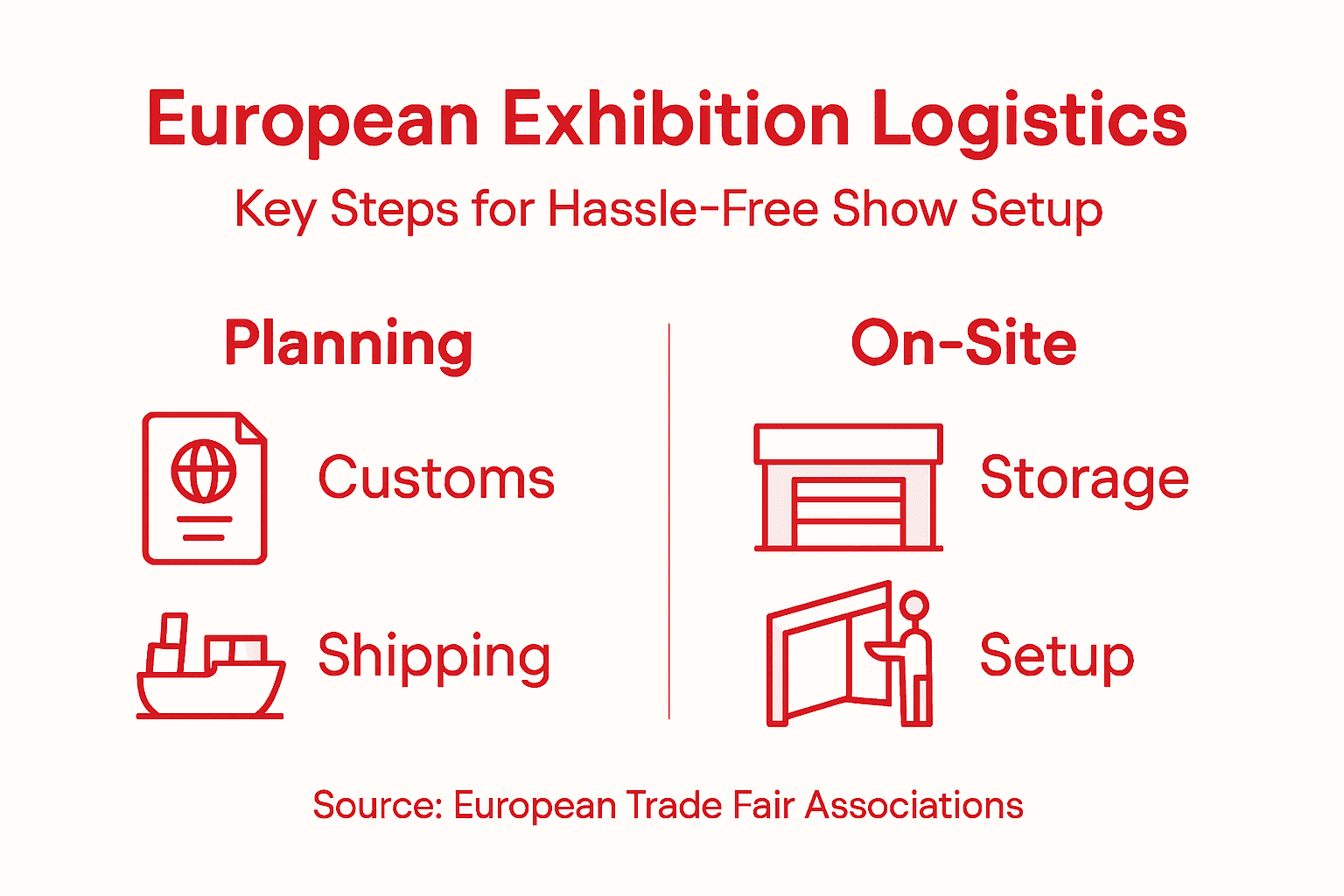
Last-mile delivery and on-site logistics present additional challenges. Getting your materials from the port or warehouse to the exhibition venue and then into your booth space involves multiple handoffs. Exhibition venues often charge fees for receiving materials, storage before setup, installation support, and breakdown services. Scheduling conflicts arise when multiple exhibitors attempt setup simultaneously. Unpredictable factors like elevator availability, loading dock access, or weather conditions can delay your setup timeline. Many experienced exhibitors arrange for on-site staff or logistics coordinators to manage these details rather than attempting remote coordination.
Common Challenges and Risk Mitigation
Beyond costs and logistics, exhibitors face operational challenges that require strategic thinking. Staff fatigue and booth engagement consistency emerges as an underestimated challenge. Working a booth for multiple consecutive days is physically and mentally demanding. Your team needs energy and enthusiasm for hundreds of conversations, but fatigue inevitably sets in. Inadequately staffed booths result in missed conversations during peak traffic periods. Overstaffed booths waste budget on unnecessary personnel. Finding the right staffing balance requires experience and sometimes trial-and-error.
Competitor presence and booth differentiation create visibility challenges. Major exhibitions feature dozens or hundreds of competing booths. Standing out requires significant visual impact, compelling messaging, or interactive elements that capture attention. Underfunded booth designs risk disappearing into the exhibition landscape. Additionally, measuring true ROI proves more difficult than anticipated. Not all leads convert at equal rates. Some partnerships take months or years to mature. Attributing specific revenue to trade show participation requires disciplined tracking systems that many marketing teams lack. Without proper lead management and follow-up processes, you cannot accurately assess whether your exhibition investment generated returns.
Pro tip: Build 20 to 30 percent contingency into your logistics budget and timeline to account for freight delays, customs hold-ups, and on-site complications, then treat any savings as bonus budget for enhanced booth elements or premium staffing rather than assuming the contingency won’t be needed.
Comparing European Shows to Other Markets
European trade shows operate within a distinctly different cultural, regulatory, and strategic framework compared to exhibitions in North America, Asia, or other global markets. Understanding these differences helps you calibrate your expectations, adapt your strategy, and avoid applying tactics that work elsewhere but fall flat in the European context. For Western European marketing managers considering international expansion or companies new to European exhibiting, these distinctions matter significantly. They affect everything from booth design philosophy to how you approach attendee conversations and measure success.
The most fundamental difference between European and North American trade shows lies in their primary objectives and attendee mindsets. North American exhibitions typically emphasize direct sales acceleration and immediate lead generation. Exhibitors focus on converting booth visitors into qualified prospects who enter the sales pipeline within days or weeks. The booth environment encourages high-volume foot traffic, quick product pitches, and transactional interactions. Attendees expect aggressive sales approaches and understand that exhibitors invest in shows primarily to generate revenue. The atmosphere tends toward competitive intensity, with companies fighting for visibility and attention. European shows, by contrast, blend commercial objectives with educational elements and collaborative networking. European exhibitors often view trade shows as strategic platforms for building long-term relationships, establishing thought leadership, and participating in industry evolution. The sales cycle runs longer, sometimes spanning months or years. Conversations prioritize understanding client needs over delivering quick pitches. This relational approach reflects European business culture generally, which values established relationships and trust-based partnerships more than North American markets do.
Strategic Approach and Attendee Engagement Differences
The regulatory environment and sustainability emphasis also distinguishes European exhibitions sharply. European shows enforce strict standards regarding booth construction materials, waste management, electrical safety, and accessibility compliance. Many venues mandate sustainable practices such as recyclable materials, limited single-use plastics, and carbon offset programs. North American shows typically have less stringent sustainability requirements. Asian exhibitions vary tremendously depending on country and local regulations. European exhibitors must budget for compliance with these standards, which increases costs but reflects market expectations about environmental responsibility. Additionally, European shows emphasize diversity, inclusion, and cultural sensitivity more explicitly than other markets. Attendee composition is intentionally diverse geographically, culturally, and demographically. Your booth messaging and imagery should reflect this diversity. Marketing approaches that work in culturally homogeneous North American shows may feel tone-deaf in European contexts where attendees represent 30 or 40 different nations.
Attendee behavior and engagement patterns differ substantially. North American trade show attendees often prioritize efficiency, moving quickly through exhibits to gather information and make comparisons. They expect polished elevator pitches and clear calls-to-action. European attendees tend to spend more time in conversations, asking deeper questions, and building understanding before making decisions. They appreciate detailed product education and honest discussions about limitations alongside benefits. Pushy sales tactics alienate European prospects. Instead, approaching attendees as peers exploring mutual business opportunities generates better reception. The decision-making authority at European shows also differs. While North American exhibitions attract many individual contributors and mid-level managers with purchasing authority, European shows often emphasize enterprise-level decision-makers and C-suite executives. This means conversations are more strategic and less transactional. You’re not selling features; you’re discussing how your solution addresses business challenges. The sales conversation might include detailed cost-benefit analysis, long-term partnership terms, and organizational implementation strategy.
Here’s how European, North American, and Asian trade shows differ in key dimensions:
| Factor | Europe | North America | Asia |
|---|---|---|---|
| Main Objective | Relationship building | Immediate sales | Product launches, media buzz |
| Planning Horizon | 9–18 months | 6–9 months | 3–12 months |
| Booth Standards | Strict, sustainable, regulated | Flexible, less regulated | Varies widely by country |
| Attendee Behavior | In-depth conversations | High-volume visits | Mixed (varies by region) |
| Typical Audience | Decision-makers, C-suite | Managers, contributors | Industry and local buyers |
Market Dynamics and Networking Culture
Small and medium-sized enterprises (SMEs) benefit differently from European shows compared to other markets. Research indicates that European exhibitions provide SMEs with disproportionate opportunities for network-driven internationalization and operational improvement. In North American shows, larger companies often dominate booth presence and attendee attention. European shows create more balanced playing fields where SMEs can establish credibility and build strategic partnerships with peers and larger organizations. The collaborative networking culture means SMEs gain value beyond direct sales. They form supplier relationships, distribution partnerships, and joint venture opportunities that accelerate their growth trajectory. This networking emphasis makes European shows particularly valuable for medium-sized Western European businesses seeking to expand beyond their home markets.
Competitor analysis and market research value differs as well. Asian trade shows often serve as product launch platforms where companies announce innovations and generate media coverage. North American shows function as lead generation engines with measurable sales impact. European shows serve all these functions but add a layer of industry discourse and thought leadership. Your booth presence at a European exhibition positions your company as a substantive participant in industry conversations, not just a vendor seeking transactions. This positioning benefit extends your ROI beyond lead quantity into brand perception and market standing.
The practical timeline and planning horizon also differs. European shows typically require longer planning cycles, sometimes 12 to 18 months from initial commitment to execution. North American shows often operate on 6 to 9-month timelines. This extended European planning window allows more thoughtful booth design, strategic positioning, and partnership development but requires earlier commitment and resource allocation.
Pro tip: If you’ve exhibited successfully in North American shows, resist the temptation to replicate that exact approach in European exhibitions; instead, adjust your strategy to emphasize relationship building, sustainability compliance, and thought leadership positioning over aggressive sales tactics and high-volume lead capture.
Elevate Your European Trade Show Experience with Expert Exhibition Solutions
Exhibiting in Europe presents unique challenges such as navigating complex logistical demands, complying with strict sustainability regulations, and crafting booth designs that resonate with diverse, discerning audiences. You need a partner who understands the importance of relationship building, cultural nuance, and long-term brand impact. At Adam Expo Stand, we specialize in helping businesses overcome these hurdles by delivering personalized, turnkey solutions that combine innovative design, sustainable materials, and seamless on-site management.
Don’t risk your European presence with generic booth options. Choose from custom and modular stand designs crafted to maximize attendee engagement and reflect your brand’s professionalism. With our expertise in 3D design visualization, detailed project management, and support for exhibition stand rental in Europe, your booth will meet regulatory standards while making a memorable impression on key decision-makers. Experience the difference of working with a seasoned team dedicated to turning your trade show investment into measurable business growth.
Ready to translate your European exhibiting goals into results that last beyond the show? Visit Adam Expo Stand today and discover tailored exhibition solutions designed to boost your brand visibility and support your long-term market success.
Frequently Asked Questions
What are the main benefits of exhibiting at trade shows in Europe?
Exhibiting in Europe can lead to increased brand visibility, access to qualified leads, strategic partnerships, and insights into market trends. The unique environment fosters meaningful conversations that can enhance long-term business relationships.
How do European trade shows differ from those in other regions?
European trade shows typically focus on relationship building and collaboration rather than immediate sales. Attendees often engage in deeper discussions and expect a higher level of professionalism and adherence to sustainability standards.
What should I consider when selecting a European trade show to exhibit at?
Consider factors like your target audience, industry focus, geolocation relevance, and the scale of the event. Detailed attendee demographics can also help you ensure that the show aligns with your business objectives.
What are the key elements of successful booth design for European exhibitions?
Successful booth design should reflect your brand’s quality and professionalism. Consider factors like booth size, visual branding, and engagement areas. Your design should balance attracting foot traffic with providing space for meaningful conversations.
Recommended
- The Ultimate Guide to Trade Booth Rental Design in Europe | Adam Expo Stand Solutions
- Success Exhibiting at IFEMA Madrid: The Ultimate Exhibitor Guide
- Top Trade Shows in Europe | Complete Industry Guide
- The Ultimate Guide to Trade Show Booth Types and Strategies | Adam Expo Stand Solutions
- 7 Essentials for Banquet Hall Luxury in Corporate Events | Jigsaw Conferences