Experiential booth design organises a stand around a useful visitor activity: a guided product demonstration, hands-on trial, comparison or consultation. Choose the activity by the audience and event objective, then specify space, equipment, staff and an accessible alternative. This guide explains how to plan and evaluate the experience without assuming a fixed lead or financial return.
Experiential Trade Show Booth: Activities and Planning
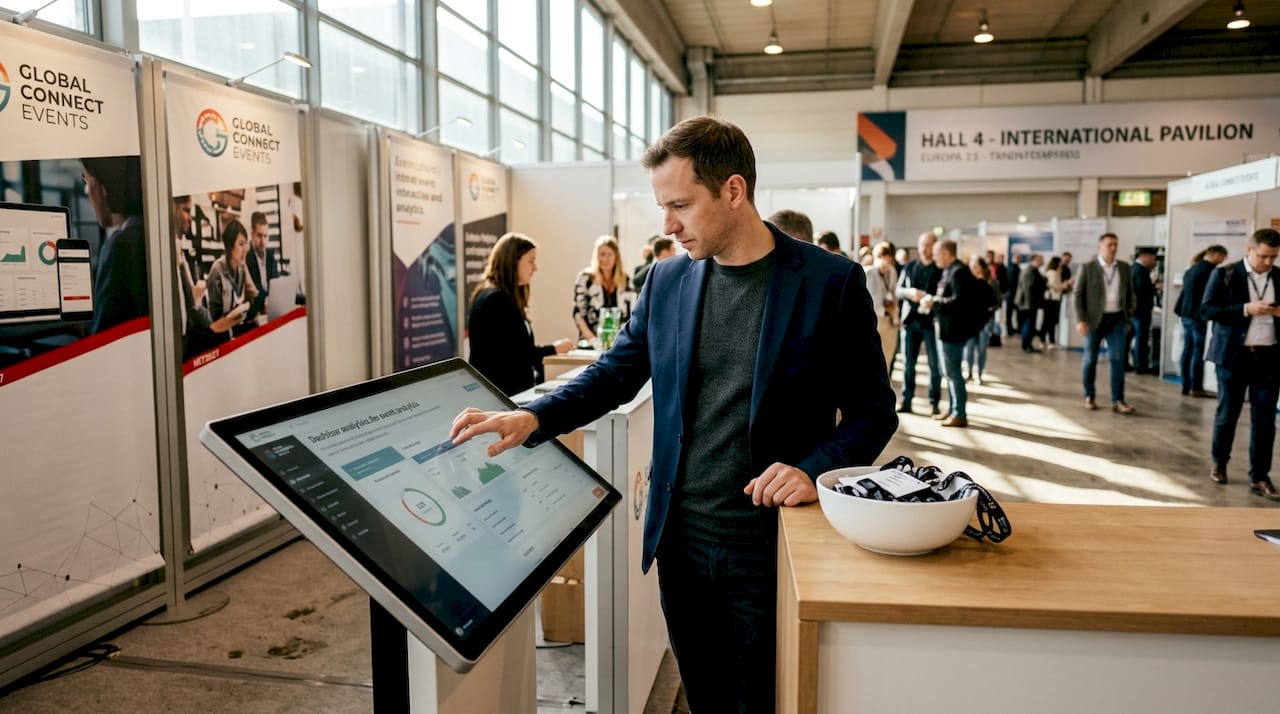
An experiential trade show booth invites visitors to participate in learning about a product or service. It can use physical demonstrations, interactive content or a guided conversation. Screens, VR and sensory effects are optional tools; a simple staffed product trial can also be experiential.
Table of Contents
- Defining experiential booth design
- Why invest in experiential design? ROI and impact data
- Core elements: What makes a booth experiential?
- Design strategies for European trade shows
- Measuring success: KPIs and common pitfalls
- Turning insights into action: Practical steps for your next event
- Enhance your exhibition presence with expert booth solutions
- Frequently asked questions
Key Takeaways
| Point | Details |
|---|---|
| Define a useful activity | Plan an activity that answers a visitor question and can be supported by the team. |
| Multisensory and tech integration | Choose sensory effects and technology for a defined activity, with appropriate permissions, operation and an accessible alternative. |
| ROI is measurable | Separate activity measures from attributed financial outcomes and full event cost. |
| Design for Europe | Check the assigned layout, event manual, material documentation and operating requirements. |
| Action beats aesthetics | Align design, staff responsibilities, approved promotion and agreed follow-up. |
Defining experiential booth design
Start with the question the experience should answer for a visitor. For example, a guided comparison may explain how two product configurations differ, while a practical demonstration may show a process that is difficult to describe on a graphic. Keep displays where they help that explanation.
Design commentary such as this immersive booth planning article can offer creative references. Evaluate each idea against your product, session capacity, staff and venue rules; a design feature does not establish a particular dwell-time improvement.
Options to specify in an experiential brief include:
- Multisensory environments: Deliberate use of lighting, spatial audio, tactile materials, and even scent to create a distinct atmosphere
- Interactive technology: Augmented reality (AR), virtual reality (VR), touchscreens, and motion sensors that respond to visitor behavior
- Purposeful visitor journeys: Layouts designed to guide attendees through a narrative, not just a product catalog
- Brand storytelling: Every element, from flooring to ceiling graphics, reinforces a single, coherent brand message
- Physical and digital content: Connect an activity to relevant approved resources, with clear instructions and an accessible alternative.
Planning principle: give visitors a useful action that helps them understand the product, and provide enough staff support to complete it.
For inspiring booth design examples that illustrate these principles in practice, reviewing real-world case studies is a valuable starting point.
Why invest in experiential design? ROI and impact data
Evaluate the additional cost of an experience against the business objective and the team’s ability to operate it. A visually impressive activity is not automatically a better investment than a clear product display or scheduled meeting.
Request an itemised scope for equipment, content, testing, staff, venue services and transport. Define expected outcomes and the evaluation period before approval. This guide does not establish universal budget shares, lead multipliers or ROI ranges.
| Measure | Define Before the Event | Review After the Event |
|---|---|---|
| Activity duration | Session length and staffed capacity | Completed sessions, queues and interruptions |
| Relevant conversations | Visitor need and product fit | Conversations with agreed next steps |
| Qualified enquiries | Consistent qualification criteria | Opportunities reviewed by the sales team |
| Financial return | Full cost, attribution method and review period | Attributed contribution or profit against cost |
| Experience budget | Equipment, content, staff and service scope | Actual cost and changes against the approved scope |
Measurement note: participation, dwell time and enquiry totals describe activity. Financial return requires the full cost, attributed contribution or profit and a stated evaluation method.
Compare modular rental costs and modular booth specifications against your actual event calendar. Include storage, transport, repairs, graphics and installation when evaluating reuse.
Core elements: What makes a booth experiential?
Specify each feature as an operating requirement: what it explains, how long a session takes, who supports it and what happens if it is unavailable. The features should fit together within the floor plan.
- Multisensory environments: Specify lighting, audio and textures for the actual task and audience. Test samples and operating conditions, and check event requirements.
- Interactive technology: Use AR, VR or a touchscreen when it explains a product question. Specify equipment, reviewed content, session capacity, staff support and fallback.
- Open, participatory layouts: Draw the actual furniture, equipment, access and circulation at scale. A counter may support a particular activity; evaluate its position and function rather than applying a universal open-layout rule.
- Physical and digital resources: Let visitors access approved product information through the exhibitor’s established process. Do not assume participation gives permission for promotional contact.
- Cohesive brand narrative: Coordinate approved messages, graphics and staff explanations. Test what visitors understand rather than assuming consistency guarantees recall.
Trade commentary on physical and digital experiences can inspire a shortlist. Confirm that the proposed content is relevant, approved and practical for your event rather than treating the ideas as an adoption ranking.
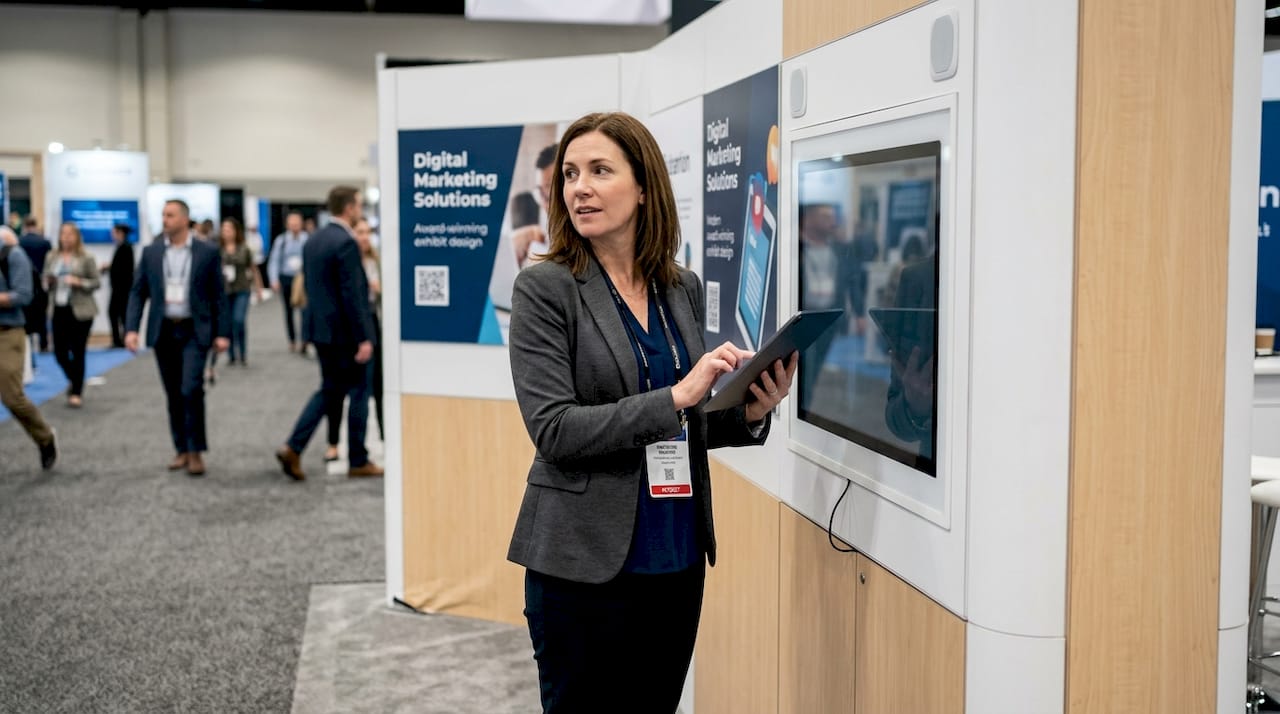
Planning tip: write down what visitors should understand or be able to compare after the activity. Test the explanation with someone unfamiliar with the product before finalising the interface and graphics.
Review reuse and material considerations alongside the activity specification. These modular configuration ideas can support a brief, but actual reuse depends on the next footprints, components and logistics plan.
Design strategies for European trade shows
Design choices must also align with regional regulations and best practices, especially across diverse European venues. What works at a large-format show in Frankfurt may require adaptation for a boutique event in Milan or a sector-specific exhibition in Amsterdam.
Use event investment planning to compare options against a documented scope. Check whether a modular system fits each event’s footprint, height and equipment needs. AR or VR should solve a product-explanation problem and have an accessible fallback; neither is required for every booth.
| Design consideration | Why it matters for European shows |
|---|---|
| Modular construction | Check compatibility with each footprint, height and equipment plan |
| Sustainable materials | Request relevant material evidence and agree reuse or disposal arrangements |
| Open layout planning | Review access, circulation and event safety requirements |
| AR/VR integration | Confirm product relevance, supervision, accessibility and fallback |
| Local language support | Use reviewed language support suited to the actual event audience |
Top considerations for 2026 European trade shows:
- Verify venue-specific height restrictions and rigging rules before finalizing design
- Request the material documentation required by the event and exhibitor, and verify claims for the supplied components
- Design for multilingual signage from the outset, not as an afterthought
- Plan power and data infrastructure requirements early, as European venues vary significantly
- Agree how changes to the assigned floor plan will be reviewed and priced before production
Planning tip: obtain the current exhibitor manual before design approval. Confirm submission and service-order deadlines, permitted heights, structural requirements, rigging, power and access with the organiser. Agree a schedule for resolving questions rather than applying a fixed twelve-week rule.
Exploring modular booth solutions and customizable booth stands can help you identify configurations that balance creative ambition with practical constraints.
Measuring success: KPIs and common pitfalls
Measure the experience against a small set of agreed outcomes and keep definitions consistent across staff. Practical observations about queues or equipment failures can explain why an activity did not perform as planned.
Success hinges on strategy over aesthetics and avoiding pitfalls like clutter, poor visitor flow, and untested technology. Many exhibitors invest heavily in design and then measure success only by the number of business cards collected. That approach misses the full picture.
Metrics to select according to the event objective:
- Dwell time: Average minutes spent at the booth, segmented by zone if possible
- Qualified engagement minutes (QEM): Time spent in meaningful conversation or interaction, not just passive presence
- Lead quality score: Percentage of leads that meet predefined qualification criteria
- Navigation friction: Points where visitors hesitate, turn back, or disengage
- Post-show outcomes: Track agreed next steps and qualified opportunities over a period suited to the sales cycle.
- Visitor feedback: Ask brief questions about what was useful or unclear, using the exhibitor’s approved process.
Record completed demonstrations, relevant meetings and qualified enquiries using the exhibitor’s existing process. If you also measure dwell time or engagement minutes, define how they are collected and what they mean. Keep these activity measures separate from financial return.
Common pitfalls to avoid include visual clutter that dilutes the brand message, interactive technology that has not been stress-tested under real show conditions, and layouts that create bottlenecks during peak traffic hours. Each of these mistakes is preventable with proper pre-show planning.
Planning tip: assign someone to observe queues, access and equipment problems during agreed periods. Record actionable issues and adjust staffing or timing where practical, while keeping activities within the contracted space.
The complete trade show guide offers a structured framework for aligning booth design decisions with measurable business outcomes.
Turning insights into action: Practical steps for your next event
Turn the brief into tasks with owners and deadlines for design, content, equipment, staffing and evaluation. Promotion and follow-up should use the exhibitor’s existing approved processes; no campaign or design guarantees a fivefold improvement.
- Define your experiential objective: Define the relevant outcomes and the activities that support them, whether enquiries, product explanation or partner meetings. Assign measures and responsibilities for each.
- Audit your current booth: Evaluate existing assets against the experiential framework. Identify which elements can be upgraded and which need to be replaced.
- Select vendors with European experience: Choose design and build partners who understand local venue regulations, logistics, and compliance requirements.
- Test technology: Agree a test and approval schedule with the supplier, including content, equipment, connectivity and fallback. Verify the installation again on site.
- Prepare promotion: Publish confirmed stand details and activity times through the exhibitor’s approved channels and established permissions.
- Assign clear roles for show days: Every team member should know their zone, their conversation objectives, and how to capture lead data consistently.
- Conduct a post-show debrief: Review observations while details are fresh, assign improvements and schedule a later review of sales outcomes.
Planning tip: rehearse the full visitor interaction, including the opening explanation, demonstration, questions and agreed next step. Prepare answers and escalation contacts for questions outside the booth team’s expertise.
Reviewing modular booth rental benefits can help you determine whether renting or owning your booth infrastructure better supports your event calendar and budget cycle.
Enhance your exhibition presence with expert booth solutions
Discuss the activity, floor plan, equipment, staff support and budget with Adam Expo Stand. Agree who handles submissions, service orders, production, transport, installation and dismantling before approval. Compare modular booth options with rental or custom construction for the same event requirements.
Frequently asked questions
What is the difference between experiential and traditional booth design?
Experiential design includes a visitor activity, such as a product trial, guided comparison or demonstration. Display-focused design primarily presents information or products. A stand can combine both approaches, and neither requires a fixed technology package.
How can I measure the ROI of my experiential booth?
Define relevant outcomes before the event, track qualified opportunities through the existing sales process and review attributed contribution or profit over an appropriate period. Include all event and experience costs. Dwell time or lead counts alone do not establish ROI, and this guide does not promise a fixed return.
What mistakes should I avoid in experiential booth design?
Avoid unclear activity goals, untested equipment, inaccessible interfaces and queues that block circulation. Specify staff responsibilities, content approval, session capacity and a fallback before the event.
Does experiential booth design work for small companies?
Yes. A supervised product trial, comparison or short demonstration can suit a small stand. Select an activity that fits the space, staff capacity and budget; immersive hardware is optional. Measure relevant outcomes rather than assuming participation guarantees leads.
Recommended
- Trade Show Booth Setup Guide for Exhibitor Success
- How to Design Trade Show Booth for Impactful Exhibits
- Top Best Trade Show Booth Designs to Boost Engagement
- The Ultimate Guide to Trade Show Booth Types and Strategies | Adam Expo Stand Solutions
For a primary industry reference on communicating objectives and requirements, see AUMA’s trade fair briefing guidance.