

Branding ideas for trade shows should help the intended visitor recognise your company, understand its offer and find a useful next step. Start with message, product evidence and the activity you want to support. Then choose graphics, lighting and construction that serve those requirements within the event’s conditions.
This guide focuses on physical brand expression. For the surrounding campaign, see trade show marketing strategies.
Agree the message before approving the appearance
Write a short description of who the offer helps, what it does and what evidence supports it. Choose one principal message for the intended approach views. More detailed specifications can sit where visitors examine the product or speak with staff.
Review claims with the responsible product and marketing teams. Terms such as “best”, “sustainable” or “guaranteed” need appropriate evidence and a defined scope. A striking display does not make an unsupported claim more credible.
Branding ideas for trade shows to evaluate
| Idea | Purpose | Practical check |
|---|---|---|
| A clear main message | Help relevant visitors identify the offer | Readability from the actual approaches and permitted sign positions |
| A visible product or sample | Connect the brand promise to something tangible | Inspection space, lighting, handling and accurate labels |
| A concise case example | Explain a relevant application | Client permission, verifiable facts and limits of the result |
| Consistent graphics | Connect the booth with invitations and resources | Approved files, physical colour samples and version control |
| A useful demonstration | Let visitors evaluate a product task | Staff, services, access, waiting space and a fallback |
| A coherent resource | Support an agreed next step | Current information, working links and an appropriate distribution process |
Test graphics and lighting in realistic conditions
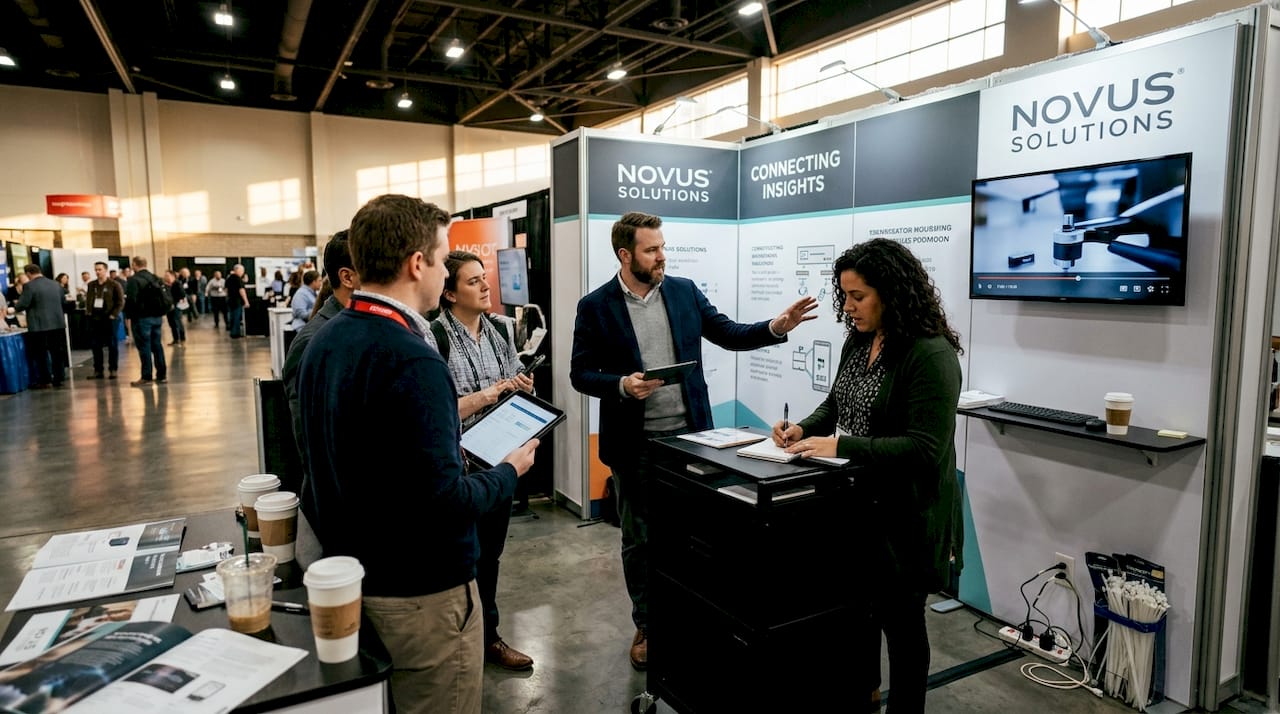
Check hierarchy, contrast, reflections, obstruction by people and the intended reading distance. Use the actual wording rather than placeholder text in design reviews. Confirm which messages remain visible during a demonstration or meeting.
A digital rendering helps compare proposals, but it cannot establish the exact appearance of printed materials under event lighting. Review relevant physical samples with the supplier. Pantone’s explanation of coated and uncoated references illustrates why the substrate matters to colour appearance.
Compare construction against the same brief
Custom fabrication, modular components, rental and combinations can all support recognisable branding. These categories do not determine creativity, price or environmental performance on their own. Ask each supplier to show how the proposal meets the same activity and message requirements.
For a multi-event programme, list actual plots, configurations, graphics and transport routes. Confirm which components can be reused, which need adaptation and which must be replaced. A custom element can be designed for reuse, while a modular system may still need new graphics and additional parts.
Compare complete costs: design, fabrication or rental, graphics, packing, transport, handling, assembly, venue services, dismantling, storage, maintenance and adaptation. Do not choose a category using a fixed number of shows, a universal saving percentage or an assumed lifespan.
Make environmental claims specific
Request evidence for the materials, quantities, sourcing and end-of-use route being discussed. Record the planned reuse and the logistics required to achieve it. Avoid describing the whole stand as environmentally superior because one component has a particular feature.
Assess practical access and operations alongside appearance. The supplier brief should include staff, products, queues, storage and services. The AUMA briefing guidance provides a reference for agreeing objectives and responsibilities.
Review branding results with clear limits
Brand recognition, message comprehension, activity participation and sales are different outcomes. Use suitable questions or observations for the result you need to assess. Longer visits do not by themselves establish satisfaction, qualified interest or financial return.
Record the event, audience, stand position, staffing and measurement period. Differences between events limit direct comparisons. Agree one or two changes to test next time rather than attributing every commercial outcome to the booth’s appearance.
What should the supplier receive?
Send approved brand files, the principal message, supporting evidence, intended activities, product dimensions, event documents and the planned future uses. Ask Adam Expo Stand to compare design options against that brief, with written inclusions, exclusions and approval stages.
Follow our exhibition planning guides
Choose Adam Expo Stand as a preferred source to help you find our exhibition guides and updates on Google.
Add as a preferred source on GoogleGoogle may ask you to sign in and confirm your choice.

