

Trade show marketing strategies for boosting exhibit impact

TL;DR:
- Clear goals and precise audience understanding are essential for trade show success.
- Innovative, engaging booth designs with interactive tech and emotional storytelling boost ROI.
- Measuring KPIs and leveraging digital follow-up strategies improve future trade show performance.
Every year, thousands of brands compete for the same fleeting seconds of attendee attention across crowded exhibition halls. The stakes are real: a poorly executed booth can waste months of planning and a significant portion of your annual marketing budget, while a strategically designed exhibit can generate qualified leads that fuel growth well beyond the event itself. This guide examines proven, innovative trade show marketing strategies, from goal-setting and booth design to digital amplification and performance measurement, giving marketing and brand managers a structured framework to elevate their next exhibit from ordinary to extraordinary.
Table of Contents
- Define your trade show goals and audience
- Innovative booth design strategies
- Cutting-edge engagement tactics
- Amplifying reach with digital and follow-up strategies
- Measuring success and optimizing for future shows
- Why creativity, not just budget, wins trade show success
- Enhance your next trade show with expert booth solutions
- Frequently asked questions
Key Takeaways
| Point | Details |
|---|---|
| Audience-driven planning | Defining objectives and knowing your target audience are crucial starting points for success. |
| Creative booth design | Innovative designs with interactive features make your booth stand out and attract more visitors. |
| Integrated engagement tactics | Live demos and interactive experiences boost attendee interest and meaningful connections. |
| Digital and follow-up power | Online outreach and post-event campaigns extend your reach and convert leads after the show. |
| Data-driven optimization | Measuring and analyzing results helps improve future trade show performance and ROI. |
Define your trade show goals and audience
Having previewed the importance of strategic differentiation, let’s start by building a solid foundation: clear objectives and audience understanding. Without this groundwork, even the most visually stunning booth risks becoming an expensive backdrop with no measurable return.
Clear objectives drive booth design and marketing success. Before a single design element is chosen, your team should align on the primary purpose of your participation. Are you focused on lead generation, brand awareness, product launches, or high-value networking? Each objective demands a different booth configuration, staffing approach, and engagement model.
Once your objectives are set, define your target audience with precision. Research attendee demographics, professional roles, and event-specific pain points. A healthcare technology firm targeting hospital procurement managers needs a fundamentally different messaging strategy than a consumer goods brand courting retail buyers.
Key steps to build this foundation:
- Set measurable goals: Define specific targets, such as 150 qualified leads, 40 product demo bookings, or 20 partnership conversations.
- Map audience pain points: Identify the problems your product or service solves for this specific attendee group.
- Align booth theme with audience expectations: A data-driven audience responds to dashboards and case study displays; a creative industry audience responds to immersive storytelling.
- Brief your booth staff thoroughly: Ensure every team member understands the primary objective and knows how to qualify a lead on the floor.
Pro Tip: Send a brief pre-event survey to registered attendees or your existing contact list to identify their top challenges. Use those insights to tailor your messaging and booth ideas that attract the right visitors from the first hour of the show.
Innovative booth design strategies
With your goals and audience clearly defined, the next step is designing a booth that truly captivates. Think of your exhibit as a three-dimensional billboard, one that must communicate your brand’s value proposition within three to five seconds of a passerby’s glance.
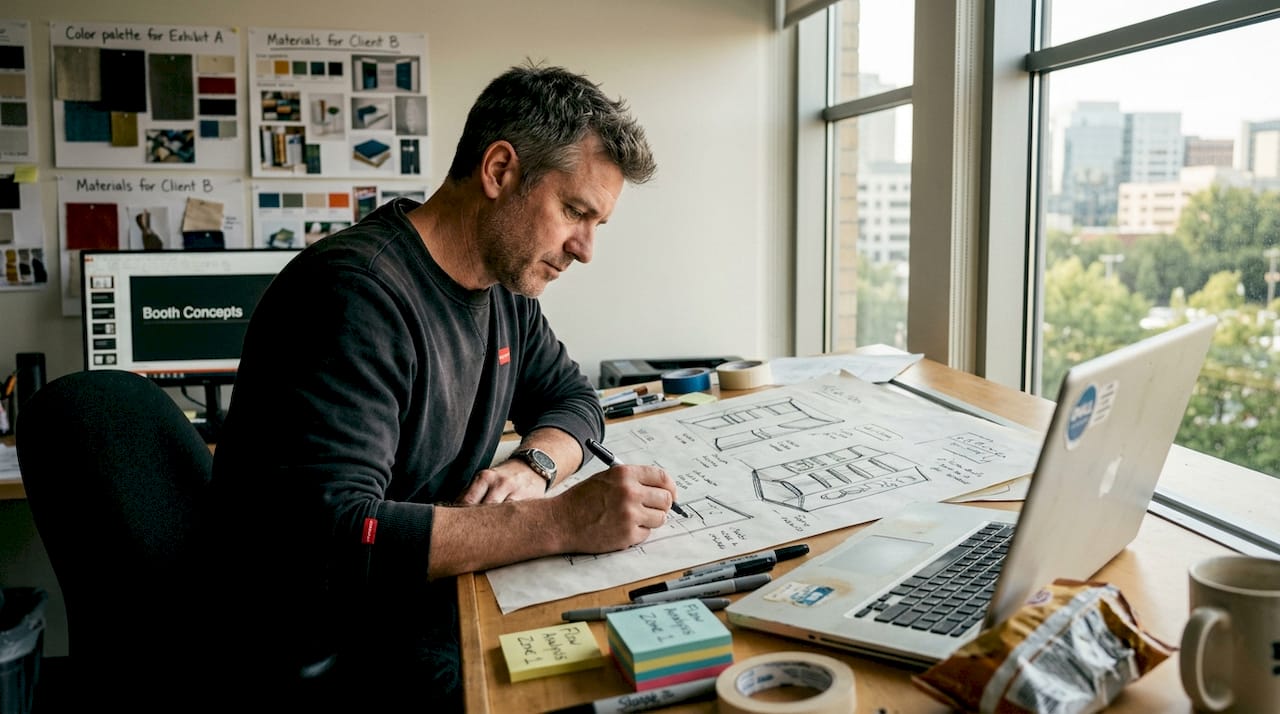
Creative booth design is a key driver of engagement and ROI, and the data supports this. 81% of attendees say engagement experiences influence their perception of a brand, making immersive design not a luxury but a strategic necessity.
High-impact design tactics worth prioritizing:
- Interactive technology: Touchscreens, augmented reality demos, and gamification elements increase dwell time significantly. Visitors who spend more time at your booth are far more likely to convert into leads.
- Open, inviting layouts: Avoid closed-off configurations. Strategic layout with clear focal points and open entry angles encourages foot traffic and reduces hesitation.
- Bold visuals and brand storytelling: Large-format graphics, dynamic lighting, and a coherent visual narrative reinforce brand consistency and make your exhibit memorable.
- Sustainable materials: Eco-friendly booth construction using recycled or reusable components resonates with environmentally conscious audiences and reduces long-term costs.
Pro Tip: Engage multiple senses intentionally. Subtle branded scents, ambient soundscapes, and tactile product displays create a multi-sensory experience that attendees remember long after the show ends. Explore inspiring booth designs for real-world examples of how leading brands execute this approach.
Best booth designs consistently balance aesthetic impact with functional flow, ensuring that visual appeal never compromises the visitor’s journey through your space.
Cutting-edge engagement tactics
A show-stopping design sets the stage, but meaningful attendee engagement is the real engine of trade show ROI. Design draws visitors in; engagement converts them.
“Live, hands-on experiences drive up to 50% higher engagement rates.” — How to Design Trade Show Booth for Impactful Exhibits
Engagement tactics that consistently deliver results:
- Live product demonstrations: Schedule timed demos to create urgency and draw crowds. A live demonstration answers objections in real time and builds trust faster than any brochure.
- Mini-workshops or micro-learning sessions: Offer 10 to 15 minute educational sessions within your booth space. Attendees gain value, and you position your brand as an authority in your field.
- QR codes for instant interaction: Deploy QR codes linked to downloadable resources, contest entries, or quick surveys. This captures contact data while delivering immediate value to the visitor.
- Influencer appearances or guest speakers: A recognized industry voice at your booth generates buzz that extends well beyond your immediate footprint on the show floor.
Impactful booth design integrates these engagement layers seamlessly, so the experience feels cohesive rather than staged. Consider pairing your engagement tactics with display ideas to stand out that physically support your interaction zones and guide visitors naturally from one touchpoint to the next.
Engagement tactics like live demos significantly boost lead capture when they are planned as structured experiences rather than informal conversations.
Amplifying reach with digital and follow-up strategies
With on-site tactics covered, it’s time to expand your booth’s impact beyond the trade show floor with digital marketing. The most successful exhibitors treat the event not as a standalone moment but as the centerpiece of a broader campaign arc.
Before the show, tease booth features and exclusive offers through targeted email sequences and social media posts. Build anticipation by revealing interactive elements, speakers, or product launches in a series of pre-event communications.
During the show, live-stream key demos or presentations to your social channels. This extends your reach to followers who are not physically present and amplifies your brand presence across digital panels simultaneously.
After the show, strategic digital outreach dramatically increases post-show conversion rates. Automate personalized follow-up sequences that reference specific interactions or sessions the lead attended, making every touchpoint feel relevant rather than generic.
| Digital channel | Estimated response rate | Estimated conversion rate |
|---|---|---|
| Personalized email follow-up | 28 to 35% | 8 to 12% |
| LinkedIn direct message | 18 to 25% | 6 to 10% |
| Retargeting ads (post-show) | 12 to 18% | 4 to 7% |
| SMS with opt-in | 35 to 45% | 10 to 15% |
Use analytics tools to track which channels generate the highest quality leads, not just the highest volume. Understanding channel effectiveness allows you to refine your custom booth design process and pre-show campaign for the next event. The ROI calculator for trade shows can help you model expected returns from each channel before you commit budget.
Measuring success and optimizing for future shows
Digital tools boost reach, but ongoing improvement depends on measuring what works and analyzing results with discipline. Without structured measurement, each trade show becomes an isolated expense rather than a learning opportunity.
Exhibitors who measure performance report improved ROI at subsequent shows, which underscores the compounding value of a data-driven approach.
Start by defining your KPIs before the event, not after. Key metrics to track:
- Lead volume and quality: Total leads captured versus qualified leads that meet your ideal customer profile.
- Cost per lead: Total event spend divided by the number of qualified leads generated.
- Engagement duration: Average time visitors spend at your booth, which correlates strongly with conversion likelihood.
- Demo-to-lead conversion rate: The percentage of demo attendees who become captured leads.
| KPI | What it reveals |
|---|---|
| Cost per lead | Budget efficiency and overall event value |
| Engagement duration | Booth design and content effectiveness |
| Demo conversion rate | Strength of your live engagement strategy |
| Post-show email open rate | Quality of lead nurturing and messaging relevance |
Gather qualitative feedback from booth staff immediately after the event, while observations are fresh. Combine that with visitor survey data and analytics from your measuring trade show success tools to build a complete picture. Apply these insights to refine both your booth design and your marketing approach for the next show.
Why creativity, not just budget, wins trade show success
With the full framework in place, let’s step back for a broader view of what really drives trade show results. There is a persistent assumption in the industry that a larger budget automatically produces a better outcome. The reality is more nuanced, and often more encouraging for brands working with constrained resources.
We have observed time and again that resourceful, creatively led teams achieve more memorable booth experiences than well-funded competitors who rely on scale alone. A single unforgettable interaction, a bold piece of storytelling, or a genuinely useful micro-workshop can generate more qualified conversations than an elaborate display with no clear narrative.
Focus on one signature experience rather than spreading resources across a dozen minor features. Visitors remember peaks, not averages. One powerful moment at your booth will be shared, discussed, and recalled far longer than a collection of forgettable touchpoints.
Monitor top performers in your sector not just to track trends, but to study their strategic creativity. How are they using sustainable booth ideas to differentiate? What interaction models are generating the most dwell time? These lessons, applied with your own brand’s voice, are more valuable than any additional square footage.
Pro Tip: Creativity scales. A well-executed concept on a modest footprint outperforms a generic execution on a large one, every time.
Enhance your next trade show with expert booth solutions
Ready to turn these strategies into a winning presence at your upcoming trade show? Moving from strategy to execution requires a partner who understands both the creative and logistical demands of high-impact exhibiting. Adam Expo Stand delivers exhibit solutions that translate strategic plans into tangible, measurable results, from custom 3D booth design and sustainable material selection to full on-site installation across Europe. Whether you are planning a flagship presence at a major industry event or a targeted appearance at a regional show, our team brings the expertise to make your exhibit a strategic launchpad for your brand. Explore our full range of services and request a consultation to begin designing your next high-impact booth.
Frequently asked questions
What are the essential elements of a successful trade show marketing strategy?
Effective strategies combine booth creativity, audience-specific messaging, engaging on-site experiences, and structured post-show follow-up to convert interest into measurable business outcomes.
How can I measure trade show ROI effectively?
Track KPIs such as cost per lead, engagement duration, and demo conversion rates, and use an ROI calculator to benchmark results against prior events and industry averages.
What are some examples of innovative trade show engagement tactics?
Live product demos, augmented reality experiences, QR-linked contests, and 15-minute micro-workshops consistently drive higher booth traffic, as innovative engagement tactics demonstrate across multiple industries.
Does booth size matter more than creativity at trade shows?
Creative, strategically designed smaller booths regularly outperform larger generic setups in both lead quality and attendee engagement, because innovative booth design prioritizes experience over square footage.


