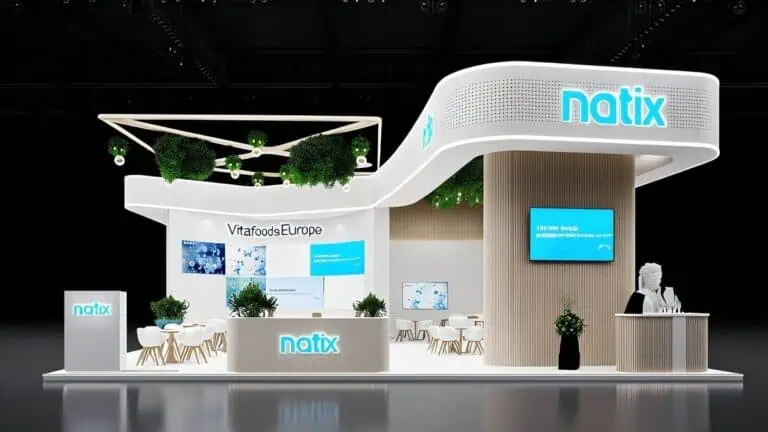
To build custom exhibition stands, first define the activities and constraints, then appoint suitable design and delivery teams, approve the documented scope and coordinate production, access and handover. A custom shape does not guarantee visitor interest or qualified leads. The stand needs to support the actual event brief.
Define what the custom stand must do
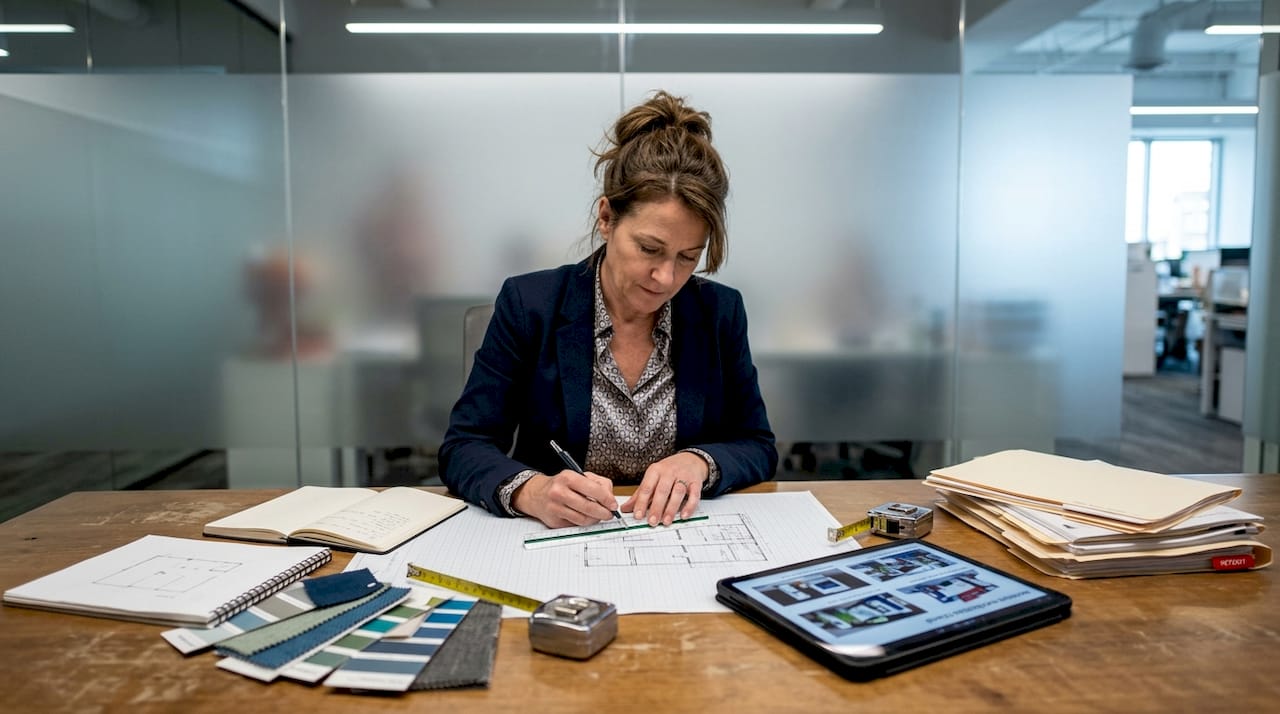
List the products, visitor activities, meetings, demonstrations, staff roles and storage needs. Obtain the confirmed plot with orientation, open sides and known obstructions. Use actual equipment dimensions, weights and service requirements. Identify the desired next steps for visitors and how staff will deliver them.
Prepare a complete cost scope covering the relevant design, structure, graphics, furniture, AV, venue services, freight, installation, dismantling and storage. Separate confirmed prices from allowances and exclusions. A per-square-metre estimate without a defined specification is insufficient for comparing builds.
Check requirements for the actual event
Request current organiser and venue documents and check which apply to the booked hall, plot, structure and activity. Confirm submission owners, deadlines, access arrangements and required technical evidence. Do not apply one fire classification, height range or approval period to every European stand.
IFEMA’s regulations directory and Fira Barcelona’s participation regulations are starting references for those locations. Event-specific instructions and written clarification remain necessary where the proposed work raises questions.
Select a suitable construction approach
Compare bespoke fabrication, compatible modular components and combinations against the same brief. Custom design and modular construction can coexist. Rental and ownership concern the commercial arrangement and can apply to different construction methods.
For a future programme, check actual component compatibility, permitted configurations, graphics replacement, packing, freight, storage and repair. There is no universal number of events at which one approach becomes cheaper. Use quoted costs for your programme and identify what happens to the components afterwards.
Build custom exhibition stands through controlled stages
- Agree the brief. Record priorities, constraints, responsibilities and missing inputs.
- Review concepts. Compare practical layouts, presentation and complete cost scope.
- Develop the selected design. Coordinate specified materials, graphics, products and services.
- Complete required reviews. Assign technical evidence and organiser submissions to the responsible people.
- Release production. Identify approved documents and control subsequent changes.
- Prepare delivery and assembly. Confirm packing, manifest, access, handling, staffing and the actual installation programme.
- Check and hand over. Verify the deliverables, required sign-offs, operating tasks and outstanding issues.
The 3D design brief guide explains what helps the design team model the stand. Digital views should be supported by checked dimensions and specifications, not treated as a guarantee of the finished result.
Plan technology as an activity with requirements
Choose a demonstration, screen or interactive feature for a defined audience task. Check power, connectivity, mounting, content rights, staffing, queue space and reset time. Rehearse the real content and provide a useful fallback for failures.
Do not assume gamification or VR improves lead quality by a fixed percentage. Record trials, conversations, requested next steps and subsequent outcomes separately. Participation in an activity or acceptance of a gift does not establish buying intent or permission for every later contact.
If visitor information is collected, use the organisation’s approved process and have the responsible team assess applicable requirements. The EDPB lawful-processing guidance provides an initial reference.
Check quality and responsibility before handover
Compare the delivered structure, finishes, graphics, furniture and equipment with the approved scope. Record defects and missing items, with owners and response times. Ask for the relevant technical checks and operating information from the responsible contractor.
Keep dismantling, returns and storage in the plan. A stand that can be assembled once is not automatically documented for safe dismantling or future use. Confirm how damage, repairs and changes will be recorded.
Frequently asked questions
What is the typical cost of a custom stand?
The cost depends on the actual brief, plot, materials, services, programme and location. Compare itemised offers with the same deliverables and exclusions rather than relying on an unsupported universal range.
Does modular construction always assemble faster?
No. Timing depends on the system, configuration, crew, access and services. Obtain the planned sequence and required resources for the actual build.
Can the stand be reused?
Only to the extent supported by its components, condition, future layouts and event requirements. Agree ownership, storage, maintenance and adaptation before treating reuse as a budget saving.
Provide the event, plot and activities to Adam Expo Stand and ask for a defined delivery scope and programme.
Follow our exhibition planning guides
Choose Adam Expo Stand as a preferred source to help you find our exhibition guides and updates on Google.
Add as a preferred source on GoogleGoogle may ask you to sign in and confirm your choice.