

Trade show booth ideas for sustainability and impact 2026
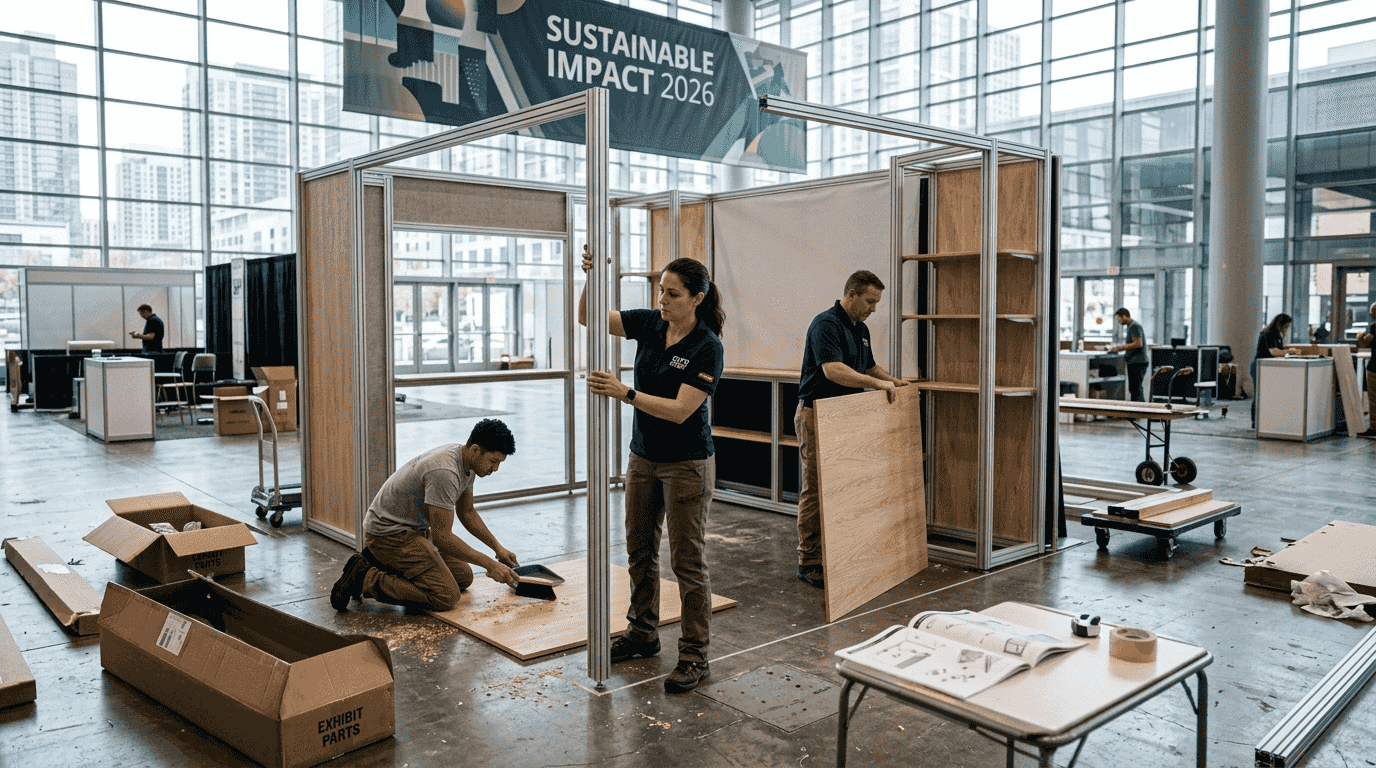
Marketing and event coordinators face a real challenge at 2026 European trade shows: designing booths that grab attention while staying environmentally responsible. Your booth needs to stand out among hundreds of competitors, engage visitors meaningfully, and align with your company’s sustainability commitments. This article walks you through practical, innovative booth ideas that balance impact with eco-consciousness. You’ll discover evaluation criteria, real examples of cutting-edge modular designs, smart technology integration, and comparison frameworks to help you choose the right approach for your next event.
Table of Contents
- Essential Criteria For Effective And Sustainable Trade Show Booth Design
- Innovative Modular And Sustainable Booth Ideas For 2026
- Leveraging Technology And Hybrid Designs To Boost Engagement Sustainably
- Comparing Top Trade Show Booth Ideas To Find Your Best Fit
- Explore Adaptable Trade Show Booth Solutions At Adam Expo Stand
- Frequently Asked Questions About Trade Show Booth Ideas
Key takeaways
| Point | Details |
|---|---|
| Align design with goals | Your booth design must directly support specific business objectives and sustainability principles |
| Choose modular solutions | Modular and circular economy booths reduce waste by 40% and lower costs |
| Extend reach with hybrid | Hybrid booth solutions combine physical and virtual elements to engage remote audiences |
| Use purposeful technology | Technology should create meaningful visitor interactions without becoming a distraction |
| Budget comprehensively | Account for all costs including floor space, setup, accommodations, and hidden expenses |
Essential criteria for effective and sustainable trade show booth design
Before exploring specific booth ideas, you need a framework to evaluate which designs will actually work for your situation. A great trade show booth starts with crystal-clear business goals. Are you launching a product, generating leads, or building brand awareness? Your booth design must serve these specific objectives, not just look impressive.
Start by defining what success looks like for your trade show appearance. Write down three measurable goals such as collecting 200 qualified leads, scheduling 50 product demos, or achieving 80% positive brand recall among visitors. These targets shape every design decision from booth size to interactive elements.
Your budget determines what’s realistic. Nailing down a realistic budget is critical for planning your trade show booth. Many coordinators focus only on floor space costs and get blindsided by expenses like electrical hookups, internet access, furniture rental, graphics production, shipping, and staff accommodations. Build a comprehensive budget spreadsheet that captures:
- Floor space and location premium costs
- Booth construction or rental fees
- Graphics, signage, and branding materials
- Technology rental and setup
- Shipping and logistics both ways
- On-site labor and installation
- Staff travel, accommodation, and meals
- Marketing materials and giveaways
- Contingency fund for unexpected costs
Sustainability should be a core criterion, not an afterthought. Evaluate booth designs based on material reuse potential, recyclability, and circular economy principles. Can the booth be disassembled and used at multiple events? Are materials sourced responsibly? Does the design minimize waste during construction and teardown?
Visitor engagement matters more than flashy gimmicks. Plan interactive elements that align with your marketing message and create memorable experiences. A well-designed demo station where visitors can test your product beats a generic photo booth every time. Consider accessibility too, ensuring all attendees can participate regardless of physical abilities.
Pro Tip: Create a one-page design brief that lists your top three goals, budget ceiling, sustainability requirements, and target visitor profile. Share this with your design team or booth provider to keep everyone aligned from day one.
When you design trade show booth for impact, every element should earn its place by serving your strategic objectives. Avoid adding features just because competitors have them or because they seem trendy.
Innovative modular and sustainable booth ideas for 2026
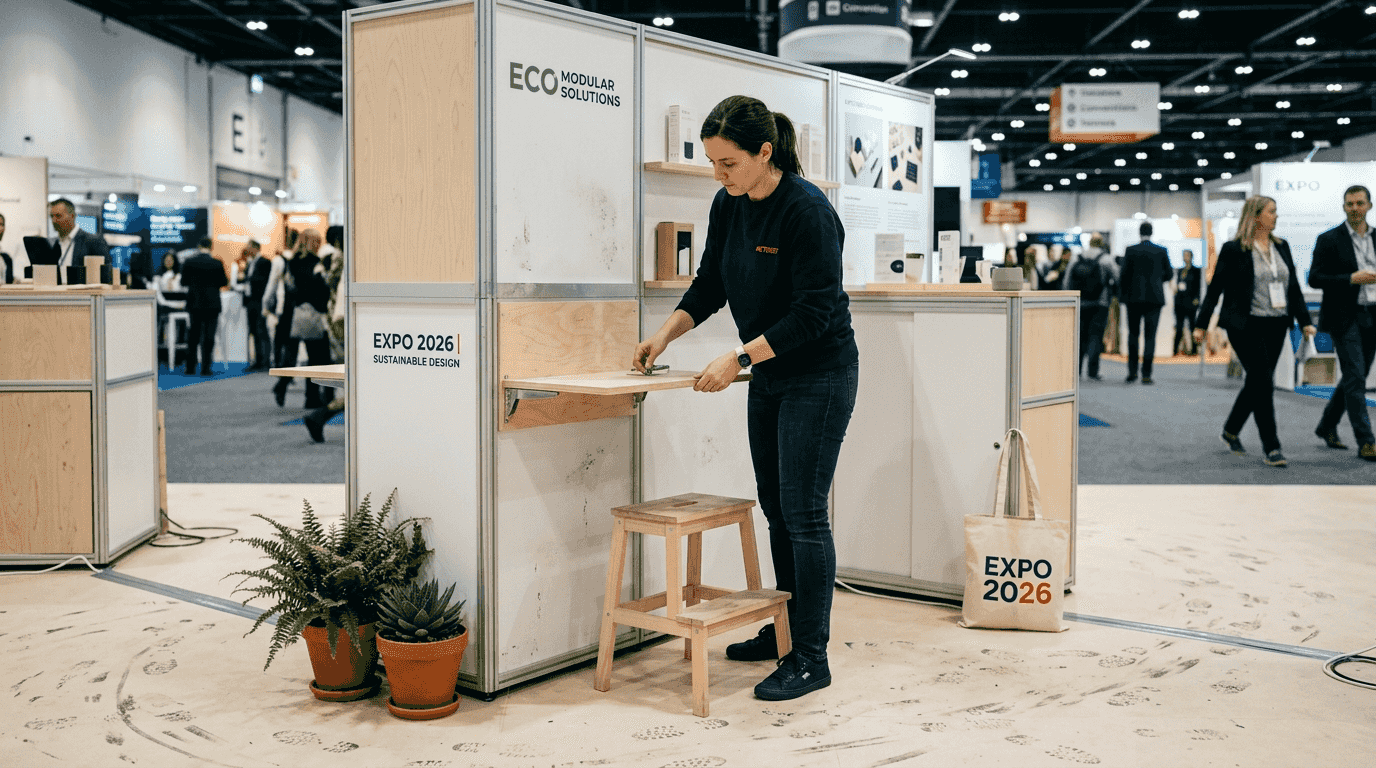
Modular booth designs lead the sustainability revolution in European trade shows. These systems use interlocking components that assemble quickly, disassemble cleanly, and store compactly for reuse at multiple events. You invest once in quality modular elements and deploy them repeatedly, dramatically reducing per-event costs and environmental impact.
Agrob-Buchtal’s Road to Net Zero booth demonstrates how prioritizing reuse and modularity minimizes waste. Their design uses standardized frame sections, interchangeable panels, and multifunctional furniture that adapts to different floor plans. After each event, components return to storage rather than landfills.
Circular economy principles transform booth construction economics. Research shows up to 30% material cost reduction and 40% waste reduction when applying circular design to exhibition stands. Instead of custom-building disposable structures, you select from cataloged modular components designed for longevity and multiple configurations.
Consider these modular and sustainable booth approaches:
- Aluminum frame systems with fabric graphics that swap out for different events
- Recycled cardboard structures for lightweight, recyclable, budget-friendly options
- Rental programs where you use high-quality modular booths without ownership costs
- Furniture that doubles as storage containers during shipping
- LED lighting systems that consume 75% less energy than traditional options
- Living walls with real plants that improve air quality and create natural focal points
Lightweight modular structures offer practical advantages beyond sustainability. They’re easier to transport, reducing shipping costs and carbon emissions. Setup crews can assemble them faster, cutting labor expenses. They adapt to different booth sizes, so you can scale up for major shows or downsize for regional events using the same core components.
Pro Tip: When evaluating modular trade show stands, ask providers about their take-back programs. The best suppliers will store, maintain, and refresh your modular components between events, eliminating your storage burden.
“Investing in modular exhibition systems isn’t just environmentally smart, it’s financially strategic. Our clients typically break even on modular investments after three to four events, then enjoy dramatically lower costs for years.”
Multifunctional design maximizes every element’s value. A reception counter that converts to a storage crate. Display shelves that fold into shipping containers. Seating that stacks efficiently. Each dual-purpose element reduces what you need to transport and store.
Modular exhibition stands sustainable future thinking means designing for the long term. Choose timeless aesthetics over trendy designs that look dated quickly. Select neutral base components you can refresh with updated graphics rather than rebuilding entirely.
Leveraging technology and hybrid designs to boost engagement sustainably
Hybrid booth designs expand your reach beyond physical attendees. By combining in-person experiences with virtual components, you engage international audiences who can’t travel to the event. Hybrid approaches can increase attendance by up to 40% by removing geographic barriers.
Virtual reality and augmented reality reduce material needs dramatically. VR and AR applications can decrease physical prototypes by up to 70%, cutting production costs and shipping weight. Instead of transporting heavy machinery or multiple product samples, you bring VR headsets that showcase your entire product line in immersive 3D.
Focus technology on solving real visitor problems, not creating spectacles. An AR app that helps visitors visualize your product in their own facility adds genuine value. A touchscreen that captures lead information while providing personalized product recommendations serves both parties. A live video connection to your engineering team for technical questions creates meaningful interaction.
These technology integrations support sustainable engagement:
- QR codes linking to digital brochures instead of printed materials
- Tablet-based presentations replacing bulky display monitors
- Live streaming your booth presentations to remote audiences
- Virtual meeting rooms for private client conversations
- Digital business card exchange eliminating paper waste
- Interactive product configurators that show customization options
Accessibility must guide technology choices. Ensure screen text is readable for visitors with visual impairments. Provide captions for video content. Design touchscreen interfaces that work for people with limited mobility. Offer alternative ways to access information for those who can’t use VR headsets.
Avoid technology gimmicks that distract from your core message. A flashy hologram display might draw crowds, but if visitors leave without understanding your value proposition, you’ve wasted their time and your money. Every technology element should directly support one of your strategic objectives.
Pro Tip: Test all technology thoroughly before the event. Have backup plans for internet connectivity issues. Train your booth staff to troubleshoot common problems so technical glitches don’t derail visitor experiences.
Hybrid elements extend your trade show investment’s lifespan. Record booth presentations and share them online afterward. Convert in-person demos into virtual tours for prospects who couldn’t attend. Use event content to fuel your marketing for months after the show ends.
Balance high-tech and high-touch interactions. Technology should enhance human connection, not replace it. The most effective booths use technology to handle routine tasks like information gathering, freeing your staff to have deeper conversations with qualified prospects.
When exploring creative trade show booth ideas, remember that creativity means solving problems elegantly, not adding complexity. The best technology implementations feel invisible because they work so smoothly.
Comparing top trade show booth ideas to find your best fit
Different booth approaches suit different situations. Every single decision should reflect your strategy. This comparison helps you evaluate which approach aligns with your goals, budget, and sustainability commitments.
| Booth Type | Initial Cost | Setup Complexity | Sustainability | Best For |
|---|---|---|---|---|
| Modular System | Medium to High | Low | Excellent | Multiple events, long-term use |
| Custom Build | High | High | Poor | One-time major launches |
| Hybrid Design | Medium | Medium | Good | International audience reach |
| Rental | Low | Low | Good | Occasional exhibitors |
| Sustainable Materials | Medium | Medium | Excellent | Eco-conscious brands |
Modular systems require higher upfront investment but deliver the lowest per-event cost over time. If you exhibit at three or more shows annually, modular makes financial sense. The components last for years and adapt to different spaces, giving you flexibility as your needs evolve.
Custom builds create unique brand experiences but generate significant waste. They make sense only for major product launches or flagship events where the investment justifies single-use construction. Even then, consider designing custom elements that can be repurposed or donated after the event.
Hybrid designs balance physical presence with virtual reach. They work brilliantly when your target audience is geographically dispersed or when travel budgets limit attendance. The technology investment pays off through expanded engagement beyond the show floor.
Rental programs eliminate ownership burdens. You get professional booth designs without storage, maintenance, or transport logistics. Rental suits companies that exhibit occasionally or want to test different booth styles before committing to a purchase.
Sustainable material choices like bamboo, recycled aluminum, or certified wood signal your environmental values. They often cost slightly more initially but appeal strongly to eco-conscious visitors and generate positive brand associations.
Consider these factors when selecting your approach:
- How many events do you attend annually?
- What’s your total annual trade show budget?
- How important is sustainability to your brand identity?
- Do you need different booth sizes for different events?
- Can you handle storage and logistics between events?
- What’s your staff’s technical capability for setup?
Many successful exhibitors combine approaches. You might own a core modular system and rent additional components for larger shows. Or use sustainable materials for your modular frame and incorporate hybrid technology for specific events.
Pro Tip: Calculate your total cost of ownership over three years for each option. Include purchase price, storage, maintenance, shipping, setup labor, and refresh costs. The lowest initial price rarely equals the lowest long-term cost.
Review inspiring examples of booth designs to see how other companies in your industry approach these decisions. Notice which elements create genuine engagement versus which just add visual noise.
Explore adaptable trade show booth solutions at Adam Expo Stand
Implementing these booth ideas requires expertise in design, logistics, and execution. Adam Expo Stand specializes in modular and customizable booth solutions that balance impact with sustainability. Their systems support quick assembly and disassembly, reducing labor costs and environmental footprint while delivering professional presence at European trade shows. Whether you need a compact 3×3 meter booth or an expansive custom installation, their team handles 3D design, manufacturing, shipping, and on-site setup. Partnering with experienced providers streamlines your planning process and ensures your booth achieves its strategic objectives while meeting sustainability commitments.
Frequently asked questions about trade show booth ideas
What are the benefits of using modular booth designs?
Modular booth designs reduce costs through reuse, minimize waste by up to 40%, and offer flexibility to adapt to different event spaces and sizes. They assemble quickly, store compactly, and maintain professional appearance across multiple shows. The initial investment pays off after three to four events through eliminated rebuild costs.
How can I make my trade show booth more sustainable?
Choose modular systems designed for reuse, select sustainable materials like recycled aluminum or certified wood, and minimize printed materials by using digital alternatives. Rent rather than buy when exhibiting infrequently. Partner with suppliers who practice circular economy principles and offer take-back programs for booth components.
What technology best engages visitors without distraction?
Focus on technology that solves visitor problems or demonstrates your product value. AR/VR for product visualization, interactive configurators, and digital lead capture systems add genuine value. Avoid gimmicks like random games or flashy displays that don’t connect to your core message. Test everything thoroughly and train staff on troubleshooting.
How should I budget realistically for a trade show booth?
Start with floor space costs, then add booth construction or rental, graphics production, technology, shipping both ways, on-site labor, electrical and internet hookups, staff travel and accommodation, marketing materials, and a 15-20% contingency. Track actual costs after each event to improve future estimates. Many coordinators underestimate by 30% on their first show.
Can hybrid booths really increase attendance and engagement?
Yes, hybrid designs that combine physical and virtual elements can boost total engagement by 40% by reaching audiences who cannot attend in person. They extend your trade show investment beyond the event dates through recorded content and virtual tours. Hybrid works best when you have geographically dispersed prospects or limited travel budgets among your target audience.
Recommended
- Creative Trade Show Booth Ideas That Attract Visitors
- Top Exhibition Trends 2025: Design, Tech and Sustainability
- Sustainable Expo Stands: Boosting Impact and Eco Value
- How to Design Trade Show Booth for Impactful Exhibits
- Sustainable Houses: A Smarter Way to Eco-Friendly Living in 2025 – Beyond The Urban


