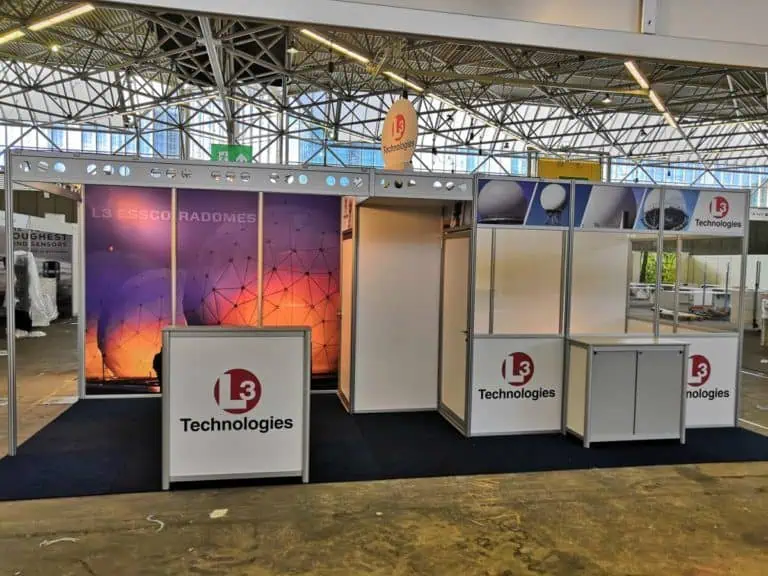
Planning a modular stand
A modular stand is useful when its components can support the layouts and activities you actually need. Start with your event programme and compare the complete scope: design, components, graphics, equipment, transport, storage and each installation.
These twelve checks help you brief a supplier and compare proposals. A modular approach does not guarantee a particular saving or visitor result; those depend on the project and how the stand is used.
1. Compare the booked spaces
Collect plot dimensions, open sides and position for every planned event. Check whether the same components can form the required layouts and whether additional parts will be needed. Treat the current exhibitor manuals as design inputs.
2. Allocate space to activities
Mark reception, demonstrations, meetings, product displays and storage on the plan. Keep visitor access clear and consider how staff will move between tasks. A larger footprint alone does not ensure better conversations.
3. Confirm what the system supports
Ask which frames, connectors, shelves and screen mounts are included. Provide actual equipment dimensions and loads. Have the supplier confirm compatibility and any required technical review; do not assume all modular systems accept the same accessories.
4. Build a clear graphic hierarchy
Decide what a visitor should understand from the aisle and what belongs at closer reading distance. Give your principal message space, then use product information where it supports a conversation. Test readability with scaled layouts and print samples where useful.
5. Separate lasting graphics from campaign graphics
Identify logos and brand elements that can remain across shows, alongside messages, languages and product images that may change. Obtain artwork templates and print specifications from the chosen production supplier before preparing final files.
6. Include storage from the start
List brochures, samples, coats, bags and packaging. Decide which items need secure storage and who needs access. Position doors and counters so replenishing supplies does not interrupt visitors or block an escape route.
7. Plan lighting and power together
Use the actual lighting and equipment schedule to calculate service requirements. Coordinate product lighting, screen glare and cable routes. Confirm how power is ordered, distributed and checked for the event rather than relying on a generic stand-size allowance.
8. Prepare demonstrations and connectivity
Specify screen placement, sound, data connections and operator positions. Agree who orders and tests the network service. Keep a usable offline demonstration where practical and check the whole setup before visitors arrive.
9. Define transport and installation responsibilities
Agree packing, delivery, venue handling, assembly and dismantling. Confirm access windows, required documentation and the event’s service-order deadlines. Identify one responsible contact and a route for resolving changes.
10. Compare the total programme cost
Compare equivalent scopes across the planned events. Include initial production, rental or ownership, graphic changes, replacement parts, transport, storage, installation and refurbishment. Separate assumptions from quoted amounts so an apparent saving can be checked.
11. Record component condition after every show
Use an inventory with photographs, packing locations and repair notes. Identify parts that can be used again and items needing replacement before the next event. Reuse should follow actual component condition and the next layout.
12. Brief the team and review the event
Agree visitor questions, demonstration roles and how to record a useful next action. After the show, review qualified conversations and operational issues against your own previous events. Use that evidence to change the next layout and follow-up plan.
A real reference for repeat-use planning
The published Alphacan project at VETECO describes a design reused across exhibition years, with storage and reinstallation. It provides a practical reference for repeat use; it does not establish a universal percentage saving or a particular modular construction system.
Compare our modular stand options with custom design. Share your events and floor plans so the proposed approach can be assessed against the programme.
Request a stand proposal →Follow our exhibition planning guides
Choose Adam Expo Stand as a preferred source to help you find our exhibition guides and updates on Google.
Add as a preferred source on GoogleGoogle may ask you to sign in and confirm your choice.