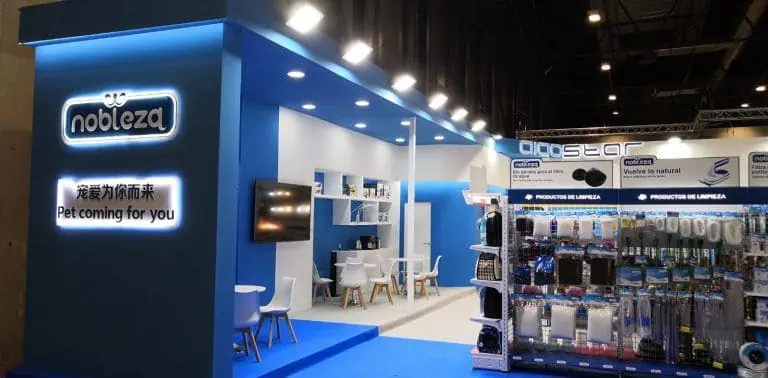
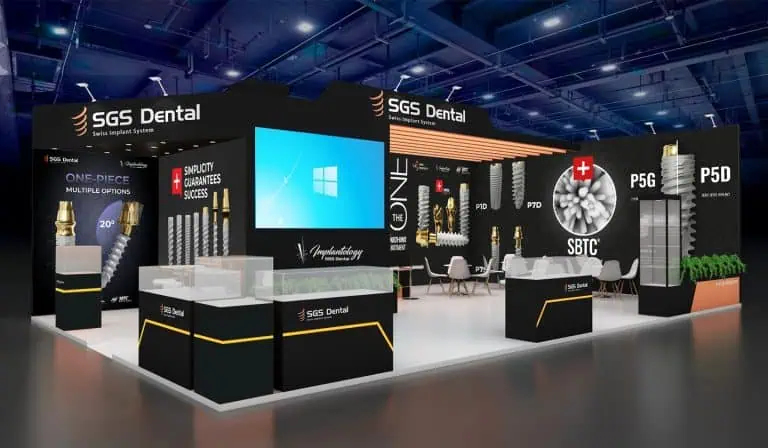
Innovation in exhibition design means solving a visitor or operating problem in a useful way. It may involve a clearer product demonstration, a different layout, reusable components or reviewed digital content. Start with the activity, then compare the specification, complete cost and a practical way to evaluate the result.
Technology is optional. A staffed comparison of two samples may explain an offer better than an elaborate interface. This guide helps an event team turn an idea into a brief, test it and learn from the event without assuming fixed improvements in dwell time, leads or financial return.
Define the problem before choosing a feature
Write down what a visitor needs to understand or do. For example, equipment too large to transport may need a simulation; a complex product range may need a guided comparison; repeated questions may need a clearer graphic. Treat these as possible briefing problems, not evidence that every exhibitor needs the same tool.
Record the audience, product details, staff capacity, booked plot, equipment and event requirements. AUMA’s trade fair briefing guidance is a useful reference for communicating objectives and requirements to the project team.
Check the current edition’s manual and booking specification. Confirm permitted construction, services, access and submission dates before approving an idea. A rendering helps communicate appearance; the project also needs dimensions, specifications, responsibilities and appropriate technical review.
Compare innovation in exhibition design by function
| Option | Possible purpose | What to test |
|---|---|---|
| Product comparison station | Explain differences between approved configurations. | Sample access, instructions, staff support and visitor questions. |
| Interactive screen | Let visitors select relevant information. | Content accuracy, readability, response, accessibility and fallback. |
| AR or VR demonstration | Visualise an application that is difficult to display physically. | Representation, supervision, session capacity and alternative explanation. |
| Reusable layout | Use compatible components across planned events. | Documented configurations, parts, packing and complete lifecycle cost. |
| Revised visitor route | Resolve an observed obstruction or queue. | Scaled layout, equipment positions and operating capacity. |
Agree the simplest credible alternative for each option. Compare the proposed feature with a staff explanation, sample or approved document. This makes the additional equipment, content and operation easier to assess.
Specify technology as an operating system
List equipment, software, content, power, connectivity, installation, support and removal. Identify who approves information and who operates or fixes the system. Rehearse the complete interaction, including questions, handover to staff and an agreed next step.
For AI, define approved sources, answer limits, human escalation and tests for incorrect output. For motion, sound, lighting or other effects, check the event rules and effect on neighbouring spaces. A feature should remain inside the contracted scope and space.
If personal data are processed, involve the exhibitor’s privacy owner before use. Review purpose, basis, information, access, retention and providers. The European Data Protection Board’s guidance on lawful processing explains that legal bases have specific conditions. Participation does not automatically authorise promotional follow-up.
Check reuse and material claims separately
Modular construction can support particular layouts; it does not promise unlimited reconfiguration. Request the inventory, documented configurations and changes needed for each event. The OCTANORM portfolio illustrates different system categories; confirm the actual proposed product and configuration with the supplier.
Compare purchase, rental and custom construction using equivalent scope. Include storage, repair, new graphics, transport, installation, dismantling and eventual return or disposal. Reuse does not guarantee a fixed saving, and new construction is not automatically required for every custom element.
Request evidence for material claims at component level. Agree actual recovery or reuse arrangements. Avoid treating a particular finish, fabric or nearby production location as proof of the environmental performance of the entire project.
Plan a pilot and acceptance checks
- State the problem and intended visitor action.
- Agree a specification, complete quote and responsibility list.
- Review drawings, samples, content and technical submissions.
- Test with people unfamiliar with the product and the operating team.
- Record errors, queues, inaccessible steps and support needs.
- Resolve acceptance issues and check the installed activity on site.
Build the schedule around actual approvals, production, supply and access dates. A generic lead time cannot establish whether a particular proposal is deliverable.
Measure activity separately from financial return
Define what counts as a completed demonstration, relevant conversation or qualified enquiry. If you use an interaction rate, state the eligible visitor denominator, counting period and method. A content view does not necessarily identify a person or establish buying intent.
Record operational observations alongside totals: waiting time, failures, staff availability and questions. Surveys can add useful feedback, but self-selection and response bias affect interpretation. Keep financial outcomes separate and use the exhibitor’s agreed attribution and cost method.
A comparison with another show is not a controlled test of the design. Audience, plot, event duration, staffing, offer and follow-up may differ. Use the observations to decide what to retain, change or test next, without attributing all improvement to one feature.
Frequently asked questions
Does innovation require a larger budget?
Not necessarily. A revised explanation or layout may use existing assets. Compare actual design, content, equipment and operating costs rather than assuming a technology package or price premium.
Which technology generates the most leads?
This guide does not establish a universal ranking. Choose a tool for a defined task, pilot it and assess relevant enquiries with consistent criteria.
What should a supplier proposal include?
A scaled layout, component and equipment specification, content responsibilities, approvals, complete cost, schedule, operation, fallback and handover arrangements.
Share the event, plot, activities, equipment, schedule and budget with Adam Expo Stand. Ask for a written scope that makes optional features and unresolved assumptions clear.
Follow our exhibition planning guides
Choose Adam Expo Stand as a preferred source to help you find our exhibition guides and updates on Google.
Add as a preferred source on GoogleGoogle may ask you to sign in and confirm your choice.