Updated October 1, 2026.
What is exhibition stand fabrication? It is the production of the physical components for an exhibition booth from an approved design: structures, display units, finishes, graphics and equipment supports. It connects design decisions with production, packing and installation. Before commissioning fabrication, agree the specifications, approval responsibilities, quality checks and delivery scope for your event.
This guide helps exhibitors and event organizers evaluate the production part of a stand project in Europe. For the complete planning process, from your first brief to dismantling, use our eight-step exhibition stand building guide. También puedes consultar la guía de planificación y construcción de stands en español.
Define the fabrication scope and responsibilities
Start with a written description of the components to be produced and the services included. A supplier may handle fabrication alone or coordinate design, production, logistics and on-site installation. Do not assume workshop ownership, engineering, venue services or show-time support from the words “full service.” Confirm the proposed delivery arrangement.
Your brief should include the allocated floor plan, event manual, dates, approved brand assets and product dimensions. Give the production team the information needed for heavy products, demonstrations, storage, screens and accessible circulation. Identify the person who can approve design changes and the person responsible for each technical submission.
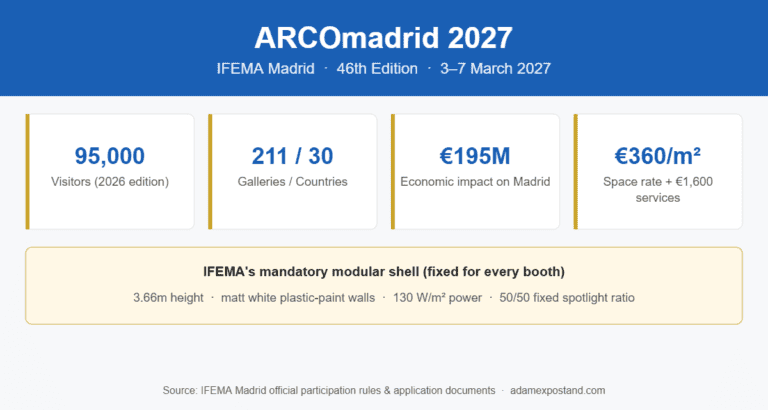
The approved design needs to be translated into specifications and production drawings appropriate to the project. Ask the responsible specialists to confirm applicable structural, material, electrical and rigging requirements. Use the current IFEMA MADRID participation regulations or Fira de Barcelona participation regulations alongside the booked event’s own manual when relevant. Requirements must be checked for the actual venue and event.
Compare custom, modular and hybrid production
Custom fabrication produces elements for a particular brief, such as product display units, meeting spaces or distinctive brand features. The choice of components and finishes follows the approved design, technical requirements and available budget. A custom stand can incorporate reusable parts when that is specified from the outset.
Modular production uses a defined system of compatible components and project-specific graphics or accessories. Ask which system is proposed, which configurations it supports and how it fits your allocated footprint. Its reuse value depends on future layouts, condition, transport and storage, rather than a universal number of shows.
Hybrid production combines system components with custom elements. The proposal should make their interfaces and packing arrangements clear. Rental is an ownership and supply arrangement that can apply to different formats; specify what will be returned, retained or replaced.
Evaluate the formats against your products, staff activities and confirmed event calendar. See our modular stand planning page for questions about adapting components between events.
Agree production milestones and quality checks
- Confirm the production brief. Record the approved scope, allocated layout, products, artwork, delivery dates and responsibility for venue approvals.
- Approve the current design documents. Consolidate feedback and establish the version of drawings, dimensions and finishes that production will follow.
- Confirm specifications and sourcing. Identify the materials, system components, graphics and equipment. Record any proposed substitution and obtain approval before it changes the finished stand.
- Review appropriate production evidence. Agree checks for dimensions, finish samples, graphic proofs and equipment interfaces. A sample or photograph should answer a particular quality question.
- Prepare packing and dispatch. Label components, list contents and record handling requirements. Coordinate items supplied separately by the exhibitor or rental providers.
- Complete installation and handover. The responsible site team checks the delivered stand against the agreed scope, coordinates required technical checks and records outstanding corrections.
Set milestone dates backward from the installation window and handover time. Production duration depends on design complexity, component availability, approvals, revisions and transport. Ask for a schedule specific to your proposal and clarify which decisions are on the critical path. Generic lead times cannot confirm capacity for a particular show.
Confirm materials, graphics and equipment integration
Ask why each proposed material suits its intended use. Compare appearance, durability, weight, repair, packing, reuse and the documentation required by the event. Descriptions such as “eco-friendly,” “fireproof” or “premium” need supporting specifications rather than being accepted as a complete answer.
For timber, panels, metalwork, fabric or other finishes, clarify the exact product and finish where they affect performance or appearance. Request appropriate samples and evidence for any certification or recycled-content claim. A supplier’s general environmental statement does not establish the impact of your individual stand.
For graphics, agree visible dimensions, print specifications, proofing and approved artwork. Check spelling, language, logos and the locations of seams or joins. Identify which graphics can be reused and which will change for each event.
For screens, lighting and demonstration equipment, provide dimensions, weights, connection requirements and the content to be shown. Confirm the responsible specialist for supports, power and technical services, as well as testing and show-time assistance. Choose interactive features because they help visitors understand the product, with a workable alternative if the equipment or connection is unavailable.
Compare costs, reuse and quotation scope
A fabrication-only price and a delivered stand price cover different work. Request an itemized proposal and identify design, production, graphics, furniture, equipment, packing, freight, installation and dismantling. Clarify venue-service charges, taxes, storage, ownership and changes separately.
- Which company contracts with us, and who coordinates production?
- Which components are custom produced, rented or drawn from a modular system?
- What specifications, drawings and artwork require our approval?
- Who manages venue submissions and specialist services?
- Which quality checks occur before dispatch and at handover?
- What is included in transport, installation, support and dismantling?
- Who owns the components after the show, and what does reuse require?
Common avoidable problems include approving conflicting artwork versions, ordering equipment after its mounting space is fixed, leaving venue-service responsibilities undefined and planning reuse without checking the next footprint. A written change process and clear contacts make these decisions easier to manage.
For organizers delivering several stands or a shared pavilion, agree common specifications, participant allocations and artwork deadlines before fabrication. Identify shared and individual service orders and coordinate one handover plan. Our country pavilion guide provides an organizer brief.
Frequently asked questions
What is the difference between fabrication and installation?
Fabrication produces the components and finishes. Installation assembles and completes the stand at the venue. Some suppliers coordinate both, but the quotation should define their scope, site responsibilities and handover requirements.
Does custom fabrication mean a stand can only be used once?
No. Custom elements can be designed for reuse when their dimensions, connections, packing and future configurations support it. Confirm refurbishment, storage and transport costs before comparing reuse options.
How much does exhibition stand fabrication cost?
Request a quote for the approved design and production scope. Materials, finishes, graphics, equipment integration and delivery requirements affect the price. Compare proposals with the same inclusions and exclusions instead of assuming a standard price per square meter.
How long does fabrication take?
The supplier needs to confirm the schedule for the actual project. Identify design, artwork, technical approvals, production, shipping and installation milestones. Ask how late changes or substitutions affect the confirmed delivery date.
What should I check before production starts?
Confirm the current approved drawings, specifications, artwork, responsibilities, quotation scope and schedule. Establish the checks required for technical requirements, finish samples, graphic proofs and equipment interfaces.
Can a fabrication supplier handle several European events?
Discuss the full calendar, each venue and each allocated layout. Confirm who delivers each event, component compatibility, storage, refurbishment, transport and available support. Capacity and coverage should be confirmed for the proposed program.
Discuss fabrication and delivery with Adam Expo Stand
Share your event, floor plan, products, approved design if available, budget scope and reuse plans. We can discuss the design, production and delivery requirements for your particular stand. Explore our completed projects and contractor comparison guide when preparing your brief.
Follow our exhibition planning guides
Choose Adam Expo Stand as a preferred source to help you find our exhibition guides and updates on Google.
Add as a preferred source on GoogleGoogle may ask you to sign in and confirm your choice.