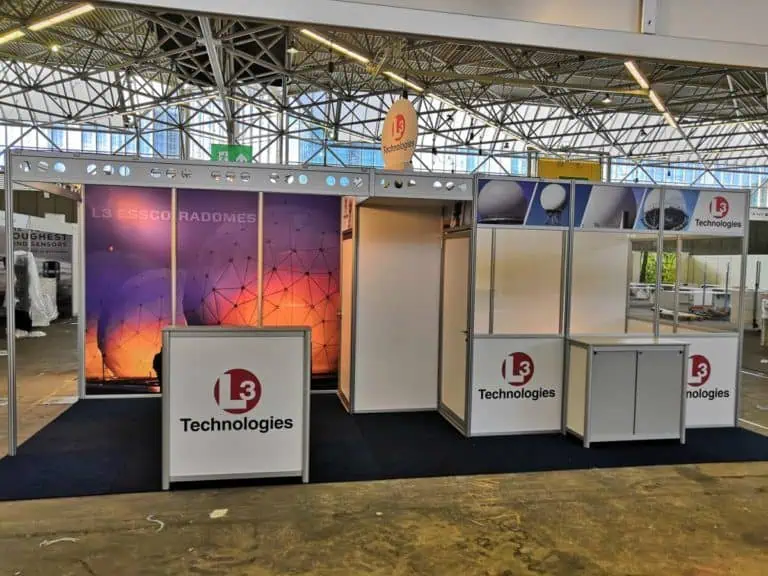
Trade Show Manager: Driving Event Success
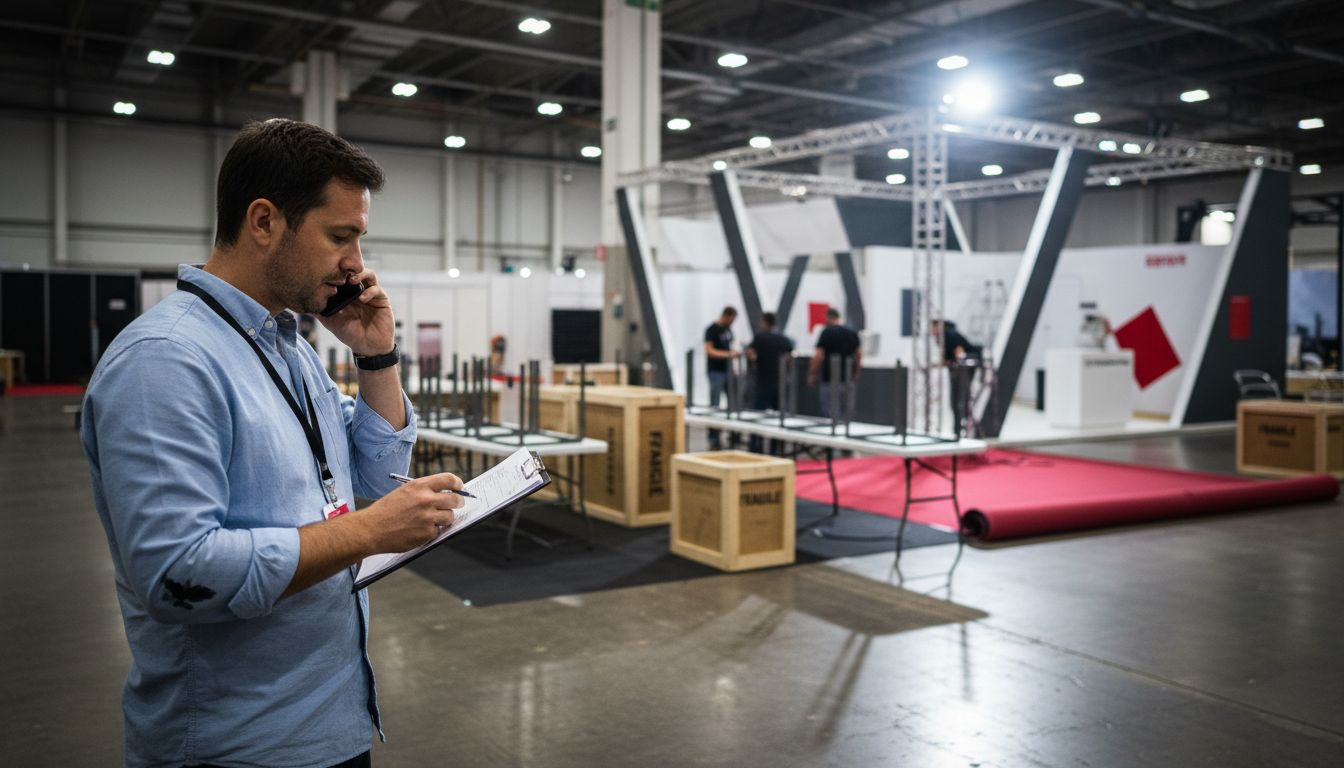
Managing a trade show program means more than just booking a booth in Italy or Germany. For marketing managers at mid-sized European companies, every international event is a test of coordination, timing, and brand consistency. Success demands more than creativity—it hinges on mastering strategic event planning and detailed logistics that translate directly into measurable business results. This article outlines exactly how a skilled trade show manager bridges strategic vision with precise on-site execution to drive lasting impact.
Table of Contents
- Defining The Trade Show Manager Role
- Key Responsibilities And Core Duties
- Essential Skills And Required Qualifications
- Event Logistics And Project Management
- Risks, Budget Challenges, And Common Mistakes
Key Takeaways
| Point | Details |
|---|---|
| Trade Show Manager Role | Trade show managers are essential for executing strategic event plans that align with marketing goals. Their skills in logistics, communication, and budget management are vital for success. |
| Risk Management | Anticipating risks such as financial overruns and vendor reliability is crucial. Implementing proactive strategies can mitigate potential issues. |
| Integrated Marketing | Effective pre-event promotions and post-event follow-ups are necessary to enhance engagement and achieve better business outcomes. |
| Continuous Development | Ongoing professional development and adaptation to industry trends ensure trade show managers remain effective in their roles. |
Defining the Trade Show Manager Role
A trade show manager is a strategic professional responsible for orchestrating complex industry events that serve as critical marketing and networking platforms for businesses. These specialized project managers coordinate intricate details to transform exhibition spaces into powerful brand communication channels.
The core responsibilities of a trade show manager span multiple crucial domains:
-
Event Strategy Development: Creating comprehensive plans that align exhibition goals with broader marketing objectives
-
Logistics Coordination: Managing venue selection, booth design, equipment transportation, and on-site setup
-
Stakeholder Management: Interfacing with vendors, internal teams, event organizers, and potential clients to ensure seamless execution
-
Budget Management: Developing and tracking financial resources for exhibition participation
-
Marketing Integration: Developing pre-event promotional strategies and post-event follow-up protocols
Trade show managers operate at the intersection of strategic planning and tactical execution. Their role requires a unique blend of skills including project management, marketing acumen, logistical expertise, and relationship-building capabilities. Exhibition booth management strategies play a critical role in translating these complex responsibilities into successful event outcomes.
Here’s a comparison of key trade show management functions and their direct business impacts:
| Function | Primary Focus | Business Impact |
|---|---|---|
| Event Strategy | Aligning goals with marketing plans | Stronger brand representation |
| Logistics Coordination | Managing setup and transportation | On-time, seamless event execution |
| Stakeholder Management | Vendor and team communication | Improved partnership and satisfaction |
| Budget Management | Optimizing and monitoring spend | Cost control and ROI improvement |
| Marketing Integration | Promotion and follow-up campaigns | Increased engagement and leads |
Successful trade show managers must possess exceptional organizational skills, adaptability, and a keen understanding of industry trends. They transform exhibition spaces from mere physical locations into dynamic platforms for business growth, brand storytelling, and meaningful professional connections.
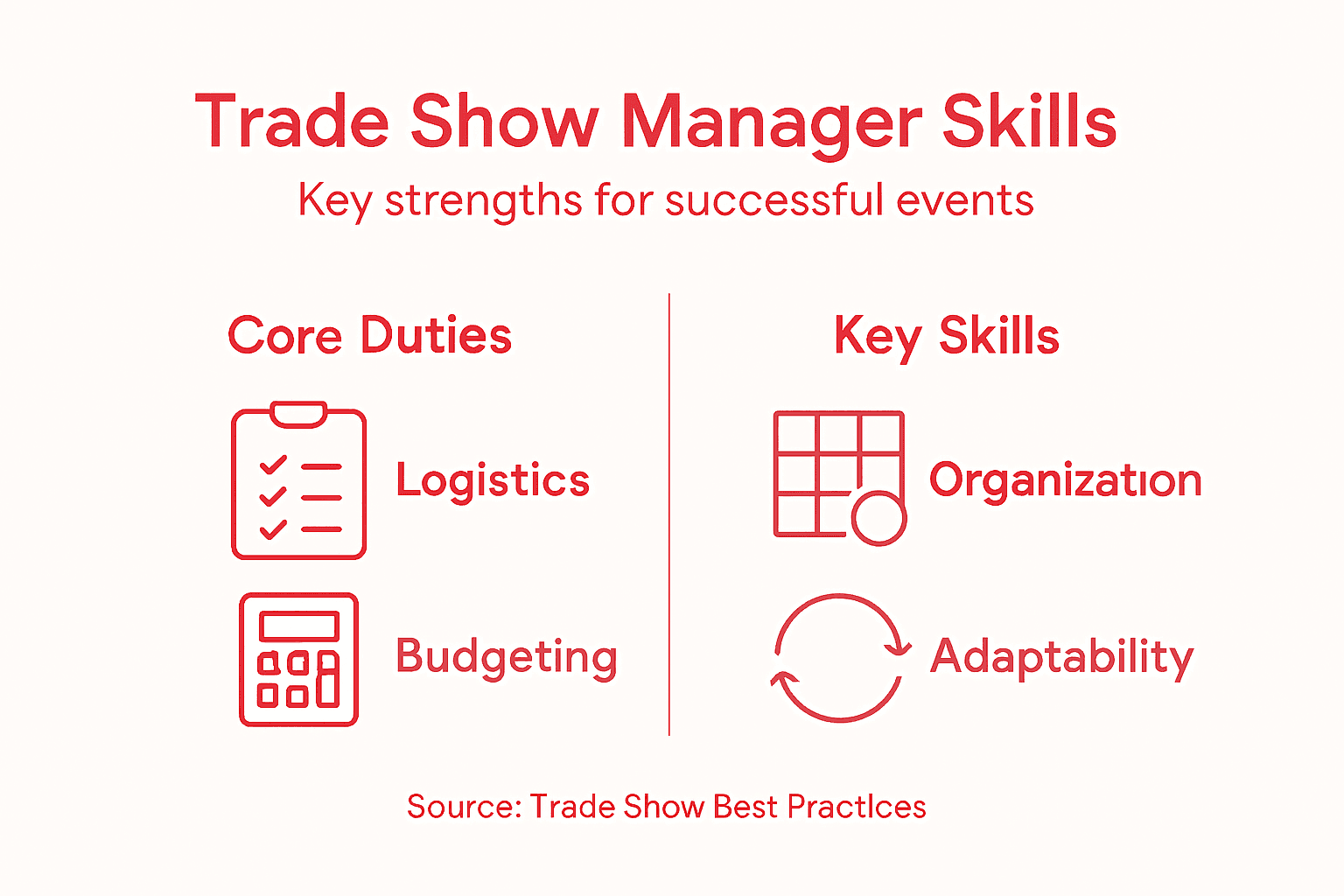
Pro tip: Always develop a detailed contingency plan that anticipates potential challenges and provides flexible solutions for unexpected exhibition complications.
Key Responsibilities and Core Duties
Trade show managers are strategic professionals who orchestrate complex marketing events through comprehensive planning and precise execution. Their role demands a multifaceted approach to transforming exhibition spaces into powerful business communication platforms.
The core duties of a trade show manager encompass several critical operational domains:
- Strategic Event Planning: Developing holistic event strategies aligned with organizational marketing objectives
- Budget Management: Creating and monitoring financial frameworks for exhibition participation
- Vendor Coordination: Establishing and maintaining relationships with exhibition suppliers, venues, and service providers
- Marketing and Promotion: Designing comprehensive pre-event and post-event communication strategies
- Logistics Execution: Managing complex operational details including booth design, equipment transportation, and on-site setup
Within these responsibilities, trade show managers must demonstrate exceptional skills in project management, stakeholder communication, and strategic thinking. Trade show booth types and strategies play a critical role in translating these responsibilities into tangible event success.
Trade show managers serve as the critical bridge between organizational marketing goals and dynamic exhibition environments, transforming abstract strategies into measurable business outcomes.
Successful managers excel at navigating complex stakeholder relationships, balancing technical logistics with creative marketing approaches, and maintaining flexibility in high-pressure event environments. They must simultaneously manage detailed operational requirements while keeping broader strategic objectives in clear focus.
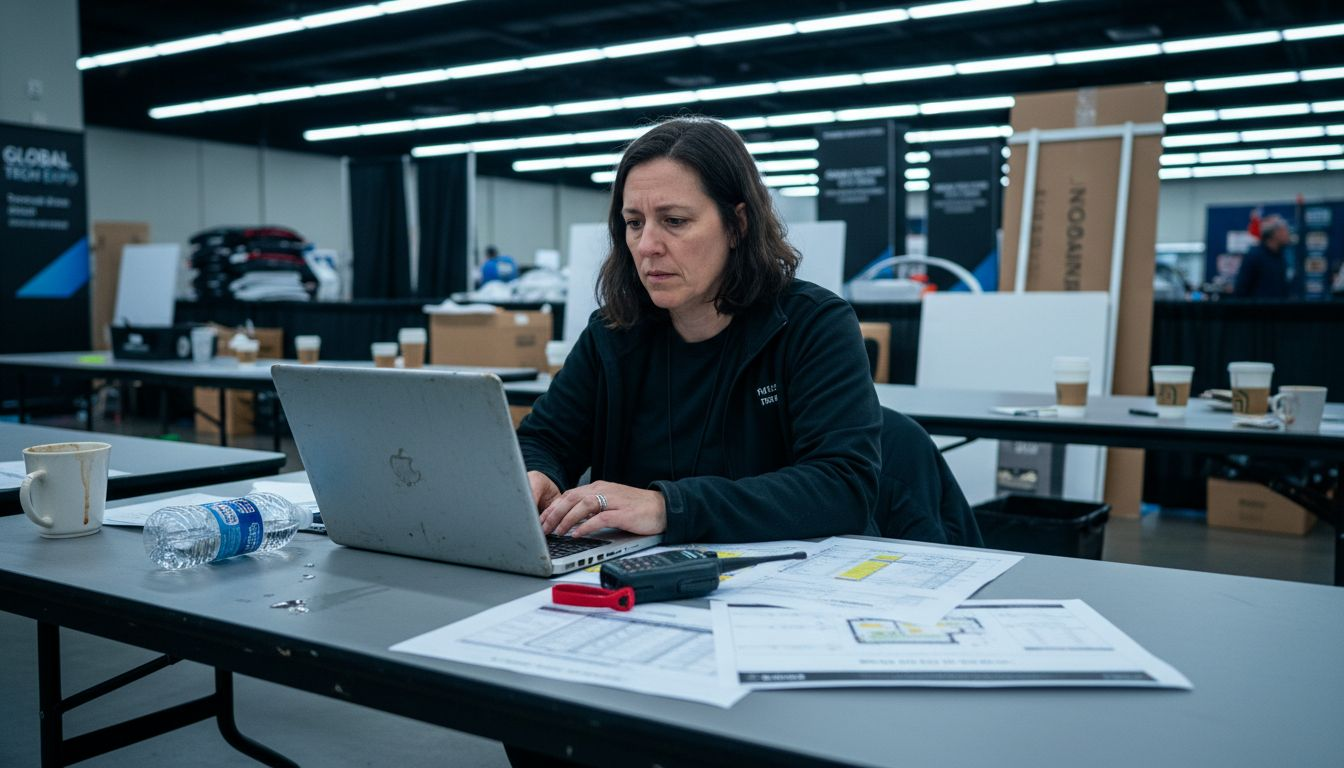
Pro tip: Develop a comprehensive event tracking system that allows real-time monitoring of budget, logistics, and performance metrics to enable rapid strategic adjustments.
Essential Skills and Required Qualifications
Successful trade show managers combine academic credentials with a robust set of professional competencies that enable them to navigate complex marketing landscapes. The role demands a sophisticated blend of technical knowledge, interpersonal skills, and strategic thinking.
Key qualifications for trade show managers typically include:
- Educational Background: Bachelor’s degree in business administration, marketing, event management, or related fields
- Professional Certification: Industry-recognized credentials like Certified Meeting Professional (CMP) or Certified Event Management Professional
- Technical Proficiencies: Advanced digital marketing tools, project management software, and event registration platforms
- Communication Skills: Exceptional verbal and written communication abilities across multiple stakeholder groups
- Analytical Capabilities: Strong data interpretation and strategic planning skills
Exhibition booth management strategies require managers to develop comprehensive skills that extend far beyond traditional event planning.
Trade show managers must function as strategic orchestrators, transforming complex logistical challenges into seamless, impactful business experiences.
Professional experience plays a critical role in developing the nuanced skills required for trade show management. Most employers seek candidates with 3-5 years of progressive experience in event planning, marketing coordination, or related fields. Successful managers demonstrate an exceptional ability to balance creative vision with precise operational execution.
Pro tip: Continuously invest in professional development by attending industry conferences, obtaining advanced certifications, and staying current with emerging digital marketing technologies.
Event Logistics and Project Management
Event logistics and project management represent the critical backbone of successful trade show execution, requiring a meticulous approach to planning, coordination, and strategic implementation. Trade show managers must orchestrate complex operational landscapes that demand precision, adaptability, and comprehensive strategic thinking.
Key components of effective event logistics include:
- Venue Selection and Preparation: Identifying and configuring optimal exhibition spaces
- Technical Infrastructure Management: Coordinating audio-visual equipment, internet connectivity, and electrical requirements
- Transportation and Shipping Logistics: Managing booth materials, equipment transportation, and on-site setup
- Vendor and Contractor Coordination: Establishing clear communication and performance expectations
- Risk Management and Contingency Planning: Developing flexible strategies to address potential operational challenges
Event management and logistics strategies require trade show managers to develop comprehensive systems that integrate multiple complex operational elements seamlessly.
Successful event logistics transform intricate operational challenges into smooth, professionally executed experiences that elevate brand perception and attendee engagement.
Project management skills are fundamental to navigating the multifaceted demands of trade show coordination. Managers must simultaneously track budgetary constraints, timeline dependencies, stakeholder expectations, and potential risk factors. This requires advanced organizational capabilities, strategic problem-solving, and the ability to make rapid, informed decisions under pressure.
Pro tip: Develop a centralized digital project management dashboard that allows real-time tracking of logistics, budget, and operational milestones to enhance coordination and transparency.
Risks, Budget Challenges, and Common Mistakes
Trade show management involves navigating a complex landscape of potential risks and financial challenges that can significantly impact event success. Successful managers must develop robust strategies to anticipate, mitigate, and proactively address potential operational and financial vulnerabilities.
Primary risks and budget challenges typically include:
- Financial Overruns: Unexpected expenses that exceed initial budget projections
- Vendor Reliability: Potential failures or performance issues with critical service providers
- Technology Disruptions: Last-minute technical infrastructure breakdowns
- Attendance Uncertainties: Fluctuating participant engagement and registration rates
- Regulatory Compliance: Navigating complex event safety and legal requirements
Trade show booth management strategies play a critical role in minimizing potential risks and maintaining financial predictability.
Effective risk management transforms potential challenges into strategic opportunities for enhanced event performance and organizational resilience.
Common mistakes often stem from inadequate planning, poor communication, and insufficient contingency preparation. Trade show managers must develop comprehensive risk mitigation frameworks that include detailed financial tracking, flexible operational protocols, and proactive stakeholder communication strategies.
The following table outlines common trade show risks and proactive mitigation strategies:
| Risk Category | Example Challenge | Recommended Mitigation |
|---|---|---|
| Financial Management | Budget overruns | Build 10% contingency fund |
| Vendor Reliability | Last-minute cancellations | Pre-qualify with backup vendors |
| Technical Disruptions | AV system failure | On-site tech support contract |
| Attendance Uncertainty | Low pre-event registration | Deploy targeted promotions |
| Compliance | Changing regulations | Regular legal compliance checks |
Pro tip: Create a comprehensive risk assessment matrix that assigns probability and potential impact ratings to each identified event risk, enabling targeted mitigation strategies and resource allocation.
Maximize Your Event Impact with Expert Trade Show Solutions
Trade show managers face the challenging task of aligning strategic event planning with flawless logistics and compelling brand presentation. When managing complex elements like booth design, vendor coordination, and budget control, having a reliable partner can make the difference between ordinary and outstanding event success. If you aim to transform your exhibition space into a dynamic platform that truly engages your audience and generates long-term brand recognition, you need tailored support that covers every detail from concept to on-site execution.
At Adam Expo Stand, we specialize in providing comprehensive exhibition stand design and management services built to address the exact pain points highlighted in the article. Our personalized, turnkey solutions include custom and modular booths, 3D design visualization, seamless logistics, and sustainable options designed to enhance your trade show presence. Explore how our exhibition stand solutions can ease the complexities of project management and elevate your marketing integration strategies. Don’t let event risks or budget challenges hold you back. Visit our site now to partner with experts ready to deliver exceptional results and maximize your brand visibility.
Frequently Asked Questions
What is the role of a trade show manager?
A trade show manager is responsible for planning and executing industry events, coordinating logistics, managing budgets, and developing marketing strategies to enhance brand representation and networking opportunities.
What skills are essential for a successful trade show manager?
Successful trade show managers should have strong project management abilities, excellent communication skills, analytical thinking, and experience with digital marketing tools and event logistics.
How can trade show managers mitigate risks during an event?
They can mitigate risks by developing contingency plans, approving backup vendors, ensuring technical support is available, and regularly monitoring compliance with safety regulations.
Why is budget management important in trade show management?
Effective budget management helps control expenses, ensures financial predictability, and maximizes the return on investment for participation in trade shows.
Recommended
- Success Exhibiting at IFEMA Madrid: The Ultimate Exhibitor Guide
- 7 Event Branding Ideas to Boost Trade Show Engagement
- Exhibition Booth Management: Boosting Event Success
- event management and logistics | Adam Expo Stand Solutions
- 7 Key Benefits of Light Accessories for Events – Mirror Balls
- Ultimate Event Photo Booth Setup Guide for Events