

Complete trade show checklist: Maximize booth impact & ROI
TL;DR:
- Successful trade shows depend on strategic planning from pre-show objectives to post-show follow-up.
- Engaging booth design and early logistics are crucial for maximizing visitor interaction and ROI.
- Continuous measurement, data analysis, and iterative improvements enhance long-term trade show performance.
Trade show success rarely happens by accident. With exhibitor budgets under constant scrutiny and custom stands yielding 3x more leads than standard shell schemes, the margin between a breakthrough show and a costly disappointment often comes down to preparation. Missing a single step, whether in logistics, design, or follow-up, can quietly erode your ROI before the first visitor even walks through the door. This checklist is built for marketing and event managers who need a structured, proven path from pre-show planning through post-show optimization, covering every phase where decisions directly affect lead quality, engagement, and measurable return.
Table of Contents
- Establishing your trade show goals and pre-show essentials
- Booth design and build: Best practices for engagement
- Show-day checklist: Making your booth operational and inviting
- Post-show actions: Measuring results and optimizing for next time
- What most trade show checklists miss: The real difference-maker
- Ready for your next great booth?
- Frequently asked questions
Key Takeaways
| Point | Details |
|---|---|
| Goal-driven planning | Setting clear objectives before design or investment multiplies your trade show ROI. |
| Smart booth design | Open, inviting layouts and integrated tech deliver higher engagement and more qualified leads. |
| Flawless show-day execution | A detailed, real-time checklist ensures your team captures every lead opportunity. |
| Robust post-show analysis | Measuring outcomes and iterating your approach from show to show drives ongoing growth and performance. |
Establishing your trade show goals and pre-show essentials
Let’s begin with the foundation. Without clear objectives and solid logistics, even the most impressive booth design won’t deliver the results you’re looking for. Every successful exhibition starts with a strategy, not a floor plan.
A goal-first strategy consistently outperforms a package-first approach when it comes to booth ROI and engagement. That means defining what success looks like before you select your booth format, location, or design style. Are you targeting qualified leads, product demos, partnership conversations, or brand awareness? Each objective drives different design and staffing decisions.
Once goals are locked in, pre-show logistics demand equal attention. Securing your trade show space early gives you access to better floor positions, often near entrances or anchor exhibitors, where foot traffic is naturally higher. Coordinate with show organizers well in advance to understand venue-specific requirements, especially for European events where regulations around electrical installations, fire safety, and structural load limits vary significantly by country and venue.
Pre-event outreach is another often-underestimated lever. Targeted email campaigns, LinkedIn outreach to registered attendees, and appointment-setting tools can dramatically increase the quality of traffic to your booth. You’re not waiting for visitors to find you. You’re engineering the visit.
Key pre-show essentials to check off:
- Define measurable goals: lead volume targets, demo counts, partnership meetings
- Book your space early: prioritize high-traffic floor positions
- Confirm venue requirements: electrical, structural, and safety regulations per country
- Launch pre-event outreach: email, social, and appointment scheduling
- Coordinate shipping and crating: factor in customs clearance for cross-border European events
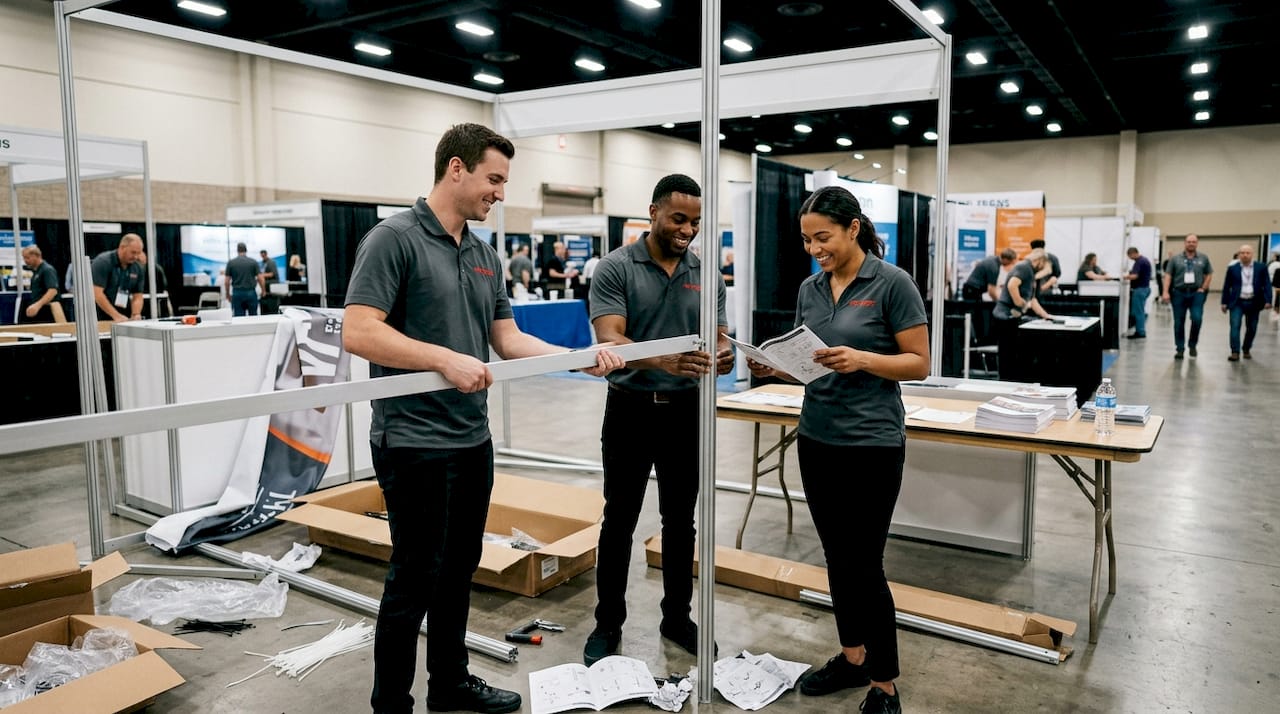
- Review booth setup essentials: confirm install timelines with your stand builder
“The exhibitors who consistently outperform their peers treat the trade show floor as a strategic launchpad, not just a physical presence. Every pre-show decision either amplifies or limits what happens on show day.”
Pro Tip: Start crating and shipping logistics at least six weeks before the event for international European shows. Customs delays and freight backlogs are common, and a late booth arrival can mean a rushed, compromised setup that undermines everything else you’ve planned.
Booth design and build: Best practices for engagement
Once goals are clear and logistics are lined up, it’s time to build the physical and psychological entry point to your brand. Your booth is a three-dimensional billboard, and every design decision either invites visitors in or turns them away.
Open, inviting layouts reduce entry barriers by 30% and are a proven driver of foot traffic conversion. Sight-line anchors placed at 1.5 to 2 meters in height draw attention from across the aisle, while open floor plans signal accessibility rather than pressure. Ergonomic tech integration, think touchscreens at standing height and demo stations with clear sightlines, keeps visitors engaged without creating bottlenecks.
Note that 28% of exhibitor spend now goes directly to booth design, reflecting how central the physical environment has become to lead generation strategy.
Booth design checklist:
- Open layout with no physical barriers at entry points
- Eye-level branding visible from at least 10 meters away
- Clear sight-lines to key demo or conversation zones
- Ergonomic tech integration (touchscreens, interactive displays)
- Concealed storage to maintain clean, professional staff and visitor zones
- Consistent brand color, typography, and messaging throughout
When choosing your booth format, the decision between custom, modular, and rental solutions has real financial and strategic implications:
| Booth type | Engagement potential | Upfront cost | Reusability | Best for |
|---|---|---|---|---|
| Custom | Highest (up to 3x more leads) | High | Low to medium | Major flagship shows |
| Modular | High | Medium | High (saves 24 to 60%) | Multi-event programs |
| Rental | Medium | Low | None (per event) | First-time exhibitors |
Explore modular booth solutions if you exhibit at multiple European events annually. The cost savings compound across shows, and reconfigurable systems let you adapt your layout to different floor plans without starting from scratch. For creative inspiration, reviewing booth design ideas tailored to European formats can spark approaches you may not have considered.
Pro Tip: Aluminum frame systems with tension fabric graphics dramatically reduce booth weight, cutting drayage costs and simplifying cross-border transport. For multi-country European tours, this can represent thousands of euros in savings per event cycle.
Show-day checklist: Making your booth operational and inviting
With your booth built and branded, focus shifts to what happens during show days. This is where true ROI is created, or lost.
Experiential stands deliver 41% higher engagement than static booths, which means your show-day operations need to actively create moments, not just display products. Structure your day in three phases: pre-opening, live show, and post-close.
Show-day operations sequence:
- Pre-opening (60 minutes before doors open): Full staff briefing covering goals, lead qualification criteria, and talking points. Complete tech check on all screens, lead scanning devices, and demo equipment. Set out all collateral, branded giveaways, and refreshments.
- Opening hour: Activate social media posts with booth location tags. Assign team rotation schedules to prevent clustering and ensure coverage at all times.
- Live show hours: Run interactive demos on a scheduled cycle to create crowd-building moments. Use lead scanning tools consistently for every meaningful conversation. Rotate staff every 90 to 120 minutes to maintain energy levels.
- Mid-show review: Quick team huddle to assess lead volume, identify what’s working, and adjust messaging or positioning if needed.
- Final hour: Prioritize any scheduled appointments. Capture social proof moments, photos, video testimonials, and visitor reactions.
- Post-close: Secure all equipment and collateral. Assign immediate follow-up tasks before staff leave the venue.
| Task | Timing | Owner |
|---|---|---|
| Staff briefing | 60 min before open | Event manager |
| Tech and AV check | 45 min before open | Tech lead |
| Lead scanner activation | 30 min before open | Sales lead |
| Demo cycle launch | Show open | Presenter |
| Team rotation | Every 90 min | Event manager |
| Post-close debrief | Within 30 min of close | Full team |
Review engagement strategies to build a show-day experience that keeps visitors at your booth longer. A well-structured modular booth workflow also ensures your team operates efficiently within the space, reducing confusion and maximizing every square meter.
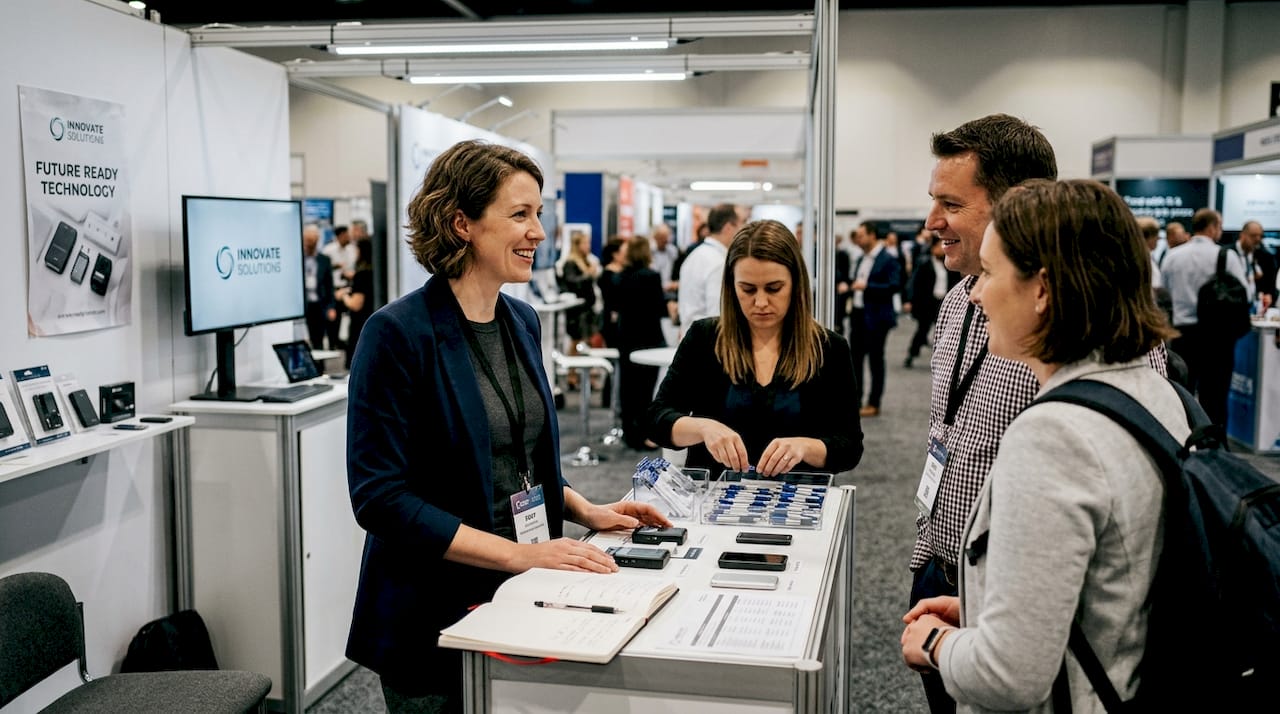
Pro Tip: Concealed storage is not just an aesthetic choice. It keeps staff zones tidy and public zones visually clean, which signals professionalism and reduces visual noise that can distract or overwhelm visitors.
Post-show actions: Measuring results and optimizing for next time
Even after the exhibit closes, your checklist isn’t finished. Post-show action is critical for capturing value that would otherwise evaporate within days.
The first 48 hours after a show are decisive. CPL tracking and ROI measurement reveal that cost-per-lead for custom and modular booths consistently outperforms shell schemes, with total ROI ranging from 150% to 600% when every phase is executed with discipline. That range is wide, and where you land depends almost entirely on what you do after the show ends.
Post-show action checklist:
- Enter all leads within 24 hours: Import scanned contacts into your CRM immediately and segment by priority level (hot, warm, cold)
- Assign follow-up ownership: Each lead should have a named owner and a follow-up deadline within the first week
- Calculate ROI: Track leads generated, revenue attributed, cost-per-lead, and engagement metrics against your pre-show goals
- Gather staff feedback: What messaging resonated? Which demo formats generated the most conversations? What would the team do differently?
- Collect visitor feedback: Post-show surveys or follow-up calls can surface insights about booth experience that aren’t visible from internal data alone
- Update your checklist: Document what worked, what didn’t, and what needs to change before the next event
- Review display workflow best practices to refine your setup and teardown process for greater efficiency next time
“Trade show ROI can reach 600% when every phase, from pre-show planning through post-show follow-up, is executed with intention and measured rigorously. The exhibitors who achieve this don’t leave it to chance.”
Pro Tip: Hold your team debrief within 24 hours of the show closing, while observations are still sharp and specific. Waiting a week means losing the granular detail that makes post-show optimization genuinely useful rather than vague and general.
What most trade show checklists miss: The real difference-maker
Having covered each phase in detail, here’s what most lists, and many experienced exhibitors, still overlook.
Checking every box is not the same as executing with strategic intent. Plenty of brands arrive with polished booths, trained staff, and printed collateral, yet walk away with mediocre results. The gap is almost always in three areas: audience experience, continuity, and measurement discipline.
Experiential, modular rental approaches consistently outperform static setups regardless of budget level, because they create moments visitors remember and share. A booth that generates a social post or a genuine conversation is worth more than one that simply looks impressive from the aisle.
Continuity is the second blind spot. Most exhibitors treat each show as a standalone event rather than a chapter in an ongoing brand narrative. The brands that build cumulative ROI across multiple shows treat their booth as a living platform, iterating design, messaging, and engagement tactics based on real data from each event.
The hardest lesson we’ve observed is this: the best checklist is not the most detailed one. It’s the one you adapt relentlessly based on what the data tells you after every show.
Ready for your next great booth?
Your checklist is only as good as your execution, and execution depends on having the right partner at every stage. At Adam Expo Stand, we work with marketing and event managers across Europe to design, build, and install exhibition stands that turn strategic objectives into measurable results. Whether you need a flagship custom build for a major European trade show or a flexible modular booth solution that travels efficiently across multiple events, we bring the expertise to make it happen. Explore our full range of European trade show booth solutions and see how the right partner transforms your checklist into a competitive advantage on the show floor.
Frequently asked questions
What is the most important step when planning a trade show booth?
Defining clear, measurable objectives before selecting your booth format or design is the single most critical step, because a goal-first strategy consistently drives stronger ROI and engagement than starting with a package or floor plan.
How can I raise engagement at my booth during a European trade show?
Open layouts reduce entry barriers by 30% and experiential stands deliver 41% higher engagement than static booths, making interactive design and structured demo cycles the most effective tools for driving visitor interaction.
Are custom or modular booths better for ROI in Europe?
Custom stands yield up to 3x more leads for high-priority flagship events, while modular systems save 24 to 60% in costs and deliver strong cumulative ROI across multi-event exhibition programs.
What post-show steps should I never skip?
Enter and prioritize all leads within 24 hours, calculate your cost-per-lead and ROI, and hold a team debrief while show-day observations are still specific and actionable.

