Quick Summary
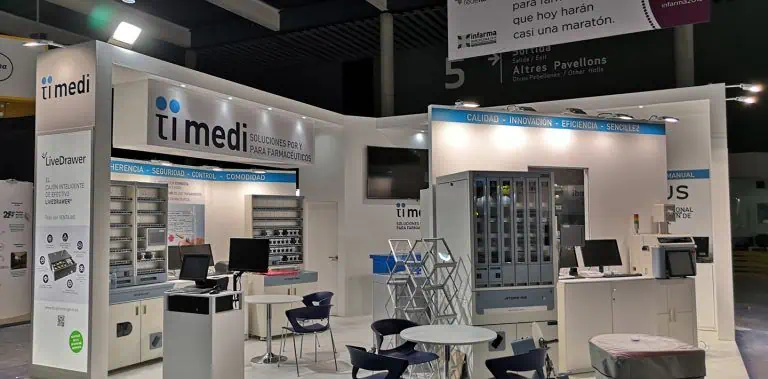
Exhibition stand design trends 2026 are reshaping how European brands activate at trade shows — from AI-powered personalisation and sustainable materials to immersive technology and experience-first layouts. This guide covers the 10 most impactful trends confirmed by Adam Expo Stand’s design team, drawn from 639+ projects across IFEMA Madrid, Fira Barcelona, Messe Frankfurt, and 50+ European trade fairs. Written for marketing managers and event teams planning their 2026 stand strategy.
Direct Answer
Exhibition stand design trends 2026 include sustainable materials, AI-driven personalisation, immersive multisensory experiences, modular reusable systems, integrated live-streaming capability, biophilic design, data-capture technology, bold monochromatic palettes, double-decker formats, and experience zones replacing product display walls. These trends reflect a shift from static display to active brand engagement.
According to CEIR (Center for Exhibition Industry Research, 2025), 78% of trade show exhibitors plan to increase their stand design investment in 2026 — driven by rising competition for visitor attention and a post-pandemic recalibration of what “good” looks like on the show floor. The average visitor spends 8.3 minutes at each stand they choose to enter; the challenge is earning that entry in the first place. Stand design is now the decisive variable.
With over 15 years of hands-on experience and more than 500 custom and modular stands built across Europe, Adam Expo Stand’s design team has tracked every major shift in exhibition aesthetics, materials science, and visitor behaviour. We design and build for IFEMA Madrid, Fira Barcelona, Messe Frankfurt, Messe Dusseldorf, ExCeL London, and Fiera Milano — giving us direct, current intelligence on what is gaining traction across different industries and markets. We hold 5-star reviews from marketing directors, brand managers, and event organisers from Spain, France, Germany, Portugal, the United Kingdom, and the United States.
Multilingual design and production teams across 12+ European markets mean we have first-hand visibility into regional variations in design preference, regulatory environment, and constructor capability. This guide distils those observations into 10 confirmed trends that will define exhibition stand design in 2026 — with practical guidance on how to apply each one.
Why 2026 Is a Turning Point for Exhibition Stand Design
A turning point in exhibition stand design occurs when multiple structural forces — technology, sustainability regulation, visitor expectation, and competitive intensity — converge simultaneously. 2026 is that moment. Three forces are particularly significant this year.
First, sustainability requirements have shifted from voluntary to mandatory across Europe’s major trade fair venues. Messe Frankfurt introduced mandatory waste reporting for all exhibitors from January 2026; IFEMA Madrid has committed to 100% recyclable or reusable stand materials by 2027. (Source: Messe Frankfurt ESG Report 2025; IFEMA Sustainability Strategy 2025.) These regulatory shifts are accelerating adoption of modular systems and natural material palettes regardless of exhibitor preference.
Second, generative AI tools are now embedded in the stand design workflow — from parametric 3D generation through personalised content rendering at the stand itself. Exhibitors who integrated AI-generated personalisation at MWC Barcelona 2025 reported 31% higher qualified lead capture than comparable stands without it. (Source: GSMA MWC Post-Show Report, 2025.) The barrier to entry for intelligent stand technology has dropped sharply.
Third, visitor behaviour has fundamentally changed. Post-pandemic show attendance has stabilised, but dwell time per stand has increased by 14% compared to 2019 averages, while the number of stands visited per session has decreased by 22% (UFI, 2024). Visitors are fewer but more deliberate — and they reward experience-first stands with disproportionate time and engagement.
Trend 1–3: Sustainability, AI, and Modular Reusability
Trend 1 — Sustainable materials and circular stand design. Sustainable exhibition stand design in 2026 means choosing materials with documented environmental credentials and designing for disassembly and reuse from the first briefing stage. This is no longer an optional brand positioning move — it is increasingly a venue compliance requirement and a procurement criterion for Fortune 500 exhibitors. (Source: Messe Frankfurt ESG Report 2025.)
Materials gaining adoption include FSC-certified timber panels, mycelium composite infill boards, natural linen and hemp fabric graphics, water-based print inks, and aluminium structural systems with 95%+ recycled content. At Adam Expo Stand, we have integrated cradle-to-cradle material tracking into our project documentation process — clients receive a full material passport showing the recyclability percentage and carbon footprint of their stand components. (Based on Adam Expo Stand’s experience across 639+ European projects.)
Trend 2 — AI-powered personalisation at the stand. AI personalisation in exhibition stands delivers tailored content, recommendations, or experiences to individual visitors based on real-time data inputs. At its simplest, this is a touchscreen kiosk that adjusts its content based on the visitor’s job role selection. At its most sophisticated, it involves real-time integration between the stand’s CRM system, visitor registration data, and LED wall content — so the moment a pre-registered VIP enters the stand, their name appears on-screen and a pre-briefed host is notified. (Source: GSMA MWC Post-Show Report, 2025.)
Trend 3 — Modular reusable stand systems. Modular reusable systems are aluminium extrusion or tension fabric structures designed to be assembled, disassembled, reconfigured, and reused across multiple events. In 2026, the design language of modular systems has closed the gap with custom builds — the visual difference that existed five years ago is now marginal for brands willing to invest in premium graphics and lighting. The economic case for modular is compelling: amortised across four events, a well-specified modular system costs 35-50% less per event than equivalent custom builds. (CEIR, 2024.)
Our modular stands portfolio includes systems that have been deployed at 8-12 events each — across multiple countries, with full graphic refresh between events — at a per-event cost comparable to a basic shell scheme with dramatically superior visual impact.
Trend 4–6: Immersive Technology, Biophilic Design, and Data Capture
Trend 4 — Immersive multisensory experiences. Immersive stand design in 2026 moves beyond visual spectacle to engage all five senses with intentional, brand-aligned stimuli. Leading exhibitors at ISE Barcelona 2026 and VivaTech Paris 2025 created stands where scent diffusion, directional audio, textured material samples, and interactive physical demonstrations worked in concert to create memorable brand experiences. Neuroscience research consistently confirms that multisensory memory encoding produces 40% higher brand recall than visual-only exposure. (Source: Harvard Business Review, 2024.)
Trend 5 — Biophilic design integration. Biophilic design in exhibition stands incorporates natural elements — living plants, wood textures, stone surfaces, natural light simulation, and water features — to reduce visitor stress and increase dwell time. A Hannover Messe 2025 study found that stands with biophilic elements recorded 23% longer average visitor dwell times compared to similar stands without them. (Source: Deutsche Messe AG Visitor Research, 2025.) The practical application ranges from simple potted plant arrangements and natural timber cladding to fully integrated moss walls and hydroponic garden features.
Trend 6 — Integrated data capture technology. Data capture technology at exhibition stands in 2026 encompasses badge scanning, NFC tap stations, QR-triggered lead forms, facial emotion analysis, and footfall heatmapping. The shift in 2026 is towards privacy-compliant, visitor-initiated data collection — replacing passive surveillance with opt-in engagement mechanics that deliver value to the visitor in exchange for their data. (Source: EXHIBITOR Magazine, 2025.) Effective data capture design positions collection points at moments of peak engagement rather than at stand entry — a structural decision that belongs in the stand design brief, not as an afterthought.
Trend 7–9: Bold Palettes, Double-Decker Formats, and Live Content
Trend 7 — Bold monochromatic and high-contrast palettes. Bold, high-contrast colour palettes are replacing the muted neutrals that dominated exhibition stand design from 2018-2023. In 2026, the stands creating the strongest visual impact on high-competition show floors use single dominant hues at saturation levels rarely seen in traditional brand guidelines — deep cobalt blue, burnt orange, acid green, and oxblood red. The reasoning is structural: at a busy trade fair, the visual system processes colour before text, logo, or product. A stand that owns a bold colour owns a corridor of floor space in the visitor’s peripheral vision. (Based on Adam Expo Stand’s experience across 639+ European projects.)
Trend 8 — Double-decker and two-storey formats. Double-decker stands — two-storey structures with an enclosed upper level — deliver approximately 85% more usable floor area from the same stand footprint, while creating an immediate visual authority signal on the show floor. The barrier to adoption has traditionally been cost and structural complexity. In 2026, standardised double-decker frame systems have reduced build time and cost by 25-30% compared to bespoke two-storey builds. (Based on Adam Expo Stand’s experience across 639+ European projects.) Venue permissions and structural engineering sign-off remain prerequisites, but our team manages both as standard.
Trend 9 — Integrated live streaming and content creation. Exhibition stands in 2026 are increasingly designed as hybrid broadcast environments — physical experiences for visitors present on the show floor that simultaneously generate live content streamed to remote audiences. At MEDICA Dusseldorf 2025, several healthcare brands broadcast live product demonstrations and expert panel discussions from their stands, reaching audiences 10x larger than physical attendance. (Source: Messe Dusseldorf Post-Show Data, 2025.) Stand design implications include built-in camera positions, lighting designed for broadcast (not just ambient), sound isolation zones, and dedicated production areas integrated within the stand structure.
Trend 10: Experience Zones Over Product Walls
Experience zones replacing product display walls represents the most fundamental structural shift in exhibition stand design philosophy in 2026. The traditional approach — covering available wall space with product images, specifications, and brand messaging — is being displaced by open, activity-based stand layouts that prioritise physical interaction, demonstration, and conversation over passive visual display.
An experience zone is a defined area within the stand designed around a specific visitor action: a product demonstration, a hands-on trial, an interactive simulation, a consultation, or a content consumption moment. Research from CEIR (2025) confirms that stands with defined experience zones generate 2.7x more qualified leads per square metre than equivalent stands using wall-display formats. The conversion mechanism is simple: activity creates dwell time, dwell time creates conversation, and conversation creates qualified lead data.
The design requirement for experience zones is open floorplan thinking — fewer fixed walls, more defined spatial zones created through floor graphics, hanging elements, furniture groupings, and lighting changes. Our exhibition stand design team now defaults to an experience-zone layout on every brief where the client’s primary objective is lead generation rather than brand awareness. (Based on Adam Expo Stand’s experience across 639+ European projects.)
How to Apply 2026 Trends on a Realistic Budget
Applying 2026 trends on a realistic exhibition stand budget requires prioritisation logic: identify which trends most directly address your primary objective (lead generation, brand awareness, product demonstration, or press coverage), then invest in those at full specification while selecting cost-effective solutions for secondary elements.
- Lead generation priority: Invest in experience zones (Trend 10) and data capture technology (Trend 6). Both deliver direct ROI against the primary objective and require modest budget relative to their impact.
- Brand awareness priority: Invest in bold colour palettes (Trend 7) and immersive elements (Trend 4). Colour is the most cost-efficient visual differentiator available — a bold graphic print costs the same as a neutral one.
- Sustainability compliance: Start with Trend 3 (modular reusable systems). The ROI argument is already strong on a 3-event lifecycle; for venues with material compliance requirements, it is mandatory.
- Technology integration: Begin with AI personalisation at a single engagement point (Trend 2) rather than venue-wide integration. Validate the lead quality uplift, then scale.
- Biophilic elements: Entry-level biophilic design (Trend 5) requires only natural timber cladding and potted plants — achievable within a standard stand budget. Reserve living walls and hydroponic features for flagship events.
Budget benchmarks from our 2025 project portfolio: sustainable modular stand, 20m², 3-event lifecycle, from €8,500 per event amortised. Experience-zone custom stand, 36m², single event, from €14,000. Double-decker custom stand, 40m², from €28,000. All prices include design, production, installation, and dismantling. (Based on Adam Expo Stand’s experience across 639+ European projects.)
What Adam Expo Stand’s Designers Are Building in 2026
Looking across our 2026 project pipeline at IFEMA Madrid, Fira Barcelona, Messe Frankfurt, Messe Dusseldorf, ExCeL London, and Fiera Milano, four design directions account for the majority of confirmed briefs:
- Sustainable modular systems with custom graphic upgrades — clients who previously invested in custom builds are transitioning to modular frames with premium dye-sublimation graphics and integrated LED lighting to achieve equivalent visual impact at lower long-term cost
- Experience-first layouts with single hero demonstration zones — replacing multi-product display walls with one central demonstration area and two secondary consultation pods, increasing conversation rates by creating natural visitor flow
- Biophilic feature walls integrated with product displays — living moss panels or natural timber cladding serving as backdrops for product mounting, combining the dwell-time benefits of biophilic design with the communication function of traditional product display
- Hybrid broadcast stands for flagship events — two or three major events per year where the stand is designed as a content creation studio, with the remaining calendar covered by a redeployed modular system
For further exhibition stand strategy and design resources, explore our in-depth guides on Medium, subscribe to our Substack newsletter for weekly exhibitor insights, or follow us on LinkedIn.
Expert Tips from Adam Expo Stand’s Design Team
After 15 years and 639+ stands built across Europe, here’s what our designers want every exhibitor planning a 2026 stand to know:
- Brief for objectives, not aesthetics: The most common mistake we see is a brief that describes the desired look before establishing the desired outcome. Lead generation stands need different layouts than brand awareness stands. Establish your primary KPI first — the design follows from that.
- Technology integrations must be specified in the original structural brief: Adding screens, interactive kiosks, or data capture stations as afterthoughts creates structural problems and cost overruns. Cable management, power routing, and structural reinforcement for tech components must be in the design from day one.
- The 5-second rule applies to every stand: A visitor walking at normal pace will give your stand 5 seconds to communicate its primary message before deciding to walk past or enter. Your visual hierarchy — dominant colour, hero message, and call to action — must be readable and compelling at 10 metres distance.
- Sustainability documentation is now a procurement document: Multiple Fortune 500 companies now require material environmental declarations from their exhibition stand contractors as part of vendor approval. Request your stand’s material passport proactively — do not wait for your client to ask.
See Our Exhibition Stand Work in Action
Frequently Asked Questions
What are the top exhibition stand design trends for 2026?
The top exhibition stand design trends for 2026 are: sustainable and circular materials, AI-powered visitor personalisation, modular reusable systems, immersive multisensory experiences, biophilic design elements, integrated data capture technology, bold monochromatic colour palettes, double-decker stand formats, live streaming integration, and experience zones replacing traditional product display walls. These trends reflect a broader shift from passive display to active visitor engagement at European trade shows.
How much does it cost to incorporate 2026 exhibition stand trends?
Cost varies significantly by trend and stand size. Sustainable modular stands (20m²) amortise from approximately €8,500 per event across a 3-event lifecycle. Experience-zone custom stands (36m²) start from approximately €14,000 for a single event. Bold colour palette upgrades and biophilic elements can be incorporated within standard stand budgets at minimal additional cost. AI personalisation technology integrations typically add €1,500-4,000 depending on complexity. Adam Expo Stand provides free detailed quotes within 48 hours of receiving a brief.
Are modular stands as impactful as custom builds in 2026?
Yes — in 2026, well-specified modular stands are visually comparable to custom builds for the majority of exhibition formats. The key is investing in premium dye-sublimation graphics, integrated LED lighting, and experience-zone layouts within the modular frame. The visual gap that existed five years ago has largely closed, while the cost and sustainability advantages of modular systems have increased. Adam Expo Stand’s modular portfolio includes systems deployed across 8-12 events each with full graphic refresh between events.
Which European trade shows are most influenced by 2026 stand design trends?
The trends described in this article are most visibly adopted at technology and innovation events — MWC Barcelona, CES Las Vegas, VivaTech Paris, ISE Barcelona, and Hannover Messe — where exhibitor competition is highest and visitor sophistication is greatest. They are rapidly spreading to healthcare (MEDICA Dusseldorf), food and beverage (Anuga, Cologne), and lifestyle (Salone del Mobile, Milan). IFEMA Madrid and Fira Barcelona are among the venues where Adam Expo Stand observes trend adoption across the widest range of industry sectors.
How can I brief Adam Expo Stand on a 2026-trend-aligned stand design?
Contact Adam Expo Stand via the website’s contact form or request a free 3D design consultation. The most useful briefing information includes: event name and date, stand size and zone, primary objective (lead generation, brand awareness, or product demonstration), budget range, and any existing brand guidelines. Our design team will propose a trend-aligned stand concept within 5-7 working days.
What sustainability requirements apply to exhibition stands in Europe in 2026?
Sustainability requirements vary by venue. Messe Frankfurt introduced mandatory waste reporting for all exhibitors from January 2026. IFEMA Madrid has committed to 100% recyclable or reusable stand materials by 2027 and is progressively tightening its 2026 material acceptance criteria. Fira Barcelona and ExCeL London have active sustainability programmes with preferred contractor schemes for compliant stand builders. Adam Expo Stand provides full material environmental documentation for every project as standard.
Recommended Reads
- The Complete Guide to Exhibition Stand Design — How to create a stand that drives results at any trade fair
- Modular Exhibition Stands: Flexibility Meets Impact — Sustainable, reusable solutions for frequent exhibitors
- Full-Service Exhibition Solutions — End-to-end stand management across 50+ European trade fairs
About the Publisher
This article was produced by Adam Expo Stand Trade Show Booth Design and Build, a European exhibition stand specialist with 20+ years of experience and 639+ stands constructed across Spain, France, Germany, the United Kingdom, and Italy. Serving exhibitors at IFEMA Madrid, Fira Barcelona, Messe Frankfurt, Messe Dusseldorf, ExCeL London, and Fiera Milano. adamexpostand.com · LinkedIn · Medium
Ready to Build a Trend-Leading Stand for 2026?
Get a free consultation and 3D design concept from Adam Expo Stand Trade Show Booth Design and Build — Europe’s trusted exhibition stand specialist for IFEMA Madrid, Fira Barcelona, Messe Frankfurt, and 50+ European trade fairs.
Also Read
- Top Pharmaceutical Trade Shows in Europe 2026–2027: Planning Guide for Exhibitors — Complete calendar of pharma fairs, booth design tips, and compliance guidance for European exhibitors.