

Master the event booth budgeting process for trade shows

Budgeting for trade show booths remains one of the most challenging aspects of event preparation for European marketing teams. Without a structured approach, costs spiral quickly, unexpected expenses emerge during setup, and your brand impact suffers despite significant investment. This guide walks you through a comprehensive budgeting process that controls costs while delivering innovative booth designs that capture attention and drive results at every event.
Table of Contents
- Key takeaways
- Understanding the event booth budgeting process essentials
- Preparing your budget: key steps and tools
- Executing and managing your booth budget during the event planning
- Reviewing outcomes and optimizing for future budgets
- Enhance your event booth budgeting with Adam Expo Stand Solutions
- FAQ
Key Takeaways
| Point | Details |
|---|---|
| Contingency budgeting | Allocate 10 to 15 percent of the total budget for contingencies, with 20 percent for first time exhibitors, to absorb scope changes and rush costs. |
| Logistics cost awareness | Logistics costs such as shipping and installation are major budget line items often underestimated by 30 to 40 percent. |
| Checklists and vendor communications | Structured checklists capture every expense category and improve accuracy to reduce financial surprises. |
| Balance design and cost efficiency | Prioritize innovative booth design while maintaining cost efficiency through modular systems and scalable options. |
Understanding the event booth budgeting process essentials
Successful efficient construction event booth budgeting requires detailed financial planning and knowledge of cost drivers that impact your final spend. Before diving into spreadsheets and vendor quotes, you need to understand the primary components that make up your total booth investment. These include design fees, material costs, fabrication expenses, logistics and shipping, installation labor, on-site services, staffing, and marketing collateral.
Many marketing managers underestimate logistics costs by 30 to 40 percent, treating shipping and installation as afterthoughts rather than major budget line items. This miscalculation leads to scrambling for additional funds weeks before the event or accepting subpar solutions that compromise your brand presentation. Design costs also vary dramatically based on complexity, with custom builds requiring significantly more investment than modular systems that offer flexibility across multiple events.
Contingency funds serve as your financial safety net when scope changes occur or unexpected venue requirements emerge. Industry veterans typically allocate 10 to 15 percent of the total budget for contingencies, though first-time exhibitors at unfamiliar venues should consider 20 percent. This buffer absorbs costs from design revisions, expedited shipping when timelines compress, or additional electrical and internet connections discovered during venue walkthroughs.
Common budgeting pitfalls include:
- Forgetting permit and regulatory compliance costs specific to European venues
- Underestimating storage fees for booth materials between events
- Ignoring insurance requirements for high-value custom installations
- Overlooking staff travel, accommodation, and meal expenses during setup
- Neglecting post-event dismantle, packing, and return shipping costs
Pro Tip: Start your budgeting process at least four to six months before the event to secure better vendor rates and avoid rush fees that can inflate costs by 25 to 50 percent.
Flexibility in your budget structure allows you to reallocate funds when priorities shift. You might discover that investing more in sustainable materials resonates with your target audience, requiring adjustments in other areas. The key is building a budget framework that supports strategic decisions rather than constraining your creative options before you explore what’s possible.
Preparing your budget: key steps and tools
Creating a comprehensive budget starts with using checklists and structured vendor communications that improve accuracy and reduce financial surprises. Your budgeting checklist should capture every potential expense category, no matter how small, because minor costs accumulate quickly and can represent 15 to 20 percent of your total spend.
Begin with these essential budget categories:
- Design consultation and 3D rendering services
- Materials and fabrication for booth structure
- Graphics, printing, and branding elements
- Lighting systems and electrical installations
- Furniture, displays, and product showcases
- Audio-visual equipment and technology integration
- Shipping to venue and return logistics
- Installation labor and on-site supervision
- Venue fees including space rental and services
- Permits, insurance, and regulatory compliance
- Staff uniforms, training, and scheduling
- Lead capture technology and software
- Marketing materials and promotional items
- Storage between events
- Contingency reserve
Estimating each category accurately requires detailed vendor conversations and multiple quotes. For booth construction, request itemized proposals that break down materials, labor, and timeline separately. This transparency helps you identify where costs concentrate and where you might find savings through material substitutions or design simplifications. Working with experienced trade show booth builders in Europe provides local market knowledge that improves estimate accuracy.
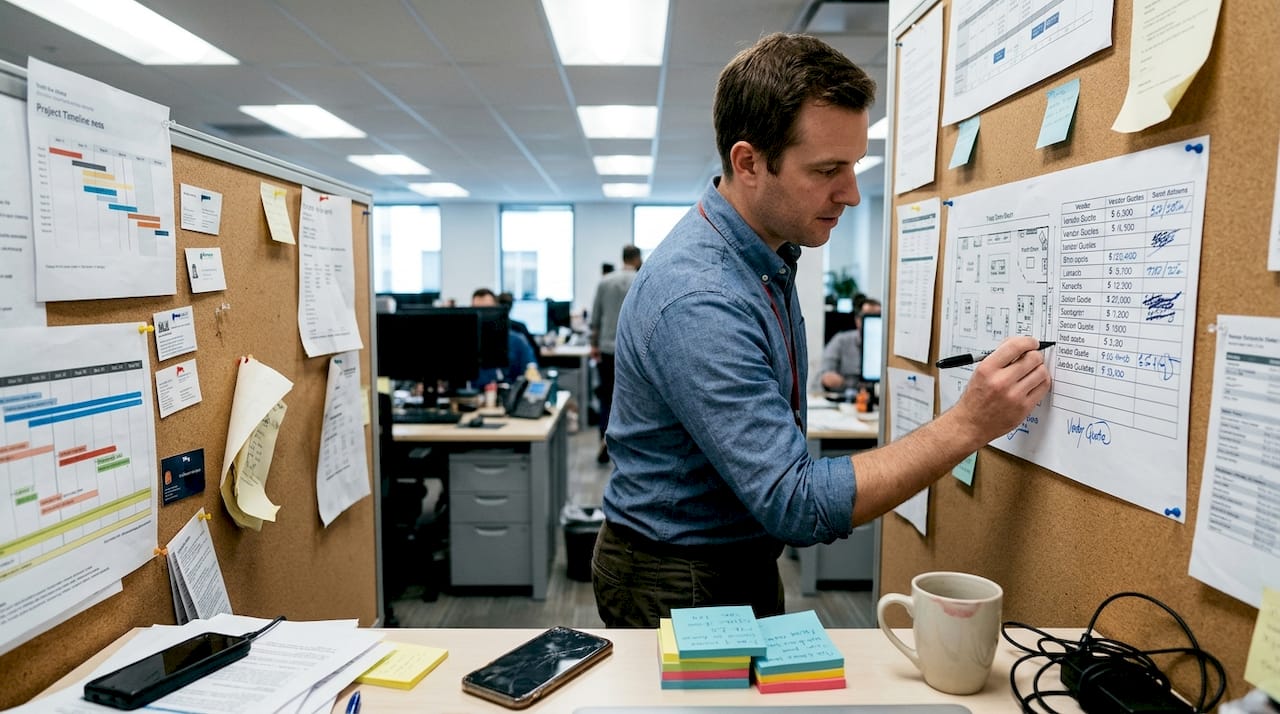
| Cost Category | Estimation Method | Typical Range (% of Total) |
|---|---|---|
| Design & Build | Vendor quotes, past projects | 35-45% |
| Logistics & Shipping | Carrier quotes, venue specs | 15-20% |
| Installation Labor | Union rates, hours estimate | 10-15% |
| Graphics & Branding | Print vendor quotes | 8-12% |
| Technology & AV | Equipment rental quotes | 5-10% |
| Contingency | Budget percentage allocation | 10-15% |
Cost tracking requires discipline throughout the planning and execution phases. Create a master spreadsheet with columns for budgeted amounts, actual quotes received, committed expenses, and final costs. Update this document weekly during the planning phase and daily during the week leading up to the event. This visibility prevents overspending in one category that forces cuts in others.
Vendor selection and negotiation significantly impact your bottom line. Request proposals from at least three qualified vendors for major categories like booth construction and logistics. Compare not just price but also experience with your venue, timeline flexibility, and problem-solving capabilities. The lowest bid often comes with hidden costs or quality compromises that create bigger problems later.
Pro Tip: Negotiate package deals with vendors who can provide multiple services like design, fabrication, and installation, often securing 10 to 15 percent savings compared to hiring separate specialists.
Establish clear payment terms and milestones tied to deliverables. Typical structures include 30 percent deposit upon contract signing, 40 percent upon design approval, 20 percent upon delivery to venue, and 10 percent after successful installation. This protects your cash flow while ensuring vendor commitment to quality and deadlines.
Executing and managing your booth budget during the event planning
Budget control during execution requires constant monitoring and proactive communication with all stakeholders. Managing logistics and installation efficiently plays a pivotal role in adhering to your budget while maintaining quality standards. The design and fabrication phase presents the first major test of your budget discipline as creative ideas can quickly exceed financial constraints.
Implement these management steps during execution:
- Establish approval thresholds where any expense over a specific amount requires written authorization from budget owners before commitment.
- Conduct weekly budget review meetings with your project team to track spending against projections and identify emerging cost concerns early.
- Maintain direct communication channels with your booth builder to address scope changes immediately and understand cost implications before proceeding.
- Document all change orders in writing with clear cost breakdowns and updated timeline impacts to prevent disputes later.
- Coordinate with venue management at least three weeks before the event to confirm all service orders and avoid last-minute additions at premium rates.
- Schedule regular check-ins with logistics providers to track shipping progress and address potential delays that could trigger expedited shipping fees.
- Review staffing schedules and travel arrangements two weeks out to lock in rates and prevent expensive last-minute bookings.
The on-site booth build and dismantle phase often generates unexpected costs when reality doesn’t match venue specifications or design assumptions. Having your project manager present during installation allows real-time problem solving that controls costs. They can authorize necessary changes while finding creative solutions that avoid expensive venue service charges.
Common execution phase budget threats include:
- Design revisions after fabrication begins, requiring material reorders
- Shipping delays necessitating expedited freight at double or triple standard rates
- Venue electrical or internet capacity insufficient for your booth requirements
- Additional labor hours when installation proves more complex than estimated
- Last-minute graphics changes requiring rush printing and shipping
- Unforeseen venue rules requiring booth modifications for compliance
Pro Tip: Keep 5 percent of your contingency fund untouched until installation day to handle inevitable on-site surprises without derailing your entire budget.
Your booth assembly process should follow a detailed timeline that builds in buffer time for complications. Rushing installation to meet tight deadlines often requires additional labor at overtime rates that can inflate costs by 50 to 100 percent. Plan for installation to complete at least four hours before the show floor opens, giving you time to address issues calmly and cost effectively.
Maintain a running expense log during the event itself, capturing every purchase from additional marketing materials to client entertainment. These small expenses accumulate quickly and often get forgotten in post-event accounting, creating confusion when actual costs exceed projections. Real-time tracking provides accurate data for your post-event analysis and future budget planning.
Reviewing outcomes and optimizing for future budgets
Post-event financial analysis transforms your budgeting process from guesswork to strategic planning based on real performance data. Post-event financial review identifies overspending areas and guides smarter future booth budgeting that improves ROI with each event. Schedule your budget debrief within two weeks of the event while details remain fresh and invoices are still arriving.
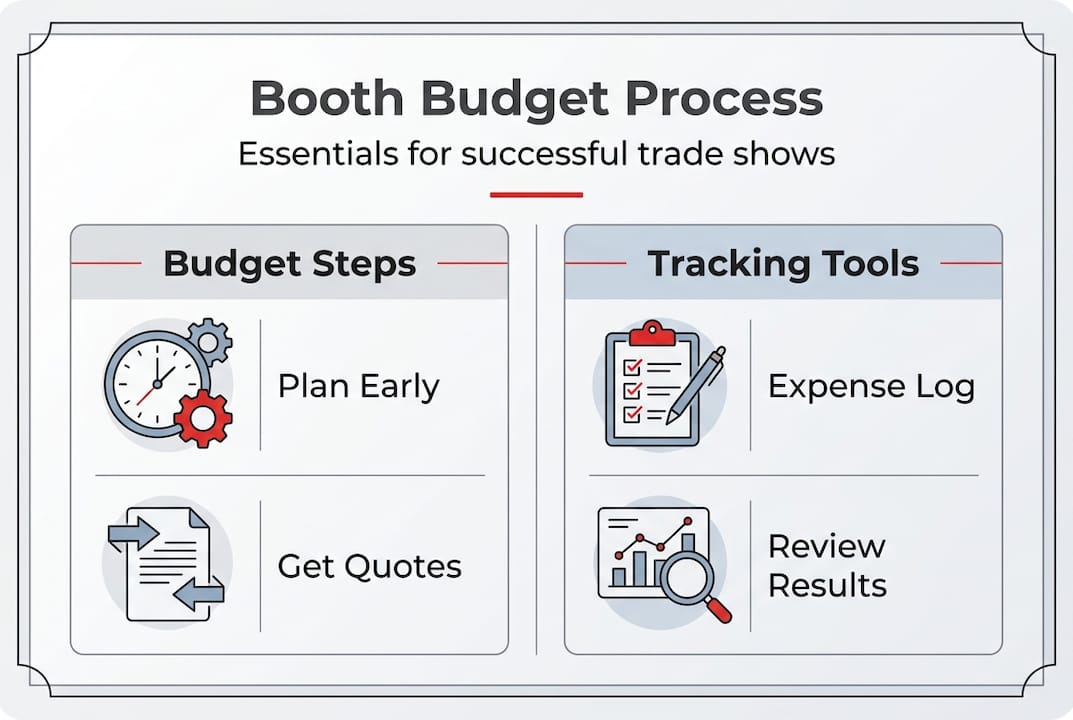
Create a comprehensive budget versus actual comparison table:
| Category | Budgeted | Actual | Variance | Variance % |
|---|---|---|---|---|
| Design & Build | €25,000 | €26,500 | +€1,500 | +6% |
| Logistics | €8,000 | €9,800 | +€1,800 | +22.5% |
| Installation | €5,000 | €5,200 | +€200 | +4% |
| Graphics | €4,000 | €3,800 | -€200 | -5% |
| Technology | €3,000 | €3,500 | +€500 | +16.7% |
| Miscellaneous | €2,000 | €2,900 | +€900 | +45% |
| Contingency | €5,000 | €1,200 | -€3,800 | -76% |
| Total | €52,000 | €52,900 | +€900 | +1.7% |
Analyze variances to understand root causes rather than simply noting overruns. Logistics costs often exceed budgets due to underestimating shipping volumes, fragile item handling requirements, or venue-specific delivery restrictions. Design costs creep up when initial concepts require more complex fabrication than anticipated or when late changes necessitate rush production.
Common variance causes include:
- Shipping delays forcing expedited freight to meet event deadlines
- Scope expansion as stakeholders request additional features or larger booth footprint
- Venue service charges higher than estimated due to outdated rate sheets
- Design complexity requiring specialized fabrication techniques not in original quotes
- Last-minute staffing changes increasing travel and accommodation expenses
- Technology failures requiring emergency equipment rentals
Conduct a structured debrief with your entire event team, including booth builders, logistics coordinators, and on-site managers. Ask specific questions about what drove costs higher or where savings emerged. Your booth builder might reveal that a different material choice could have saved 15 percent without compromising appearance. Your logistics partner might suggest alternative shipping methods that reduce costs for future events.
Document lessons learned in a format that informs next year’s budgeting process. Note which vendors delivered exceptional value, where you overspent unnecessarily, and what cost assumptions proved inaccurate. This institutional knowledge prevents repeating expensive mistakes and helps you negotiate better rates based on demonstrated experience.
Calculate your cost per lead and cost per conversion to evaluate whether your booth investment delivered appropriate returns. If you spent €50,000 and generated 500 qualified leads, your cost per lead was €100. Compare this to your customer acquisition costs through other channels to assess trade show effectiveness. This analysis might reveal that increasing your booth budget actually improves efficiency by attracting more high-quality prospects.
Optimization opportunities often emerge from reviewing your expense breakdown. You might discover that investing in a modular booth system reduces long-term costs despite higher upfront investment because you reuse components across multiple events. Or you might find that partnering with a single full-service provider simplifies coordination and reduces total costs compared to managing multiple specialized vendors.
Enhance your event booth budgeting with Adam Expo Stand Solutions
Mastering the budgeting process requires expertise, experience, and local market knowledge that comes from managing hundreds of successful trade show installations. Adam Expo Stand specializes in helping European companies create cost-effective, innovative booth designs that maximize brand impact while respecting budget realities. Their comprehensive approach integrates design, fabrication, logistics, and installation into a seamless process that eliminates coordination headaches and hidden costs.
Working with a specialized European provider gives you access to established vendor relationships, venue-specific knowledge, and sustainable material options that reduce costs while enhancing your environmental credentials. Their team understands the unique requirements of major European trade shows and can navigate complex venue regulations that often surprise first-time exhibitors. From initial concept through post-event analysis, they provide the strategic partnership that transforms budgeting from a constraint into a competitive advantage.
FAQ
What is the best way to estimate booth design costs accurately?
Request detailed itemized quotes from at least three qualified booth builders that break down materials, labor, design fees, and timeline separately. Include contingency funds of 10 to 15 percent for revisions and unexpected complexity. Review past project costs if available to benchmark estimates against real-world results.
How can I control unexpected expenses during event booth setup?
Maintain a dedicated contingency fund and establish clear approval processes for any additional spending during installation. Communicate daily with suppliers, logistics teams, and venue management to anticipate issues before they become expensive emergencies. Having your project manager on-site during setup enables real-time problem solving that prevents cost overruns.
What tools or templates help in tracking event booth budgets?
Use detailed spreadsheets with categories for budgeted amounts, vendor quotes, committed expenses, and actual costs, updating weekly during planning and daily during event week. Consider specialized event management software that integrates budgeting with project timelines and vendor communications. Many essential trade show budgeting tools provide templates specifically designed for exhibition planning.
When should I start the budgeting process for a trade show?
Begin budgeting four to six months before the event to secure better vendor rates and avoid rush fees that inflate costs by 25 to 50 percent. Early planning also provides time for multiple quote rounds and design iterations that optimize spending. Last-minute planning almost always results in higher costs and compromised quality.
How much should I allocate for logistics and shipping costs?
Budget 15 to 20 percent of your total booth investment for logistics including shipping to venue, on-site handling, and return freight. Obtain detailed quotes that account for booth size, weight, fragility, and venue-specific delivery requirements. International shipments or island venues may require higher allocations due to customs and limited carrier options.

