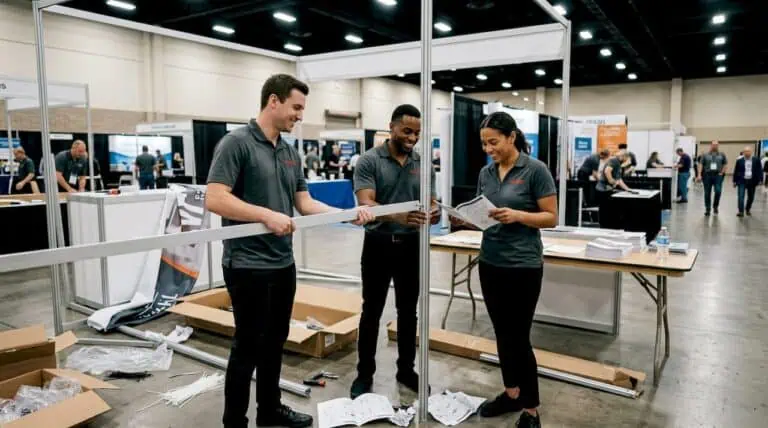
A GENERA exhibition stand should help visitors understand an energy solution, inspect the relevant equipment and discuss a real project. Start with the product’s operating mode, the people you need to meet and the confirmed stand package. Build the layout around demonstrations, technical conversations, storage and delivery, then check the organiser’s current requirements before approving production.
GENERA exhibition stand planning for 2026
GENERA 2026 takes place on 24–26 November at IFEMA Madrid, with professional access from 09:30 to 18:30 in Halls 9 and 10. Use the confirmed allocation to brief your contractor; the fair’s overall hall list does not identify your plot’s dimensions, open sides or service positions.
The organiser presents GENERA and MATELEC within the International Electrification and Decarbonisation Week, with a Global Forum and Innovation Gallery. Check the relevant participation process if you want to propose a product or attend programme sessions. Exhibiting does not automatically secure a speaking slot or inclusion in a selected showcase.
Translate the broader energy theme into a specific visitor task. An installer might need to compare connections and maintenance access, while a developer may want to discuss a project’s scale and delivery. A single slogan cannot answer both. Decide which conversation your stand should make easiest and provide a clear next step for the others.
Choose what visitors can inspect or demonstrate
Prepare a product schedule before commissioning the display. Record dimensions, weight, packed size, handling needs and whether each exhibit will be operational, a disconnected sample, a cutaway or a digital representation. Give this information to the contractor and the person responsible for the demonstration. Do not let a rendering imply an operating installation that has not been assessed.
| Exhibit | Useful visitor task | Briefing decision |
|---|---|---|
| Photovoltaic modules and mounting systems | Compare components and inspect a representative connection | Sample size, support, viewing position and controlled handling |
| Inverters and electrical equipment | Understand interfaces, installation and maintenance access | Static or approved operating mode, services and demonstration owner |
| Energy storage | Discuss a system configuration and application | Actual unit, inert sample or model; handling and venue review |
| Heat pumps and thermal systems | See the system arrangement and relevant components | Representative unit, clearance and any operating services |
| Monitoring and energy software | Follow a defined workflow or interpret a dashboard | Prepared demonstration data, screen position and offline fallback |
| Engineering, finance or project services | Explore a project brief with a specialist | Meeting capacity, useful documents and responsibility for follow-up |
An operational exhibit is useful when it answers a meaningful question and can be delivered within the approved conditions. A labelled static sample may be more appropriate for another purpose. Explain what the visitor is seeing rather than treating every disconnected unit as a working demonstration. Refer equipment-specific operating arrangements to competent staff and the organiser.
Make the energy demonstration understandable
Write a short demonstration sequence: the visitor’s problem, the feature being shown, the evidence available and the next question. Test it with someone who has not prepared the presentation. If the explanation depends on an unseen component, add a diagram or a clearly identified cutaway rather than more unstructured text.
For software, use prepared fictional or appropriately authorised demonstration data. Keep confidential customer records out of public screens. Rehearse the same task on the device and connection planned for the stand, and provide a local presentation or recorded walkthrough if the live service is unavailable. Clearly identify a recording when using it.
Assign a demonstrator and a colleague who can continue the technical discussion. Leave space for people watching without blocking the entrance or the neighbouring aisle. Plan where spare samples, packaging and staff possessions will go so they do not displace the products during opening hours.
Fit the stand format to the work
The current GENERA exhibitor guide distinguishes supplied packages and space-only participation, publishes tariffs and requires approval of free-design projects. Its design and rigging submission deadline is 18 October 2026. Confirm your booking and current instructions before committing to changes.
A supplied package can work when the products fit its usable space and permitted display arrangements. A modular design can support a planned series of events when its components, transport and storage suit those events. A bespoke structure can address a particular display or meeting need. Compare the actual proposals against the same product schedule rather than choosing solely by stand area or exhibition frequency.
For a heavy exhibit, ask the designer to show the support and handling arrangement for review. For a screen, ask to see the viewing position and service route. For meeting furniture, check that people can enter, sit and leave comfortably with the exhibits installed. These decisions should appear in the approved plan, not remain assumptions in a visual concept.
Our modular and custom stand comparison explains questions to use when assessing those options. The preferred format is the one that satisfies the confirmed brief and delivery conditions.
Compare complete GENERA exhibition stand costs
Keep the organiser’s participation charges separate from the contractor’s construction proposal. Build a budget with named lines for design, display supports, graphics, lighting, furniture, equipment handling, transport, installation, dismantling and return or storage. Add the services required by the actual exhibits and identify who places each order.
Ask suppliers to mark inclusions, exclusions, quantities and assumptions. Check whether the proposed service capacity matches the equipment schedule and whether handling covers both arrival and departure. A low construction subtotal can omit significant work; an expensive proposal is not automatically more complete. Request clarification where two offers cover different scopes.
For reuse, specify the next likely plot and the parts intended to travel. Include inspection, refurbishment, graphics replacement and storage in the comparison. Document the material or reuse claim at component level instead of describing an entire stand as environmentally beneficial without evidence. See our exhibition budget guide for a broader cost structure.
Coordinate build, goods entry and collection
The guide schedules free-design build for 18–21 November, goods entry for 22–23 November and dismantling for 27–28 November. These are separate stages. Confirm the applicable handover, vehicle access and collection arrangements for your booking rather than using public opening as an installation window.
Create one delivery list with a contact, packed dimensions, handling responsibility and final destination for each item. Agree when the installed stand can accept the equipment and who checks it on arrival. Retain the packaging needed for the return journey and arrange its storage. Product delivery should not depend on finding an unassigned person to receive it.
At handover, inspect the agreed exhibit locations, graphics, lighting, furniture and ordered services. Rehearse the demonstration and record outstanding items with an owner. Separate changes essential to operation from optional additions, then confirm how any approved change affects cost and delivery.
Turn useful conversations into a next action
Brief the team on the questions that establish a relevant enquiry: application, project stage, product interest, decision process and requested next step. Capture only the information needed for that purpose using an appropriate process. A badge scan or a busy demonstration does not by itself establish a qualified opportunity.
Assign follow-up to a named colleague and agree the information to send. Review enquiries, meetings, proposals and resulting business separately after the event. This gives the next stand brief a firmer basis than a promised return or an assumed improvement over another marketing channel.
Questions about exhibiting at GENERA
Must every energy product operate on the stand?
No. Choose the mode that explains the product and can meet the approved conditions. Clearly distinguish operational equipment, samples, cutaways and simulations.
Can a small stand support technical meetings?
It can if the actual equipment, circulation and furniture fit. Draw the occupied layout and test the intended conversation before approving the design.
How should I request a stand proposal?
Send Adam Expo Stand the confirmed plot, package, exhibit schedule, demonstration requirements and available budget through our contact page. Identify any submission or approval already outstanding so the proposed scope reflects the current project.
Follow our exhibition planning guides
Choose Adam Expo Stand as a preferred source to help you find our exhibition guides and updates on Google.
Add as a preferred source on GoogleGoogle may ask you to sign in and confirm your choice.