Must-have trade show materials for a standout 2026 booth
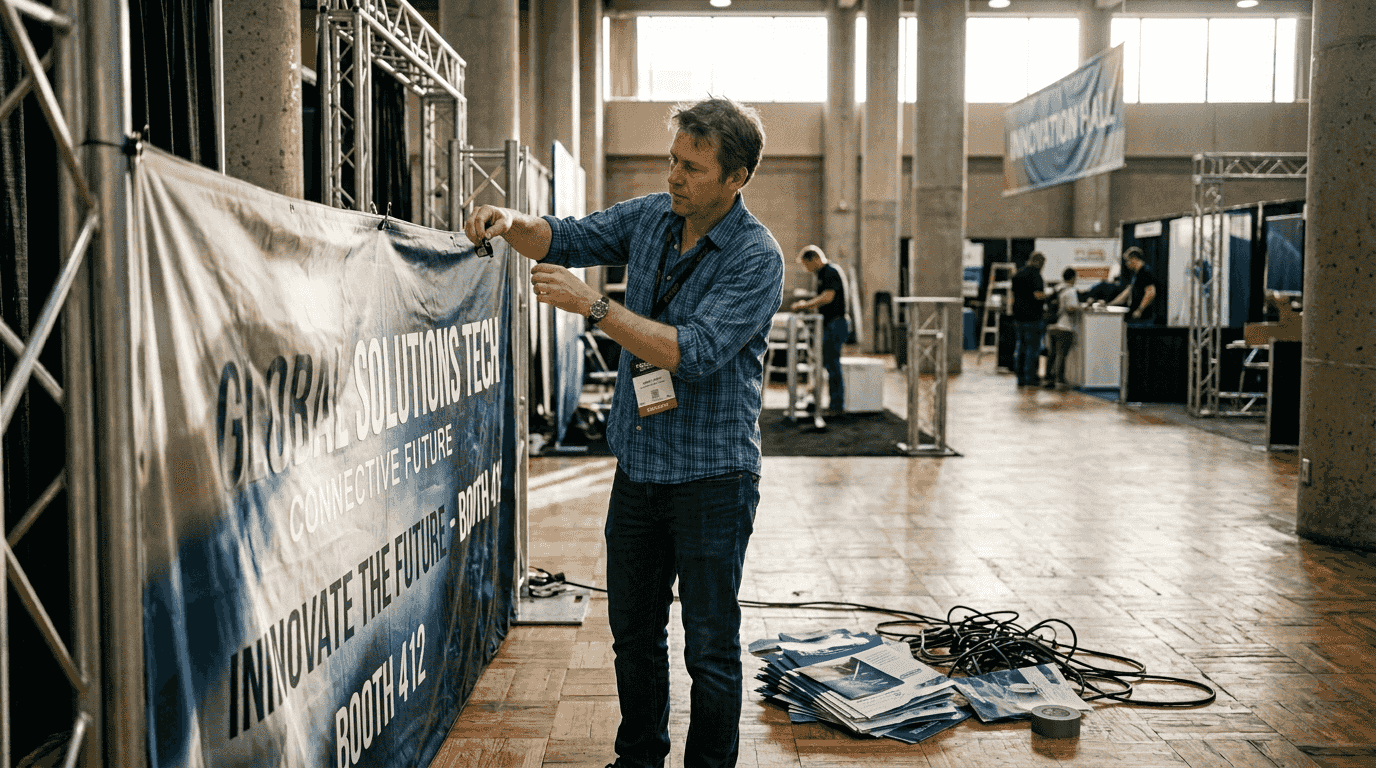
Choosing the right trade show materials can feel overwhelming with endless options competing for your budget and attention. Your booth’s success depends on selecting materials that engage attendees, capture quality leads, and deliver measurable ROI. With exhibitors shifting spending toward experiential designs in 2026, a strategic criteria-based approach helps you invest wisely. This article breaks down essential trade show materials proven to increase booth engagement, visitor traffic, and conversion rates. You’ll discover practical evaluation frameworks, data-backed recommendations, and actionable strategies to build a standout booth that drives real business results.
Table of Contents
- Evaluating Criteria For Must-Have Trade Show Materials
- Branded Display Materials That Attract Visitors
- Essential Printed Collateral And Lead Capture Tools
- Product Samples, Demos, And Experiential Materials
- Comparing And Deciding On Your Trade Show Materials Mix
- Boost Your Trade Show Success With Expert Materials And Support
- Frequently Asked Questions
Key takeaways
| Point | Details |
|---|---|
| Visual branding impact | Well-designed displays can boost booth visitors by up to 30% through strong brand recognition |
| Physical cards still win | 72% of attendees prefer receiving traditional business cards for initial contact |
| Samples drive purchases | Product demonstrations and samples increase purchase likelihood by 25% |
| Data capture is critical | GDPR-compliant lead systems maximize conversion and protect your investment |
| Experience beats static | Interactive materials and demos outperform passive displays for engagement in 2026 |
Evaluating criteria for must-have trade show materials
Before you fill your shopping cart with booth supplies, establish clear selection criteria that align with your marketing goals and budget realities. Smart material choices balance multiple factors including durability, brand impact, engagement potential, and cost efficiency. Your evaluation framework should prioritize materials that survive multiple shows while delivering consistent performance.
Start with durability as your foundation. Materials must withstand repeated assembly, disassembly, shipping, and storage without losing visual appeal. Fabric displays outlast vinyl in most cases, while modular systems adapt to different booth sizes across events. Budget allocation varies significantly between enterprise exhibitors and startups, so identify your spending tier early. Mid-market companies typically invest 15-20% of their trade show budget in reusable materials, while startups often start with 10% and scale up.
Brand impact matters more than you might think. Your materials serve as three-dimensional advertisements that communicate quality and professionalism before conversations begin. Choose materials that amplify your visual identity through consistent colors, logos, and messaging. Data capture capability often gets overlooked during material selection, yet it directly affects lead quality and follow-up efficiency. Integrate digital tools that collect contact information while respecting privacy regulations.
Consider these essential evaluation criteria:
- Reusability across multiple events and venues
- Setup and teardown time requirements
- Shipping weight and storage footprint
- Compatibility with experiential marketing elements
- Integration with digital lead capture systems
Pro Tip: Create a scoring matrix rating each material type against your top five criteria, then rank options numerically to identify clear winners that match your specific needs and constraints.
Branded display materials that attract visitors
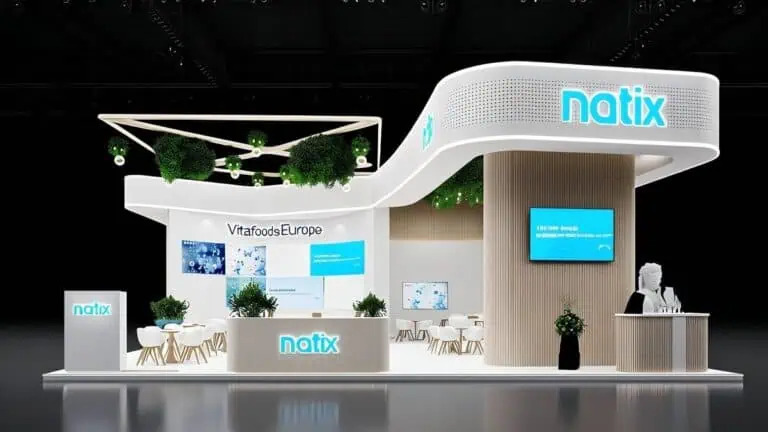
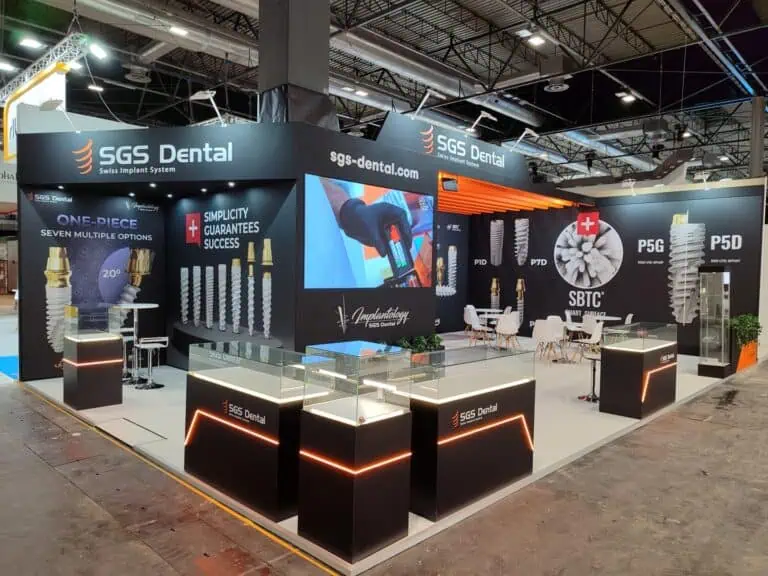
Your branded displays form the visual foundation of booth attraction, creating the first impression that determines whether attendees approach or walk past. Booths with strong visual branding attract up to 30% more visitors compared to generic setups, making display investment one of your highest ROI decisions. Quality displays include banners, backdrops, pop-up walls, kiosks, and hanging signs that work together to create cohesive brand environments.
Fabric displays have replaced vinyl as the professional standard because they resist wrinkling, pack lighter, and photograph better under trade show lighting. Dye-sublimation printing on polyester creates vibrant, long-lasting graphics that maintain color accuracy across years of use. Modular display systems offer flexibility you’ll appreciate when booth sizes change between events. Prioritizing booth functionality ensures your displays serve practical purposes beyond aesthetics.
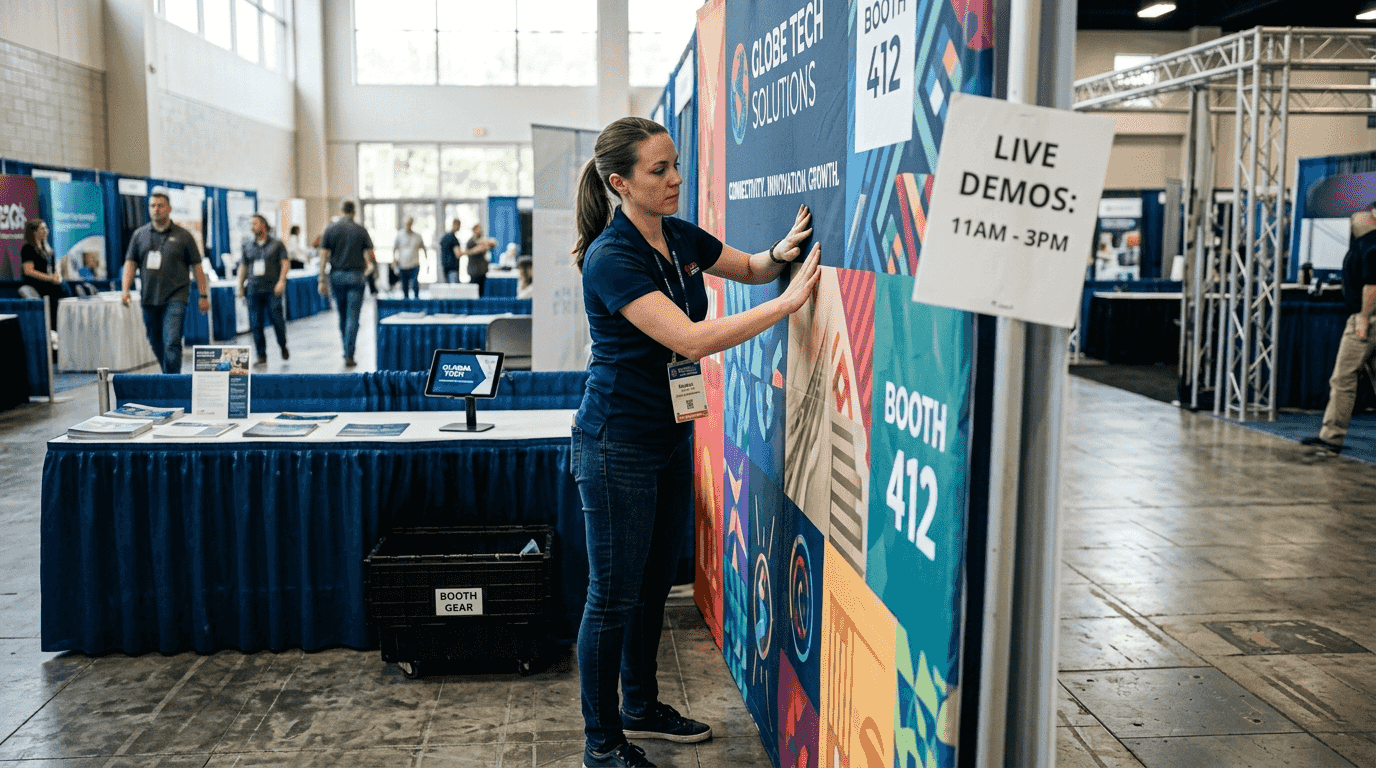
Layout strategy transforms good displays into great ones. Position your largest branded element at the back wall to create depth and draw eyes from across the aisle. Use vertical space with hanging banners or towers that rise above competitor booths. Side panels should feature secondary messaging or product categories that guide visitors deeper into your space. Clear sightlines into the booth encourage entry, while strategic placement of branded elements maintains visibility from multiple angles.
Personalized booth design elevates standard displays into memorable brand experiences. Custom elements that reflect your company’s unique identity create stronger recall than template solutions. Consider incorporating dimensional letters, backlit graphics, or textured materials that add tactile interest. Your display investment should scale with your exhibit frequency, with companies attending six or more shows annually benefiting most from premium, durable systems.
Pro Tip: Invest in professional photography of your completed booth setup to use in pre-show marketing, which increases planned visits by 40% according to exhibitor surveys.
Essential printed collateral and lead capture tools
Printed materials remain surprisingly effective in our digital age, with 72% of attendees preferring physical business cards for initiating post-show contact. Business cards, brochures, product sheets, and branded folders create tangible touchpoints that survive the digital noise flooding inboxes. Your printed collateral serves dual purposes: immediate information delivery and lasting brand reminders that outlive the event itself.
Business cards anchor your printed strategy because they facilitate the quick exchanges that happen during busy show hours. Include QR codes linking to digital resources, creating bridges between physical and online engagement. Brochures support deeper conversations by providing detailed product information, case studies, or technical specifications that salespeople can reference. Research shows brochures increase brand recall by 20% compared to verbal presentations alone, making them valuable conversation tools rather than mere handouts.
Digital lead capture tools have evolved beyond simple badge scanners into sophisticated qualification systems. Modern apps collect contact details, score lead quality through qualifying questions, and sync directly with your CRM for immediate follow-up. European exhibitors must ensure their data capture methods comply with GDPR requirements, including clear opt-in mechanisms and transparent data usage explanations. Trade show engagement strategies should integrate seamless data collection that feels helpful rather than intrusive.
Implement this proven lead capture workflow:
- Greet visitors and qualify interest level through conversation
- Use tablet or mobile app to scan badge or manually enter details
- Ask 2-3 qualifying questions that inform follow-up priority
- Provide relevant printed materials based on expressed interests
- Schedule immediate next steps when possible
- Trigger automated follow-up within 24 hours post-show
Lead generation booth design should incorporate dedicated spaces for data capture conversations that feel private yet remain visible to maintain booth energy. Balance your printed inventory carefully, as excess materials create shipping costs while shortages miss opportunities. Most exhibitors find success printing 1.5 times their expected visitor count for core brochures, with business cards at 2-3 times expected contacts.
Product samples, demos, and experiential materials
Experiential materials transform passive viewing into active participation, creating memorable interactions that drive purchase decisions. Product samples increase purchase likelihood by 25% because they engage multiple senses and provide tangible proof of value. Live demonstrations show your products solving real problems in real time, building confidence that marketing claims alone cannot achieve.
Samples work best when they’re immediately usable and relevant to attendee needs. Food and beverage companies have perfected this approach, but B2B exhibitors can adapt the strategy with trial software access, material swatches, or miniature product versions. The key is creating ownership feelings, where attendees leave with something they’ll use and remember. Interactive screens and touchpoints let visitors explore product features at their own pace, accommodating different learning styles and time constraints.
Virtual reality and augmented reality experiences represent the cutting edge of experiential marketing in 2026, particularly for products too large or complex to bring to the show floor. VR transports attendees into your manufacturing facility, while AR overlays product information onto physical samples. These technologies increase average booth dwell time from 8 minutes to 15 minutes, providing more opportunity for meaningful conversations. Choosing the right booth materials means balancing innovation with practical implementation.
Compare engagement impact across material types:
| Material Type | Average Dwell Time | Lead Quality Score | Implementation Cost |
|---|---|---|---|
| Static displays | 3-5 minutes | 6/10 | Low |
| Printed collateral | 5-8 minutes | 7/10 | Low to Medium |
| Product samples | 8-12 minutes | 8/10 | Medium |
| Live demos | 12-18 minutes | 9/10 | Medium to High |
| VR/AR experiences | 15-20 minutes | 9/10 | High |
Pro Tip: Combine multiple experiential elements in stages, starting with low-commitment interactions like touchscreens, then graduating interested visitors to high-value demos or VR experiences that justify staff time investment.
Comparing and deciding on your trade show materials mix
Your optimal materials mix depends on balancing budget constraints, marketing objectives, and audience expectations. No single formula works for every exhibitor, but understanding each material category’s strengths and limitations guides smarter allocation decisions. Display materials deliver high visual impact and brand recognition but offer limited direct engagement opportunities. They work best as attraction tools that draw visitors into deeper interactions.
Printed collateral supports brand recall and provides detailed information, yet it creates shipping costs and storage challenges. The trend toward lighter, more selective printing reflects both cost consciousness and environmental awareness. Experiential materials drive the deepest engagement and strongest emotional connections, though they require higher investment in technology, staffing, and maintenance. Your decision framework should weigh immediate costs against long-term value and reusability.
Data capture systems often get treated as afterthoughts despite their critical role in ROI. GDPR-compliant lead management protects both your business and attendee privacy while ensuring quality data collection. Poor data capture wastes every other investment by failing to convert booth traffic into actionable sales opportunities. Structured measurement yields an average ROI of 3.2 times investment for exhibitors who track and optimize their materials mix.
Evaluate your materials mix with this comparison:
| Material Category | Primary Benefit | Main Drawback | Best For |
|---|---|---|---|
| Branded displays | Maximum visibility and traffic | Limited interaction depth | Brand awareness goals |
| Printed collateral | Detailed information delivery | Shipping and storage costs | Complex product education |
| Product samples | Hands-on experience | Per-unit costs and logistics | Tangible product categories |
| Digital demos | Scalable engagement | Technology dependencies | Software and services |
| Data capture tools | Lead quality and follow-up | Integration complexity | All exhibitors |
Avoid these common material selection mistakes:
- Ignoring reusability and choosing single-use items that inflate costs
- Overinvesting in displays while underbudgeting for engagement tools
- Selecting materials that require excessive setup time or specialized labor
- Failing to plan for data capture until the last minute
- Choosing trendy materials that don’t align with brand identity
Pro Tip: Allocate 40% of your materials budget to displays, 25% to experiential elements, 20% to printed collateral, 10% to data capture systems, and reserve 5% for unexpected needs or opportunities.
“The exhibitors who succeed consistently are those who view materials as integrated systems rather than isolated purchases. Every element should support your core objectives while working harmoniously with other components.”
Best trade show booth designs demonstrate how thoughtful material selection creates cohesive experiences that feel intentional rather than haphazard. Use the exhibitor ROI calculator to model different material combinations and predict their impact on your specific metrics and goals.
Boost your trade show success with expert materials and support
Selecting the right materials is just the beginning of trade show success. Partnering with experienced providers ensures your displays are durable, your graphics are vibrant, and your setup runs smoothly under tight show deadlines. Professional support helps you balance creative vision with practical constraints like budget, logistics, and regulatory compliance. Whether you’re a startup attending your first show or an enterprise managing multiple simultaneous events, expert guidance optimizes your investment.
Explore comprehensive trade show booth materials and solutions designed for European exhibitors across all industries and company sizes. From initial concept through final installation, the right partner transforms your material selections into cohesive brand experiences that drive measurable results. Make your 2026 trade show season your most successful yet with materials that work as hard as your team.
Frequently asked questions
What materials are essential for trade show success in 2026?
Essential materials include branded displays for visibility, printed business cards and brochures for information sharing, product samples or demos for engagement, and digital lead capture tools for follow-up. The specific mix depends on your budget and goals, but choosing booth materials strategically ensures you cover all critical functions. Exhibition stand research confirms that combining visual impact with interactive elements delivers the best results.
How can I ensure my trade show materials comply with GDPR?
Use clear opt-in forms that explain exactly how you’ll use collected data, and never pre-check consent boxes. Store all lead information securely with encryption and access controls, processing it only for the specific purposes you disclosed. GDPR compliance requires documenting your data handling procedures and providing easy opt-out mechanisms. Work with lead capture vendors who understand European privacy requirements and build compliance into their systems.
What is the average ROI for trade show exhibitors in 2026?
Exhibitors report an average ROI of 3.2 times their total investment when they measure results systematically and follow up promptly. ROI varies significantly based on lead quality, sales cycle length, and post-show nurturing effectiveness. Use the exhibitor ROI calculator to set realistic targets and track performance against industry benchmarks. Companies that integrate trade shows into broader marketing strategies see higher returns than those treating events as isolated activities.
Which trade show materials are best for startups on a budget?
Startups should prioritize durable branded displays and essential printed collateral that work across multiple shows. Leverage digital tools like QR codes and mobile apps to reduce printing costs while maintaining professional presence. Startups often underestimate ancillary costs like staffing and travel, so budget conservatively for materials while ensuring quality. Focus on booth materials that scale as your company grows, avoiding disposable solutions that create ongoing expenses.