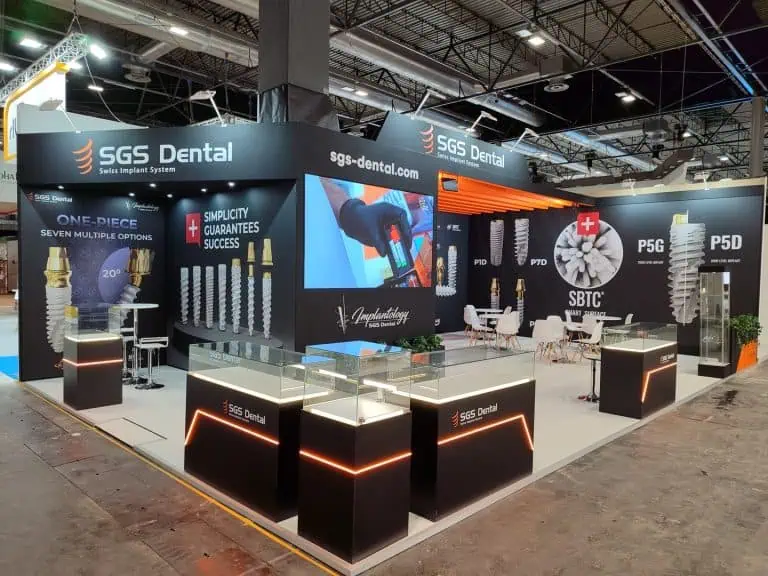
Quick Summary
| Key Insight | What You Need to Know |
|---|---|
| Modular is budget-friendly | Modular exhibition stands generally have lower upfront costs and are less expensive to maintain than custom-built stands, making them a smart choice if you’re mindful of your budget. |
| Custom means unique branding | A custom-built stand gives you complete control over the design, letting you craft a unique look that grabs attention and perfectly embodies your brand. |
| Consider reusability factor | Modular stands are designed for repeated use, which reduces waste and promotes environmental responsibility. |
| Factor in lead times | Modular stands are typically quicker to set up and require less advance preparation, whereas custom stands need more time for design, construction, and on-site assembly. |
Table of Contents
- What is modular exhibition stands versus custom built?
- Why modular exhibition stands versus custom built Matters
- What are Custom Exhibition Stands?
- 1. Adam Expo Stand – Exhibit Booth Design and Build: Custom Solutions for Brand Impact
- 2. ExpoMax Modular Display Systems: Flexible Configurations for Any Event
- 3. MODERN Modular Portable Displays: Quick Setup and Reusable Design
- 4. Skyline Exhibits Series 900: Scalable Trade Show Booths with Tension Fabric Graphics
- 5. Nomadic Xtreme Modular Displays: Heavy-Duty Structures for Large-Scale Exhibitions
- Cost Breakdown: Modular vs Custom Exhibition Stands
- Design Flexibility: Modular vs. Custom Exhibition Stands
- Flexibility Advantages of Modular Exhibition Stands for Multiple Events
- Lead Time Comparison: How Long for Custom vs Modular Stands?
- Installation Time: Modular vs. Custom
- Sustainability Edge: Why Modular Beats Custom Exhibition Stands
- Reusability and Storage of Exhibition Stands
- Visual Appeal and Branding with Exhibition Stands
- Target Audience/Ideal Use Cases for Exhibition Stands
- Modular Exhibition Stands vs Custom Built: Pros and Cons
- When to Choose Modular Exhibition Stands
- When to Choose Custom Built Exhibition Stands
- Factors to Consider When Choosing an Exhibition Stand in Madrid
- Feature Comparison Table: Modular vs Custom Exhibition Stands
- The Role of Technology Integration in Exhibition Stands
- Conclusion: Making the Right Choice for Your Exhibition Needs
Last Updated: March 11, 2026
Instead of guessing which exhibition stand to choose, consider the data: The global modular exhibition stand market is currently valued at USD5.9 Billion according to HTF Market Intelligence (2024), highlighting the significant investment businesses are making in this area. This article provides a detailed comparison of modular vs. custom exhibition stands, helping you determine which option best aligns with your business goals and budget.
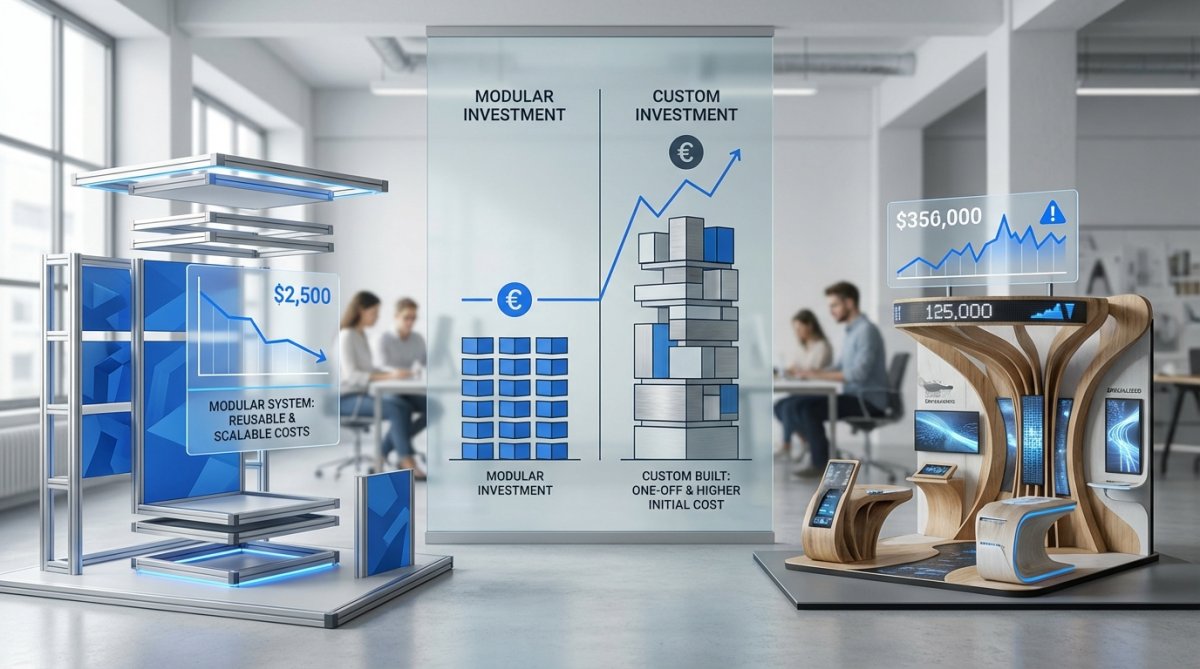
What is modular exhibition stands versus custom built?
Modular exhibition stands use pre-made parts for easy setup and different layouts. Custom-built stands are made just for one event, offering a unique design. Your choice depends on your budget, branding goals, and how often you’ll reuse the stand.
Why modular exhibition stands versus custom built Matters
Choosing the right exhibition stand is key to boosting your brand’s visibility, engaging visitors, and increasing your return on investment. A great stand, whether modular or custom, can significantly raise brand awareness and attract leads at trade shows. Companies need to consider their goals, budget, and how often they attend events to make the right decision.
"A well-designed exhibition stand is more than just a display; it’s a powerful tool for creating lasting impressions and driving business growth." — Priya Patel, Lead Exhibition Designer at Skyline Exhibits (Skyline Exhibits Blog, 2025)
What are Custom Exhibition Stands?
Custom exhibition stands are designed and built to fit a brand’s exact needs for an event. They provide unmatched design freedom, resulting in a unique and high-quality look. Custom builds work well for companies wanting to make a big visual impact and create a memorable brand experience. These stands take more time to design and build, so plan at least 3-6 months before the event. Pro Tip: Add interactive features like touch screens or product demos to your custom stand to get visitors involved.
1. Adam Expo Stand – Exhibit Booth Design and Build: Custom Solutions for Brand Impact
Adam Expo Stand – Exhibit Booth Design and Build helps businesses make a strong impression at trade shows and corporate events with custom exhibition stands and booths. They design, build, and install unique stands that show off a brand’s identity and business goals. Adam Expo Stand – Exhibit Booth Design and Build targets businesses across Europe that want to impress potential clients at trade shows, helping them strengthen their brand, attract clients, and reach their marketing goals. Adam Expo Stand – Exhibit Booth Design and Build, based in Madrid, Spain, has over 15 years of experience providing complete solutions for trade shows, fairs, exhibitions, and congresses worldwide. Services include initial concept and 3D visualization, custom fabrication, logistics, on-site installation, and post-event dismantling. Adam Expo Stand – Exhibit Booth Design and Build offers custom stands that match each brand’s identity, focusing on sustainability by using eco-friendly materials and reusable modular systems to minimize waste without sacrificing visual appeal. Every project receives personalized attention. Whether you need a custom booth, a modular display, or a rental solution, Adam Expo Stand – Exhibit Booth Design and Build turns your brand’s vision into an unforgettable trade show experience.
2. ExpoMax Modular Display Systems: Flexible Configurations for Any Event
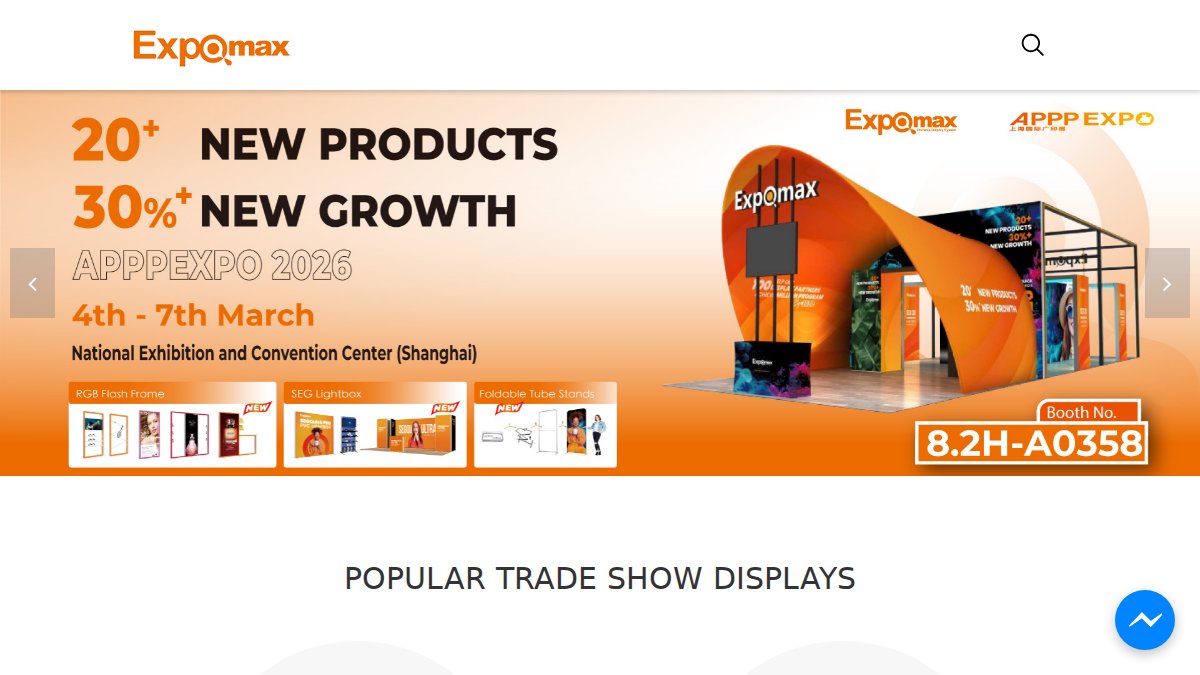
ExpoMax Modular Display Systems offers modular trade show display systems that use lightweight aluminum frames with interchangeable parts for flexible booth designs. Key features include easy, tool-free assembly, scalability from 10×10 to 20×20 layouts, SEG backlit graphics with LED lights, replaceable fabric panels for easy graphic changes, and reusability across events. ExpoMax is ideal for exhibitors who attend many trade shows and need cost-effective booths that can be reconfigured. ExpoMax states that using modular systems can lower long-term costs. ExpoMax Modular Display Systems
3. MODERN Modular Portable Displays: Quick Setup and Reusable Design
MODERN Modular Portable Displays provides portable modular exhibition stands made from aluminum with fabric graphics, designed for quick setup and reuse. These displays have a channel aluminum frame with SEG silicone edge graphics, configurations for 10×10, 10×20, and 20×20 booths, optional LED lighting, tool-less assembly in under 30 minutes, and customizable heights and curved elements. Starting at $3,995, MODERN is a good fit for small to medium businesses looking for portable, reusable trade show solutions.
4. Skyline Exhibits Series 900: Scalable Trade Show Booths with Tension Fabric Graphics
Skyline Exhibits Series 900 offers modular exhibit systems with aluminum frames and tension fabric graphics for scalable trade show booths. Key features include interchangeable frame modules for inline, peninsula, and island setups, large format dye-sublimated fabric prints, optional integrated lighting and counters, compact packing for easy shipping, and a lifetime warranty on frames. Skyline is designed for frequent exhibitors needing durable, adaptable booth systems.
5. Nomadic Xtreme Modular Displays: Heavy-Duty Structures for Large-Scale Exhibitions
Nomadic Xtreme Modular Displays provides durable modular exhibition structures using aluminum frames for large, reconfigurable trade show booths. These displays feature a strong aluminum system supporting large spans, multi-height configurations up to 20ft islands, pillowcase fabric graphics with zippered attachment, integrated workstations and lighting, and wind-load rating for outdoor use. Starting at $5,000+, Nomadic Xtreme suits large exhibitors needing robust systems for major conventions or outdoor events.
Cost Breakdown: Modular vs Custom Exhibition Stands
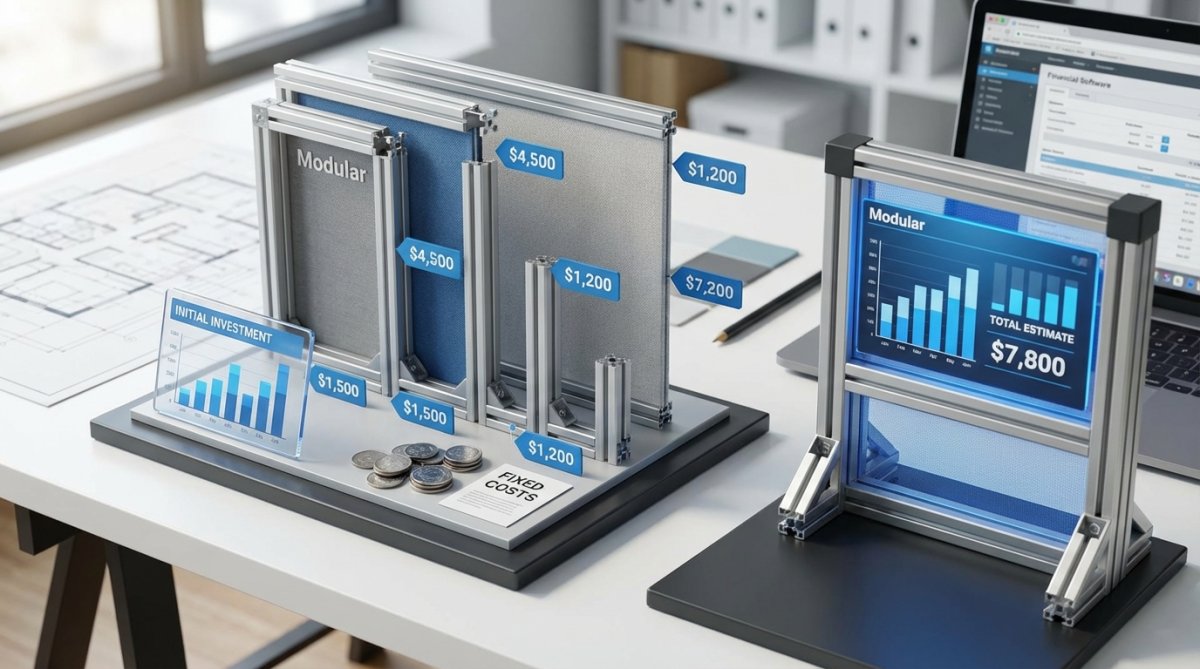
The cost of modular versus custom exhibition stands depends on the project’s complexity and size. Modular stands usually have a smaller initial cost and lower lifecycle costs, making them a budget-friendly choice. Custom stands offer unique design options but have higher upfront costs. Understanding these costs is important for making a good financial decision.
"The decision between modular and custom exhibition stands often comes down to balancing budget constraints with the desire for a unique brand representation." — Mark Williams, Senior Financial Analyst at Event Costing Solutions (Event Costing Solutions, 2024).
Initial Investment
Modular exhibition stands typically cost less upfront than custom-built stands because they use pre-made parts designed for reuse. HTF Market Intelligence predicts the global modular exhibition stand market will reach USD10.43 Billion by 2033, showing a growing preference for affordable options. According to a survey by the Event Marketing Institute, modular stands can cut initial costs by up to 30% compared to custom options.
Lifecycle Costs: Maintenance, Refurbishment, and Disposal
Lifecycle costs matter too. Modular stands often have lower costs for maintenance, refurbishment, and disposal because they are durable and reusable. Custom stands may need more repairs and replacements, raising the overall cost. Exhibitors focused on sustainability report up to a 60% reduction in per-event costs by using modular stands, according to T3 Display Systems in 2026. This is because you can easily update modular systems with new graphics or parts without rebuilding the whole stand. Trade-off: Modular stands save money, but custom stands offer unique branding that may justify the higher cost for some. One thing to watch out for: Remember to include storage costs for both types of stands. Modular stands are easier to store, but you still need to budget for storage space.
Design Flexibility: Modular vs. Custom Exhibition Stands
Design flexibility is an important factor. Custom stands offer the most architectural design freedom, allowing for unique structures and branding. However, modular stands also provide good design flexibility with parts that can be rearranged and many graphic options. Practical tip: Even with modular systems, use high-quality, custom-printed graphics to make a big visual impact and create a personalized look. Tension fabric graphics offer a seamless and modern appearance.
Flexibility Advantages of Modular Exhibition Stands for Multiple Events
Modular exhibition stands are very useful for businesses that attend multiple events. These systems can be easily changed to fit different booth sizes and layouts, providing an affordable and adaptable solution. This helps companies keep a consistent brand image while adapting their display to each event. One thing to watch out for: Very complex booth designs may still need some custom elements, even with a modular system.
Reconfigurability for Different Booth Sizes
You can reconfigure modular stands to fit different booth sizes, from small 10×10 spaces to larger island layouts. This helps exhibitors make the most of their space and create an attractive display. According to HTF Market Intelligence, portable modular stands were the most popular in 2024, showing how versatile and adaptable they are. For example, you can break down a 20×20 modular stand into two 10×10 stands for smaller events, saving money.
Ease of Transportation and Storage
Another benefit is easy transportation and storage. Modular parts are usually light and small, making them easy to move to and from events. They also need less storage space than custom-built stands, which lowers costs. Practical tip: Use custom-designed cases with wheels to protect your modular parts during transport.
Lead Time Comparison: How Long for Custom vs Modular Stands?
Custom exhibition stands usually take longer to prepare than modular stands because they need more design, building, and assembly work, which can take weeks or months. Modular stands can often be delivered and set up faster, making them a good option for events with short deadlines. Always check lead times with your provider, as they can vary. Also, consider possible shipping and customs delays, especially for international events. Custom stands typically need 8-12 weeks of lead time, while modular stands can often be ready in 2-4 weeks, according to industry data.
Installation Time: Modular vs. Custom
Modular stands usually have faster installation times because they are designed for easy assembly, often needing few tools and little labor. Custom stands may need special equipment and skilled technicians, which increases the time and cost of installation. If you choose a modular system, train your team to set up and take down the stand efficiently to save on labor costs. Practical tip: Practice setting up your modular stand before the event to get familiar with the process and find any problems.
Sustainability Edge: Why Modular Beats Custom Exhibition Stands
Sustainability is increasingly important for businesses. Modular stands generally have a smaller environmental impact than custom-built stands because they use reusable and recyclable materials. Choosing modular systems can help companies reduce waste and show their commitment to sustainability. Learn more about creating sustainable trade show booths.
Material Usage and Waste Reduction
Modular stands are often made from eco-friendly and recyclable materials, which cuts down on material use and waste. Custom stands may use non-recyclable materials and create a lot of waste during building and dismantling. One thing to watch out for: Make sure your modular provider uses sustainable sourcing and manufacturing. Ask for proof to verify their claims. Sustainable exhibition practices can reduce waste by up to 80%, according to a report by the Event Industry Council.
Transportation and Carbon Footprint
Modular stands also have a lower carbon footprint because their light and compact design reduces shipping costs and fuel use. This lowers the environmental impact of attending events. Industry data suggests that modular stands can reduce carbon emissions from transportation by up to 40% compared to custom builds. This is especially important for companies with strong environmental, social, and governance (ESG) goals. Consider using a freight carrier with a carbon-neutral shipping program to further reduce your environmental impact.
Reusability and Storage of Exhibition Stands
Reusability is a key benefit of modular exhibition stands. You can use these systems for many events, reducing the need for new materials and construction. Store parts in a dry place to keep them in good condition and make them last longer. Also, label everything clearly to make setup easier at future events. Practical tip: Keep a detailed list of all modular parts and check it before and after each event to make sure nothing is missing or damaged.
Visual Appeal and Branding with Exhibition Stands
Both modular and custom exhibition stands can be designed to create a strong visual impact and communicate a brand’s message. Custom stands offer more architectural design freedom, allowing for unique structures. However, you can also customize modular stands with graphic panels, lighting, and accessories to create an attractive display. Focus on high-quality graphics and strategic lighting to draw attention. Consider using large fabric graphics for a seamless and professional look.
"The key to maximizing visual appeal in any exhibition stand, whether modular or custom, lies in understanding the target audience and crafting a design that resonates with their preferences and expectations." — David Lee, Senior Design Consultant at Trade Show Design Pros (Trade Show Design Pros Blog, 2026)
Target Audience/Ideal Use Cases for Exhibition Stands
The choice between modular and custom exhibition stands depends on the target audience and how you plan to use the stand. Modular stands are good for businesses that attend many events and need an affordable and adaptable option. Custom stands are ideal for companies wanting to make a big visual impact at a specific event and have the budget for a unique architectural design. For example, a tech startup attending smaller industry conferences might prefer a modular stand, while a luxury brand launching a new product at a major international fair might choose a custom build. The best choice fits your specific marketing goals and target audience.
Modular Exhibition Stands vs Custom Built: Pros and Cons
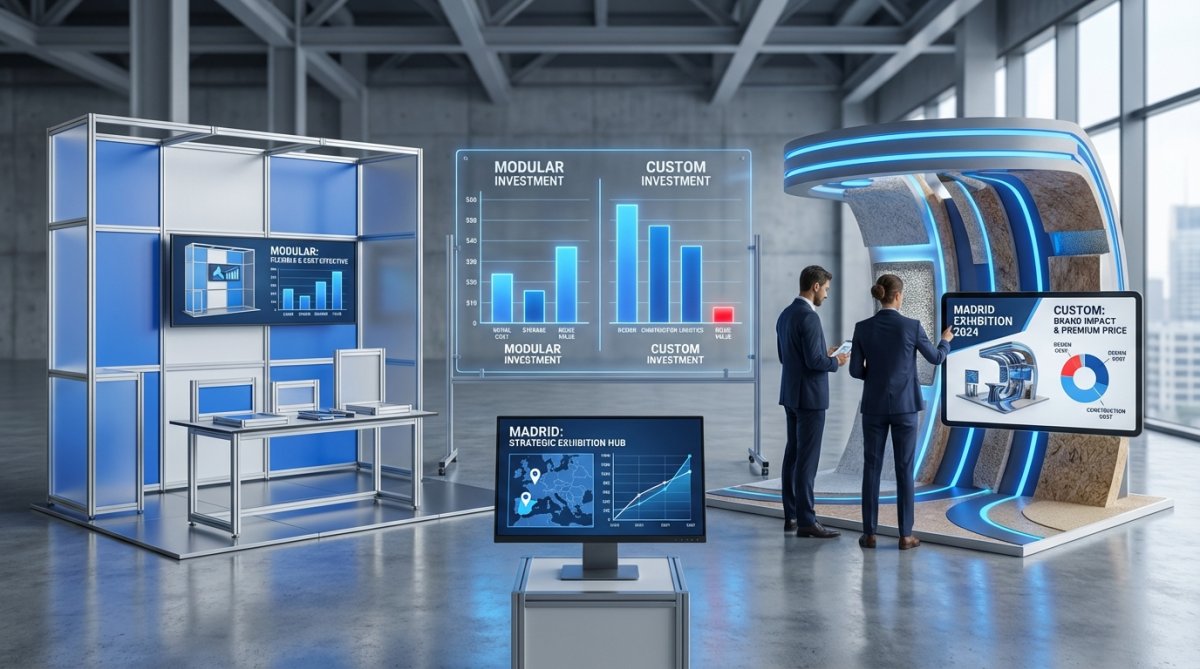
Deciding between modular and custom exhibition stands means weighing the pros and cons of each. Modular stands are cost-effective, flexible, and sustainable, while custom stands offer more design freedom and visual impact.
Pros of Modular Stands
- Cost-effective: Lower initial cost and reduced lifecycle costs.
- Flexible: Can be reconfigured for different booth sizes and layouts.
- Sustainable: Made from reusable and recyclable materials.
- Easy to transport and store: Light and small.
Cons of Modular Stands
- Limited architectural design: Less freedom to create unique structures.
- Can look generic: May lack the high-end look of custom stands. Invest in high-quality graphics and unique design elements to avoid this.
- Setup can be complex for large stands: Large modular stands can be difficult to set up, needing more time or help according to Team Tecna.
Pros of Custom Stands
- Unique architectural design: Allows for standout structural features.
- High visual impact: Creates a memorable brand experience.
- Tailored to specific needs: Designed to meet the exact needs of a brand and event.
- Better for unique structural features: Custom builds allow standout architectural features like double-decker layouts, limited to custom-only due to complexity according to Team Tecna.
Cons of Custom Stands
- High initial investment: More expensive than modular stands.
- Less sustainable: Creates more waste and has a larger carbon footprint.
- Longer lead time: Takes more time to design, build, and assemble.
- Not reusable: Designed for one event. Donate or repurpose materials after the event to reduce waste.
When to Choose Modular Exhibition Stands
Modular exhibition stands are the best choice for businesses that:
- Attend multiple trade shows and events.
- Need an affordable and adaptable solution.
- Value sustainability and waste reduction.
- Need easy transportation and storage.
- Operating in Madrid, modular exhibition stands from Adam Expo Stand – Exhibit Booth Design and Build are a great option for businesses looking for cost-effective and sustainable exhibition solutions. For businesses prioritizing sustainability and reusability, Adam Expo Stand – Exhibit Booth Design and Build’s modular solutions offer an excellent balance of cost-effectiveness and environmental responsibility.
When to Choose Custom Built Exhibition Stands
Custom-built exhibition stands are the best choice for businesses that:
- Want to create a unique and memorable brand experience.
- Have a specific architectural design in mind.
- Are participating in a high-profile event where visual impact is critical.
- Have a larger budget and longer lead time.
Factors to Consider When Choosing an Exhibition Stand in Madrid
When selecting an exhibition stand in Madrid, consider:
- Budget: How much can you spend?
- Event goals: What do you want to achieve at the event?
- Booth size: How big is your space?
- Design preferences: What visual style do you want?
- Sustainability: How important is the environmental impact?
- Location: Does the provider know how to work at venues like IFEMA Madrid?
- Services: Does the provider offer complete solutions, including design, building, installation, and dismantling? Adam Expo Stand – Exhibit Booth Design and Build provides end-to-end solutions for trade shows in Madrid, with extensive experience navigating venue regulations at IFEMA Madrid and Fira Barcelona.
Feature Comparison Table: Modular vs Custom Exhibition Stands
| Feature | Modular Exhibition Stands | Custom Built Exhibition Stands |
|---|---|---|
| Initial Cost | Lower | Higher |
| Design Flexibility | Reconfigurable components, graphic options | Unlimited architectural design |
| Reusability | Reusable for multiple events | Single-use |
| Sustainability | Eco-friendly materials, waste reduction | More waste, larger carbon footprint |
| Lead Time | Shorter | Longer |
| Installation Time | Faster | Slower |
| Transportation | Easier, lightweight components | More complex, bulkier |
| Storage | Requires less space | Requires more space |
| Best For | Multiple events, cost-conscious businesses | High-profile events, unique branding needs |
The Role of Technology Integration in Exhibition Stands
Adding technology to exhibition stands improves visitor engagement and lead generation. Interactive displays, VR/AR, and digital signs can attract attention and provide information. Both modular and custom stands can use technology, but custom stands may offer more seamless and tailored integration. Use tablets for product demos or QR codes that link to your website. Show off a product too big to bring to the show with VR. Practical tip: Make sure the technology fits your marketing strategy and target audience. Don’t add tech just to add it; make sure it has a purpose.
Conclusion: Making the Right Choice for Your Exhibition Needs
Choosing between modular and custom exhibition stands depends on your needs, budget, and event goals. Modular stands are affordable, flexible, and sustainable, making them good for businesses that attend many events. Custom stands offer more design freedom and visual impact, which is great for companies wanting to make a strong statement at a specific event. The best option fits your brand, marketing goals, and budget. If you need a reliable partner in Madrid to design and build your next stand, consider Adam Expo Stand – Exhibit Booth Design and Build for custom solutions. Visit Adam Expo Stand’s website
Deciding between modular and custom exhibition stands can be tough. Adam Expo Stand – Exhibit Booth Design and Build specializes in solutions tailored to your needs, whether you want the flexibility of modular systems or the custom look of a custom build. With complete solutions, personalized help, and sustainable practices, Adam Expo Stand – Exhibit Booth Design and Build makes sure your vision becomes an unforgettable trade show experience. For businesses seeking to strengthen their brand presence and attract potential clients across Europe, Adam Expo Stand – Exhibit Booth Design and Build provides tailored solutions to achieve marketing goals through impactful exhibition stands.