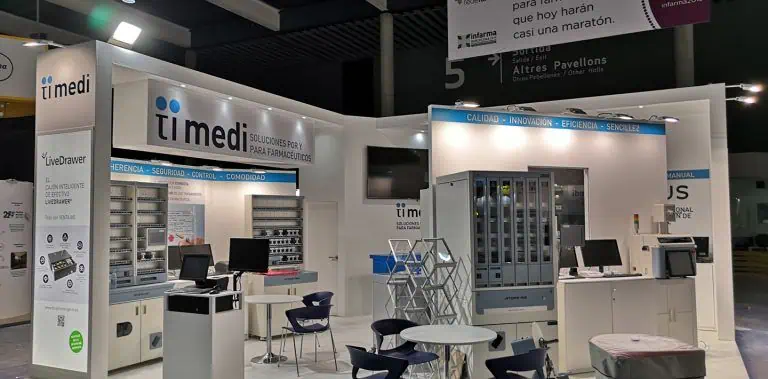
Evaluate custom booth fabrication by checking what will be made, how quality will be demonstrated and who is responsible when an issue appears. Relevant references, specified materials, samples, production records and a clear handover process provide better evidence than a claim that every stage is handled in-house.
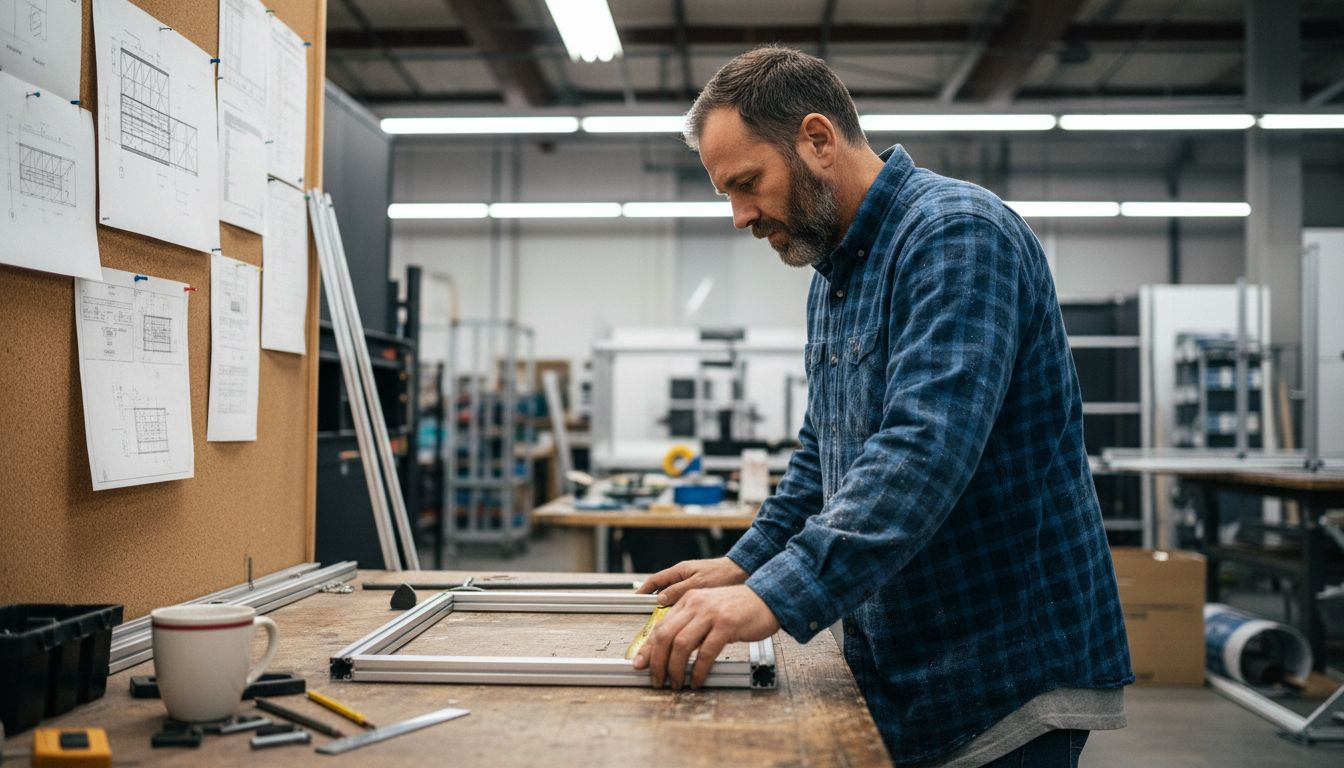
Define acceptance criteria for custom booth fabrication
Give prospective suppliers the same brief, plot and current event requirements. Describe the actual products, activities, finishes, services and reuse plans. Ask for a written scope that identifies design development, fabrication, graphics, logistics, installation, technical evidence and event support.
Agree how the relevant elements will be accepted. A rendering alone may not define joints, edges, graphic substrates or visible fixings. Identify which drawings, specifications, samples and proofs form the approval record, and how conflicts between documents will be resolved.
Ask for evidence appropriate to the work
| Area | Evidence to request | Question to resolve |
|---|---|---|
| Relevant experience | Comparable project scope and a reference that can be checked. | What did this supplier actually deliver? |
| Materials and finishes | Specifications, samples and relevant documentation. | What is proposed, and how will substitutions be approved? |
| Graphics | Production specification and agreed proof method. | Who approves artwork, dimensions and appearance? |
| Fit and assembly | Drawings, review records or a defined trial assembly where useful. | Which interfaces need checking before dispatch? |
| Delivery | Manifest, packing plan and access arrangements. | How will missing or damaged items be identified and resolved? |
| Handover | Acceptance checklist, required sign-offs and support contacts. | Who owns each remaining issue? |
Assess responsibility and competence
Ask who designs, fabricates and installs each part, including any subcontracted work. Confirm supervision, quality control and the route for decisions. Subcontracting does not by itself establish poor quality; in-house production does not by itself establish competence or sufficient capacity.
In its UK event-planning context, HSE guidance on selecting contractors recommends considering suitability, competence, resources and relevant experience. Assess the actual project and applicable local requirements rather than treating the UK guidance as a substitute for another venue’s rules.
Check materials and environmental claims precisely
Request the documentation applicable to the proposed assembly and use. A material safety data sheet, a fire classification and a chain-of-custody record serve different purposes. Ask the responsible specialist to confirm which evidence is needed for the event.
Define environmental claims narrowly enough to verify: the specified material, certified scope, documented recycled content, planned reuse or actual recovery route. A natural, lightweight or recyclable material is not automatically the lowest-impact option for the complete stand.
If reuse is planned, confirm compatible configurations, expected handling, repair, packaging and storage. Compare complete programme costs and responsibilities. Do not accept an unspecified sustainability certificate as proof that the whole build is sustainable.
Use samples and trial assembly for specific risks
A sample can resolve a finish question. A print proof can help agree graphic appearance. A trial assembly can check selected connections or interfaces. Define what each check covers, who attends, what will be recorded and how issues will be closed.
A full pre-build is not automatically included or necessary for every project. Equally, a trial fit does not replace structural assessment, the required documentation or on-site checks. Agree the appropriate evidence for the complexity and risks of the actual work.
For drawing and material coordination, see the 3D exhibition stand design guide. Models and renderings assist review but should not hide details that still need development.
Control substitutions and late changes
Require proposed substitutions to identify the affected item, reason, specification, appearance, cost and programme implications. Check whether the change affects technical evidence or organiser approval. Keep a written decision and issue the applicable revision to production and installation teams.
At delivery, compare the completed work with the approved scope. Record defects and missing items, required actions, owners and timing. Confirm who can authorise rectification and how event support, dismantling and returns will be handled.
Frequently asked questions
Does a workshop tour prove fabrication quality?
It can provide context about facilities and processes. Assess it alongside relevant references, specifications, samples, responsibilities and project-specific evidence.
Must the fabrication team’s own crew install everything?
Not necessarily. Confirm the appointed installers’ competence, current instructions, supervision and responsibility for resolving issues. The contractual and quality-control arrangements matter.
What should we inspect ourselves?
Check the agreed presentation and operating tasks, and record concerns. Ask the responsible competent people for the technical inspections and sign-offs appropriate to the stand.
Request a documented fabrication scope and acceptance process when discussing your brief with Adam Expo Stand.
Follow our exhibition planning guides
Choose Adam Expo Stand as a preferred source to help you find our exhibition guides and updates on Google.
Add as a preferred source on GoogleGoogle may ask you to sign in and confirm your choice.