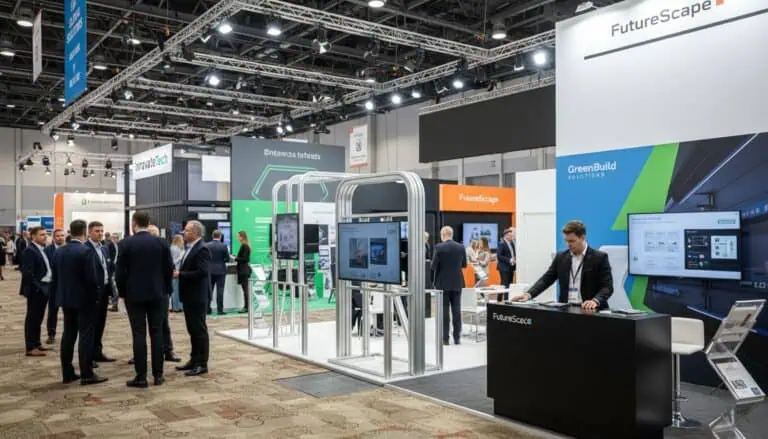
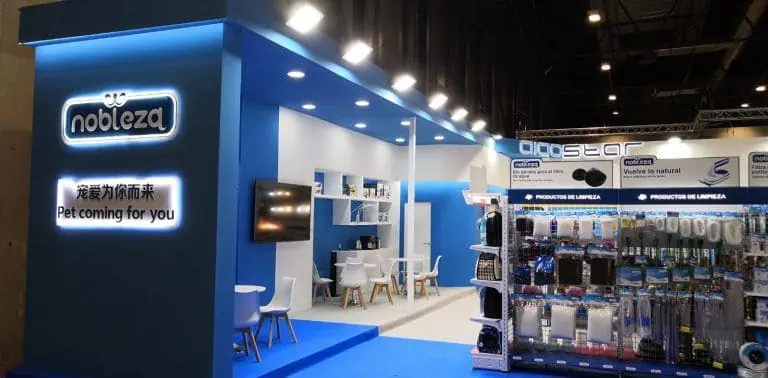
Stand storage solutions inside a booth should give staff access to the permitted items needed for the day without obstructing visitor activities, equipment or required access. Start by listing what must be on the stand, then agree suitable furniture, quantities, access and replenishment. Keep empty packaging and bulk stock in the appropriate event storage service where required.
This guide covers storage in an operating exhibition booth. For reusable components between shows, use the separate exhibition stand storage guide.
List what the team actually needs to store
Separate products for display from spare samples, daily literature, operating supplies, personal belongings and technical equipment. Record dimensions, quantities, weight and who needs access. Ask the organiser and relevant supplier about any special handling or storage conditions.
Reduce the on-stand quantity to what the agreed operation and rules allow. Identify where reserve supplies will be held and how they will be replenished. A design drawing should show the storage items and access positions, rather than treating a hidden room as unlimited capacity.
| Item group | Planning question | Operating decision |
|---|---|---|
| Product samples | What size, weight and handling conditions apply? | Suitable support, access and staff responsibility |
| Daily literature | How much is needed and permitted on the stand? | Daily quantity and replenishment location |
| Devices and valuables | Who may access them and where will they go after closing? | Access control and the organisation’s approved arrangements |
| Operating supplies | What is needed to reset the activity? | Accessible location without blocking the task |
| Empty packing | What does the event permit and which service handles it? | Booked collection, identification and return arrangements |
Compare stand storage solutions by their usable capacity
A counter with a cabinet can combine a welcome surface and storage, provided both uses fit the operating plan. Check the internal dimensions, doors, shelves, supported loads and the room needed to open and use it. External furniture dimensions do not establish internal capacity.
A dedicated store room may suit some briefs but consumes plot area and needs appropriate access. Wall-integrated cupboards and modular shelving must be specified with the responsible designer or system supplier. Do not assume that every wall, shelf or attachment can support the proposed contents.
For seating with storage, consider whether supplies can be retrieved while the seat is occupied and whether the proposed unit is suitable for both uses. A combined function is helpful only when staff can operate it without interrupting another necessary activity.
Raised floors and service voids should not be treated as general storage space. Have the responsible designer coordinate cables, access, structural details and applicable requirements. Avoid placing goods in a void simply because it is hidden.
Show doors, people and replenishment on the plan
Include storage access in the scaled layout: open doors or drawers, the person retrieving supplies, the route to the activity and any handling equipment. Repeat the walkthrough while a demonstration or meeting is in progress.
Keep the applicable routes, exits and technical equipment accessible. Do not use public aisles as an unapproved stock area. If the proposed furniture conflicts with operation, reduce the stock, change the unit or arrange a different replenishment method.
Test the message and product visibility with the storage unit in place. Tall cabinets may affect sightlines and the permitted design. Select dimensions and finishes against the actual brief rather than following an unsupported claim about a fashionable storage style.
Check the event’s packaging and material rules
Read the current organiser and venue documents for the event. For a dated example, section 4.4.12 of Messe Frankfurt’s 2026 technical guidelines addresses empty packaging and material storage, including removal of empty packaging and reducing on-stand literature to requirements. Confirm the documents that apply to your booking instead of assuming this example governs every venue or future show.
Agree collection and return arrangements with the designated logistics service where needed. Clearly distinguish empty packaging from goods accepted for storage; confirm permitted contents and identification rather than hiding equipment inside an empty crate.
Agree access, device use and closing procedures
Decide who holds keys or manages other access controls, where spares are kept and what the team does if access fails. A lockable counter does not guarantee protection from theft or establish insurance cover. Follow the organisation’s arrangements for valuables and personal information.
If devices will be charged or operated near storage, have the responsible supplier review ventilation, electrical requirements and equipment instructions. An enclosed drawer is not automatically a suitable charging location. Avoid adding an electronic lock or integrated charger without a defined need and support arrangement.
At opening, confirm that required supplies are available. At closing, follow the agreed procedure for devices, stock and belongings. Keep a simple issue list so missing supplies or access problems can be resolved before the next session.
Specify rental, reuse and complete cost
Ask whether the furniture is rented, purchased or part of the stand package. Confirm delivery, handling, installation, return condition, keys, cleaning and any repair responsibility. Include the applicable service costs in the comparison without counting an included item twice.
For future events, check dimensions, supported configurations, condition, transport and storage. Reusable furniture may be appropriate, but a recycled material label or modular construction alone does not establish lower cost or environmental impact. Request evidence for the specific claim and intended programme.
Frequently asked questions
How do you add storage to a small booth?
List the permitted daily supplies, measure their volume and test a suitable cabinet or combined-use unit on the actual plan. Include access and replenishment while the visitor activity is running.
Can empty crates stay behind the booth wall?
Check the event’s rules and logistics arrangements. A hidden location does not make empty-packaging storage permissible.
Can storage furniture be rented?
Ask the relevant supplier about available units, dimensions, capacity, charges and return terms for the event. Availability and complete scope need confirmation.
See our stand design service or send the plot and storage list to discuss the layout.
Follow our exhibition planning guides
Choose Adam Expo Stand as a preferred source to help you find our exhibition guides and updates on Google.
Add as a preferred source on GoogleGoogle may ask you to sign in and confirm your choice.