Trade Show Engagement Strategies to Maximize Booth Impact
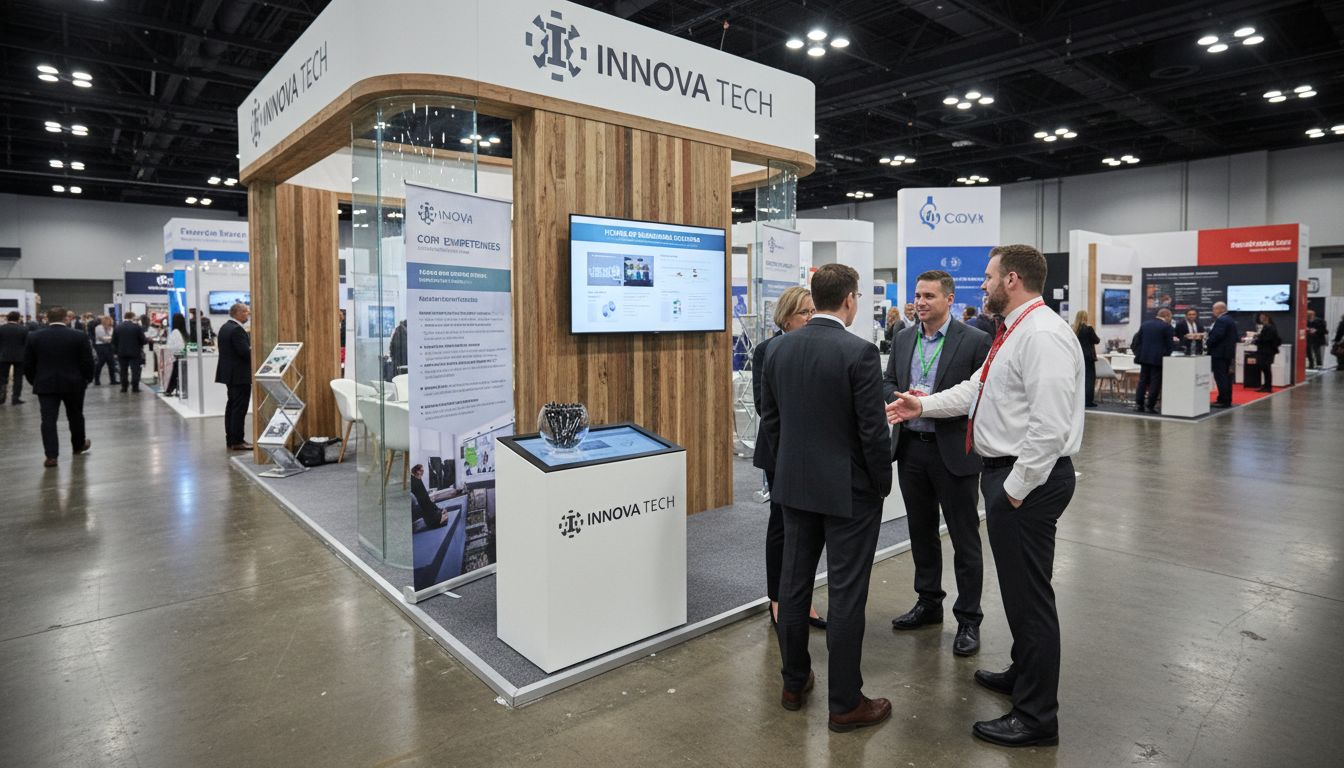
Trade show engagement starts with a clear reason for visitors to stop: a useful product explanation, demonstration or meeting. This five-step guide helps exhibitors define relevant audiences, select manageable activities, prepare staff and measure agreed outcomes. Choose tactics for the actual event, space and team capacity; a busy booth alone does not establish sales value.
Table of Contents
- Step 1: Identify Attendee Profiles And Set Booth Engagement Goals
- Step 2: Design Interactive Displays And Select Engagement Tools
- Step 3: Deploy Staff For Dynamic Attendee Interaction
- Step 4: Monitor Attendee Behavior And Refine Engagement Tactics
- Step 5: Evaluate Engagement Outcomes And Improve Future Strategies
Quick Summary
| Key Insight | Explanation |
|---|---|
| 1. Develop Attendee Profiles | Define relevant roles, product questions and an achievable activity objective. |
| 2. Create Interactive Displays | Specify content, staff capacity, access, services and an equipment fallback. |
| 3. Train Staff for Engagement | Rehearse explanations, handovers, queues and staff breaks. |
| 4. Observe Activity and Queues | Use anonymous counts and observations to resolve operating problems. |
| 5. Conduct Comprehensive Evaluations | Review activities and later outcomes separately, with definitions and dates. |
Step 1: Identify attendee profiles and set booth engagement goals
Define what a useful conversation looks like before choosing an activity. For a product launch, that might be a demonstration for a relevant user; for an established service, it might be a meeting about a specific project. Assign an owner and a way to review the outcome.
Ask the organiser for audience-role and sector information, including the date and source of the figures. Compare it with your own previous event experience. Separate information about the whole event from evidence about likely visitors to your assigned stand; do not assume every attendee has buying authority.
Key Steps for Attendee Profile Development:
- Review relevant previous-event results and product questions
- Check the source and date of organiser audience information
- Use existing audience research to understand product needs
- Ask the organiser about relevant roles, sectors and audience limits
Set specific engagement goals using the available staffing, session length and expected audience. Define how a conversation or demonstration will be counted, and use comparable previous events where available. Targets are planning assumptions, not guaranteed results.
Use the following questions to turn general objectives into an operating plan:
| Planning Area | Question | Practical Action |
|---|---|---|
| Conversation purpose | What question is answered? | Brief staff on the useful explanation |
| Requested next step | What does the visitor want? | Use the existing approved process |
| Message clarity | Can the offer be understood? | Test graphics and explanations |
| Activity measurement | How is an activity counted? | Record a consistent definition and period |
- Number of meaningful conversations
- Quality leads generated
- Product demonstrations conducted
- Next steps requested by relevant visitors
Plan for the visitor’s product question and preferred next step, rather than treating every stop as an opportunity.
Map likely visitor questions to the information, product access and staff expertise available. Use this booth layout planning guide to check circulation, demonstration space and storage alongside the activity.
Pro tip: Write a short audience brief with relevant roles, common questions and the activity offered. Ask the team to review it before the event, without relying on age or personality stereotypes.
Step 2: Design interactive displays and select engagement tools
Select an activity that answers a useful product question and can be operated reliably. A staff-led explanation or physical sample may be more appropriate than complex technology. Compare equipment, content, staff, power, network and space requirements before approval.
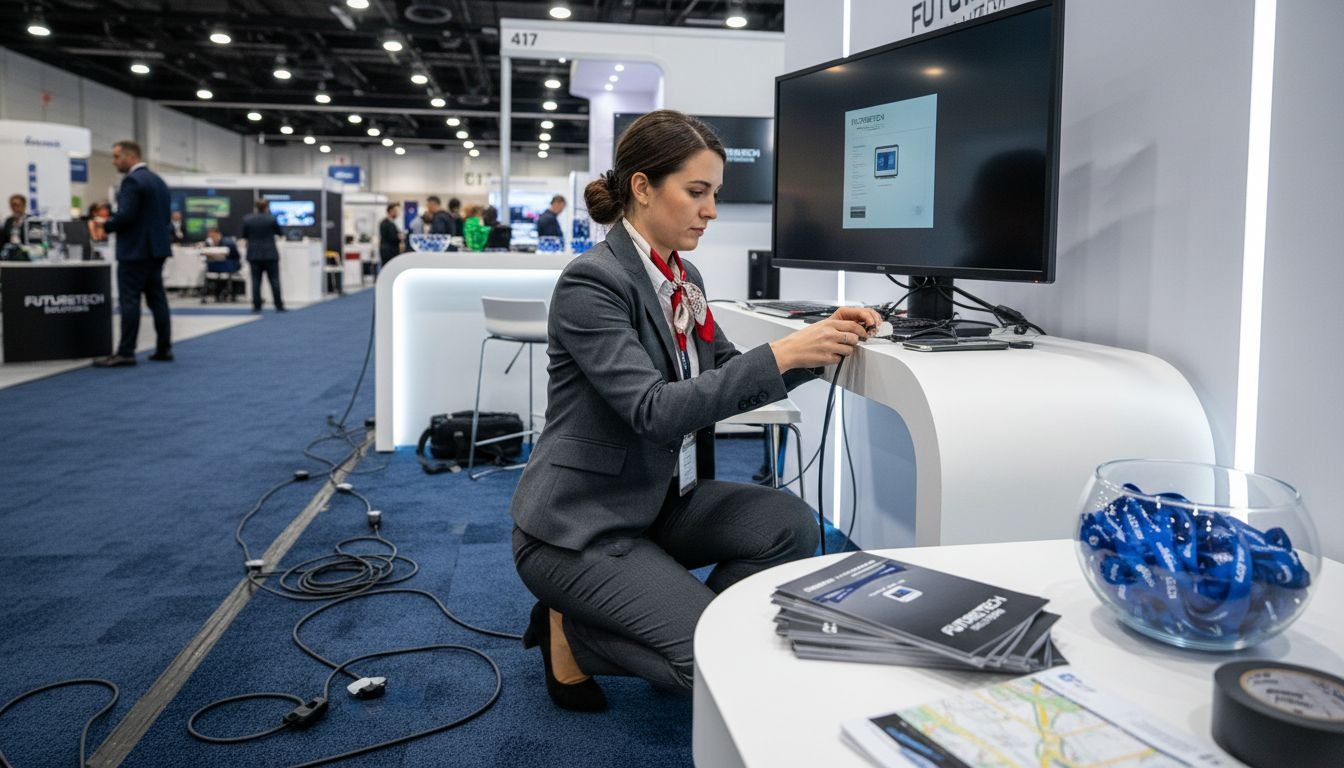
A touchscreen can explain configurations, while a live demonstration can show a product task. Choose the format for the question being answered and provide a simpler alternative. Specify approved content, session capacity, support and an offline fallback before booking digital touchpoints.
Interactive Display Options:
- Touchscreen product exploration stations
- Live demonstration zones
- Virtual reality product experiences
- Augmented reality brand interactions
- Interactive digital games related to your industry
Price the full activity: equipment, content preparation, delivery, venue services, operators and removal. Include queues and staff workspace inside the stand allocation. Review access, safety and any event conditions with the organiser and supplier.
An interactive feature needs a defined purpose, an operator and a fallback; novelty does not establish engagement quality.
Offer a short explanation first, then allow visitors to choose a demonstration, technical discussion or resource. Provide readable information and a staff-assisted alternative to headset or touchscreen activities. Participation should be optional.
- Assess your target audience’s preferences
- Select technologies matching their interaction style
- Test a clear route through the chosen activity
- Train booth staff to guide interactive experiences
Pro tip: Rehearse the complete activity with the actual equipment and approved content. Test loading, readability, sound, recovery from failure and the staff handover before the event.
Step 3: Deploy staff for dynamic attendee interaction
Assign welcoming, product explanation, demonstration and meeting roles to the team. Place staff where they can offer help while keeping access clear. Plan breaks, queue management and cover for specialist questions.
Use a short interaction plan: an opening question, a useful explanation, an optional demonstration and an agreed next step. Rehearse it without requiring every visitor to follow a script. Staff should know when to involve a specialist or acknowledge an unanswered question.
Key Staff Deployment Strategies:
- Assign specific interaction roles to each team member
- Prepare flexible explanations and handover prompts
- Establish clear communication protocols
- Develop targeted conversation starters
- Implement real-time feedback mechanisms
Prepare a staff handover plan showing who handles product, technical and commercial questions. Discuss the visitor’s stated needs instead of assuming them from appearance. Use the existing approved enquiry process for requested follow-up.
A useful staff conversation explains the offer accurately, listens to the visitor and confirms the requested next step.
Prepare your team through comprehensive training that covers:
- Product knowledge depth
- Active listening techniques
- Nonverbal communication skills
- Responding to short and detailed product questions
- Using the existing approved enquiry process
Pro tip: Conduct role-playing scenarios before the event to help staff practice dynamic interaction techniques and build confidence in handling various attendee encounters.
Step 4: Monitor attendee behavior and refine engagement tactics
Use simple observations to identify operational problems during the event: blocked access, long queues, equipment failures or repeated unanswered questions. Review these at agreed times and record what changed. Counts need a consistent definition and observation period.
Start with anonymous activity counts, queue observations and voluntary comments. Do not treat dwell time as satisfaction or infer emotions from faces. If a proposed tool collects personal data, have its purpose, lawful basis and information requirements reviewed before use; the EDPB guide to lawful processing provides background.
Key Behavioral Monitoring Methods:
- Count completed demonstrations without recording visitor identities
- Observe access and queues at agreed check-in times
- Invite optional comments about the activity
- Review anonymous completion and equipment-error counts
- Record recurring product questions and unresolved issues
Change one manageable element at a time, such as demonstration timing or a confusing graphic, and record the reason. Compare similar time windows where possible. A difference in counts can also reflect changing footfall, session schedules or staff availability.
Use observations to resolve specific visitor and operating problems; activity counts alone do not show why behaviour changed.
Agree a practical observation routine:
- Define specific engagement metrics
- Create real-time data collection protocols
- Train staff in observation techniques
- Develop quick adaptation strategies
- Review and adjust tactics continuously
Pro tip: Assign a staff member to review queues, common questions and equipment issues at scheduled check-ins. Avoid collecting identities when anonymous operational counts are sufficient.
Step 5: Evaluate engagement outcomes and improve future strategies
Review the event against the objectives agreed before the show. Separate activity completed on the stand from later meetings, opportunities and sales. Record the assessment date because commercial outcomes may take longer to establish.
Count demonstrations, relevant conversations and requested next steps using the same definitions throughout the event. Review later outcomes through the exhibitor’s existing process. A scan, competition entry or long visit is not automatically a qualified opportunity.
Key Evaluation Metrics:
- Consistently defined relevant conversations
- Requested next steps and later assessed opportunities
- Voluntary comments about the activity
- Staff performance and interaction effectiveness
- Alignment with pre-event engagement goals
Record the event, audience, stand area, staffing hours, activity offered and total cost alongside the results. Differences between events can limit direct comparisons. Identify one or two specific changes to test next time instead of attributing every outcome to the design.
Use these review questions to prepare the next event brief:
| Evaluation Aspect | Review Question | Next Action |
|---|---|---|
| Requested next steps | What was requested and by whom? | Review later outcomes separately |
| Voluntary feedback | What did visitors choose to report? | Record limitations of the sample |
| Staff coverage | Were specialists and breaks covered? | Identify training or scheduling changes |
| Agreed objectives | What was completed against the target? | Record evidence and comparison limits |
Keep the evidence, definitions and assessment date alongside each result so the next team can interpret it.
Implement a strategic evaluation process:
- Compile comprehensive interaction data
- Conduct team and stakeholder debriefings
- Analyze lead quality and conversion potential
- Compare outcomes against initial objectives
- Document lessons learned and improvement strategies
Pro tip: Reuse a review template with objectives, activity definitions, counts, costs, staff observations, later outcomes and next actions. Record unavailable information rather than filling gaps with assumptions.
Bring the Engagement Plan Together
Bring the layout, activity and staff plan together in a brief. Specify what the visitor can learn, how long the activity needs, who operates it and what happens if it fails. Confirm access and queue space before committing to equipment.
Choose an Activity the Team Can Operate
Consider a short product demonstration, an optional quiz related to the product or a consultation area. Select the simplest format that meets the objective. Review prize conditions where relevant, and keep staff and waiting visitors within the stand. Longer visits and participation do not guarantee leads.
Review the Message, Access and Staff Plan
When engagement is limited, first check the message, access, activity relevance and staff availability. Rehearse open questions and accurate product explanations. Offer a resource or requested meeting through the existing process; respect visitors who prefer to leave or browse independently.
Brief Your Exhibition Stand Supplier
Give the stand supplier an activity brief covering the audience, product dimensions, demonstration equipment, staff positions, queue space and service needs. That makes it easier to compare proposals against the same operating requirements.
Adam Expo Stand provides custom and modular exhibition stand services. Discuss the layout, equipment integration, construction scope, installation and dismantling requirements for your event. Request itemised inclusions and exclusions rather than assuming a turnkey quote covers every venue service.
Discuss your event, stand dimensions, activity plan and budget with Adam Expo Stand through the existing contact route. Agree the design scope, supplier responsibilities and organiser deadlines before production.
Use the AUMA trade fair briefing guidance to agree objectives, resources and responsibilities with the team and suppliers.
Frequently Asked Questions
How can I identify the right attendee profiles for my trade show booth?
Use organiser audience-role and sector information, with its source and date, alongside your previous event experience. Identify the product questions and tasks relevant to those visitors. Avoid assuming that all attendees have buying authority.
What are effective engagement goals to set for my trade show booth?
Choose measurable objectives such as completed demonstrations, relevant conversations or requested meetings. Define each count and set a target suited to staff capacity and comparable previous results. Record the assumptions and review the target after the event.
What types of interactive displays should I consider for my trade show booth?
Choose a physical demonstration, sample, touchscreen or other activity that answers a product question. Check approved content, space, access, staffing, services and a fallback. One well-planned activity may be sufficient; there is no required minimum number of display types.
How can I train my booth staff for dynamic attendee interactions?
Rehearse welcoming questions, product explanations, specialist handovers, queue management and breaks. Practice a visitor who wants a short answer and one who needs a detailed demonstration. Use the existing enquiry process for agreed next steps.
What metrics should I monitor to evaluate my trade show engagement success?
Track consistently defined activity counts, queues, equipment issues and voluntary feedback. Review requested meetings and later commercial outcomes separately. Avoid equating dwell time with satisfaction or treating scans as qualified leads.
How can I create a post-event evaluation template for my team?
Include the event and audience, objectives, activity definitions, staffing hours, cost scope, results, observation period, staff feedback and agreed improvements. State what remains unknown and record a later assessment date for commercial outcomes.