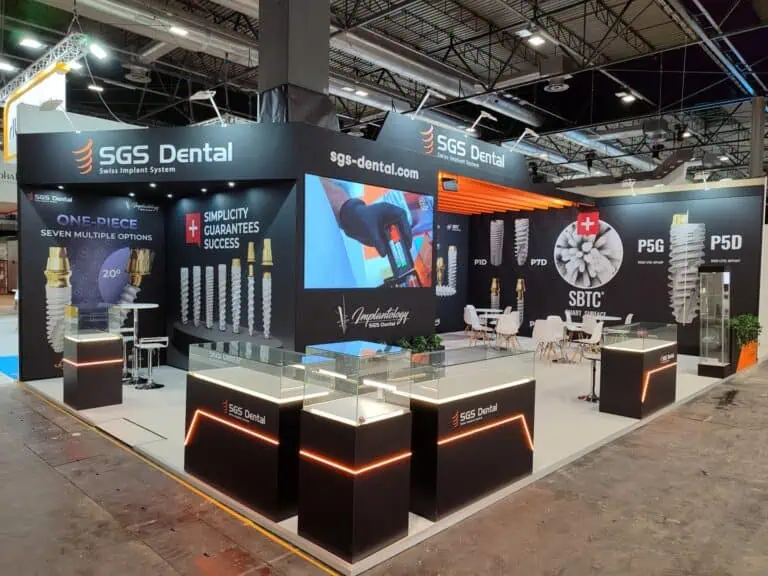
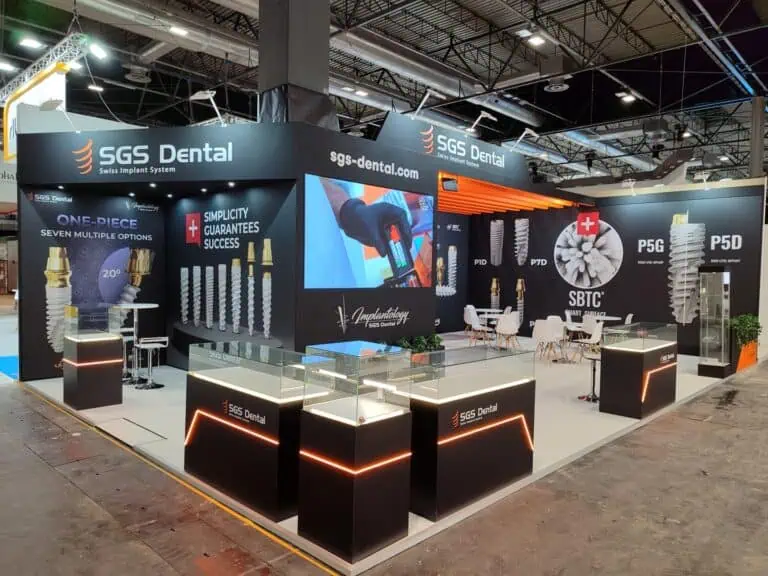
Why choose modular stands? A suitable system can let you retain components, replace graphics and plan different configurations. Those benefits depend on the actual inventory, design, handling and event programme. Confirm them before choosing a system; modular construction does not automatically save a fixed percentage or produce a lower environmental footprint.
This guide focuses on whether a proposed component system can support repeated use. For the broader design comparison, see modular versus custom exhibition stands.
Why choose modular stands for a repeat programme?
Start with the events you expect to attend and the work the stand must support. Reuse can be useful when retained components remain suitable for those activities and approved plots. A stable brand is helpful for planning graphics, but it does not guarantee that the same physical configuration will work everywhere.
List confirmed and tentative events separately. Include plot dimensions, exposed sides, products, meetings, demonstrations, equipment and available staff. Ask the supplier to identify which requirements the proposed system meets and where it needs additions.
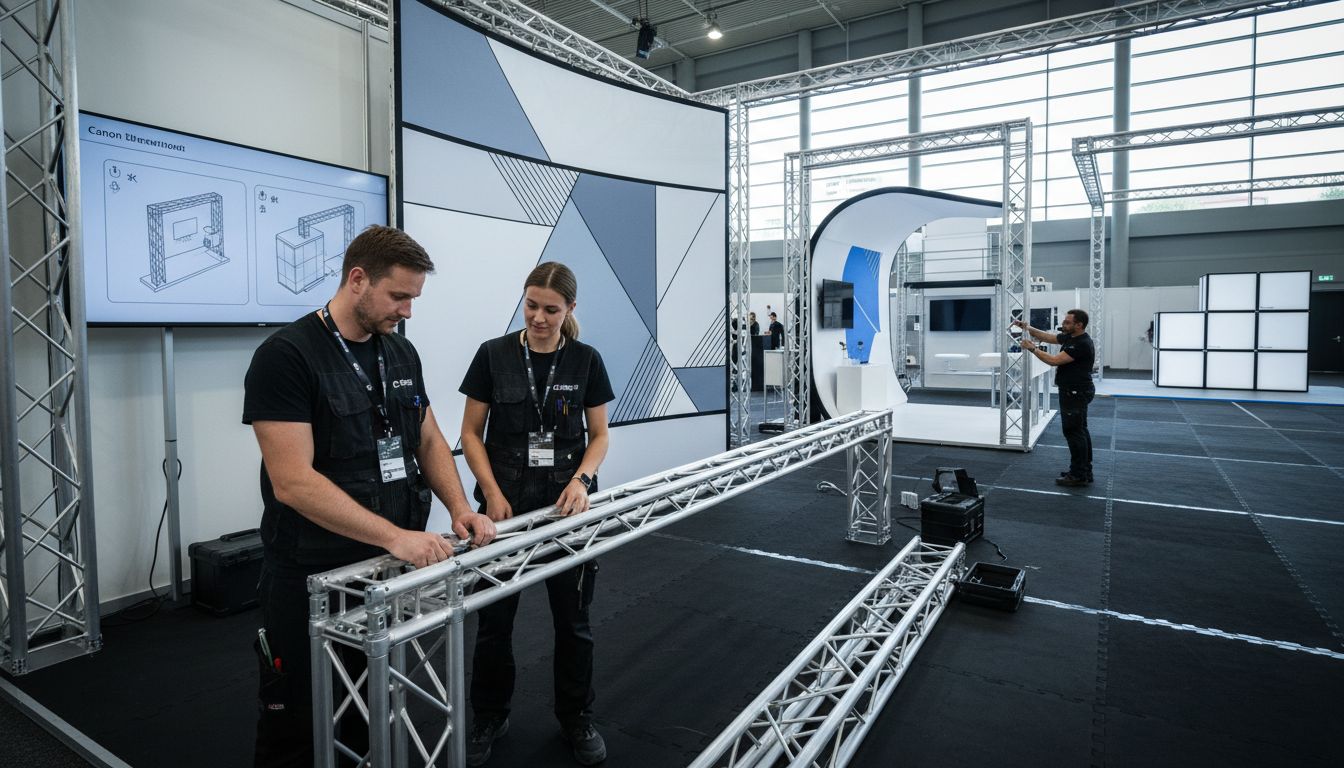
Ask for an inventory and configuration plan
Obtain drawings and a component list for each intended layout. Identify frames, connections, panels, supports, graphics, accessories and equipment interfaces. Ask what is common between configurations and what is additional.
| Proposed benefit | Evidence to request |
|---|---|
| Changed footprint | Scaled plans and component lists for both plots |
| Updated branding | Graphic dimensions, production specification, fitting and replacement cost |
| Efficient transport | Packed dimensions, mass, handling requirements and actual delivery quotes |
| Repeated installation | Instructions, competent team, programme, inspections and replacement parts |
| Longer use | Storage, maintenance, repair and inventory responsibilities |
A supplier should demonstrate the proposed changes. Do not assume every shelf, screen or counter attaches to every frame, or that components from different systems are compatible.
Check assembly and technical responsibilities
Use the manufacturer’s instructions and competent installers for the specified system and configuration. Modular does not mean that no specialist expertise, tools or structural review is needed. Assign responsibility for connections, loads, equipment, electrical services and final technical acceptance.
Manufacturer portfolios vary. Octanorm’s overview, for example, separates several system applications. Confirm the exact product and documentation rather than treating the manufacturer’s name as approval for every intended use.
Review current event and facility instructions, including IFEMA’s regulations directory when relevant. A previously installed configuration may need adaptation or a new review at another event.
Make graphic changes practical
Agree which graphics can be replaced individually, their finished dimensions and how they fit the structure. Check colour, legibility and lighting with samples where useful. A new campaign may require different messages or product displays as well as a new printed surface.
Record artwork approval, production, delivery, fitting and removal responsibilities. Store reusable graphics according to their instructions and inspect them before dispatch. Replacing graphics is not cost-free or automatically possible at the last minute.
Compare complete costs over realistic use
Request purchase or hire, design, technical work, graphics, packing, transport, handling, installation, support, dismantling, storage, inspection, maintenance and adaptations as applicable. Use equivalent requirements when comparing another solution.
Divide the complete programme cost by the planned uses only when those uses are realistic and suitable. Also compare fewer events, a changed product and a different plot. The acquisition price divided by ten is not the total cost of ten installations.
Keep financial cost comparison separate from commercial return. A cheaper installation does not establish better leads, and a longer visit does not prove profit. Record useful activity and attributable outcomes alongside the agreed cost scope.
Plan storage, repair and environmental evidence
Assign an inventory owner. Label components, keep packing records and note damage after each event. Confirm storage conditions, access, insurance arrangements and who organises inspection and repair before the next use.
Support environmental statements with evidence for the actual project. Identify retained components, replaced graphics, transport, repairs and available end-of-use routes. Lightweight or recyclable materials alone cannot establish the footprint of the complete stand.
Frequently asked questions
How many times can a modular stand be reused?
That depends on the system, condition, handling, maintenance and continued suitability. Inspect the components and follow supplier guidance instead of promising a universal number.
Does modular always mean cheaper?
No. Compare complete suitable offers over your actual programme, including adaptations, services and between-event costs.
Can I add technology later?
Review the equipment’s dimensions, loads, power, ventilation, fixing and service access with the responsible teams. Do not add it solely because the frame has spare space.
How do I request a system proposal?
Send the event programme, plots, products, activities, brand files and budget. Ask for documented configurations, a component inventory and complete delivery and maintenance scope.
Follow our exhibition planning guides
Choose Adam Expo Stand as a preferred source to help you find our exhibition guides and updates on Google.
Add as a preferred source on GoogleGoogle may ask you to sign in and confirm your choice.