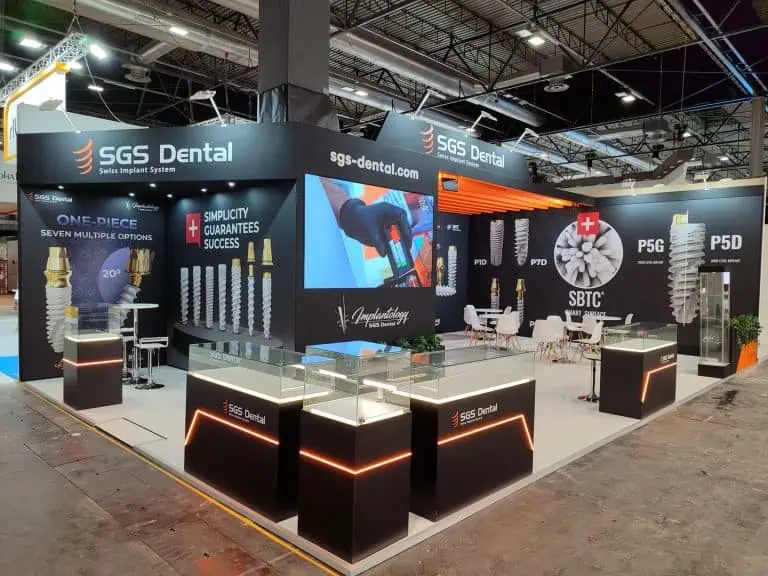
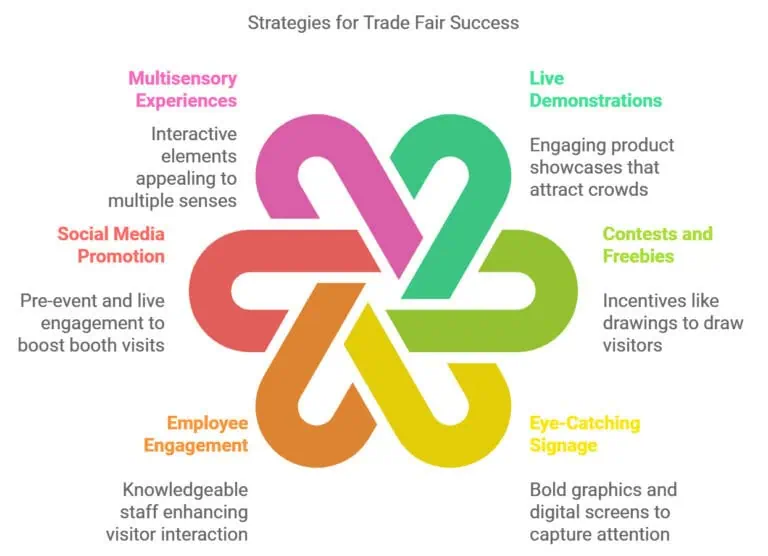
Creative trade show booth ideas should give a relevant visitor a clear reason to stop and an activity they can complete. Consider a guided demonstration, sample comparison, readable visual message, visitor-selected information or a well-planned meeting area. Choose by usefulness, space, staff capacity and complete cost.
This guide offers planning options rather than promises of crowds or leads. A smaller stand can support a useful activity, while a large stand can still be difficult to operate. Test the actual layout and explanation before approving production.
Start with the visitor question
Identify the audience and the product question you want to answer. For example: how do two configurations differ, how is a process performed, or which application suits a particular need? Write the intended activity and agreed next action.
Provide the team with the booked plan, package specification, current event manual, equipment dimensions, staffing, schedule and budget. AUMA’s trade fair briefing guidance is a reference for communicating objectives and requirements.
Creative trade show booth ideas to compare
| Idea | Useful purpose | Planning check |
|---|---|---|
| Guided demonstration | Explain a process through a short activity. | Staff, supervision, capacity, waiting space and fallback. |
| Sample comparison | Make differences visible or tangible. | Accurate labels, lighting, handling and product access. |
| Visual focal point | Identify the offer from relevant approaches. | Readable message, actual viewing conditions and approved mounting. |
| Information menu | Let visitors choose relevant content. | Reviewed information, accessible interface, support and alternative. |
| Conversation area | Support questions or scheduled meetings. | Appropriate furniture, privacy, equipment and staff coverage. |
Combine ideas only when their functions fit together. A demonstration, meeting and recording area may compete for the same space or staff. Draw them at scale and rehearse the operating sequence.
Plan a compact stand around real equipment
Show the actual dimensions of products, furniture, doors, storage and screens on the plan. Review visitor access and circulation under the event’s requirements. A counter may be appropriate for a particular activity; moving every feature to the back is not a universal layout solution.
Use height only within the permitted specification and the structure’s documented capability. Shelves, screens, banners and suspended elements need suitable supports and approval. Do not improvise load-bearing walls, lighting or electrical work from decorative examples.
Multi-purpose furniture can be useful when designed for those functions. Confirm intended use, stability, dimensions and access. A storage box should not be treated as visitor seating unless it is suitable for that use.
Control costs through scope and comparison
Check what the booking already supplies before ordering additional walls, lighting or furniture. Compare rental and purchase over the actual programme, including delivery, setup, removal, storage, repair and replacement. Rental is not automatically cheaper in every case.
For modular systems, confirm the specific inventory and documented layouts. The OCTANORM systems portfolio illustrates manufacturer categories, but the supplier must confirm the product and configuration for your brief. Reusable components do not guarantee a fit for every plot.
Request optional prices for features that can be removed without undermining the activity. Include design, graphics, content, equipment, transport, installation, dismantling, services and applicable taxes. Decorative materials that appear inexpensive may still require fabrication, documentation and handling.
Use lighting and colour to explain the offer
Test samples, text and product appearance under the proposed lighting. Review contrast, glare, reflections, viewing positions and staff working needs. Keep brand consistency while making information readable.
A colour does not produce the same emotional response in every audience. An LED wall or backlit graphic is an option, not an attention guarantee. Specify the actual content, equipment, mounting, power and support with the responsible providers.
Give interactive features a defined job
A touchscreen, AR demonstration or quiz should answer a relevant question. Test instructions, duration, accessibility, accuracy and session capacity. Provide a simpler alternative when equipment is unavailable or unsuitable for a visitor.
If considering prizes, samples or giveaways, agree the purpose, suitability, operating terms and event approval through the exhibitor’s established process. Do not equate a prize entry or badge scan with a qualified enquiry or permission for every follow-up message.
For tools processing personal data, involve the privacy owner before use. The European Data Protection Board’s guidance explains that lawful processing depends on the applicable basis and its conditions. Review the specific purpose and process rather than assuming all booth interactions work the same way.
Make material and reuse claims specific
Request evidence for the supplied components and define their next use or recovery route. Reclaimed wood, cardboard, fabric, plants or LED equipment do not automatically establish that a whole stand is environmentally preferable. Check relevant performance and documentation as well as appearance.
Agree who dismantles, inventories, packs, stores and repairs reusable items. Compare the next event’s configuration before promising reuse. A material described as recyclable also needs an actual available recovery arrangement.
Rehearse and measure the activity
Before opening, test the explanation, product demonstration, equipment and staff handover. Record who handles issues and what acceptance checks must be completed. Keep queues and activities inside the agreed space.
During defined periods, record completed activities, relevant conversations, qualified enquiries and operational problems. Use consistent criteria across staff. Financial return requires full cost, an attribution method and later outcomes; visitor totals or social shares alone are insufficient.
Frequently asked questions
What is the best idea for attracting visitors?
There is no universal winner in this guide. Choose a useful activity for the intended audience and test the message, access and staffing. Relevance matters as well as attention.
Do I need to build decorative features myself?
No. Compare suitable supplied or rented components and ask the responsible contractor to confirm construction, mounting and installation. An inspiration image is not a technical method.
How do I generate relevant enquiries?
Prepare a clear product explanation, staff questions suited to the audience and an agreed process for recording the next action. Assess enquiries against defined criteria; participation alone does not establish quality.
Send your event, plot, activities, equipment, schedule and budget to Adam Expo Stand and request a written proposal with scope, responsibilities and optional costs.
Follow our exhibition planning guides
Choose Adam Expo Stand as a preferred source to help you find our exhibition guides and updates on Google.
Add as a preferred source on GoogleGoogle may ask you to sign in and confirm your choice.