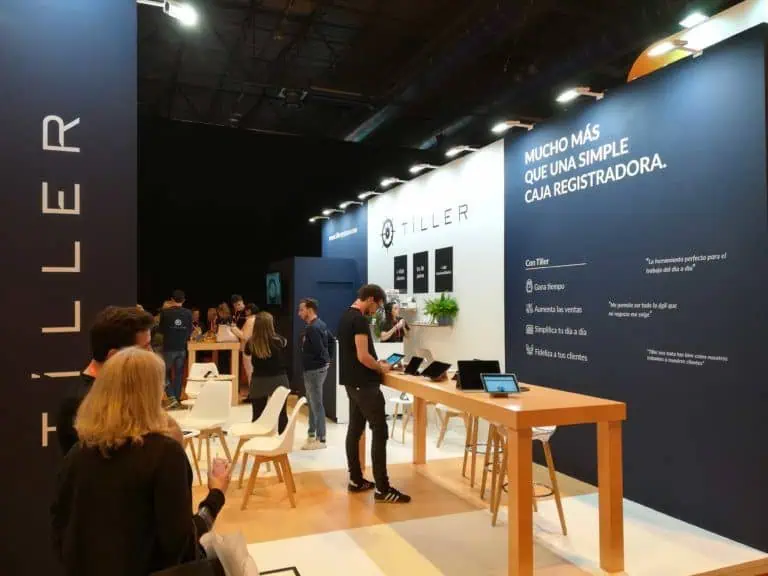
Trade show booth marketing goals should determine what happens in the space. Start with the visitor action you need, then specify the activity, equipment, staff and evidence required to support it. A brighter display or a larger floor area can help a particular task, but neither guarantees more qualified enquiries.
This guide connects common marketing goals with practical booth requirements. For campaign timing and channels, use the separate trade show marketing strategies guide. Your project team should confirm the final brief against the actual event and audience.
Choose one primary goal before designing the booth
Write a sentence that names the audience, intended action and evidence of success. For example: “Help maintenance managers assess whether our new component suits their application, and record agreed technical follow-ups.” This is more useful than “create impact”, because it identifies what the booth must enable.
A secondary goal may fit alongside the main one. However, several activities can compete for the same space, power, staff and attention. Decide which activity takes priority when the stand is busy. The AUMA participation concept guidance provides a useful starting point for connecting objectives and participation planning.
Match trade show booth marketing goals to activities
| Goal | Useful activity | Requirements to discuss | Evidence to record |
|---|---|---|---|
| Introduce a product | Explain one relevant use case | Visible product, concise message, demonstrator and safe handling | Relevant questions and agreed next steps |
| Demonstrate suitability | Let visitors examine a task or comparison | Working equipment, service requirements, reset process and alternative demonstration | Completed relevant demonstrations and suitability issues |
| Meet existing customers | Hold scheduled account conversations | Booking process, seating and appropriate acoustic and visual privacy | Attendance, decisions and assigned actions |
| Generate enquiries | Discuss needs and arrange a follow-up | Prepared staff, simple qualification questions and reliable recording | Enquiries meeting an agreed definition |
| Explain the brand | Present a clear offer and supporting evidence | Readable messages, relevant examples and consistent materials | Visitor feedback or a defined awareness study |
| Recruit partners | Discuss a defined partnership opportunity | Suitable team members, criteria and a meeting area | Relevant prospects and agreed evaluation steps |
| Gather market feedback | Ask a short, focused set of questions | Neutral questions, a recording method and a clear explanation of use | Responses, limitations and recurring themes |
| Create useful content | Record a planned explanation or interview | Permissions, sound, lighting, schedule and distribution plan | Usable assets and their subsequent performance |
Test the actual visitor journey
Walk through each activity using the proposed plan: notice the invitation, approach, understand the offer, participate and agree a next step. Check whether a queue blocks another task or the aisle. Include access needs, storage, replenishment, staff positions and the space required to operate products.
For private discussions, a hanging sign or decorative screen does not establish acoustic confidentiality. Discuss the information involved and test the proposed enclosure or meeting arrangement. When a task cannot work comfortably in the available area, shorten or relocate it rather than relying on a persuasive rendering.
Specify displays, reuse and costs in the brief

Ask suppliers to explain how lighting, graphics and furniture support the selected tasks. Check graphic legibility at realistic viewing positions and approve relevant physical samples. For digital models, see the 3D exhibition stand design guide.
Custom construction, rental and reusable components can each suit a project. Compare the complete scope: design, graphics, transport, handling, installation, venue services, dismantling, storage, maintenance and future adaptation. A system that expands on paper may need additional parts, structural checks or new graphics for a different plot. Obtain written requirements and prices for the proposed configurations.
Confirm packing dimensions, weights, delivery arrangements and assembly responsibilities. Do not assume a display can travel by parcel service, fit a particular storage room or be installed by two people without the supplier’s documented instructions and the event’s requirements.
Measure outcomes without confusing them
Footfall, demonstrations, relevant enquiries, accepted follow-ups and sales describe different stages. Define each before the event and record the period used. A busy activity can produce little commercial value; a small number of suitable meetings may still serve the objective.
Agree how contact details will be used and retained. A scan or participation in a giveaway does not automatically authorise every marketing use. The EDPB guidance on lawful processing explains why purpose and an appropriate lawful basis matter.
What should go into the final booth brief?
Include the audience, primary goal, activity, required products and services, staff roles, access needs, scope, budget assumptions, approval owners and measurement definitions. Record unresolved questions before approving production. Ask Adam Expo Stand to assess the brief against the event documents and the agreed project scope.
Follow our exhibition planning guides
Choose Adam Expo Stand as a preferred source to help you find our exhibition guides and updates on Google.
Add as a preferred source on GoogleGoogle may ask you to sign in and confirm your choice.