A useful exhibition stand experience gives the right visitor a clear reason to stop, a useful activity to take part in and an easy next step. Start with the conversation or demonstration your team needs to deliver. Then organise branding, displays, meeting space and technology around that activity.
This guide uses three published Adam Expo Stand projects to explain the design decisions behind different stand experiences. It also includes a briefing checklist and a way to compare budgets without assuming that a larger crowd means better business results.
Editorial update: . Examples describe the published project briefs and design choices; no measured lead uplift is claimed.
What should visitors do on your stand?
Write the main action in one sentence: watch a product demonstration, compare samples, discuss a requirement or attend a booked meeting. A vague goal such as “get noticed” makes it difficult to decide where to spend money or allocate floor space.
Describe who the stand is for and what they need to understand. A technical buyer may need to see equipment working; a distributor may want product comparisons; an existing client may need a quiet meeting. Those needs can require different zones within the same stand.
Three exhibition stand examples and what they teach
SGS Dental at Expodental: separate demonstrations from private meetings
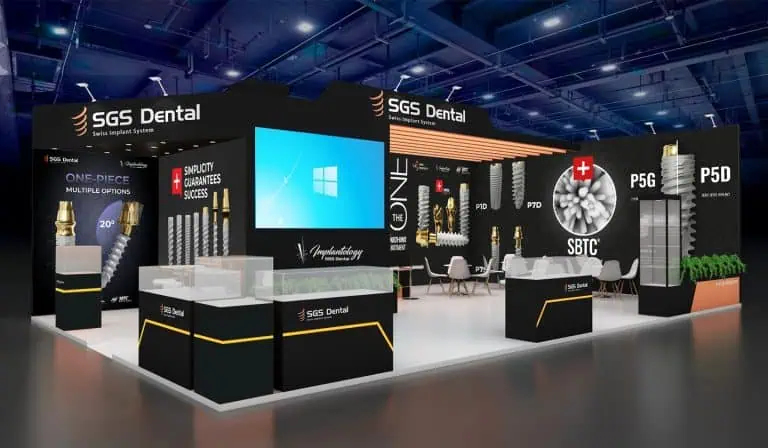
The SGS Dental project at IFEMA Madrid combined product displays, live demonstrations and private meetings. Glass-inspired elements, multimedia screens and LED lighting supported the presentation within an open layout.
Lesson for your brief: identify each activity before drawing the stand. Give demonstrations enough viewing space and place confidential conversations where they can happen without blocking the display. Ask the builder to show how visitors move between these areas.
Alphacan at VETECO: put the product first and plan reuse
The Alphacan case study describes large display frames and a restrained architectural setting for window systems. The design was reused across exhibition appearances, with storage and reinstallation forming part of the programme.
Lesson for your brief: let visitors see and examine the product. If you intend to reuse the stand, include future floor plans, storage and transport in the first discussion. Durability and reconfiguration matter alongside the first event’s appearance.
Just Juice and Lost Vape at Vapexpo Madrid: give two brands clear identities
The shared-brand Vapexpo Madrid project used two distinct brand zones within one coordinated structure. Counters, colours, lighting and display elements identified the areas while maintaining a connected layout.
Lesson for your brief: a shared stand needs an agreed allocation of display space, staffing, storage and branding. Decide who approves common elements and how visitors recognise each participant.
These are design examples, not controlled tests of visitor or sales performance. Explore the full case-study portfolio and ask for a project relevant to your own products and venue.
How to plan an exhibition stand experience
- At the aisle: make the product or problem you address clear from the permitted approach directions.
- At the entrance: leave space for visitors to pause without blocking access or a live demonstration.
- At the activity: provide the power, lighting, display height, staffing and safety arrangements it needs.
- At the conversation: separate quick questions from longer or confidential meetings.
- At the next step: make it easy to request specifications, arrange a meeting or agree a follow-up.
Test the layout with your actual product dimensions and the number of people working on the stand. Include step-free access, readable graphics and the applicable venue requirements. A render alone cannot confirm the practical clearances or approval conditions.
Which features deserve your budget?
Compare each feature by the visitor task it supports and the full cost of delivering it. An LED wall, touchscreen or VR experience needs suitable content, power, staffing and a fallback if it stops working.
| Feature | Useful when | Check before ordering |
|---|---|---|
| Live product demonstration | Visitors need to understand how a product works | Footprint, power, handling, safety and demonstration staffing |
| Screen or interactive display | Physical products or processes are difficult to show | Content, sound, connectivity, accessibility and technical support |
| Private meeting area | Detailed commercial or technical conversations are central | Capacity, noise, ventilation and the effect on display space |
| Reusable structure | You have several compatible events planned | Future layouts, storage, repairs, replacement graphics and transport |
Use the stand cost calculator as a planning aid, then request an itemised quotation. Confirm VAT, venue space, electrical connections, rigging, AV, furniture, transport, installation, dismantling and storage. Do not compare a build-only quote with an offer that includes more services.
Our turnkey service guide explains how to define inclusions and responsibilities. For a repeated programme, compare total costs across all shows rather than assuming that reuse always makes the lowest initial price the best choice.
What makes a reuse plan credible?
List the components you intend to retain, how they will be stored and the changes needed for the next event. Ask for material information or certification when making a specific environmental claim. Screens can update digital content; printed graphics still need new production when the artwork changes.
Estimate the complete programme cost, including transport, storage and maintenance. The modular stand service can be a starting point for that discussion.
How to measure results beyond foot traffic
Record useful actions consistently: completed demonstrations, qualified conversations, booked meetings and requests for a proposal. Agree what makes a lead qualified before the show so the team uses the same criteria.
Assign follow-up ownership and record the next step agreed with each contact. Report proposals and won business alongside the event cost. When calculating ROI, use an agreed attribution period and distinguish revenue from profit; a visitor count alone does not establish return on investment.
Promote relevant demonstrations and meeting slots before the show. Afterwards, share useful product information or project lessons with the appropriate audience. Use your own photographs and footage with the necessary permissions.
Exhibition stand briefing checklist
- Event, venue, dates, hall and stand number.
- Floor plan, dimensions, open sides and the current exhibitor manual.
- Target visitors and the main action they should take.
- Products: dimensions, weight, power and demonstration requirements.
- Staffing, meeting capacity, storage and accessibility needs.
- Brand assets, graphics, AV content and artwork deadlines.
- Budget range, required services and approval responsibilities.
- Future shows, reuse goals, storage and reinstallation needs.
Questions to ask your stand builder
Ask for a comparable completed project, an itemised scope and a schedule with your approval deadlines. Confirm concept delivery, revisions, venue submissions, installation, support and dismantling. Review who pays for third-party services and how changes are priced.
For events at IFEMA, explore our Madrid stand design and build service. For another venue, include its name in your brief so the delivery requirements can be reviewed.
Discuss your stand layout and request a project-specific proposal.
Follow our exhibition planning guides
Choose Adam Expo Stand as a preferred source to help you find our exhibition guides and updates on Google.
Add as a preferred source on GoogleGoogle may ask you to sign in and confirm your choice.