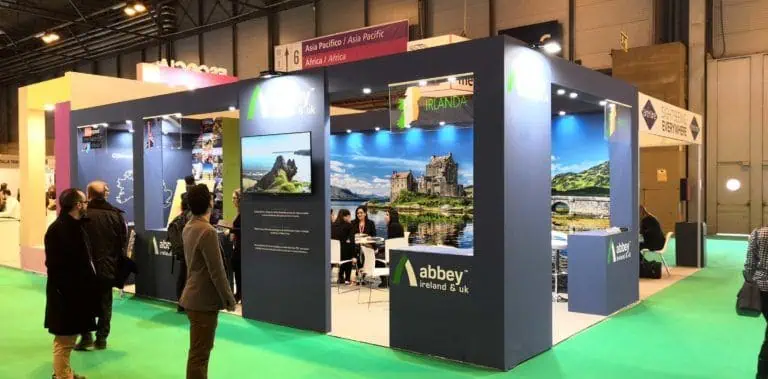
An exhibition stand design company should explain how its proposal meets your brief, who delivers each part and what the quoted scope includes. Compare suppliers using relevant evidence and written responsibilities. A low headline price, an impressive rendering or an “all-inclusive” label does not establish that the complete project is covered.
These FAQs focus on selecting and working with a supplier. For layout and specification decisions, see the exhibition stand design FAQ.
What should I send an exhibition stand design company?
Provide the event, dates, plot plan, open sides, objectives, intended audience, products, activities, staff and budget scope. Include brand files, equipment requirements, approval owners and current organiser documents. Identify unknowns rather than allowing assumptions to become part of production.
What experience is relevant?
Request examples with a comparable activity, scale, location and delivery scope. Ask what the supplier actually handled, which partners were involved and what was learned. Confirm permission to contact references. Years in business and a large project count do not replace evidence relevant to your brief.
How should I compare proposals?
Use the same requirements and cost categories for each bidder. Check the visitor activity, scaled layout, finishes, services, programme, delivery responsibilities and reuse plans. Ask suppliers to identify deviations. Do not assume a custom, modular or rental category automatically provides better value.
What design deliverables should be agreed?

Confirm concepts, views, scaled plans, specifications, artwork templates, technical documentation and approval stages as applicable. Establish revision rounds, fees, file ownership and permitted use in writing. A complimentary concept should not be assumed to include unlimited changes or production-ready drawings.
Does a 3D visual approve the construction?
No. It helps review appearance and arrangements, while technical documents and competent checks serve other purposes. Agree who verifies structure, electrical work, materials and event conditions. The 3D design guide explains useful review views and their limits.
What should the quotation include?
| Area | Items to clarify |
|---|---|
| Design and production | Deliverables, revisions, construction, finishes and graphics |
| Delivery | Packing, transport, handling, access and installation |
| Event services | Power, network, rigging, AV, cleaning and opening support where required |
| Move-out | Dismantling, waste, return freight, storage and repair |
| Commercial terms | Taxes, payment, cancellation, ownership, insurance and exclusions |
Is in-house fabrication always better?
Ask who performs the work and how competence, quality and coordination are managed. A supplier may use its own team, specialist partners or a combination. Ownership of a workshop alone does not establish quality, and subcontracting alone does not establish poor service. Require clear accountability and relevant evidence.
How should changes be managed?
Use a named approval owner and current document versions. Record the proposed change, effect on price and programme, required technical review and written acceptance before implementation. Agree actual approval dates with the supplier; a universal last-minute change window is unreliable.
How do I compare rental and ownership?
Use the expected event programme and complete cost over that period. Include adaptation, graphics, delivery, storage, maintenance and disposal. For AV, confirm equipment availability, operation, support and damage terms in either option. Rental does not automatically remove transport, insurance or service charges.
What support and acceptance process should be agreed?
Define handover, testing, technical sign-offs, issue recording, escalation and support hours. Document remedies and commercial terms for unresolved issues. Do not infer response deadlines or compensation from general marketing wording.
What evidence supports environmental claims?
Ask for the scope of material documentation, quantities, planned reuse, storage, repairs and end-of-use arrangements. A single certified material or management system does not establish the environmental performance of the entire stand. Confirm the claims before including them in visitor-facing messages.
Who measures commercial results?
Agree whether reporting is part of the supplier’s scope and what data the exhibitor must provide. Separate operating quality, activity counts, later opportunities and financial return. A stand contractor cannot establish sales attribution from photographs or footfall alone.
The AUMA briefing guidance offers a reference for agreeing objectives and responsibilities. Send Adam Expo Stand your confirmed brief and request a proposal with clear inclusions, exclusions and approval stages.
Follow our exhibition planning guides
Choose Adam Expo Stand as a preferred source to help you find our exhibition guides and updates on Google.
Add as a preferred source on GoogleGoogle may ask you to sign in and confirm your choice.