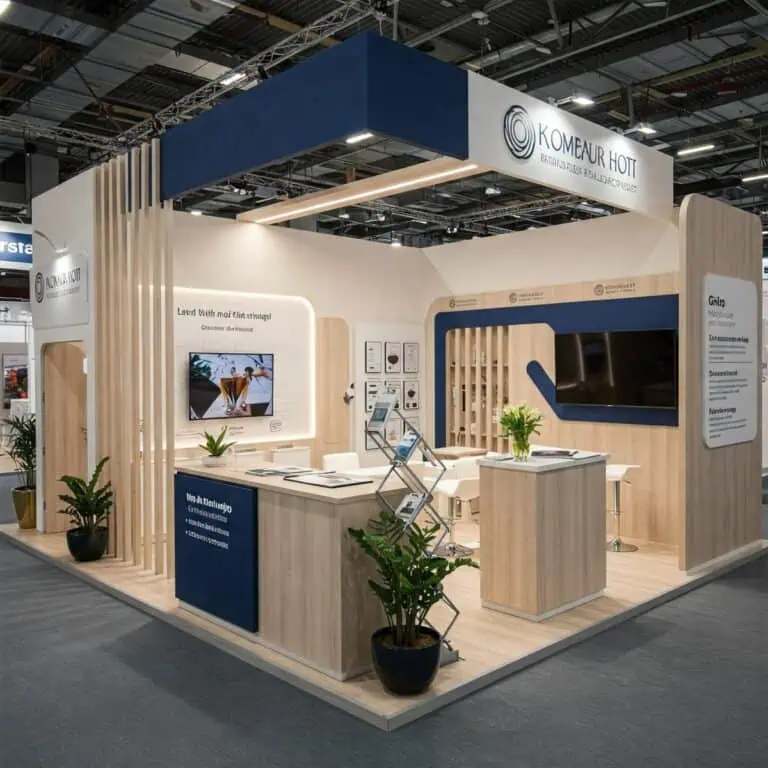
RAI Amsterdam stand planning starts with your event’s booked plot, current exhibitor manual and delivery requirements. Define the visitor activity, then coordinate the layout, technical review, services, crew registration and freight access. Confirm the scope with each responsible provider; another fair’s height limit, construction timetable or price does not establish the requirements for your participation.
RAI Amsterdam stand planning: identify the actual event and plot
Record the fair and edition, hall, stand number, dimensions, open sides and supplied package. Obtain the allocated plan showing services and surrounding circulation. Ask the organiser which documents govern your construction and who reviews the design. Keep a dated requirements sheet shared by the exhibitor, designer, installer and logistics provider.
Check event details at their source. For example, the official Horecava information confirms 11–14 January 2027 at RAI Amsterdam. Its visitor dates do not establish the build-up timetable for that show or any other RAI event. Confirm access and submission dates in your own exhibitor information.
The venue’s exhibitor services page points to the services needed for participation, including stand construction, technical support, logistics and permissions. Use the organiser’s current portal and appointed contacts to identify what your package includes and which orders remain your responsibility.
Design for the audience and the visitor task
Explain what you offer, who it is for and what a visitor can assess on the stand. Prepare relevant products, demonstrations, reference information and meeting activities. Dutch nationality alone does not establish a visitor’s preferred design style. Test the proposed presentation against the show’s actual audience and your commercial objectives.
Make the main message readable, leave a clear approach and keep conversations, queues and furniture inside the booked footprint. Provide enough storage for the real quantity of stock, packaging and personal belongings. Where confidentiality matters, assess a suitable meeting arrangement while retaining usable circulation and access.
Specify demonstration equipment, operating conditions, staff supervision and an alternative if a device or connection fails. Give the designer dimensions and service requirements before approving the layout. Use our bespoke exhibition stand guide to prepare the functional brief.
Check technical review and permissions before production
Ask for the applicable stand height, boundary, floor-loading, structural, material and fire-safety requirements for your event and design. Identify the required drawings and evidence, submission owner, reviewer and response date. A general hall description or a supplier’s previous project is not approval for a new installation.
| Proposed element | Check to record in the project brief |
|---|---|
| Tall, elevated or multi-level construction | Design review, supporting documents and permissions for the actual proposal |
| Suspended sign, lighting or AV | Rigging permission, load information, available positions and approved provider |
| Powered equipment | Supply requirements, order owner, connection arrangements and testing |
| Water or operating product demonstration | Relevant permissions, service specification, supervision and containment |
| Food, samples or promotional activity | Organiser and venue permission requirements, responsible team and operating process |
| Visitor and staff circulation | Accessible approach, usable internal routes and clear emergency access |
RAI’s event-related permits page identifies activities that need permission and explains that the organiser determines the applicable permissions for each event. Tell the organiser about your intended activity early. Keep approval of the physical stand separate from review of product claims, promotional content and the exhibitor’s own operating procedures.
Coordinate rigging and technical services
The venue’s rigging information describes a dedicated partner and specific written-consent and plan-approval requirements where a different supplier is proposed. Roof-loading conditions vary by space. Confirm the arrangement for your event and proposed equipment rather than assuming your visiting crew may attach to the building.
Agree the equipment inventory, weights, power, data and other service needs with the responsible specialists. Confirm positions before finalising flooring and furniture. Record which party orders each service, pays for it and checks it at handover. Keep any revised drawings consistent across the installer and service providers.
Arrange freight delivery and crew access separately
The current venue logistics page explains advance freight time-slot registration and event traffic instructions. It also describes delivery through the Advanced Logistics Center with its logistics partner. Compare the available arrangements with your shipment, handling requirements and installation programme; obtain a specific quote for the services needed.
Confirm the route, loading location, booked slot, unloading assistance, empty-case storage and return collection. Label goods with the event, hall, stand and receiving contact. Tell the carrier who accepts delivery and how to reach the installation manager. Ask the logistics provider to check current vehicle-access requirements for the actual journey.
RAI’s safe-working information requires personal registration and the relevant QR code or badge during build-up and breakdown. A vehicle booking does not replace personal access. Pass the current safety instructions to the crew and confirm the applicable equipment and working arrangements. The page distinguishes its real-estate work permit from stand-building activities; do not substitute one permission process for another.
For shipments crossing a customs boundary, the responsible freight provider should determine the documents and procedure for the actual goods and route. Identify temporary equipment returning after the fair, consumables and items intended for sale. Avoid assuming every international shipment requires the same form.
Compare a complete budget and contractor scope
Separate the organiser’s space package from design, construction, graphics, furniture, equipment, venue services, freight, handling, installation, dismantling and storage. Include tax treatment, currency and any specialist documentation. Ask suppliers to state assumptions, exclusions, change charges and the person responsible for each order.
A turnkey proposal still needs defined interfaces. Request relevant project evidence, the named project manager, installation responsibility and the specialist-provider arrangements. Apply the same checks to Adam Expo Stand and other bidders. A supplier ranking or promise of guaranteed success does not replace a comparable brief and written scope.
Work backwards from actual submission, production and access dates. Track decisions and dependencies instead of imposing one lead time on every stand. Confirm supplier capacity and what happens if an approval, artwork decision or service order changes. Agree the process for accepting a variation before work proceeds.
Plan reuse, handover and removal
For repeated shows, compare modular systems, custom reusable components and rental options against the booked footprints. Include adaptation, transport, packaging, maintenance and storage. Request evidence for particular material claims; a reusable component or labelled board does not certify the entire stand or establish an automatic environmental saving.
At handover, check the accepted layout, graphics, operating equipment, services, storage and staff access. Test demonstrations and their fallback. Record outstanding items, support contacts and the person accepting delivery. Brief staff on visitor questions and the approved method for recording useful conversations and next steps.
Before dismantling, confirm the organiser’s release, crew access, collection arrangements, component inventory, waste responsibilities and return destination. Document the condition of retained parts for the next use. To discuss the project, contact Adam Expo Stand with your event documents, visitor brief and required scope.
Follow our exhibition planning guides
Choose Adam Expo Stand as a preferred source to help you find our exhibition guides and updates on Google.
Add as a preferred source on GoogleGoogle may ask you to sign in and confirm your choice.