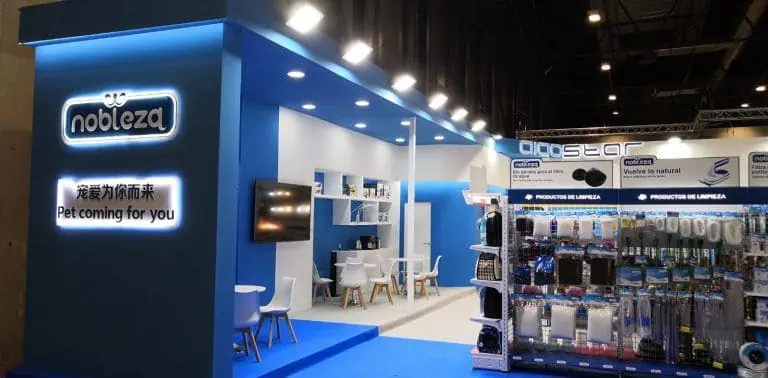
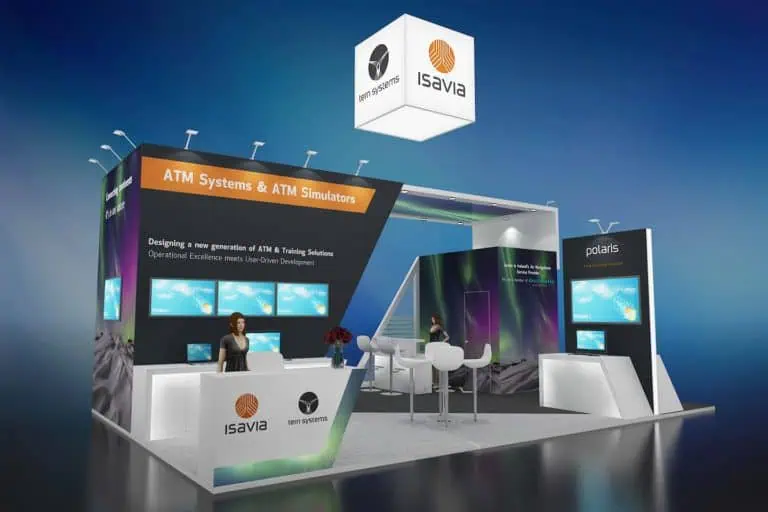
Quick answer: Compare custom exhibition stands vs shell scheme against the same activity brief and complete event cost. A shell scheme is an organiser-supplied package with specified components; a custom stand is designed around a particular brief. Neither format guarantees stronger visitor engagement or a better financial return.
Adam Expo Stand publishes this comparison and offers stand services. This is a buying framework, rather than an independent ranking of contractors. Ask each supplier, including us, to confirm the proposed team, scope and relevant project evidence.
What the two terms mean
A custom exhibition stand combines components designed or selected for your brand, plot and activities. It can include purpose-made construction, standard rented items and reusable systems. It does not mean every component is newly manufactured or that the structure is automatically suitable for every venue.
A shell scheme is a package offered for a particular event, usually with defined walls or framework and branding provisions. Flooring, lighting, furniture, power, cleaning and other services depend on the package. Check the organiser’s itemised offer: a space booking does not automatically include a shell scheme, even at a familiar venue.
Dimensions, usable wall areas, supports, open sides, permitted fixings and service locations vary. Obtain the current package drawing and rules before ordering graphics or equipment. A standard package can still require additional services and exhibitor documentation.
Start with what must happen on the stand
List the products, demonstrations, conversations, meetings, storage and staff tasks. Record equipment dimensions, loads, power, connectivity and access needs. Distinguish essential activities from optional features.
The AUMA stand-design guidance provides a useful starting point for dividing space by function. Turn those functions into a scaled plan for the allocated plot, keeping waiting visitors and activities inside it.
For a compact shell scheme, this might mean a clear product message, one demonstration point, storage for staff supplies and a place to record the next action. A custom proposal might accommodate a larger demonstration or particular meeting environment. These are planning examples, not evidence that one format converts better.
Compare the complete scope and cost
| Item to compare | Shell-scheme question | Custom-stand question |
|---|---|---|
| Plot and package | What exactly is supplied with the booking? | Which plot and event services are separate from the build? |
| Graphics and fixtures | Which dimensions and attachment methods are permitted? | Which finishes, samples and fixtures are included? |
| Technical work | What documents or approvals do upgrades need? | Who prepares and submits the applicable drawings and calculations? |
| Installation and operation | Who installs additions and resolves faults? | What installation, testing and show-time assistance is contracted? |
| After the event | What must be removed, returned or disposed of? | Who owns, packs, transports and stores reusable components? |
Include design, documentation, build or package hire, graphics, furniture, audiovisual equipment, content, licences, services, transport, handling, installation, operation, support and removal. Identify taxes, exclusions, quantities and change conditions. Compare quotations in the same currency on the same basis.
There is no universal European shell-scheme or custom-stand price. An apparently lower total may cover fewer tasks. Ask for a dated event-specific quotation instead of relying on a per-square-metre figure without a scope.
Branding and product presentation
A custom layout can create specific forms, display arrangements and environments within the event’s limits. A shell scheme can use approved graphics, furniture, lighting and equipment to support a clear message. Review both with real product content and actual viewing distances.
Large structures and bright screens do not establish meeting quality. Test whether visitors can understand the offer, find an entrance and participate comfortably. Have the technical team assess supports, lighting and equipment; a visual concept does not establish safety or permission to build.
Where modular systems fit
A modular system uses compatible components that can be assembled into specified configurations. It can form a customised stand or supply particular features. It is not a fixed middle price band between a shell scheme and a purpose-made build.
Check the actual system’s dimensions, connections, loading information, graphic compatibility and available parts. Moving from a small inline plot to an island may require extra components, new graphics and a different technical review. Reconfiguration does not mean unlimited expansion.
See our modular trade show stand planning guide for questions about ownership, packing and repeat use.
Assess reuse across actual events
List future plots, rules, products and transport routes. Identify which components can be used again, how they will be protected, and who checks their condition. Both custom and modular projects can include reusable parts; neither label proves a particular environmental saving.
Compare total ownership and rental scenarios including storage, handling, repairs, replacement graphics, transport and installation. Dividing the initial purchase price by four events gives only that purchase allocation, not the full cost per event. Do not assume buying becomes cheaper after a fixed number of shows.
Build a workable calendar
Work backwards from the current event’s submission, service-order, access and installation deadlines. Add time for decisions, technical review, samples, production, shipping and testing. Confirm supplier capacity and dependencies before agreeing milestones.
A small package upgrade can still need lengthy content or equipment preparation. A custom project can use existing components. Broad promises of two-week or eight-week delivery cannot replace a calendar for the actual scope.
Questions before choosing
Is a shell scheme suitable for a first event?
It can be, if its dimensions, inclusions and permitted additions support the brief. First-time participation alone does not determine the format. Check the complete cost and responsibilities.
Can a shell scheme look distinctive?
Clear messaging, suitable graphics, organised products and approved lighting can create a coherent presentation. Obtain package drawings and fixing rules first. There is no budget threshold at which an upgrade automatically becomes poor value.
Can a custom stand be reused?
Yes, when selected components and their next configurations are designed, documented, packed and maintained for that purpose. Confirm ownership and adaptation costs before commissioning.
How should we choose a supplier?
Compare relevant delivered projects, actual roles, named responsibilities, documentation, costs, logistics and assistance. A self-published ranking or general review score does not demonstrate suitability for this stand.
Send Adam Expo Stand your brief, allocated plot, current manual, activity list, budget and intended reuse. Ask for a written proposal identifying the format, team, inclusions, exclusions and decision dates for your project.
Follow our exhibition planning guides
Choose Adam Expo Stand as a preferred source to help you find our exhibition guides and updates on Google.
Add as a preferred source on GoogleGoogle may ask you to sign in and confirm your choice.