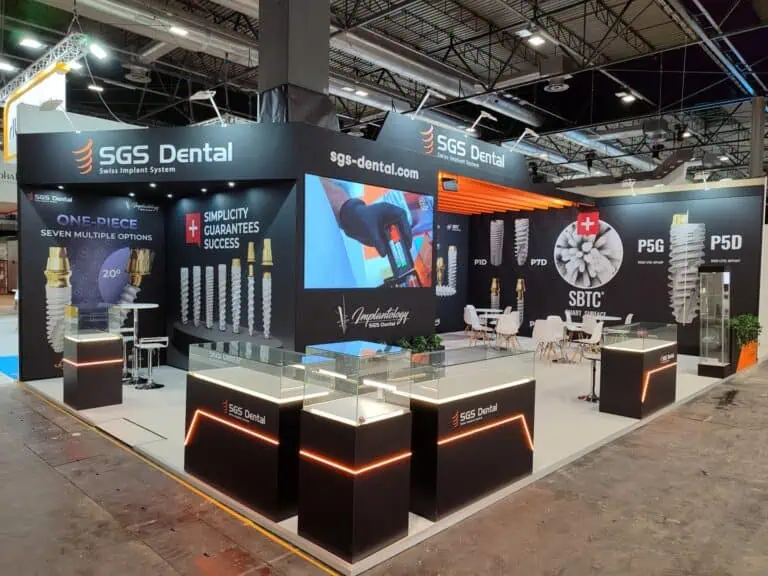
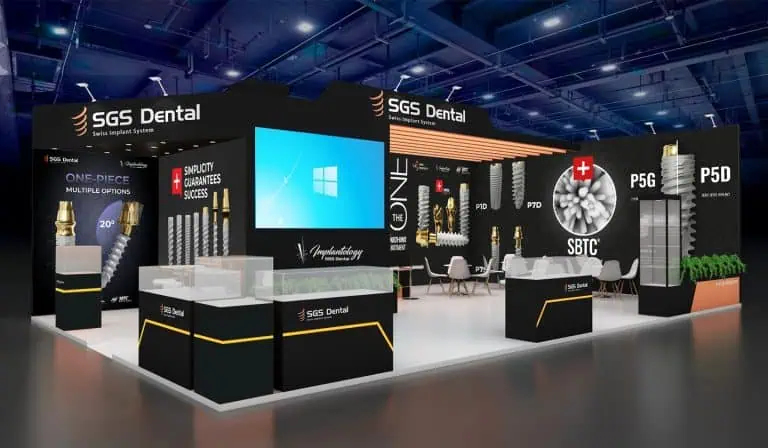
Adaptive booth solutions let an exhibitor change a stand for different plots, products or activities while retaining useful components. Adaptability must be demonstrated in actual layouts and a component schedule. Before commissioning a system, identify the events it needs to serve, the changes each event requires and the costs of transport, installation, graphics, repair and storage.
Adaptive booth solutions start with defined changes
“Adaptive” describes a requirement rather than a single construction system. A stand might adapt by moving a meeting area, changing graphic panels, adding compatible frames or replacing a demonstration counter. Digital content can change independently of the structure. A screen is optional; its presence does not establish physical adaptability.
List the changes you expect across your programme. Distinguish confirmed bookings from possible events. Ask the designer to show the layouts that work with the proposed inventory, together with additional parts and work needed for each. A rendering of one stand does not prove that the same components will fit another plot.
Build an event-by-event configuration schedule
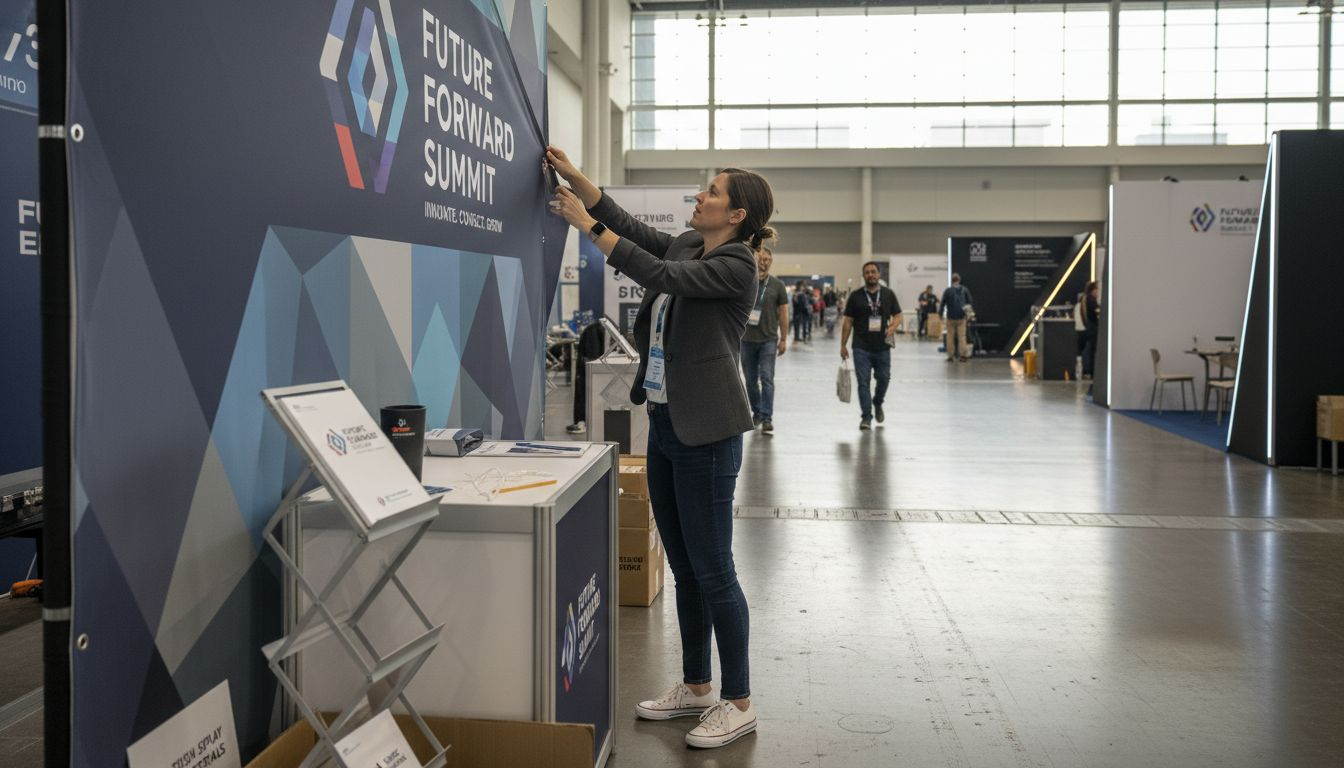
For each booked event, record the allocated dimensions, open sides, height conditions, products, team and activities. Add service positions, delivery access, storage needs and the relevant event manual. Mark unresolved information and who will confirm it. Use actual plans rather than assuming that equal floor area means an interchangeable layout.
| Change to accommodate | Design evidence to request | Associated work to price |
|---|---|---|
| Different plot dimensions | Dimensioned layouts using identified components | Additional frames, infill, flooring and graphics |
| Different open sides | Entry, display and meeting positions for each plot | Revised walls, finishes, signs and service routes |
| A new product | Display dimensions, weight and demonstration arrangement | Supports, handling, connections and testing |
| A new message | Artwork sizes and replacement method | Production, fitting and retained graphic storage |
| A different visitor task | Staff, visitor and equipment positions | Furniture, content and equipment changes |
For a hypothetical programme, an exhibitor might need one layout for a product demonstration and another for appointments. The designer should show how the same retained inventory supports both, with any extra parts listed. This is a planning example, not evidence of a completed Adam Expo Stand project or an automatic saving.
Check component compatibility and limits
Identify the system, component references, dimensions, connectors and permitted uses. Confirm compatibility before combining owned equipment with hired or newly purchased parts. Ask how replacement components can be obtained and whether graphics, lighting and accessories depend on particular frames or fittings.
Portable displays, modular frames and project-specific elements can all have a place in an adaptable stand. Their suitability depends on the actual equipment and layout. Do not treat a pop-up display as an approved structural support, or assume that a larger stand can be created simply by adding panels. Obtain the relevant technical assessment for the configuration and intended use.
Review each configuration against its event
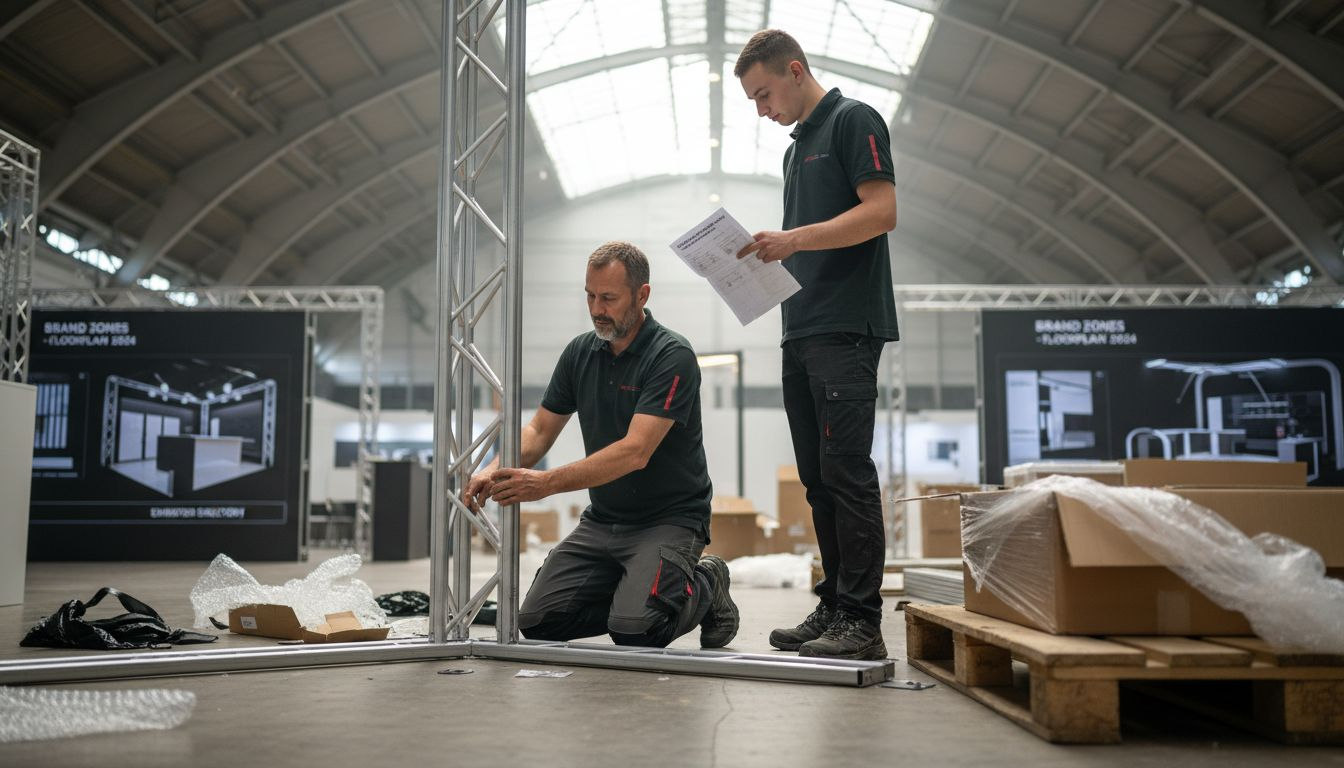
A previous installation does not establish acceptance at the next venue. Check the current event manual, required submissions, service arrangements and responsible technical parties. Assign who updates drawings, supplies evidence, places service orders and obtains the necessary responses. Record conditions that affect production or installation.
The Messe Frankfurt services resources, for example, provide separate technical and stand-approval information. Use the documents for the relevant edition and project. Reusing a frame does not remove the need to assess a changed layout, exhibit or attachment.
Adapt the visitor task as well as the walls
Place staff, visitors, products and furniture on each proposed plan. Walk through the intended task, including waiting, storage, replenishment and the next conversation. A smaller configuration may need fewer simultaneous activities rather than compressed versions of everything. Keep the main message understandable from the available approaches.
If using screens or interactive content, specify who updates it and test it on the actual equipment. Rehearse startup, the full demonstration, reset and a useful fallback. Changing a video is different from changing a product display with new weight, power or handling needs. Both belong in the change record.
Calculate adaptation costs across the programme
Compare equivalent scopes for purchase, rental or a combination. Include initial design, components, graphics, packing, freight, handling, installation, support, removal, storage, repair and later modifications. Show uncertain events separately. Confirm ownership, availability, replacement terms and which tasks remain with your team.
Rental maintenance is not automatically included, and ownership is not automatically cheaper over three years. Use actual quotations and feasible configurations. The European exhibition budget guide provides a structure for the cost comparison.
Make reuse an operational plan
Label retained components and keep an inventory, condition record, packing instructions and storage location. Photograph damage, assign repairs and confirm the parts needed for the next configuration before dispatch. Decide who retains artwork and editable files so that a graphic change can be prepared without guessing sizes.
RAI Amsterdam’s Better Stands announcement encourages reusable stand systems and programme criteria. Actual reuse and documented outcomes matter; an adaptive label alone does not establish lower emissions, certification or a financial return.
To discuss an adaptable stand with Adam Expo Stand, send the confirmed event plans, products, activities, owned inventory and budget scope through the project contact form. Request a configuration schedule, component list and priced changes alongside the initial design.
Follow our exhibition planning guides
Choose Adam Expo Stand as a preferred source to help you find our exhibition guides and updates on Google.
Add as a preferred source on GoogleGoogle may ask you to sign in and confirm your choice.