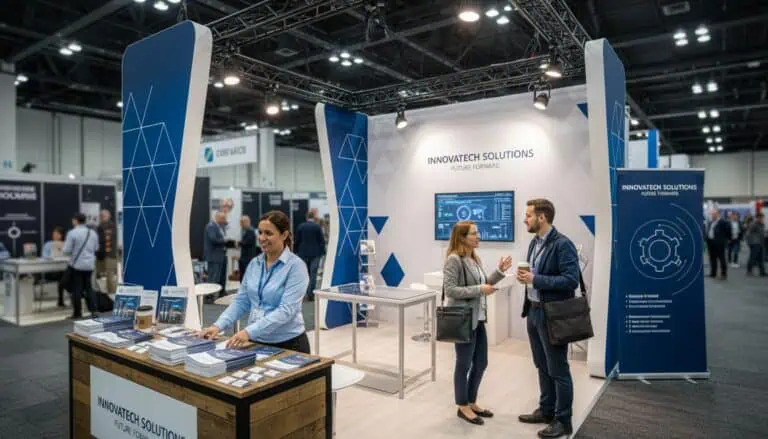
Innovation in exhibition design: transform your 2026 trade shows
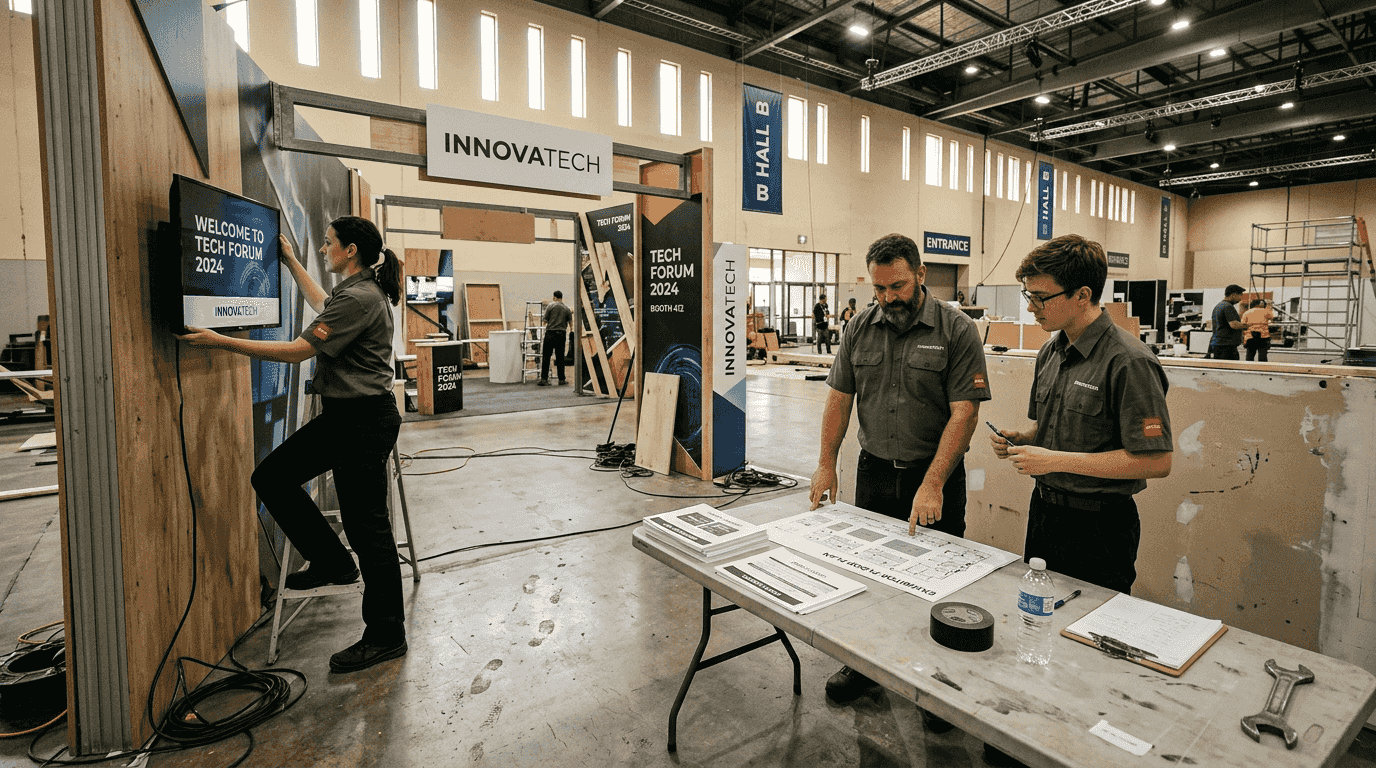
Most brands assume exhibition design success hinges on eye-catching visuals and bold graphics. Yet, innovative design strategies prove this mindset limits potential. Innovation extends far beyond aesthetics, integrating technology, interactivity, and strategic branding to create immersive experiences that captivate audiences and drive measurable results. As trade shows grow more competitive in 2026, event marketers and brand managers must embrace innovation to differentiate their presence, engage visitors meaningfully, and maximize return on investment across European markets.
Table of Contents
- The Evolving Role Of Innovation In Exhibition Design
- Innovative Exhibition Design Elements Transforming Visitor Engagement
- Aligning Innovation With Brand Strategy And Trade Show Goals
- Measuring The Impact And ROI Of Innovation In Exhibition Design
- Why Partner With Adam Expo Stand For Innovative Exhibition Design
Key takeaways
| Point | Details |
|---|---|
| Innovation redefines exhibition design | Moving beyond static displays to create dynamic, technology-driven brand experiences that engage visitors deeply |
| Technology integration drives engagement | AR, VR, interactive touchscreens, and digital elements transform passive viewing into active participation |
| Strategic alignment maximizes impact | Innovative design must connect with brand messaging and measurable trade show objectives to deliver ROI |
| Measurement validates innovation investment | Tracking visitor counts, engagement duration, lead quality, and brand recall quantifies design effectiveness |
The evolving role of innovation in exhibition design
Trade show landscapes have transformed dramatically over recent years. Traditional booth setups featuring printed banners and product displays no longer capture attention in crowded exhibition halls. Visitors now expect interactive, memorable experiences that reflect modern digital lifestyles. Innovation moves exhibition design beyond static displays into dynamic brand experiences that create lasting impressions.
Emerging technologies define what innovation means in exhibition contexts today. Augmented reality overlays digital information onto physical products, allowing visitors to visualize customization options instantly. Virtual reality transports attendees into immersive brand stories, creating emotional connections impossible through conventional methods. Interactive digital elements like touchscreens and motion sensors invite participation, transforming passive observers into active participants who engage directly with your brand message.
Innovation serves strategic purposes beyond technological novelty. It supports sophisticated brand storytelling by creating multi-sensory environments that communicate values, expertise, and differentiation. Companies leveraging innovation distinguish themselves in saturated markets where dozens of competitors vie for the same audience attention. Consider how branding strategies amplify when paired with innovative delivery mechanisms.
Brands neglecting innovation face serious consequences. Visitors bypass uninspiring booths in favor of competitors offering engaging experiences. Decision makers remember interactive demonstrations far longer than static product sheets. Your exhibition investment yields diminishing returns when design approaches remain stagnant while audience expectations evolve. Innovation directly impacts visibility, engagement quality, and ultimately, lead generation effectiveness at every trade show.
“Innovation in exhibition design creates competitive advantages by transforming how audiences perceive, remember, and respond to brand messages in crowded trade show environments.”
The innovation imperative grows stronger as 2026 progresses. Technology costs decrease while capabilities expand, making advanced features accessible to brands of all sizes. Visitor expectations continue rising as immersive experiences become standard rather than exceptional. Event marketers who recognize and act on these trends position their companies for sustained trade show success.
Innovative exhibition design elements transforming visitor engagement
Specific design components separate innovative stands from conventional setups. Understanding these elements helps you make informed decisions about which innovations deliver maximum impact for your brand and budget. Technology integration forms the foundation, but strategic implementation determines success.
Digital screens and interactive displays revolutionize information delivery. Large format LED walls create visual impact visible across exhibition halls, drawing visitors toward your booth. Touch interfaces enable self-directed exploration, allowing attendees to access product details, case studies, and multimedia content at their own pace. Augmented reality applications overlay digital information onto physical products, demonstrating features and benefits in ways traditional displays cannot match. Tech-enhanced stands and immersive experiences boost visitor interaction and dwell time significantly.
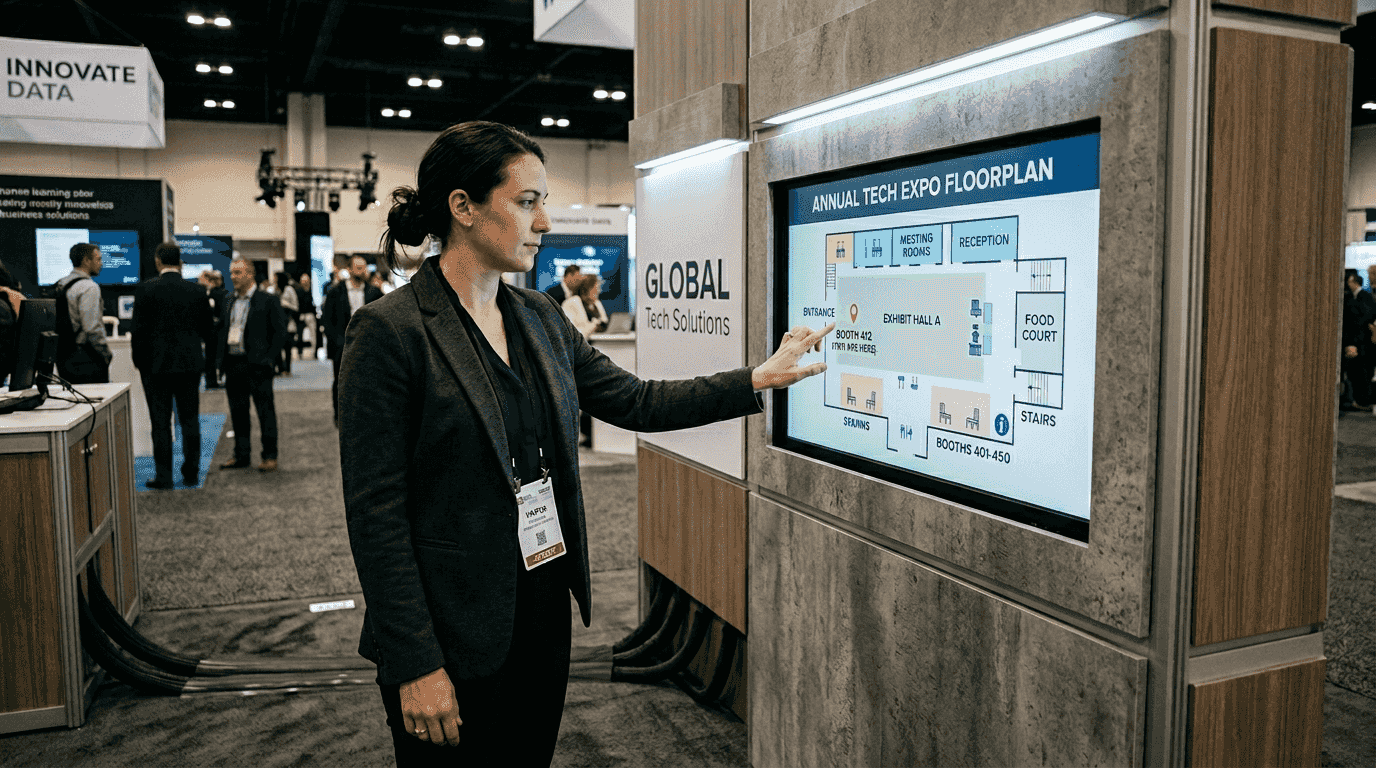
Modular design systems provide flexibility that fixed structures cannot offer. These adaptable frameworks allow you to reconfigure layouts for different venues, adjust messaging for specific audiences, and scale booth size based on event importance. Modular approaches reduce long-term costs while maintaining fresh, current appearances. They enable rapid deployment and easy updates, critical advantages for brands participating in multiple trade shows annually.
| Feature | Traditional Approach | Innovative Approach | Engagement Impact |
| — | — | — |
| Information delivery | Printed brochures and static signage | Interactive touchscreens with dynamic content | 3x longer visitor dwell time |
| Product demonstration | Physical samples on tables | AR visualization and virtual try-on | 5x higher information retention |
| Brand storytelling | Banner graphics and text | Immersive video walls and VR experiences | 4x stronger emotional connection |
| Lead capture | Paper forms and business cards | Digital registration with instant follow-up | 2x higher conversion rates |
Interactive elements create memorable touchpoints throughout the visitor journey. Motion sensors trigger personalized greetings as attendees approach. Gamification encourages participation through competitions and challenges that subtly communicate product benefits. Social media integration enables instant sharing, extending your reach beyond the physical event space. Each interaction generates data points that inform follow-up strategies and measure engagement quality.
Pro Tip: Incorporate sensory elements like dynamic lighting that changes based on visitor proximity and spatial audio that creates immersive soundscapes without disturbing neighboring booths to create memorable brand impressions that persist long after the event concludes.
The most effective innovative designs balance technology with human connection. Digital elements should enhance rather than replace personal interactions. Train staff to leverage technology as conversation starters, using interactive displays to facilitate meaningful discussions about visitor needs and challenges. Explore creative exhibition stand ideas that blend innovation with strategic brand positioning.
Aligning innovation with brand strategy and trade show goals
Innovation without strategic direction wastes resources and dilutes brand messaging. Successful event marketers integrate innovative design elements deliberately, ensuring every feature supports specific branding objectives and measurable trade show goals. This alignment transforms innovation from flashy gimmicks into powerful business tools.
Follow this systematic approach to integrate innovation strategically:
- Define clear objectives before selecting innovative elements, identifying whether you prioritize lead generation, brand awareness, product launches, or relationship building at each specific event.
- Analyze target audience behavior patterns and preferences, understanding how your ideal visitors consume information and what types of interactions resonate most effectively with their decision-making processes.
- Map innovative features to specific brand messages, ensuring each technological element or interactive experience communicates core values, differentiators, or product benefits authentically.
- Establish measurement frameworks before the event, determining which metrics validate success and how you will capture data through innovative design elements themselves.
- Create cohesive experiences where innovation enhances rather than overshadows brand identity, maintaining visual consistency and message clarity throughout all touchpoints.
- Plan integration with broader marketing campaigns, connecting pre-event promotion, on-site experiences, and post-event follow-up into seamless journeys that maximize innovation’s impact.
Data-driven insights elevate innovation effectiveness dramatically. Use audience research to identify which technologies and interactive formats appeal most to your target segments. Analyze past trade show performance to pinpoint engagement gaps that innovation can address. Strategic branding integration is essential for maximizing trade show impact through innovative design approaches.
Consider how different innovative elements serve distinct strategic purposes. Virtual reality excels at emotional storytelling and brand immersion but requires dedicated space and staff support. Interactive product configurators drive qualified leads by capturing detailed preference data while demonstrating capabilities. Social media walls build community and extend reach but need careful moderation. Match innovations to objectives rather than adopting technology for its own sake.
Pro Tip: Plan pre-event and post-event digital engagement strategies that extend your exhibit innovation’s impact, using email campaigns to preview interactive experiences before the show and virtual booth tours to re-engage leads afterward, creating continuous touchpoints that reinforce trade show interactions.
Authenticity matters more than technological sophistication. Visitors quickly detect when innovation serves as superficial decoration rather than genuine value delivery. Ensure every innovative element provides practical benefits, whether entertainment, education, or simplified decision-making. Align innovation with your company’s actual capabilities and culture. Explore event branding ideas that authentically represent your organization while incorporating innovative delivery methods.
Measuring the impact and ROI of innovation in exhibition design
Innovation investments require validation through rigorous measurement and analysis. Event marketers must demonstrate how innovative exhibition design delivers tangible returns, justifying budgets and informing future trade show strategies. Fortunately, innovative designs themselves enable sophisticated data capture that traditional booths cannot match.
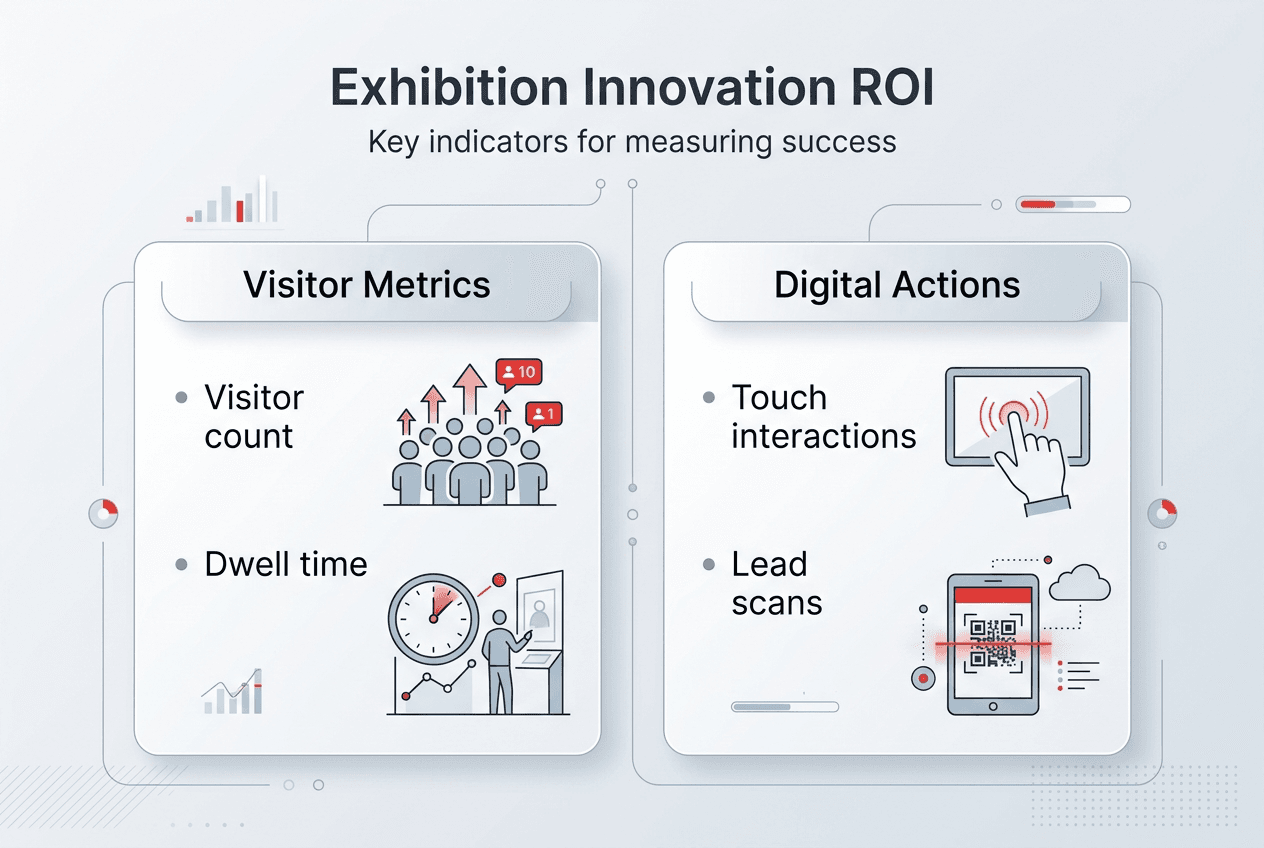
Key performance indicators reveal innovation effectiveness across multiple dimensions. Visitor counts measure attraction power, showing whether innovative elements successfully draw traffic from busy exhibition floors. Engagement duration indicates interest depth, with longer interactions suggesting compelling content and effective design. Lead quality assessments determine whether innovation attracts your target audience or merely generates unqualified traffic. Brand recall studies measure lasting impression strength, revealing whether innovative experiences create memorable associations that influence future purchasing decisions.
| Measurement Method | Implementation | Advantages | Limitations |
| — | — | — |
| Digital interaction tracking | Sensors and software monitor touchscreen usage, AR engagement, and content views | Provides detailed behavioral data and engagement patterns automatically | Requires technology integration and may miss non-digital interactions |
| Visitor surveys | Post-interaction questionnaires assess satisfaction, recall, and intent | Captures qualitative insights and emotional responses directly | Response rates vary and self-reported data may contain bias |
| Lead scoring systems | CRM integration tracks inquiry quality and conversion rates | Connects trade show activity to business outcomes measurably | Requires time for full sales cycle completion |
| Social media analysis | Monitor mentions, shares, and engagement from event hashtags | Extends measurement beyond booth to broader audience reach | Difficult to isolate innovation impact from other factors |
Innovative design enables better data capture through technology-enhanced interactions. Interactive displays automatically log which content attracts attention and how long visitors engage with specific features. Digital lead capture systems collect detailed qualification information seamlessly during natural conversations. Beacon technology tracks foot traffic patterns, revealing which booth areas generate most interest. Measuring innovation’s impact requires tracking both qualitative and quantitative trade show metrics systematically.
Prioritize these metrics when assessing innovation impact:
- Total qualified leads generated compared to previous events using traditional designs
- Average engagement duration per visitor interaction at innovative elements
- Content interaction rates showing which innovative features attract most attention
- Post-event survey scores measuring brand perception changes and recall strength
- Social media reach and engagement metrics extending beyond physical attendees
- Sales pipeline velocity for leads generated through creative exhibition booth experiences
- Cost per qualified lead comparing innovative versus traditional exhibition approaches
Establish baseline measurements before implementing innovation to enable accurate comparison. Track the same metrics across multiple events to identify trends and validate long-term impact. Share results across your organization, demonstrating how innovative exhibition design contributes to broader marketing and sales objectives. Review trade show visibility tips that complement measurement strategies.
Calculate return on investment by comparing incremental costs of innovative elements against measurable benefits. Include both direct returns like increased qualified leads and indirect benefits such as enhanced brand perception and competitive differentiation. Consider long-term value from reusable modular systems and technology investments that serve multiple events. Comprehensive ROI analysis justifies innovation budgets and guides strategic decisions about which elements deliver greatest value for your specific trade show objectives.
Why partner with Adam Expo Stand for innovative exhibition design
Implementing innovative exhibition design requires specialized expertise and experience that Adam Expo Stand brings to every project. Our team understands how to balance cutting-edge technology with strategic brand messaging, creating stands that captivate audiences while delivering measurable business results. We serve event marketers and brand managers across Europe with comprehensive turnkey solutions that handle every aspect from initial 3D design concepts through on-site installation and support.
Our approach combines innovation with practicality. We leverage modern design techniques, sustainable materials, and flexible modular systems to deliver impactful exhibition stands suited to various event sizes and locations. Whether you need custom solutions for major industry shows or adaptable modular designs for multiple events, we provide expert guidance that aligns innovative features with your specific branding goals and budget parameters. Visit Adam Expo Stand to explore our portfolio and discover how we can elevate your trade show presence in 2026.
FAQ
What are the main technologies used in innovative exhibition design?
Top technologies include augmented reality for product visualization, virtual reality for immersive brand experiences, interactive touchscreens for self-directed content exploration, LED displays for dynamic visual impact, and IoT sensors for visitor tracking and personalized interactions. These tools create engaging experiences that transform passive viewing into active participation. Explore innovative exhibition technologies that enhance trade show effectiveness.
How can exhibition design innovation improve lead generation at trade shows?
Innovative interactive displays encourage deeper visitor engagement, naturally increasing opportunities to capture qualified lead information during meaningful conversations. Technology-enabled data collection systems gather detailed qualification details seamlessly, while engagement analytics identify high-intent prospects for prioritized follow-up. Data-driven design enables targeted post-event communication based on specific interests demonstrated through booth interactions. Learn more about trade show lead generation strategies that maximize conversion.
What budget considerations should be made when incorporating innovation in exhibition design?
Innovation typically requires higher upfront investment compared to traditional approaches but delivers superior ROI through increased engagement, better lead quality, and stronger brand impact. Consider modular designs and scalable technology solutions that serve multiple events, reducing per-show costs over time. Prioritize innovations that align directly with your strategic objectives rather than adopting technology for novelty alone. Review exhibition stand design budgeting guidance for cost-effective innovation implementation.